
AREDS 2 Side Effects: Who Should Not Take PreserVision?
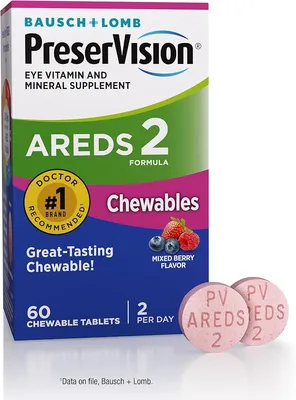
PreserVision AREDS 2 Formula
The most widely available version of the formula tested in AREDS2, and a reasonable default for adults whose eye doctor has diagnosed intermediate AMD or advanced AMD in one eye. It is not for people with healthy eyes or early AMD only.
- Made by Bausch + Lomb, the brand most familiar to eye care professionals
- Contains no beta-carotene, the ingredient linked to lung cancer risk in smokers
- Widely available, so refills are easy to keep consistent over years of use
The AREDS 2 formula has a good safety record, but it is not a gentle multivitamin — here’s what the research actually shows. The single biggest source of side effects is zinc: the study formula delivered 80 mg a day — double the 40 mg daily upper limit set for adults — which can cause nausea, cramping, a metallic taste, and, with long use, copper depletion (the reason 2 mg of copper is built into the formula). The 400 IU of vitamin E can add to bleeding risk if you take warfarin, and 500 mg of vitamin C adds oxalate for anyone who forms kidney stones. And some people should not take it at all: those with no or only early macular degeneration, chronic kidney disease, Wilson’s disease, hemochromatosis, or certain prescriptions.
The Detailed Answer
The AREDS2 trial, run by the National Eye Institute, enrolled 4,203 adults aged 50 to 85 who were at high risk of advanced age-related macular degeneration (AMD) and followed them for a median of five years. The formula tested contained vitamin C 500 mg, vitamin E 400 IU, zinc (as zinc oxide) 80 mg, copper (cupric oxide) 2 mg, lutein 10 mg, and zeaxanthin 2 mg.
That is a large amount of a few specific nutrients, and the side effect profile follows directly from the doses. PreserVision AREDS 2 Formula from Bausch + Lomb, the brand most associated with the name, states that its formula matches the trial amounts exactly and is typically taken as two soft gels a day — one in the morning, one in the evening. Not every product marketed as an “AREDS 2” formula uses identical amounts, so read the Supplement Facts panel on the bottle you actually own before comparing it to the numbers below.
The zinc problem: stomach upset, copper, and kidney questions
Zinc is the ingredient most often behind complaints. The NIH Office of Dietary Supplements sets the tolerable upper intake level for adults at 40 mg of zinc per day; the AREDS formula delivers 80 mg. At that level, reported effects include nausea, vomiting, loss of appetite, stomach cramps, diarrhea, headaches, and a metallic taste. Taking the doses with food and splitting them through the day helps many people considerably.
The longer-term concern is copper. High-dose zinc competes with copper for absorption and can cause copper deficiency, which shows up as anemia and, less commonly, nerve problems — this is precisely why 2 mg of copper was added to the AREDS formula. If you take a separate zinc lozenge or a multivitamin containing zinc on top of an AREDS 2 product, you can push your daily total well past 100 mg without realizing it.
On kidneys: in the original AREDS trial of 3,640 adults aged 55 to 80, participants taking zinc had significantly more hospitalizations for genitourinary causes than those who did not. The AREDS 2 formula is not known to damage healthy kidneys, but people with chronic kidney disease clear minerals differently, and the 500 mg of vitamin C is metabolized partly to oxalate, which matters for anyone who has formed calcium-oxalate stones. If your kidney function is reduced, this is a conversation for your nephrologist, not a decision to make in the vitamin aisle.
Vitamin E, vitamin C, and the interactions that matter
Vitamin E at 400 IU per day is well below the 1,500 IU upper limit but is enough to matter clinically. The NIH notes that high-dose vitamin E can interfere with blood clotting and may increase bleeding risk in people taking anticoagulants such as warfarin, and it warrants caution before surgery. Separately, the SELECT trial of 35,533 men found that 400 IU of vitamin E daily was associated with a 17% relative increase in prostate cancer diagnoses — a finding in a different population taking the vitamin alone, but one worth raising with your doctor if prostate cancer is part of your history.
Zinc also binds certain drugs in the gut. Tetracycline and fluoroquinolone antibiotics, and the chelating drug penicillamine, should be separated from zinc-containing supplements by at least two hours. Vitamin C increases iron absorption, which is undesirable for people with hemochromatosis or another iron-overload condition.
Why beta-carotene was removed — and why smokers still read labels
The original 2001 AREDS formula contained 15 mg of beta-carotene. Two large trials in smokers had already linked beta-carotene supplements to more lung cancer, and AREDS2 confirmed the signal: lung cancers were about twice as common in the beta-carotene groups (roughly 2.0% versus 0.9%), and almost all of those cases occurred in former smokers. AREDS2 showed that lutein and zeaxanthin worked at least as well, so beta-carotene was dropped.
The practical point for 2026: modern AREDS 2 formulas contain no beta-carotene, but older “AREDS” or “original formula” eye vitamins still on shelves and in medicine cabinets may. If you smoke now or ever have, check the label for beta-carotene and choose the AREDS 2 version.
Who should not take it
- People with no AMD or only early AMD in both eyes. The trials found benefit in intermediate AMD or advanced AMD in one eye. There is no evidence it prevents AMD in healthy eyes, so the side-effect risk buys nothing.
- People with chronic kidney disease or a history of calcium-oxalate kidney stones, without a doctor’s specific approval.
- People with Wilson’s disease or another copper-handling disorder, because of the added copper.
- People with hemochromatosis or iron overload, because of the 500 mg of vitamin C.
- People on warfarin or other anticoagulants, or scheduled for surgery, until their prescriber signs off on the vitamin E.
- Anyone already taking a zinc supplement or a zinc-containing multivitamin, until the totals are added up.
- People who smoke and only have access to an older beta-carotene formula.
Related Questions
Are there side effects from taking AREDS 2 long term?
The 10-year follow-on analysis of AREDS2 participants found that lutein and zeaxanthin remained safe over the long run, while the excess lung cancer risk seen with beta-carotene persisted — further support for the reformulated version. What long-term use does require is monitoring: copper status, kidney function if it is already borderline, and a yearly review of everything else you take. Our detailed review of PreserVision AREDS 2 Formula covers what daily use looks like in practice.
Is there an AREDS 2 formula without zinc, or with less zinc?
AREDS2 also tested a lower-zinc version at 25 mg and found no meaningful difference in effectiveness, which is why some ophthalmologists are comfortable recommending reduced-zinc products for people whose stomachs rebel. Carotenoid-focused products such as MacuHealth Plus+ take a different approach — note that MacuHealth also sells a separate, lower-cost Triple Carotenoid Formula without the added vitamin C, E, zinc, and copper, so check labels carefully before buying — though the strongest outcome evidence still belongs to the AREDS2 formula itself. Our guide to AREDS 2 ingredients and alternatives compares the options ingredient by ingredient.
Is a regular eye vitamin like Ocuvite the same thing?
No. Bausch + Lomb Ocuvite 50+ is a general adult eye vitamin from the same company, not the AREDS 2 study formula, so the AREDS2 trial results do not transfer to it. If your eye doctor told you to take “the AREDS 2 vitamin,” check that the label matches the study nutrients — comparing panels side by side is the only reliable way, and our roundup of the best eye supplements for macular health does that work for you.
Can I reduce the stomach upset without stopping the supplement?
Usually, yes. Take each dose with a full meal rather than on an empty stomach, keep the daily amount split into two servings rather than swallowing it all at once, and give your body two to three weeks to adjust. If nausea, cramping, or diarrhea persists past that, tell your doctor or pharmacist — a lower-zinc formula is a reasonable next step rather than abandoning treatment altogether.
When to Talk to Your Doctor
Do not start, stop, or switch an AREDS 2 supplement on your own — consult your doctor or pharmacist first, and bring the actual bottle so they can read the label. That conversation matters most if you take a blood thinner, a tetracycline or fluoroquinolone antibiotic, or penicillamine; if you have reduced kidney function, kidney stones, hemochromatosis, or Wilson’s disease; or if you also take a multivitamin or standalone zinc.
Call sooner rather than waiting for your next appointment if you notice persistent nausea or vomiting, unusual bruising or bleeding, unexplained fatigue or pallor (possible signs of copper-related anemia), numbness or tingling in the hands or feet, or new flank pain. And ask directly whether you are in the group the trials studied: adults with intermediate AMD, or advanced AMD in one eye. If you are not, the honest answer may be that you do not need this supplement at all.
The bottom line: the AREDS 2 formula is a well-studied, generally well-tolerated therapy whose risks cluster around one ingredient — 80 mg of zinc — and a handful of specific medical situations. Worth considering, with your eye doctor’s guidance, if you fall into the group it was tested in.
Sources:
- National Eye Institute — Age-Related Eye Disease Studies (AREDS/AREDS2) — Trial populations, formula composition, and the reason beta-carotene was removed.
- AREDS2 Research Group. Lutein + zeaxanthin and omega-3 fatty acids for age-related macular degeneration. JAMA. 2013;309(19):2005-2015. — Primary AREDS2 results, including the 25 mg low-zinc comparison and lung cancer findings in former smokers.
- AREDS2 10-Year Follow-On Study. JAMA Ophthalmology. 2022. — Long-term safety of lutein/zeaxanthin and persistence of beta-carotene lung cancer risk.
- AREDS Report No. 8. Arch Ophthalmol. 2001;119(10):1417-1436. — Original AREDS population and the excess genitourinary hospitalizations in the zinc groups.
- NIH Office of Dietary Supplements — Zinc Fact Sheet for Health Professionals — 40 mg upper limit, high-dose zinc side effects, copper interference, and antibiotic interactions.
- NIH Office of Dietary Supplements — Vitamin E Fact Sheet for Health Professionals — Bleeding risk, anticoagulant interaction, and upper intake level for vitamin E.
- NIH Office of Dietary Supplements — Vitamin C Fact Sheet for Health Professionals — Oxalate and kidney stone considerations and increased iron absorption with high-dose vitamin C.
- Klein EA, et al. Vitamin E and the risk of prostate cancer: the SELECT trial. JAMA. 2011;306(14):1549-1556. — 35,533 men; 400 IU/day vitamin E associated with a 17% relative increase in prostate cancer.
- PreserVision AREDS 2 Formula — Formulation: Ingredients and Levels — Bausch + Lomb’s own statement that PreserVision AREDS 2 matches the AREDS2 trial doses exactly and is beta-carotene-free.
- MacuHealth+ Product Page — Ingredient amounts for MacuHealth Plus+ (zinc 25 mg vs. the AREDS2 formula’s 80 mg) and its carotenoid-focused positioning.
- Ocuvite Adult 50+ Product Page — Supplement Facts confirming zinc (9 mg) and copper (1 mg) well below the AREDS2 study formula.
- Mayo Clinic — Dry macular degeneration: Diagnosis and treatment — Which AMD stages supplements are recommended for.
Products We Recommend
- Made by Bausch + Lomb, the brand most familiar to eye care professionals
- Contains no beta-carotene, the ingredient linked to lung cancer risk in smokers
- Widely available, so refills are easy to keep consistent over years of use
- High zinc content is the main driver of nausea, cramping, and metallic taste
- Vitamin E and vitamin C amounts require a medication review for anyone on anticoagulants or with kidney stones
- No benefit demonstrated for people without intermediate or advanced AMD
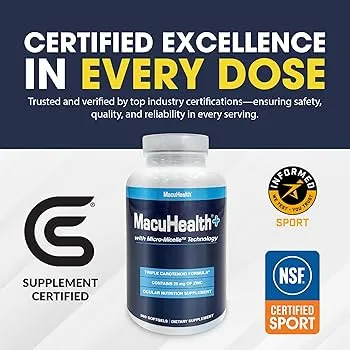
- Positioned around three retinal carotenoids (lutein, zeaxanthin, and meso-zeaxanthin) with lower mineral doses than the AREDS2 formula
- An option to raise with your doctor if the standard formula upsets your stomach
- Available directly from MacuHealth, through some online retailers, and through eye-care professionals
- Not the exact formulation tested in the AREDS2 trial, so trial outcomes do not directly transfer
- Generally costs more than mass-market eye vitamins
- Requires careful label comparison against the AREDS 2 nutrients before you switch
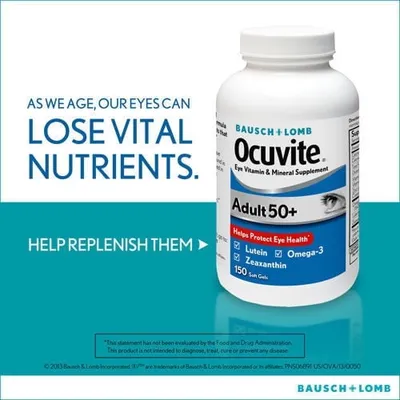
- From the same maker as the AREDS 2 product, so it is easy to find alongside it
- Marketed as general eye nutrition for adults over 50
- Far less zinc than the study formula (9 mg vs. 80 mg), which may be gentler on the stomach for some people
- Not the AREDS2 trial formulation, so the trial's results do not apply to it
- Easily confused with the AREDS 2 product on the shelf
- Requires reading the Supplement Facts panel to know what you are actually getting
Frequently Asked Questions
Can I take AREDS 2 with my regular multivitamin?
Often you can, but the totals have to be checked first. Many multivitamins also contain zinc — often at or above the 11 mg Daily Value — which adds to the 80 mg already in the AREDS formula and pushes your total further above the 40 mg upper limit for adults. Ask your pharmacist to add up zinc, vitamin E, and vitamin C across everything you take.
Does AREDS 2 cause nausea?
Nausea is a commonly reported complaint, and high-dose zinc is the likely reason — stomach upset, cramping, and a metallic taste are also recognized effects of zinc intakes above 40 mg per day. Taking the doses with food and splitting them across the day resolves it for many people. If it persists beyond two or three weeks, ask your doctor about a lower-zinc formula.
Should men with a prostate cancer history avoid AREDS 2?
It is worth a specific conversation. The SELECT trial of 35,533 men found that 400 IU of vitamin E daily — the same amount in the AREDS formula — was associated with a 17% relative increase in prostate cancer diagnoses. That study tested vitamin E alone rather than the eye formula, so the finding is a reason to consult your doctor, not an automatic disqualification.
Do I still need AREDS 2 if my macular degeneration is only in the early stage?
Probably not. Both AREDS trials found benefit in people with intermediate AMD, or advanced AMD in one eye, and no evidence of benefit in early AMD or healthy eyes. Your eye doctor can tell you which stage you are at, which is the single most useful fact in deciding whether the supplement is worth its side effects.
Can AREDS 2 supplements interact with antibiotics?
Yes. The zinc in the formula can bind tetracycline and fluoroquinolone antibiotics in the gut and reduce how much drug you absorb. The usual advice is to separate the supplement from the antibiotic by at least two hours; your pharmacist can confirm the timing for your specific prescription.