
Daily Supplements for Aging Adults: What to Take Every Day (and What to Skip)
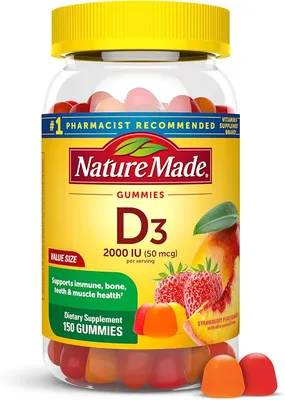
Nature Made Vitamin D3 2000 IU
A simple, USP Verified D3 option for adults 75 and older, or for anyone whose doctor has recommended 2,000 IU a day. One softgel daily, taken with food.
- USP Verified for identity, quality, strength and purity
- 2,000 IU (50 mcg) of vitamin D3 per softgel, one softgel a day
- Dose sits above the 600–800 IU recommendation and below the 4,000 IU upper limit
Here’s what the research actually shows: most adults over 60 can get all the nutrients they need from food, and a daily supplement earns its place only when it fills a specific gap. The gaps that turn up most often after 50 are vitamin B12 (2.4 mcg a day for adults 51 and older), vitamin D (at least 600 IU a day at 51–70, at least 800 IU after 70, and no more than 4,000 IU), and calcium (1,200 mg a day for women 51+ and men 71+, 1,000 mg for men 51–70). Magnesium and omega-3 fats are worth considering if greens, nuts and seafood are rare on your plate. Beta-carotene and vitamin E pills, on the other hand, are on the skip list.
What “Daily Supplements” Actually Mean After 50
A dietary supplement is meant to do one job: add a nutrient your food isn’t supplying in the amount your body needs. It is not a second breakfast in pill form, and it does not make an average diet into a good one.
That distinction matters because supplements are everywhere. The U.S. Preventive Services Task Force reported in 2022 that 52% of U.S. adults had used at least one supplement in the previous 30 days. Bathroom shelves fill up fast, usually one bottle at a time, and rarely does anyone go back and ask whether each one is still doing something.
The National Institute on Aging is blunt about the starting point: it is usually better to get your nutrients from food rather than a pill, and most older adults can get all the nutrients they need from foods. Food delivers nutrients in combinations — fiber, protein, healthy fats — that a capsule cannot copy.
Why real gaps still open up after 50
Three things change with age, and they explain most of the supplements on this page.
- B12 absorption. Some people over 50 have trouble absorbing the vitamin B12 that occurs naturally in food, even when they eat plenty of it. Fortified foods or a supplement bypass the problem.
- Vitamin D. Most people in the U.S. get less vitamin D than recommended, and skin makes less of it from sunlight as the years go by.
- Eating less overall. Smaller appetites, dental problems, and cooking for one all shrink the daily nutrient total, even when food choices are good.
If none of those apply to you, a shelf of daily bottles may be solving a problem you don’t have. For a closer look at which vitamins matter most in this age group, see The Essential Vitamins for Adults Over 50.
The Science, Simplified
Think of a nutrient supplement the way you’d think of topping off the oil in a car. When the level is low, adding oil matters a great deal. When the level is already full, adding more doesn’t make the engine run better — and overfilling causes its own problems.
The large VITAL trial shows the point. Researchers gave 25,871 U.S. adults — men 50 and older, women 55 and older — either 2,000 IU of vitamin D3 a day or a placebo for a median of 5.3 years. Vitamin D did not lower invasive cancer or major cardiovascular events. That is a large, long, well-run study, and it tells you what a daily D3 pill does not do for a generally healthy population.
The same trial tested 1 gram a day of marine omega-3s. Major cardiovascular events were not significantly lower (hazard ratio 0.92, 95% confidence interval 0.80 to 1.06). Total heart attacks, a secondary endpoint, were lower (hazard ratio 0.72, 95% CI 0.59 to 0.90) — but secondary results are not definitive, and they are best read as a reason for more research rather than a promise.
Where the guidelines have landed
The Endocrine Society’s 2024 guideline draws a line at age 75. It suggests empiric vitamin D — meaning taking it without testing first — for adults 75 and older, because of its potential to lower the risk of death. For healthy adults younger than 75, it suggests against taking vitamin D above the current dietary reference intake to lower disease risk, and it suggests against routine vitamin D blood testing. The panel also states plainly that the optimal dose remains unclear.
For antioxidant pills, the 2022 USPSTF review recommends against beta-carotene or vitamin E supplements to prevent cardiovascular disease or cancer, and found the evidence insufficient to judge multivitamins for that purpose.
The bottom line from the evidence: supplements correct shortfalls reliably. They do not prevent the diseases of aging.
What’s Worth Taking Every Day
Here is a short, defensible daily list. Nobody needs all five — pick the ones that match a gap in your own eating, and check amounts against what a multivitamin may already provide.
| Nutrient | Amount after 50 | Ceiling |
|---|---|---|
| Vitamin B12 | 2.4 mcg a day, men and women 51+ | — |
| Vitamin D | 600 IU at 51–70; 800 IU over 70 | 4,000 IU a day |
| Calcium | 1,200 mg for women 51+ and men 71+; 1,000 mg for men 51–70 | 2,000 mg a day |
| Magnesium | 420 mg for men, 320 mg for women 31+ (food plus supplement) | 350 mg a day from supplements |
| Omega-3 | 8 oz or more of seafood a week | — |
Vitamin B12: the clearest case for a daily pill
Men and women 51 and older need 2.4 mcg a day. Because some people in this age group can’t absorb the B12 bound to food protein, the National Institute on Aging suggests B12 supplements or foods fortified with B12.
This is the nutrient where a daily supplement most often earns its keep, and the dose needed is small. Many B-complex products and multivitamins already contain more than 2.4 mcg, so check the label before adding a separate B12.
Vitamin D: match the dose to your age
Aim for at least 600 IU a day at 51 to 70 and at least 800 IU after 70, and stay under 4,000 IU. Those numbers come from the National Institute on Aging. If you are 75 or older, the Endocrine Society’s 2024 guideline suggests taking vitamin D without testing first.
If you are in that group, or your doctor has recommended 2,000 IU for another reason, Nature Made Vitamin D3 2000 IU is a straightforward option: 2,000 IU (50 mcg) of D3 per softgel, one softgel a day, and the product is USP Verified. That dose sits above the 600–800 IU recommendation and well below the 4,000 IU ceiling. Vitamin D needs fat to be absorbed, so take it with a meal. It contains no vitamin K2, if that matters to you.
Calcium: food first, supplement only for the shortfall
Women 51 and older and men 71 and older need 1,200 mg a day; men 51 to 70 need 1,000 mg. Do not exceed 2,000 mg a day from all sources combined.
Add up what you already eat before reaching for a bottle. A cup of milk or fortified soy beverage, a cup of yogurt, and a serving of canned salmon with the bones will carry most people much of the way. If you land 300 mg short, supplement 300 mg — not 1,000.
Magnesium: useful if your diet is short on greens, nuts and beans
The recommended intake is 420 mg a day for men and 320 mg for women 31 and older, counting food. The upper limit from supplements specifically is 350 mg a day, and high doses can cause diarrhea, nausea and cramping.
Nature Made Magnesium Glycinate provides 200 mg of magnesium per serving of two capsules and is USP Verified. One serving a day sits comfortably under the supplement limit. The capsules are on the larger side, and there is nothing in the formula beyond the magnesium glycinate itself.
One important caution: side effects from high magnesium intake are uncommon except in people with significantly reduced kidney function, and the excess almost always comes from supplements or magnesium-containing laxatives rather than food. If your kidneys are not working normally, ask your doctor before taking any magnesium product.
Omega-3: try seafood before softgels
The Dietary Guidelines recommend adults eat 8 ounces or more of a variety of seafood a week — roughly two servings. If you hit that, a fish oil capsule adds little.
If seafood rarely appears on your plate, a supplement is worth considering. Nordic Naturals Ultimate Omega supplies 1,280 mg of omega-3s, including 1,100 mg of EPA plus DHA, per two-softgel serving. The softgels are large, and it takes two to reach that amount. Keep the VITAL results in mind: 1 gram a day did not significantly reduce major cardiovascular events, so treat fish oil as nutritional insurance, not heart protection. If you take a blood thinner, clear it with your doctor first.
What You Probably Don’t Need
Cutting bottles is as valuable as adding them — fewer products means fewer interactions, fewer duplicate doses, and less money spent.
Beta-carotene and vitamin E pills
The USPSTF recommends against taking beta-carotene or vitamin E supplements to prevent cardiovascular disease or cancer. That is a recommendation against, not a shrug — the evidence was reviewed and did not support the practice. The same review found the evidence insufficient to judge whether multivitamins help for that purpose, which means a daily multi is neither proven useful nor proven useless for disease prevention.
Megadoses above the upper limits
More is not a stronger version of enough. Stay at or below 4,000 IU a day of vitamin D, 2,000 mg a day of calcium, and 350 mg a day of supplemental magnesium. High-dose products marketed as “extra strength” push past these numbers routinely, and above the limits the risk side of the ledger grows while the benefit side does not.
Routine vitamin D blood tests with no medical reason
The Endocrine Society’s 2024 guideline suggests against routine vitamin D blood testing in healthy adults, partly because the optimal blood level and dose remain unclear. Testing is a different matter if your doctor is investigating bone disease, malabsorption, or another specific concern — that is a medical decision, not a screening habit.
A fourth, fifth and sixth bottle “just in case”
Every product added to a daily routine is another chance for a duplicate dose or a drug interaction. If your count is climbing, read Is It Safe to Take 5 or More Supplements at Once? before you add another.
What to Look For on the Label — and What to Avoid
Supplement labels are marketing documents with a facts panel attached. Read the panel.
Look for a third-party verification mark
The USP Verified mark means USP has verified the identity, quality, strength and purity of the product. The mark does not say a supplement will help you — it says that what is on the label is in the bottle, which is a lower bar than many shoppers assume.
Read the serving size before the big number on the front
The dose on the front of a bottle is per serving, and a serving is often two capsules or softgels. Nature Made Magnesium Glycinate, for example, delivers 200 mg per two-capsule serving — not per capsule. Nordic Naturals Ultimate Omega likewise lists its 1,280 mg across two softgels. Misreading it can leave you taking half the dose you intended, or twice as many capsules as you need.
Avoid proprietary blends
A “proprietary blend” lists ingredients without telling you how much of each is in the product. You cannot compare it to a study dose, you cannot compare it to a recommended intake, and you cannot tell your pharmacist what you are actually taking. Skip it.
Treat dramatic claims as a warning sign
Language like “reverses aging,” “cures,” or “guaranteed results” is a reason to put the bottle down. Legitimate products describe a nutrient and an amount. The National Institute on Aging notes that supplements can have unwanted side effects, including unsafe interactions with prescription drugs — or they may simply not work at all.
When to Talk to Your Doctor or Pharmacist
Before you start any daily supplement, talk with your doctor — including for the ones sold without a prescription and the ones a friend swears by. Bring the actual bottles to your next appointment, or to a pharmacist for a medication review; a label in hand beats a list from memory.
Two situations call for that conversation before you buy anything:
- Reduced kidney function or kidney disease. Your kidneys clear the minerals you swallow. Magnesium, in particular, builds up when they are not working normally.
- Blood thinners. Fish oil and several other supplements can affect bleeding and clotting. Your prescriber needs to know what you are adding.
Also ask if you are scheduled for surgery, if you take medication for blood pressure, diabetes or cholesterol, or if you are starting a new prescription of any kind.
One tool your prescriber may mention is the American Geriatrics Society Beers Criteria, updated in 2023. It is an explicit list of medications that are typically best avoided by adults 65 and older, designed to support shared decision-making between you and your clinician rather than to issue blanket bans. If you want an age-specific starting point for that conversation, What Supplements Should a 70-Year-Old Woman Take? covers the same ground with more detail on one common situation.
Sources:
- National Institute on Aging — Vitamins and Minerals for Older Adults — Food-first guidance and the B12, vitamin D and calcium amounts for adults 51 and older.
- National Institute on Aging — Dietary Supplements for Older Adults — Supplement side effects and drug interactions, talking to your doctor, and what the USP Verified mark means.
- Endocrine Society Clinical Practice Guideline on Vitamin D (2024) — Empiric vitamin D for adults 75 and older, against above-DRI dosing under 75, and against routine vitamin D testing.
- VITAL trial — Vitamin D Supplements and Prevention of Cancer and Cardiovascular Disease (NEJM) — 25,871 participants, 2,000 IU D3 daily, median 5.3 years; no reduction in invasive cancer or major cardiovascular events.
- VITAL trial — Marine n-3 Fatty Acids and Prevention of Cardiovascular Disease and Cancer (NEJM) — 1 g a day of marine omega-3s; hazard ratios for major cardiovascular events and total heart attacks.
- NCCIH — Omega-3 Supplements: What You Need To Know — Dietary Guidelines recommendation of 8 ounces or more of seafood a week.
- USPSTF 2022 Recommendation Statement — Vitamin, Mineral, and Multivitamin Supplementation — Recommendation against beta-carotene and vitamin E, insufficient evidence for multivitamins, and the 52% supplement-use figure.
- MedlinePlus — Magnesium in Diet — Magnesium RDA of 420 mg for men and 320 mg for women 31+, and the kidney-function caution.
- Harvard T.H. Chan School of Public Health — The Nutrition Source: Magnesium — 350 mg a day upper limit from supplements and side effects of high doses.
- American Geriatrics Society 2023 Updated AGS Beers Criteria — Explicit list of potentially inappropriate medications for adults 65 and older, intended to support shared decision-making.
- Nature Made Vitamin D3 50 mcg (2000 IU) Softgels — product page — 2,000 IU (50 mcg) of vitamin D3 per softgel, one softgel daily.
- Nature Made High Absorption Magnesium Glycinate 200 mg Capsules — product page — 200 mg of magnesium per serving of two capsules.
Products We Recommend
- USP Verified for identity, quality, strength and purity
- 2,000 IU (50 mcg) of vitamin D3 per softgel, one softgel a day
- Dose sits above the 600–800 IU recommendation and below the 4,000 IU upper limit
- Cholecalciferol (D3) form
- Must be taken with a meal, since vitamin D needs fat for absorption
- No vitamin K2 in the formula
- More than most adults under 75 need if they are simply meeting the RDA
- Does nothing for fatigue that is not caused by low vitamin D
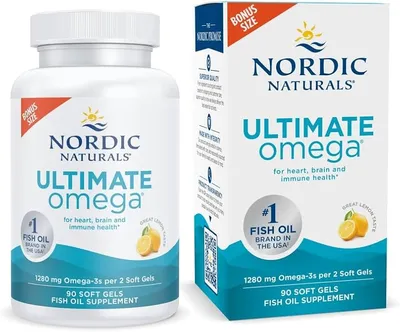
- 1,280 mg of omega-3s per two-softgel serving, including 1,100 mg EPA plus DHA
- Lemon-flavored
- One serving covers a substantial omega-3 gap for non-fish-eaters
- Takes two softgels to reach the labeled amount
- Large softgels can be hard to swallow
- In the VITAL trial, 1 g a day of marine omega-3s did not significantly lower major cardiovascular events
- Should be cleared with a doctor if you take a blood thinner
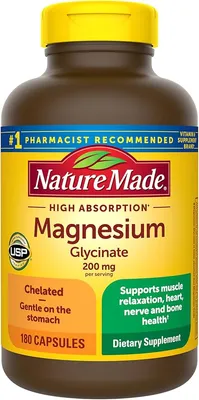
- USP Verified for purity, potency and label accuracy
- 200 mg of magnesium per serving of two capsules, under the 350 mg supplement limit
- Chelated glycinate form is gentle on the stomach
- Widely available at pharmacies and grocery stores
- A serving is two capsules, which some people misread as one
- Capsules are moderately large
- No added glycine or other ingredients beyond the magnesium glycinate
- Not appropriate without medical advice for people with significantly reduced kidney function
Frequently Asked Questions
What supplements should aging adults take every day?
For most adults over 50, the short list is vitamin B12 (2.4 mcg a day for adults 51 and older), vitamin D (at least 600 IU at 51–70 and at least 800 IU after 70), and enough calcium to reach 1,200 mg a day for women 51+ and men 71+ — with food covering as much of that as possible. Magnesium and omega-3 are worth considering only if greens, nuts, beans and seafood are rare in your diet. The National Institute on Aging notes that most older adults can get all the nutrients they need from foods, so each supplement should be filling a gap you can name.
Is 2,000 IU of vitamin D too much for adults over 70?
It is not above the safety ceiling: the recommended amount after 70 is at least 800 IU a day and the upper limit is 4,000 IU, so 2,000 IU falls between the two. Whether you need that much depends on age. The Endocrine Society's 2024 guideline suggests vitamin D for adults 75 and older without testing first, while for healthy adults younger than 75 it suggests against going above the recommended intake to lower disease risk. Ask your doctor which amount fits your situation rather than assuming a higher number is better.
Do I need a multivitamin every day after 60?
Not necessarily. The U.S. Preventive Services Task Force's 2022 review found the evidence insufficient to judge whether multivitamins prevent cardiovascular disease or cancer — meaning they are neither proven helpful nor proven useless for that purpose. A multivitamin can be a reasonable convenience if your eating is irregular, but check that it does not duplicate a separate vitamin D or calcium product you already take.
Is it better to get vitamins from food or from supplements?
Food first. The National Institute on Aging states that it is usually better to get your nutrients from food rather than a pill, and that most older adults can get all the nutrients they need from foods. The main exception is vitamin B12, since some people over 50 have trouble absorbing the B12 that occurs naturally in food and do better with fortified foods or a supplement.
Which supplements should older adults avoid?
The USPSTF recommends against beta-carotene and vitamin E supplements for preventing cardiovascular disease or cancer. Also avoid doses above the published upper limits — 4,000 IU a day of vitamin D, 2,000 mg a day of calcium, and 350 mg a day of supplemental magnesium — and skip products that hide amounts inside a proprietary blend. If you have reduced kidney function or take a blood thinner, check with your doctor before starting anything new.