
Best Fish Oil for Women Over 50 (2026)
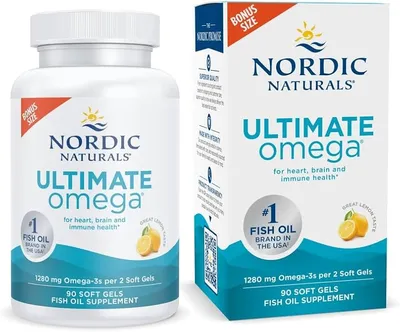
Nordic Naturals Ultimate Omega
The best all-around choice for women over 50 who want a real EPA/DHA dose in an easy-to-tolerate, independently tested form and are willing to pay a premium for it.
- 1,280mg omega-3s (1,100mg EPA+DHA) per 2-softgel serving
- Triglyceride form for better absorption
- IFOS 5-star rated for purity, including mercury, PCBs, and oxidation
If you are a woman over 50 shopping for fish oil, the short version is this: look for a product that gets you to roughly 1,000mg of combined EPA and DHA per day — the dose the American Heart Association cites for people with heart disease — in the triglyceride form, from a brand that publishes third-party purity testing. Nordic Naturals Ultimate Omega hits all three at about $38 a bottle with 1,280mg of omega-3s (1,100mg EPA+DHA) per serving. Kirkland Fish Oil does the job for about $15 if you do not mind swallowing three or four capsules to get there. And if you take a blood thinner or daily aspirin, that conversation with your doctor comes first.
Our Top Picks at a Glance
| Product | Best for | Key spec | Price band | Our rating |
|---|---|---|---|---|
| Nordic Naturals Ultimate Omega | Best overall for women over 50 | 1,280mg omega-3s (1,100mg EPA+DHA) per 2-softgel serving, triglyceride form | About $38 | 4.8/5 |
| Viva Naturals Omega-3 | Best value at high potency | 2,200mg fish oil with 1,400mg EPA/DHA per serving, triglyceride form | About $25 | 4.5/5 |
| Kirkland Fish Oil | Best pure-budget pick | 300mg EPA/DHA per capsule, USP verified | About $15 | 4.2/5 |
| Nordic Naturals DHA Xtra | Best when DHA is the priority | 1,660mg DHA per serving, triglyceride form | About $36 | 4.7/5 |
| Nordic Naturals ProOmega | Also consider | Sold in several EPA/DHA strengths — check the label | About $30 | 4.5/5 |
Prices are approximate and shift with retailer and bottle size. What matters more than the sticker price is the cost per 1,000mg of EPA plus DHA, which is the number we use below.
How We Evaluated
We compared these five products on four things women over 50 tend to care about, in this order: the actual EPA and DHA content per serving (not the “fish oil” number on the front of the bottle), the chemical form of the oil, independent purity and freshness testing, and cost per useful dose.
We leaned hard on third-party verification. The International Fish Oil Standards (IFOS) program and USP Verified both test finished products for what the label promises and for contaminants such as mercury and PCBs. A brand that pays for that testing and publishes the results has skin in the game.
We also weighed the practical stuff that decides whether a bottle gets finished or shoved to the back of a cabinet: softgel size, aftertaste, and how many capsules a day the dose requires. Our ratings and price bands come from our own published product reviews, which are updated as formulations and prices change.
Detailed Reviews
Five products, each with a different job. Read the one that matches your situation rather than assuming the top pick is automatically right for you.
Best Overall: Nordic Naturals Ultimate Omega
Nordic Naturals Ultimate Omega is our top pick for women over 50 who want one bottle that covers general heart and overall omega-3 support without a fuss.Its 1,280mg serving is a little above the roughly 1,000mg a day the American Heart Association cites for people with heart disease.
The oil is in triglyceride form, the same chemical arrangement omega-3s take in whole fish, and it carries an IFOS 5-star rating for purity, covering mercury, PCBs, and oxidation. The lemon flavoring is the reason many long-term users stay with it: fishy repeat is one of the most common complaints about fish oil, and this one keeps it minimal.
Pros
- 1,280mg omega-3s (1,100mg EPA+DHA) per 2-softgel serving, a real dose without pill stacking
- Triglyceride form, associated with better absorption than ethyl esters
- IFOS 5-star rated for purity and freshness
- Lemon-flavored, so minimal fish burps
Considerations
- Premium price at about $38 per bottle
- Two softgels per serving, and they are large
- Costs meaningfully more per bottle than a warehouse-club fish oil
Verdict: The best-documented, easiest-to-tolerate choice for most women over 50, and worth the premium if you plan to take it daily for years.
Best Value at High Potency: Viva Naturals Omega-3
Viva Naturals Omega-3 is the pick when you want a high dose without a premium-brand price. A serving supplies 2,200mg of fish oil with 1,400mg of EPA and DHA, which is more active omega-3 per serving than our top pick, at about $25 a bottle. It is also in triglyceride form and IFOS certified for purity, so you are not trading quality for the lower price.
This is the one we point women toward when a doctor has suggested a higher omega-3 intake, for example for elevated triglycerides, and the concentrated dose keeps the daily capsule count down. Do check with your doctor before going above roughly 2,000mg of EPA/DHA daily from supplements.
Pros
- 1,400mg EPA/DHA per serving, well above a standard 1,000mg softgel
- Triglyceride form for strong absorption
- IFOS certified for purity
- Strong mid-range value at about $25
Considerations
- Contains gelatin, so not an option for vegetarians
- Some users report a mild aftertaste
- Less clinical name recognition than Nordic Naturals
Verdict: The most EPA and DHA per dollar among quality triglyceride-form oils, best for women who need a higher dose without a higher pill count.
Best Budget Pick: Kirkland Fish Oil
Kirkland Fish Oil is the honest budget answer. At about $15 for 400 softgels, it works out to roughly $0.07 per day, and it is USP verified, meaning an independent organization has checked that the contents match the label and meet basic quality standards. For a woman on a fixed budget who wants baseline omega-3 support, this is a legitimate option, not a compromise on safety.
The trade-offs are real, though. Each capsule provides only 300mg of EPA and DHA, so reaching 1,000mg or more means three to four capsules daily. It is also an ethyl ester oil, a processed form that studies suggest is absorbed less efficiently than triglyceride oils, particularly when taken without a meal containing fat. Ethyl ester oils are also the ones most often blamed for fishy repeat.
Pros
- Roughly $0.07 per day, by far the lowest cost here
- USP verified for basic quality assurance
- Widely available at Costco, easy to restock
Considerations
- Only 300mg EPA/DHA per capsule, so 3-4 capsules daily
- Ethyl ester form, lower absorption than triglyceride
- More likely to cause fishy burps and reflux
Verdict: The right choice if cost is the deciding factor and you do not mind a few extra capsules with dinner.
Best High-DHA Option: Nordic Naturals DHA Xtra
DHA is the omega-3 most concentrated in brain and retinal tissue, and some women over 50 come to fish oil specifically with memory and cognitive support in mind rather than heart health. Nordic Naturals DHA Xtra is built for that: 1,660mg of DHA per serving, the highest DHA concentration among the products we review, in triglyceride form and IFOS 5-star certified for purity, potency, and freshness. The strawberry flavoring means no fish taste.
Be clear-eyed about the evidence. Research on omega-3s and cognition in older adults is mixed, and no supplement prevents dementia. A high-DHA oil is a reasonable choice if DHA is your target nutrient, not a substitute for blood pressure control, exercise, and sleep.
Pros
- 1,660mg DHA per serving, the highest concentration we have found
- Triglyceride form for absorption
- IFOS 5-star certified for purity, potency, and freshness
- Strawberry-flavored with no fish taste
Considerations
- Premium price at about $36
- Two large softgels per serving
- Lower EPA content, so not the best fit if heart health is your main goal
Verdict: Choose this only if DHA specifically is what you are after; otherwise a balanced EPA/DHA oil serves most women better.
Also Consider: Nordic Naturals ProOmega
Nordic Naturals ProOmega sits between the value and premium tiers at about $30 and carries a 4.5/5 rating in our reviews. It comes from the same manufacturer as our top pick and is sold in several strengths, so check the EPA/DHA per serving on the label you are holding.
If you already have a bottle in the cabinet, there is no reason to switch. If you are choosing fresh, compare the EPA/DHA per serving printed on the label you are actually holding against our top two picks, since Nordic Naturals sells several ProOmega variations.
Verdict: A solid Nordic Naturals alternative at a slightly lower price, worth grabbing when it is the one available.
Buyer’s Guide: What to Look For After 50
Several things change for women around and after menopause that make fish oil selection a little different than it was at 40.
Read the EPA/DHA number, not the fish oil number
A bottle that shouts “1,000mg Fish Oil” may contain only 300mg of actual EPA and DHA. The rest is other fats. Turn the bottle over and find the line that says EPA and DHA, add them together, and check the serving size, which is often two or three softgels rather than one.
The American Heart Association’s advisory cites about 1,000mg of combined EPA plus DHA daily for people with documented heart disease, and the large prevention trials VITAL and ASCEND used about 840mg; the FDA advises no more than 2,000mg a day from supplements, and the higher doses used for high triglycerides are prescription products. Our guide to how much fish oil a 65 year old should take walks through the dosing math in more detail.
EPA versus DHA balance
EPA and DHA do overlapping but not identical jobs. EPA is the omega-3 most studied for triglyceride lowering and inflammatory markers; DHA is structurally concentrated in brain and eye tissue. For most women over 50, a balanced oil with more EPA than DHA, which is how Nordic Naturals Ultimate Omega and Viva Naturals Omega-3 are formulated, is the sensible default. Reach for a high-DHA product only when DHA is your specific goal.
Post-menopause bone and heart considerations
Estrogen decline after menopause accelerates bone loss and shifts cardiovascular risk. Some observational research has linked higher omega-3 intake with better bone density measures, but the evidence is preliminary and inconsistent, and fish oil is not a bone treatment. The load-bearing items for bone after 50 remain adequate calcium and vitamin D, resistance exercise, and, where indicated, prescription therapy your doctor recommends.
On the heart side, the picture is honest but modest. The NIH Office of Dietary Supplements notes that omega-3 supplements can lower triglyceride levels, while findings on preventing heart attacks and strokes in people without established heart disease have been mixed across large trials. Treat fish oil as one supporting piece, not the centerpiece.
Triglyceride form versus ethyl ester
Natural fish oil is in triglyceride form. Concentrating it usually converts the oil to ethyl esters, and some manufacturers then convert it back, which costs more. Triglyceride-form oils tend to be better absorbed and less prone to fishy repeat. Nordic Naturals Ultimate Omega, Viva Naturals Omega-3, and Nordic Naturals DHA Xtra are triglyceride form; Kirkland Fish Oil is ethyl ester, which is part of why it costs so much less.
Third-party testing and freshness
Fish oil oxidizes, and rancid oil both tastes bad and defeats the purpose. Look for an IFOS certificate, USP Verified marking, or ConsumerLab approval, and check the expiration date on the bottle before you buy. Store the bottle in a cool, dark place, or in the refrigerator if the label allows it.
Red flags: a “proprietary omega blend” that hides the actual EPA and DHA milligrams, no lot-level testing information anywhere on the site, and marketing that promises to cure or reverse anything.
Practical tricks for burps and swallowing
Take fish oil with your largest meal of the day, which improves absorption and cuts reflux. Flavored softgels help. Some people keep the softgels in the freezer and find it cuts down on repeat; there is no formal evidence for it, but it is harmless to try. If capsule size is the barrier, a higher-concentration product like Viva Naturals Omega-3 means fewer pills, and liquid fish oils are another route worth asking your pharmacist about.
If you are weighing fish oil against other omega-3 sources, our comparison of fish oil vs krill oil covers the cost and absorption differences.
What you probably do not need
You do not need a fish oil marketed specifically “for women” with added evening primrose or a token dose of biotin. Those additions raise the price without raising the EPA and DHA. You also do not need 3,000mg-a-day megadoses unless a doctor prescribed them for high triglycerides. And the DREAM trial, published in the New England Journal of Medicine in 2018, tested 3,000mg of EPA/DHA daily for a year in 535 adults with dry eye disease and found no significant benefit over placebo, so do not buy fish oil expecting dry eye relief.
Safety, Interactions, and When to See Your Doctor
Fish oil is well tolerated by most people, but it is not a neutral supplement, and after 50 the medication list usually gets longer.
The most important interaction is bleeding risk. Omega-3s can modestly reduce platelet aggregation, and combining them with warfarin, apixaban, rivaroxaban, clopidogrel, or daily aspirin may increase the chance of bruising or bleeding. That does not automatically rule fish oil out, but it does mean the decision belongs to you and your doctor together, not to a product review.
Some other points to raise at your next appointment:
- Upcoming surgery or a dental procedure. Many surgeons ask patients to stop fish oil about a week beforehand.
- Atrial fibrillation. Several large trials found a small increase in atrial fibrillation with higher-dose omega-3s, so mention it if you have a history of irregular heartbeat.
- High triglycerides. Prescription omega-3 products exist at doses well above over-the-counter supplements, and your doctor may prefer one.
- Fish or shellfish allergy. Ask your pharmacist about algae-based DHA/EPA alternatives.
- Dose limits. The FDA advises consuming no more than 3 grams per day of EPA and DHA combined from all sources, with no more than 2 grams per day of EPA and DHA from dietary supplements.
Call your doctor if you notice unusual bruising, nosebleeds, blood in the stool, or a heartbeat that feels irregular after starting a fish oil supplement.
Bring the actual bottle to your appointment or pharmacy so the label can be read directly, and consult your doctor or pharmacist before adding fish oil to your routine, especially if you take prescription medication. For a broader look at options that are not framed around women specifically, see our roundup of the best omega-3 fish oil supplements for seniors.
Sources:
- Siscovick DS et al. Omega-3 Polyunsaturated Fatty Acid (Fish Oil) Supplementation and the Prevention of Clinical Cardiovascular Disease: A Science Advisory From the American Heart Association. Circulation. 2017;135:e867-e884 — the ~1 g/day EPA+DHA figure for people with documented coronary heart disease
- Manson JE et al. Marine n-3 Fatty Acids and Prevention of Cardiovascular Disease and Cancer (VITAL). N Engl J Med. 2019;380:23-32 — 840 mg/day EPA+DHA in 25,871 adults
- ASCEND Study Collaborative Group. Effects of n-3 Fatty Acid Supplements in Diabetes Mellitus. N Engl J Med. 2018;379:1540-1550 — 840 mg/day EPA+DHA in 15,480 adults with diabetes
- Omega-3 Fatty Acids — Health Professional Fact Sheet, NIH Office of Dietary Supplements — Supports the FDA guidance of no more than 3 g/day EPA+DHA from all sources and no more than 2 g/day from supplements, triglyceride lowering, and mixed cardiovascular outcomes.
- n-3 Fatty Acid Supplementation for the Treatment of Dry Eye Disease (DREAM trial), New England Journal of Medicine, 2018 — Supports the statement that 3,000mg daily EPA/DHA for 12 months in 535 adults showed no significant benefit over placebo for dry eye.
- Omega-3 fatty acids (fish oil) — Mayo Clinic Drugs and Supplements — Supports bleeding-risk interaction with anticoagulants and antiplatelet drugs, and general safety guidance.
- Fish Oil Supplements — Cleveland Clinic — Supports side-effect guidance including burping, fishy aftertaste, and heartburn.
- Associations of long chain polyunsaturated fatty acids with bone mineral density and bone turnover in postmenopausal women, European Journal of Nutrition, 2022 — Supports the statement that observational research has linked omega-3 intake with bone density measures in postmenopausal women, while noting the findings are preliminary.
- Marine Omega-3 Supplementation and Cardiovascular Disease: An Updated Meta-Analysis, Circulation, 2021 — Supports the statement that higher-dose omega-3 supplementation has been associated with a small increase in atrial fibrillation risk.
- Nordic Naturals Ultimate Omega product page — Manufacturer page for Ultimate Omega formulation details including triglyceride form and lemon flavoring.
All Products We Reviewed
- 1,280mg omega-3s (1,100mg EPA+DHA) per 2-softgel serving
- Triglyceride form for better absorption
- IFOS 5-star rated for purity, including mercury, PCBs, and oxidation
- Lemon-flavored, so minimal fish burps
- Premium price at about $38
- Two softgels per serving
- Large softgel size may be hard to swallow
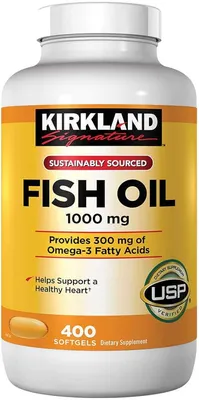
- Roughly $0.07 per day, about $15 for 400 softgels
- USP verified for basic quality assurance
- Widely available at Costco
- Only 300mg EPA/DHA per capsule, so 3-4 daily
- Ethyl ester form with lower absorption than triglyceride
- More likely to cause fishy burps and reflux

- 2,200mg fish oil with 1,400mg EPA/DHA per serving
- Triglyceride form for strong absorption
- IFOS certified for purity
- Good mid-range price at about $25
- Contains gelatin, not suitable for vegetarians
- Some users report a mild aftertaste
- Less clinical recognition than Nordic Naturals

- 1,660mg DHA per serving, the highest concentration available
- Triglyceride form for best absorption
- IFOS 5-star certified for purity, potency, and freshness
- Strawberry-flavored with no fish taste
- Premium price at about $36
- Two large softgels per serving
- Lower EPA content, so not ideal if heart health is the main goal
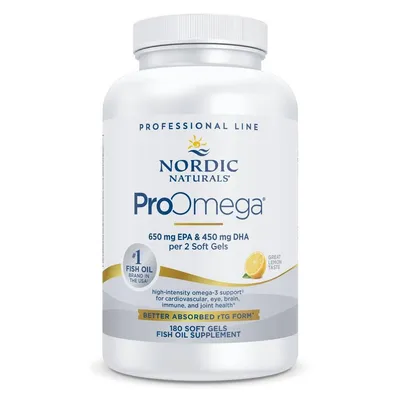
- From the same manufacturer as our top pick
- Mid-tier price at about $30
- 4.5/5 in our reviews
- Sold in several variations, so EPA/DHA per serving differs by label
- Costs more than budget fish oils
Frequently Asked Questions
How much fish oil should a woman over 50 take?
The American Heart Association's science advisory cites about 1,000mg of combined EPA plus DHA per day for people with documented heart disease, and the large prevention trials VITAL and ASCEND used about 840mg — figures that are different from the total fish oil number on the front of the bottle. The FDA advises no more than 3 grams per day of EPA and DHA combined from all sources, with no more than 2 grams per day coming from dietary supplements. Higher doses are sometimes prescribed for elevated triglycerides, but only under a doctor's supervision.
What is the best omega 3 supplement for women over 60?
The same criteria apply after 60 as after 50: roughly 1,000mg of combined EPA plus DHA a day unless your doctor prescribes more, triglyceride form, and independent purity testing. Nordic Naturals Ultimate Omega is our top pick at about $38 for 1,280mg of omega-3s (1,100mg EPA+DHA) per serving, and Kirkland Fish Oil is the budget option at about $15. Because medication lists tend to be longer after 60, check the interaction question with your pharmacist first.
Does fish oil help with menopause symptoms?
The evidence here is thin and inconsistent. A few small trials have looked at omega-3s and hot flashes with mixed results, and fish oil is not considered a treatment for menopausal symptoms. Women over 50 generally take fish oil for triglyceride and overall heart support, not for vasomotor symptoms.
Can I take fish oil if I am on a blood thinner?
Sometimes, but only with your doctor's approval. Omega-3s can modestly reduce platelet clumping, so combining them with warfarin, apixaban, clopidogrel, or daily aspirin may raise bleeding risk. Your doctor may still approve a moderate dose, adjust monitoring, or advise stopping fish oil before surgery or dental work.
How do I stop fish oil burps?
Take the softgels with your largest meal, choose a flavored triglyceride-form product such as Nordic Naturals Ultimate Omega, or try keeping the softgels in the freezer — some people find it cuts the fishy repeat. Ethyl ester oils like Kirkland Fish Oil are the most likely to cause repeat, so switching forms often solves the problem on its own.