
Saw Palmetto, Pygeum, and Nettle Root for Prostate Health: Which Works, and Do You Need All Three?

Life Extension Ultra Prostate Formula
The only product here that supplies saw palmetto, pygeum, and nettle root together, plus beta-sitosterol, lycopene, and boswellia. Best for men who want the most complete prostate formula and are comfortable paying about $28 a month for it.
- Comprehensive formula: saw palmetto, beta-sitosterol, pygeum, nettle and lycopene in one softgel
- Six clinically studied prostate ingredients at clinically relevant doses
- Includes AprèsFlex boswellia, a patented fast-absorbing form, for inflammation support
If you have compared prostate supplements lately, you have seen these three names stacked on almost every label. Here is what the research actually shows: saw palmetto has been tested the most and performed the worst in the largest trials, pygeum and nettle root have smaller and older studies that look more promising, and buying all three separately usually costs more than one well-built combination formula. Saw palmetto alone runs about $14 a month; a six-ingredient formula runs about $28. And before any of it, a new urinary symptom after 50 deserves a proper medical workup.
The Short Answer
If you are going to try one ingredient, pygeum has the most favorable trial record relative to its size, and nettle root is the best-supported partner for it. Saw palmetto has by far the most research behind it, but the biggest and best-designed studies — a 2012 Cochrane review pooling 32 trials and 5,666 men, plus the NIH-funded STEP and CAMUS trials — found it no better than a placebo for benign prostatic hyperplasia (BPH) symptoms. That is an uncomfortable finding for the most popular prostate herb on the shelf, and it deserves to be said plainly.
That does not make saw palmetto worthless. It is inexpensive, well tolerated, and some men do report fewer nighttime trips to the bathroom on it. At about $14 a month for a standardized 320 mg dose, an eight-week trial is a low-cost experiment. It is simply not the sure thing the marketing suggests.
Do you need all three? Probably not as three separate bottles. The ingredients overlap in their proposed anti-inflammatory effects, and buying them individually can run $45 or more a month. A single combination formula — Life Extension Ultra Prostate Formula at about $28 a month is the one in our catalog that contains all three — is the practical way to cover the family. If money is tight, start with saw palmetto alone and judge after eight to twelve weeks.
Saw Palmetto vs Pygeum vs Nettle Root: Head-to-Head
| Saw palmetto (Serenoa repens) | Pygeum (Prunus africana) | Nettle root (Urtica dioica) | |
|---|---|---|---|
| What it is | Fat-soluble extract of the berry | Extract of the African cherry tree bark | Extract of the root, not the leaf |
| Proposed mechanism | May partly block 5-alpha-reductase, the enzyme that converts testosterone to DHT; anti-inflammatory effects on prostate tissue | Anti-inflammatory; may act on bladder muscle and prostate growth factors | May bind sex hormone-binding globulin and reduce prostate inflammation |
| Size of evidence base | Largest — dozens of trials, thousands of men | Moderate — 18 trials, 1,562 men, mostly small and short | Smallest — one large 6-month trial plus combination studies |
| Direction of evidence | Mixed, and negative in the largest trials | Modestly positive, but older studies of uneven quality | Modestly positive, thinner than the other two |
| Typical studied dose | 320 mg/day standardized to 85–95% fatty acids and sterols | 100–200 mg/day standardized bark extract | 120 mg, two to three times daily |
| Common downsides | Mild stomach upset, headache; theoretical bleeding concern with blood thinners | Nausea, stomach upset; sustainability concerns for the tree | Mild diuretic effect; may lower blood pressure and blood sugar |
| Cost per month in our catalog | About $14 (NOW Saw Palmetto Extract 320mg) | Not sold on its own — combination formulas only | Root not stocked separately; leaf products are a different thing |
| Best suited to | A first, cheap trial for mild symptoms | Men who saw nothing from saw palmetto, especially with nighttime waking | Use inside a combination formula |
One practical note before the research sections: pygeum is a gap in most supplement aisles. Standalone pygeum capsules are uncommon and inconsistently standardized, which is why the ingredient usually shows up inside blends.
What the Research Says About Saw Palmetto
Saw palmetto is the extract of the berry of a small palm native to the southeastern United States. The theory is reasonable: its fatty acids appear to interfere modestly with 5-alpha-reductase, the same enzyme targeted by prescription drugs such as finasteride, and it may calm inflammation in prostate tissue.
The trials, unfortunately, have not cooperated. The STEP trial, published in the New England Journal of Medicine in 2006, randomized 225 men with moderate to severe BPH to 160 mg of saw palmetto twice daily or placebo for one year. Symptom scores and urine flow improved slightly in both groups, with no meaningful difference between them. The follow-up CAMUS trial, published in JAMA in 2011, tried to rule out under-dosing: 369 men took escalating doses up to 960 mg a day — triple the usual amount — for 72 weeks. Again, no advantage over placebo.
The 2012 Cochrane review by Tacklind and colleagues pooled 32 randomized trials covering 5,666 men and reached the same conclusion: saw palmetto, alone or at double and triple doses, did not improve urinary symptom scores, peak urine flow, or prostate size compared with placebo. Cochrane reviews are the closest thing supplement research has to a verdict, and this one was not kind.
Why some men still swear by it
Two things can both be true. Older European trials, often using a specific hexane extract and shorter follow-up, did report benefits, and individual men do notice fewer nighttime bathroom trips. Placebo response in BPH studies is famously large — symptom scores routinely improve 20–30% on sugar pills — so some of that is expectation, some may be regression to the mean, and some may be a real response in a subgroup we cannot yet identify.
The safety picture is the reassuring part. According to the NIH’s National Center for Complementary and Integrative Health, saw palmetto is generally well tolerated, with mild digestive upset and headache being the usual complaints. It also does not appear to meaningfully lower PSA readings the way finasteride does, which matters because a falsely low PSA can mask a problem. Even so, tell your doctor you are taking it before any PSA test.
What the Research Says About Pygeum
Pygeum comes from the bark of Prunus africana, an evergreen used in traditional African medicine and prescribed for decades in France and Italy. Its phytosterols and pentacyclic triterpenes appear to act mainly as anti-inflammatories rather than as hormone blockers.
The key evidence is a 2002 Cochrane review by Wilt and colleagues, which pooled 18 randomized trials in 1,562 men. Men taking pygeum were roughly twice as likely to report an overall improvement in symptoms than men on placebo. Nighttime urination fell by about 19%, residual urine volume by about 24%, and peak urine flow rose by about 23%. Side effects were mild and no more common than with placebo — mostly stomach upset.
Those numbers look better than anything saw palmetto has produced, so read the fine print. The trials averaged only about two months, most enrolled fewer than 100 men, standardization varied from product to product, and reporting standards in the 1980s and 1990s were looser than today. Cochrane’s own conclusion was that pygeum “may be a useful treatment option” but that larger, longer, modern trials were needed. More than twenty years later, they still have not been done.
Dose, form, and a sustainability caveat
Trials generally used 75–200 mg a day of a standardized bark extract, often split into two doses, with 100 mg twice daily a common regimen. Look for a label that names the standardization (commonly 13% total sterols or 2.5% phytosterols); a blend that simply says “pygeum bark” with no extract ratio tells you nothing about potency.
One ethical note worth knowing: wild Prunus africana has been heavily harvested and is listed under CITES trade protections. Brands that source from cultivated or certified-sustainable bark are the better choice.
What the Research Says About Nettle Root
Nettle root is the least familiar of the three and the most often misunderstood. Laboratory work suggests its lignans bind sex hormone-binding globulin and that its compounds reduce prostate cell inflammation, though the mechanism is still unsettled.
The standout human study is a six-month randomized, double-blind, placebo-controlled trial by Safarinejad published in 2005, enrolling 620 men with BPH and giving 120 mg of nettle root extract three times daily. About 81% of the nettle group reported improved lower urinary tract symptoms compared with 16% of the placebo group, with average symptom scores falling from roughly 19.8 to 11.8 and peak urine flow improving substantially. Those are strong numbers from a single trial that has never been replicated at that scale — which is exactly why nettle root is best described as promising rather than proven.
Nettle root is also the ingredient with the most relevant drug interactions for adults over 60. It has a mild diuretic effect and may modestly lower blood pressure and blood glucose. If you take a thiazide or loop diuretic, a blood-pressure medication, or a diabetes drug such as metformin or a sulfonylurea, talk to your pharmacist before adding it.
Nettle root is not nettle leaf
This trips up more shoppers than any other detail in the prostate aisle. Prostate research uses the root. Nettle leaf is the form studied for seasonal allergy symptoms — including a small 1990 Planta Medica trial using 300 mg of freeze-dried leaf twice daily — and it has no meaningful BPH evidence behind it.
Solaray Stinging Nettle Leaf, which supplies 450 mg of freeze-dried nettle leaf per capsule for about $15 a bottle (under $0.20 per day), is a perfectly good, inexpensive allergy-season product with a very low side-effect profile. It is not a substitute for nettle root, and we would not buy it for prostate symptoms. Read the label for the word “root.”
Do You Need All Three?
The argument for combining them is that they work through different proposed pathways — hormonal, anti-inflammatory, and hormone-binding — so a blend covers more ground than any single herb. There is some human evidence behind the pairing specifically. A 48-week German trial of roughly 500 men compared a fixed combination of 160 mg saw palmetto plus 120 mg nettle root against finasteride and found similar improvements in symptom scores, though the study had no placebo arm, which limits what it proves.
The argument against is arithmetic. Bought separately, a saw palmetto at $14, a nettle root at around $15, and a standardized pygeum — if you can find one — easily exceeds $45 a month for three bottles and four to six capsules a day. A well-dosed combination formula costs less and is far easier to stick with. Adherence matters: none of these ingredients show anything in under eight weeks.
The honest middle position is this. If your symptoms are mild — an occasional slow start, one nighttime trip — start with saw palmetto alone for twelve weeks and judge. If symptoms are moderate, or if saw palmetto did nothing, a combination formula that includes pygeum and nettle root gives you more shots on goal for about $28. If symptoms are severe, supplements are not the answer and a urologist is. For a wider look at what else belongs in the category, including beta-sitosterol and zinc, see our guide to the best prostate supplements for men over 50.
Which Should You Choose?
If you are trying a prostate supplement for the first time
Start with a standardized saw palmetto at 320 mg a day for eight to twelve weeks, and keep a simple log of nighttime bathroom trips. It is the cheapest, most widely available option, and a single ingredient makes it easy to tell whether anything changed. Just go in knowing the large trials were negative.
If saw palmetto did nothing after three months
Do not simply raise the dose — CAMUS tested up to 960 mg a day and found no extra benefit. Switch pathways instead. Pygeum at 100–200 mg a day of a standardized bark extract, or a combination formula that includes both pygeum and nettle root, is the more sensible next step.
If nighttime urination is your main complaint
Pygeum has the most direct data here: the Cochrane pooled analysis found about a 19% reduction in nocturia. Since standalone pygeum is hard to source reliably, a combination formula is usually the practical route.
If you take blood pressure or diabetes medication
Be cautious with nettle root, which may add to the blood-pressure-lowering and glucose-lowering effects of your prescriptions and has a mild diuretic action of its own. Saw palmetto alone is the simpler choice, and your pharmacist can check the full list.
If you take warfarin or another blood thinner
Saw palmetto has been linked to isolated bleeding reports, and the interaction data are thin rather than reassuring. Do not start any of these three without medical clearance.
If you want the single best-evidenced non-drug option
That is arguably beta-sitosterol, not any of these three. We compare the two directly in saw palmetto vs beta-sitosterol, and a good combination formula includes both.
Our Picks
Best overall: Life Extension Ultra Prostate Formula
This is the only product in our catalog that puts saw palmetto, pygeum, and nettle root in the same softgel, alongside beta-sitosterol, lycopene, and AprèsFlex boswellia for inflammation support — six clinically studied ingredients at clinically relevant doses, from a brand with strong third-party testing. At about $28 a month, or roughly $0.93 a day, it is the most expensive option here, it requires two softgels daily, and the softgels are on the large side. It may also interact with prescription prostate medications, so clear it with your doctor if you take tamsulosin, finasteride, or dutasteride. Our full write-up is here: Life Extension Ultra Prostate Formula review.
Best value: NOW Saw Palmetto Extract 320mg
NOW Saw Palmetto Extract 320mg delivers the classic 320 mg clinical dose of standardized liposterolic extract (85–95% fatty acids and sterols) from a GMP-certified manufacturer for about $14 a month. It is the cleanest way to test one variable at a time, and it combines easily with anything else you take. The honest caveat is the one running through this whole article: the NIH-funded STEP and CAMUS trials found no benefit over placebo, and a single ingredient may not be enough for moderate to severe symptoms. The softgels contain gelatin, so they are not vegetarian.
Alternative: Gaia Herbs Saw Palmetto
Gaia Herbs Saw Palmetto costs about $22 a month and is standardized to the same 85–95% fatty acid fraction, with the company’s Purity-Tested program and full batch traceability behind it. Worth considering if verified sourcing matters more to you than price. It is still a single-ingredient saw palmetto, so it carries the same mixed evidence, and it should be avoided with blood thinners without medical clearance.
Allergy season, not prostate: Solaray Stinging Nettle Leaf
We are including Solaray Stinging Nettle Leaf mainly to prevent a common mistake. At about $15 a bottle — under $0.20 a day — it provides 450 mg of freeze-dried nettle leaf, the form used in the 1990 Mittman allergy trial at 300 mg twice daily. It is well tolerated with very few interactions, though its mild diuretic effect may not pair well with diuretic medications, and the evidence base rests on a single positive trial. For prostate symptoms, you want nettle root instead.
When to Talk to Your Doctor
This is the part that matters more than any product comparison. New or worsening urinary symptoms after 50 need a medical workup before you self-treat. A weak stream, urgency, frequent night waking, or incomplete emptying can come from BPH, but they can also come from a urinary tract infection, bladder stones, a neurological condition, medication side effects, or prostate cancer. Supplements do not distinguish between those causes, and months spent trying herbs is time a diagnosis is not being made. Ask your doctor for an evaluation, which typically includes a symptom questionnaire, a physical exam, and a discussion about PSA testing.
Call your doctor promptly, not eventually, if you have blood in your urine, cannot urinate at all, have fever with urinary symptoms, or notice sudden worsening.
Bring your pharmacist into the conversation too, with your full medication list. Nettle root may add to the effects of blood-pressure medications, diabetes medications, and diuretics. Saw palmetto has isolated reports of bleeding with anticoagulants and antiplatelet drugs. Pygeum can cause stomach upset and has not been well studied alongside prescription BPH drugs. Combination formulas may interact with alpha-blockers and 5-alpha-reductase inhibitors. And if you are scheduled for surgery, most clinicians advise stopping herbal supplements one to two weeks beforehand.
The bottom line: give any of these three at least eight to twelve weeks before judging, track one or two concrete measures such as nighttime trips rather than a vague sense of improvement, and treat supplements as an addition to medical care rather than a replacement for it.
Sources:
- Serenoa repens for benign prostatic hyperplasia (Cochrane Database of Systematic Reviews, 2012) — Pooled 32 randomized trials and 5,666 men; saw palmetto no better than placebo for urinary symptoms, flow rate, or prostate size, even at double and triple doses.
- Saw Palmetto for Benign Prostatic Hyperplasia (STEP trial, New England Journal of Medicine, 2006) — 225 men, 160 mg twice daily for one year, no difference from placebo in symptom scores or urine flow.
- Effect of Increasing Doses of Saw Palmetto Extract on Lower Urinary Tract Symptoms (CAMUS trial, JAMA, 2011) — 369 men, escalating doses to 960 mg/day for 72 weeks, no benefit over placebo.
- Pygeum africanum for benign prostatic hyperplasia (Cochrane Database of Systematic Reviews, 2002) — 18 trials, 1,562 men; roughly twofold greater likelihood of reported symptom improvement, 19% reduction in nocturia, 24% reduction in residual urine, 23% increase in peak flow; trials were small and short.
- Safarinejad MR. Urtica dioica for treatment of benign prostatic hyperplasia: a randomized, double-blind, placebo-controlled study (PubMed) — 620 men, 120 mg nettle root extract three times daily for six months; 81% reported improved symptoms versus 16% on placebo.
- Combined sabal and urtica extract compared with finasteride in men with BPH (PubMed) — 48-week trial of roughly 500 men comparing fixed saw palmetto plus nettle root combination with finasteride; similar symptom score improvement, no placebo arm.
- Saw Palmetto — National Center for Complementary and Integrative Health (NIH) — Safety profile, tolerability, and summary of evidence that saw palmetto is no more effective than placebo for BPH.
- Benign prostatic hyperplasia (BPH) — Mayo Clinic — Symptoms of BPH and the warning signs that require prompt medical evaluation.
- Prunus africana — CITES Appendix II listing (Convention on International Trade in Endangered Species) — Confirms international trade protection for the pygeum source tree due to overharvesting.
All Products We Reviewed
- Comprehensive formula: saw palmetto, beta-sitosterol, pygeum, nettle and lycopene in one softgel
- Six clinically studied prostate ingredients at clinically relevant doses
- Includes AprèsFlex boswellia, a patented fast-absorbing form, for inflammation support
- Reputable brand with strong third-party testing
- Most expensive option at about $28 a month, roughly $0.93 per day
- Requires two softgels per day
- Large softgels may be difficult for those who struggle to swallow capsules
- May interact with prescription prostate medications
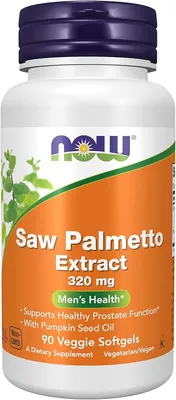
- Classic 320 mg clinical research dose
- Standardized liposterolic extract, 85–95% fatty acids and sterols
- About $14 a month and widely available
- GMP certified manufacturing
- Single ingredient, so it is easy to combine with other supplements
- Clinical evidence is mixed; the NIH-funded STEP and CAMUS trials found no benefit over placebo
- May not be enough on its own for moderate to severe BPH symptoms
- Softgels contain gelatin, so not vegetarian
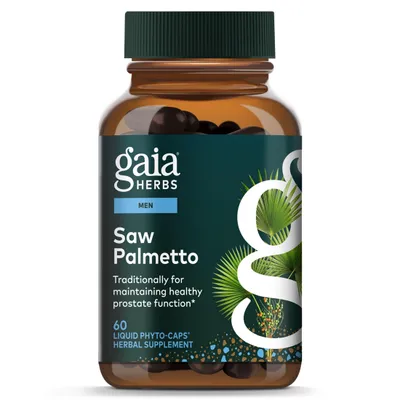
- Standardized to 85–95% fatty acids, the active saw palmetto fraction
- Purity-Tested program with full batch traceability
- Well tolerated, with an established safety record in men's health use
- Costs about $22 a month, more than comparable single-ingredient saw palmetto
- Single ingredient, so no pygeum or nettle root
- Should be avoided with blood thinners without medical clearance
- Shares saw palmetto's mixed clinical evidence
- 450 mg freeze-dried nettle leaf per capsule
- Matches the form and dose range used in the 1990 Mittman Planta Medica allergy trial (300 mg twice daily)
- Affordable at under $0.20 per day
- Generally well tolerated with a very low side effect profile
- Leaf, not root — the prostate evidence is for nettle root
- Evidence base rests on a single positive trial
- Mild diuretic effect may not pair well with diuretic medications
Frequently Asked Questions
Can you take saw palmetto and pygeum together?
Yes — they are frequently combined in commercial prostate formulas and act through different proposed pathways, so there is no known reason they conflict. Typical combined dosing is 320 mg of standardized saw palmetto plus 100–200 mg of standardized pygeum bark extract daily. Buying one combination product is usually cheaper and easier to stick with than two bottles, but check with your pharmacist if you take blood thinners or prescription BPH medication.
Is nettle root or nettle leaf better for prostate health?
Nettle root is the form studied for prostate symptoms, including a six-month trial of 620 men using 120 mg three times daily. Nettle leaf is a different preparation studied mainly for seasonal allergy symptoms and has no meaningful BPH evidence. If a label says only "stinging nettle" or "nettle leaf," it is not the prostate ingredient you are looking for.
How long does it take for saw palmetto to work?
If it works for you at all, most trials looked for change at eight to twelve weeks, and some ran a full year. Nothing about these herbs works in days. Give a standardized 320 mg daily dose at least eight weeks, track a concrete measure such as the number of nighttime bathroom trips, and stop if nothing has changed by twelve weeks.
Does saw palmetto lower PSA levels?
Current evidence suggests saw palmetto does not meaningfully lower PSA the way finasteride does, which roughly halves PSA readings. That is generally a good thing, since a falsely low PSA can hide a problem. Still, tell your doctor about every supplement you take before a PSA test so results are interpreted correctly.
Why is pygeum so hard to find on its own?
Wild African cherry bark is subject to international trade protections because of overharvesting, and standardized extracts are costly to produce, so most brands include pygeum inside combination formulas rather than selling it alone. If you want pygeum, a multi-ingredient prostate formula is usually the practical route. Look for a label that states the standardization, such as 13% total sterols.