
What Helps Leg Cramps at Night After 50? What Works, What Doesn't
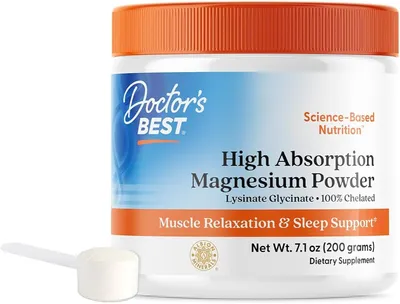
Doctor's Best Magnesium Glycinate
Worth trying if you're on a diuretic or acid reducer, or think your diet runs low — not a guaranteed cramp fix, but a gentle, well-absorbed option.
If a charley horse in your calf or foot has been snapping you awake more often since you turned 50, you’re dealing with one of the most common — and most over-supplemented — complaints in aging bodies. Most adults over 60 get nighttime leg cramps at least occasionally, and for a good share of them, the cramps show up often enough to wreck a night’s sleep.
The honest version of what helps: gentle stretching before bed and a look at your medication list do more good than any pill on the shelf. Magnesium is the most heavily marketed fix, but the research in older adults is underwhelming for ordinary cramps — though there are real exceptions where it’s worth a try. Here’s what the evidence actually supports, and what’s mostly marketing.
The short honest answer
- Stretching and a medication review beat supplements. Gentle calf and hamstring stretches before bed have modest trial support, and checking your medication list with a pharmacist is one of the highest-yield moves you can make.
- Magnesium is reasonable to try, not a proven cure. A Cochrane review found it’s unlikely to meaningfully help ordinary night cramps in older adults — but if you’re on a diuretic or acid reducer, or eat little magnesium-rich food, a trial may still be worthwhile.
- Quinine works but isn’t worth the risk. It genuinely reduces cramps, but the FDA warns against using it because of rare, serious blood and heart reactions. Tonic water doesn’t have nearly enough quinine to help.
- When a cramp hits, move — don’t wait it out. Standing and flexing your foot upward toward your shin, or sipping a couple of ounces of pickle juice, tends to break a cramp fastest.
- Some cramps are a signal, not a nuisance. Calf pain that shows up while walking and eases with rest, or cramps with swelling or skin changes, deserve a doctor visit.
Why night cramps get worse after 50
Nighttime leg cramps aren’t random, and as Mayo Clinic’s overview of night leg cramps explains, they typically involve the calf, foot, or thigh muscles seizing without warning. A handful of age-related changes stack up to make them more common after 50, and most people have more than one at play.
Nerves get more excitable
As we age, the nerves that control muscle contraction become somewhat more prone to misfiring, especially when a muscle is held shortened for hours at a time — like when your foot points downward under a tucked-in sheet. That misfire is what triggers the sudden, involuntary contraction you feel as a cramp.
Muscle mass declines
Muscle naturally shrinks and loses some conditioning with age, a process that speeds up if you sit more than you used to. Less-conditioned muscle fibers seem to cramp more easily, particularly after a day of unusual activity — a long walk, yard work, or a hike you’re not used to.
Medications play a bigger role than people realize
By your 50s and 60s, you’re more likely to be on one or more medications for blood pressure, cholesterol, or breathing — and several common categories are linked to cramping. More on this below, because it’s one of the most fixable pieces of the puzzle.
Dehydration adds fuel
Mild dehydration, which becomes more common with age as thirst signals weaken, can make muscles more cramp-prone. If you’re waking up thirsty or noticing dark urine, hydration is worth addressing on its own. Our guide on why you’re more dehydrated as you age covers why this gets harder to notice after 50.
The magnesium question
Magnesium is the first thing almost everyone reaches for, and it’s easy to see why — it’s cheap, widely available, and marketed hard for cramps. The honest evidence is more mixed than the marketing suggests.
A Cochrane review — one of the most rigorous forms of evidence review — looked at magnesium for ordinary (idiopathic) night cramps and concluded it’s unlikely to provide meaningful benefit for most older adults. Part of the reason is that cramp trials tend to have a large placebo effect: people who take a sugar pill often report fewer cramps too, which makes any real benefit hard to detect.
That doesn’t mean magnesium is pointless for everyone. If you take a diuretic (water pill) or an acid-reducing medication — both of which can lower magnesium levels over time — or if your diet runs low on magnesium-rich foods, a trial is reasonable. You may genuinely be correcting a deficiency rather than chasing a placebo effect, and magnesium may also help you fall asleep more easily, which is a real benefit even if the cramps don’t fully resolve.
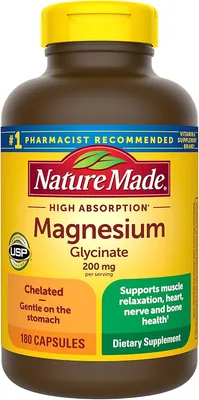
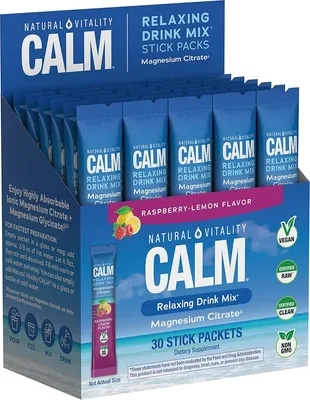
If you decide to try it, a straightforward glycinate form — such as Doctor’s Best Magnesium Glycinate or the more budget-friendly Nature Made Magnesium Glycinate — tends to be gentler on digestion than other forms. Natural Vitality Calm, a magnesium citrate powder, is another option some people prefer because the dose is easy to adjust, though citrate is more likely to loosen your stool than glycinate. None of these should be sold to you as a guaranteed cramp fix — think of them as a reasonable, low-risk experiment, best discussed with your doctor if you’re on other medications. For a deeper look at how the forms differ, see our magnesium glycinate vs. citrate vs. oxide comparison.
What actually helps tonight
Two things have more consistent support than any supplement: stretching before bed, and knowing what to do the moment a cramp starts.
Before bed:
- Stand about arm’s length from a wall, step one foot back, and lean forward gently until you feel a stretch in the back calf. Hold for 20-30 seconds per side.
- Sit on the edge of the bed, extend one leg, and reach gently toward your toes to stretch the hamstring.
- Untuck the top sheet and blankets at the foot of the bed, or sleep with your feet free, so your toes aren’t held pointed downward all night — that position seems to make cramps more likely.
When a cramp hits:
- Stand up if you can, and put weight on the cramping leg.
- Flex your foot upward toward your shin, or have someone else do it for you if standing isn’t safe.
- A couple of ounces of pickle juice, sipped when the cramp starts, may shorten it — small studies in athletes suggest it works through a nerve reflex rather than by replacing electrolytes. It’s harmless for most people and worth keeping on hand if you find it helps.
Staying hydrated through the day supports all of this too — it’s much easier to prevent a cramp-friendly state than to fix one at 2 a.m.
The medication review nobody does
This is the step most people skip, and it may be the single highest-yield move available. Several medication categories are associated with nighttime leg cramps:
- Diuretics (“water pills”) for blood pressure or fluid retention
- Statins, used for cholesterol
- Long-acting beta-agonist inhalers, sometimes prescribed for asthma
None of this means you should stop a medication on your own — these drugs are often doing important work for your heart, blood pressure, or lungs. But it does mean a medication review is worth doing. Bring your full list to your pharmacist or doctor and ask directly whether any of them could be contributing to your cramps, and whether an alternative or dose adjustment is worth considering. Pharmacists are often better positioned than a rushed doctor’s visit to spot these patterns across your full medication list.
Electrolytes and food-first potassium
Electrolyte drinks get recommended constantly for cramps, but they’re mainly useful for a specific group: people on diuretics, or anyone sweating heavily through exercise or heat. If neither applies to you, a generic electrolyte drink is unlikely to move the needle on nighttime cramps.
Potassium deserves a specific caution. It’s tempting to reach for a potassium pill, but potassium supplements can be genuinely risky if you have kidney disease or take certain blood pressure medications — too much potassium can affect your heart rhythm. Getting potassium from food is the safer default: bananas, potatoes with the skin on, beans, and prunes are all solid sources, and food-based potassium doesn’t carry the same overdose risk as a concentrated pill.
If you do want to try an electrolyte supplement — for heat, travel, or heavy activity — talk to your doctor first if you have kidney disease, heart failure, or take blood pressure medication. Our best electrolyte supplements for seniors guide walks through the lower-risk options.
When it’s not just a cramp
Most nighttime leg cramps are annoying but harmless, and MedlinePlus is a reliable place to read more about ordinary muscle cramps in general. A few patterns are different enough to be worth a call to your doctor:
- Calf pain that comes on while walking and eases with rest. This can signal narrowed arteries in the leg (peripheral artery disease) rather than an ordinary cramp, and it’s worth getting checked.
- Cramps with leg swelling or skin changes — discoloration, warmth, or a hard, tender area.
- Cramps every night despite trying the basics — stretching, hydration, and a medication review.
- New cramps that started right after beginning a new medication. This is a strong clue worth mentioning to whoever prescribed it.
None of these are meant to alarm you — most people with nighttime leg cramps have nothing more serious going on. But these specific patterns are different enough from an ordinary cramp that they deserve a conversation with your doctor rather than another round of stretching.
The bottom line
Nighttime leg cramps after 50 usually respond better to stretching, hydration, and a hard look at your medication list than to any supplement. Magnesium is worth a try if you’re on a diuretic or acid reducer, eat little magnesium-rich food, or just want the possible sleep benefit — but go in with realistic expectations, not a promise of a cure. Quinine works but carries real risks that outweigh the benefit for most people, and potassium pills should stay off your list unless your doctor puts them there.
If your cramps come with walking pain, swelling, or show up nightly despite the basics, that’s a conversation for your doctor, not another supplement trial. For more on hydration’s role in cramping, see why you get more dehydrated as you age, and for a full breakdown of magnesium forms, our magnesium glycinate vs. citrate vs. oxide guide.
Products We Recommend
Frequently Asked Questions
Does magnesium really help leg cramps?
For most people, not as much as the marketing suggests. A Cochrane review of magnesium for ordinary (idiopathic) night cramps found it's unlikely to provide meaningful benefit in older adults, and cramp trials in general have a large placebo effect. The exception is people who are actually low in magnesium — often because of a diuretic, an acid-reducing medication, or a diet low in magnesium-rich foods. For them, a trial is reasonable, and it may help with sleep even if the cramps don't fully resolve. Talk with your doctor before starting if you take other medications, since magnesium can interact with some antibiotics and heart medications.
What stops a leg cramp fast?
Movement usually works faster than anything else. Standing up and putting weight on the cramping leg, or flexing your foot upward toward your shin, tends to break the muscle spasm quickly. Some people find gently massaging the muscle or applying a warm compress speeds relief. A couple of ounces of pickle juice has shown promise in small studies, likely through a nerve reflex rather than electrolyte replacement — it's harmless for most people and worth trying if the taste doesn't bother you. Quinine reliably stops cramps too, but the FDA warns against using it for this purpose because of rare, serious blood and heart risks.
Why do I get leg cramps every night?
Nightly cramps usually mean more than one factor is stacking up — most commonly a cramp-linked medication (a diuretic, a statin, or certain inhalers), mild dehydration, reduced muscle conditioning, or sleeping with your feet pointed downward under tight bedding. It's worth working through these systematically: review your medication list with your pharmacist, check your hydration through the day, add gentle evening stretching, and untuck your bedding at the foot of the bed. If cramps continue nightly despite addressing all of these, it's a reasonable time to see your doctor rather than keep experimenting on your own.
Is pickle juice good for leg cramps?
It's a reasonable, low-risk thing to try. Small studies in athletes suggest that a couple of ounces of pickle juice can shorten a cramp already in progress, and the leading theory is that it works through a nerve reflex triggered by the vinegar or brine, not by replacing electrolytes fast enough to matter. It's not a preventive measure — it helps once a cramp has already started. For most people it's harmless, though anyone on a sodium-restricted diet for heart failure or blood pressure should check with their doctor before making it a habit.
Can statins cause leg cramps?
Yes, statins are one of the medication classes associated with muscle cramps, along with diuretics and some long-acting asthma inhalers. This doesn't mean you should stop taking a statin on your own — the cardiovascular benefit is usually significant, and cramps are a side effect worth managing rather than a reason to quit outright. Bring it up with your doctor or pharmacist; sometimes a different statin, a dose adjustment, or addressing a related magnesium or vitamin D deficiency resolves it. Never change how you take a prescribed medication without talking to whoever prescribed it first.
Should I take potassium for leg cramps?
Not as a supplement pill, in most cases. Potassium supplements can be genuinely risky if you have kidney disease or take certain blood pressure medications, since too much potassium can affect your heart rhythm. Food is the safer way to get potassium: bananas, potatoes with the skin on, beans, and prunes are all good sources, and it's very hard to overdo potassium from food alone. If you're specifically losing potassium through a diuretic or heavy sweating, ask your doctor whether a supplement makes sense for you rather than starting one on your own.