
Why Am I More Dehydrated as I Age? (And What Actually Helps)
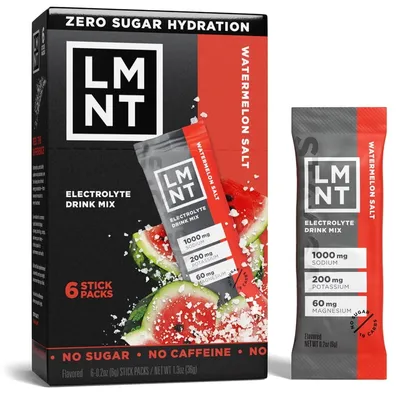
LMNT Recharge Electrolyte Drink Mix
Best electrolyte for active days, hot weather, and heat exposure — 1,000mg sodium, zero sugar.
If you’re noticing that hot days hit you harder than they used to, that you feel foggy or weak after time outdoors, or that you don’t seem to feel thirsty until you’re already feeling off — you’re not imagining it. Hydration genuinely gets harder after 50. The biology shifts, the medications often add to the problem, and the strategies that worked at 35 don’t reliably hold up at 65.
This guide explains why dehydration risk rises with age and covers the practical strategies that work for older adults.
The 30-second answer
- Thirst sensation declines after 60. You can be 2-3% dehydrated and not feel thirsty.
- Kidneys concentrate urine less efficiently — body holds water less well when intake is low.
- Total body water shrinks — 60% of body weight in young adults, 50% in older adults.
- Common medications increase fluid loss — diuretics, SSRIs, certain heart medications, anticholinergics.
- Drink on a schedule, not on thirst — target 2-3 liters daily for most adults (adjusted for heart/kidney conditions).
- Front-load fluids early — most adults are mildly dehydrated waking up.
- Match electrolytes to activity — plain water for sedentary days, low-sugar electrolyte for hot/active days.
- Watch urine color — pale yellow = adequate; dark yellow = behind.
Now the detail.
Why thirst becomes unreliable
The neurological mechanism that converts low blood volume and elevated blood osmolality into the felt urge to drink weakens progressively after age 60. By 70, the felt urge to drink typically lags real dehydration by 2-3 percent body water loss. Younger adults feel meaningful thirst at 1% body water loss.
The practical consequence: relying on thirst alone as a hydration cue is reasonable advice for a 25-year-old and unreliable advice for a 70-year-old.
The fix is structural, not reactive:
- Drink on a schedule (every 1-2 hours during waking)
- Use external cues — water with every meal, water bottle at your desk, scheduled water breaks
- Front-load fluids early in the day (most adults are mildly dehydrated upon waking)
- Check urine color throughout the day as a real-time hydration signal
Hospital and nursing home protocols for adults over 70 routinely include scheduled hydration rather than thirst-driven hydration — for exactly this reason.
Why kidneys hold water less well
Aging kidneys lose some of their ability to concentrate urine. The medullary concentration gradient that drives water reabsorption becomes less efficient. Antidiuretic hormone (ADH) response weakens. Renal tubules become less responsive to ADH signaling.
The practical consequence: An older adult who skips fluids for several hours doesn’t conserve water as efficiently as a younger adult would. The body has both lower intake (declining thirst) and higher relative loss (less efficient water conservation), and dehydration can progress quickly.
Kidney function tests (eGFR, creatinine, BUN) measure overall filtration but don’t directly measure concentrating ability. This aspect of kidney aging is often clinically invisible until dehydration symptoms appear.
Annual blood work after 50 should include:
- Basic metabolic panel (BMP) — sodium, potassium, chloride, kidney function
- Creatinine and eGFR
- BUN (blood urea nitrogen)
If your eGFR is declining (especially below 60), discuss hydration strategy specifically with your doctor — your needs may differ from generic recommendations.
Why body water shrinks with age
Total body water as a percentage of body weight declines progressively from young adulthood through old age:
- Young adult men: ~60% body water
- Young adult women: ~55% body water
- Older adult men: ~50% body water
- Older adult women: ~45% body water
The decline reflects increasing fat mass (which contains less water than muscle), declining muscle mass (sarcopenia), and reduced intracellular water.
The practical consequence: The same absolute fluid loss represents a larger proportional hit to a smaller reservoir. A liter of sweat loss in a 70-year-old is a bigger physiological event than a liter of sweat loss in a 30-year-old, even at the same body weight.
This is why heat-related illness affects older adults disproportionately — the same heat exposure produces more severe dehydration.
Medications that increase dehydration risk
Several common medication classes worsen baseline dehydration risk:
Diuretics. Furosemide (Lasix), hydrochlorothiazide, chlorthalidone, torsemide — directly increase fluid and electrolyte excretion. Common for blood pressure, heart failure, kidney conditions.
ACE inhibitors and ARBs. Lisinopril, enalapril, losartan, valsartan — can lower blood pressure further during dehydration; combined with diuretics, can produce significant orthostatic hypotension.
SSRIs and SNRIs. Sertraline (Zoloft), fluoxetine (Prozac), venlafaxine (Effexor), duloxetine (Cymbalta) — can cause SIADH (inappropriate antidiuretic hormone) leading to low blood sodium; can also suppress thirst and increase sweating.
Tricyclic antidepressants. Amitriptyline, nortriptyline — anticholinergic effects cause dry mouth and decrease thirst perception.
First-generation antihistamines. Diphenhydramine (Benadryl, ZzzQuil, Tylenol PM), chlorpheniramine — anticholinergic burden affects mucous membrane hydration; also on Beers Criteria for adults over 65.
Lithium. Requires careful hydration management; dehydration causes lithium toxicity.
Laxatives and stimulant bowel medications. Increase fluid loss.
Multiple medication regimens. If you take 5+ medications (common after 60), the cumulative effect on hydration can be significant even if each individual medication is mild.
Action: Show your pharmacist your full medication list and ask specifically about hydration implications. Pharmacists catch interactions and hydration concerns that prescribing doctors often don’t address.
How to drink: practical strategy
Target daily intake:
- Healthy adult, normal activity: 2-3 liters total fluids
- Sedentary in air conditioning: 2 liters
- Heart failure / CKD on fluid restriction: ask your doctor for specific target
- Hot weather, outdoor activity, fever, vomiting: 3-4+ liters
Distribute throughout the day:
- 1-2 cups water upon waking
- Water with every meal
- 1 cup mid-morning, mid-afternoon
- Reduce intake 2-3 hours before bed (avoid nighttime bathroom trips)
Track with urine color:
- Pale yellow throughout the day = adequate
- Dark yellow / amber = behind, increase intake
- Clear / no color = potentially overhydrating, especially if drinking a lot of plain water without electrolytes
Water-rich foods count:
- Watermelon, cucumber, strawberries, oranges, grapefruit
- Soups, broths
- Yogurt, cottage cheese
- Lettuce, tomatoes, celery
- These can contribute 20-30% of daily fluid intake
Caffeine and alcohol notes:
- Coffee and tea contribute to daily fluid intake despite mild diuretic effect (regular drinkers develop tolerance)
- Alcohol is a significant diuretic; each alcoholic drink reduces net hydration; balance with extra water
When to add electrolytes vs. plain water
Plain water is enough:
- Sedentary days in air conditioning
- Light walking, moderate weather
- Adequate food intake including water-rich foods
Add electrolytes:
- Moderate outdoor activity in 80°F+ heat
- 1-3 hours of activity or noticeable sweating
- After GI illness (vomiting, diarrhea)
- Heat exposure beyond air-conditioned environments
- Long flights (low-humidity cabin air dehydrates faster than feels obvious)
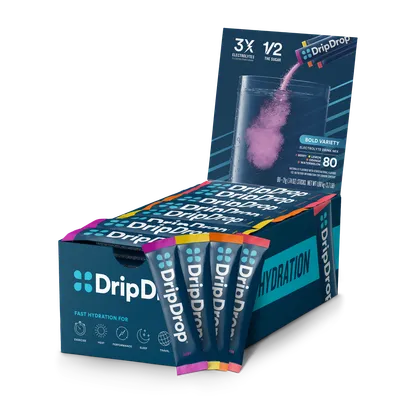
Use medical-grade oral rehydration (DripDrop ORS) for:
- Actual dehydration recovery
- Heat illness recovery
- Post-vomiting/diarrhea rehydration
Skip:
- Sugary sports drinks (Gatorade, Powerade) — 21-36g sugar, low sodium, wrong audience
- Salt tablets — concentrated sodium without water worsens GI upset
- “Adrenal cocktails” with cream of tartar — unpredictable potassium content
See our best electrolyte supplements for seniors guide for specific product picks.
Warning signs that need medical attention
Immediate / urgent (ER or 911):
- Confusion, disorientation, slurred speech, unsteady gait — possible hyponatremia
- Cessation of sweating despite heat exposure, body temp above 103°F — heat stroke
- Fainting
- Persistent vomiting preventing oral hydration
- Sudden weight loss 2+ pounds in a day
Same-day medical evaluation:
- Dizziness on standing
- Decreased urine output (no urination 6-8+ hours despite drinking)
- Very dark concentrated urine
- Persistent muscle cramps, weakness, irregular heartbeat
- Sunken eyes, severe dry mouth, skin tenting
Routine doctor follow-up:
- Recurrent mild dehydration episodes
- Difficulty staying adequately hydrated despite scheduled drinking
- Medication review if on multiple medications
The simple rule
Drink on a schedule, not on thirst. Aim for 2-3 liters of total daily fluids unless you have a medical condition that requires restriction. Front-load fluids early in the day, distribute throughout, taper before bed. Use urine color as your real-time check (pale yellow = adequate). Add low-sugar electrolytes for hot or active days. Watch for warning signs and don’t wait if confusion, dizziness, or significant changes occur.
The basics matter more than any single supplement. The structural fix — scheduled drinking + water-rich foods + adequate electrolytes during exposure — is what keeps older adults out of the hospital from preventable dehydration.
For the broader summer playbook, see our best supplements for summer over 50 pillar guide. For electrolyte product picks, see our best electrolyte supplements for seniors guide.
Products We Recommend
Frequently Asked Questions
Can you actually become dehydrated without feeling thirsty?
Yes — and it's the central reason dehydration is so common in older adults. The neurological mechanism that converts low blood volume and elevated blood osmolality into the felt urge to drink weakens progressively after age 60. Studies measuring thirst response in young vs. older adults under controlled water restriction consistently show older adults feel less thirst at the same level of dehydration. By age 70, the felt urge to drink typically lags real dehydration by 2-3 percent body water loss. Younger adults feel meaningful thirst at 1% body water loss. The practical implication: 'drink when you're thirsty' is reasonable advice for a 25-year-old and unreliable advice for a 70-year-old. The fix is structural — drink on a schedule (every 1-2 hours during the day), front-load fluids early, and use external cues (a glass with every meal, a water bottle at your desk, scheduled water breaks) rather than relying on thirst. This is why hospital and nursing home protocols for adults over 70 routinely include scheduled hydration rather than thirst-driven hydration.
Why don't older kidneys hold onto water as well?
Aging kidneys lose some of their ability to concentrate urine — meaning they produce more dilute urine for the same water intake, so the body excretes more water rather than retaining it. The biological mechanism: the medullary concentration gradient that drives water reabsorption in the loop of Henle becomes less efficient with age. Antidiuretic hormone (ADH) response weakens, and the renal tubules become less responsive to ADH signaling. The result: an older adult who skips fluids for several hours doesn't conserve water as efficiently as a younger adult would. This is why elderly dehydration can progress quickly — the body has both lower intake (declining thirst) and higher relative loss (less efficient water conservation). Kidney function tests (eGFR, creatinine, BUN) measure overall filtration and waste removal but don't directly measure concentrating ability, so this aspect of kidney aging is often clinically invisible until dehydration symptoms appear. Annual blood work after 50 should include kidney function tests; if your eGFR is declining (especially below 60), discuss hydration strategy specifically with your doctor.
How much water should an adult over 50 drink per day?
Most healthy adults over 50 need 2-3 liters (about 8-12 cups) of total fluids per day, including water, other beverages, and water from food. Practical targets: (1) Healthy active adult: 2.5-3 liters daily, more on hot days or with exercise. (2) Sedentary adult in air conditioning: 2 liters daily. (3) Adult with heart failure or chronic kidney disease on fluid restriction: ask your doctor for your specific daily target — fluid restriction is common and 'drink more water' is sometimes the wrong advice for these conditions. (4) Adult on diuretics: usually drink more, but doctor should specify. (5) Hot weather, outdoor activity, fever, vomiting: increase to 3-4+ liters. Distribute throughout the day rather than chugging — drink on a schedule (every 1-2 hours), front-load fluids early (most adults are mildly dehydrated upon waking), and finish significant fluid intake 2-3 hours before bed to avoid nighttime bathroom trips. Food contributes meaningfully — fruits, vegetables, soups, yogurt all add water. Aim for pale yellow urine throughout the day as a real-time indicator of hydration status.
What medications increase dehydration risk in adults over 50?
Several common medication classes. (1) Diuretics: furosemide (Lasix), hydrochlorothiazide, chlorthalidone, torsemide — directly increase fluid and electrolyte excretion. (2) ACE inhibitors and ARBs: lisinopril, enalapril, losartan, valsartan — can lower blood pressure further during dehydration; combined with diuretics, can produce significant orthostatic hypotension. (3) SSRIs and SNRIs: sertraline, fluoxetine, venlafaxine, duloxetine — can cause SIADH (inappropriate antidiuretic hormone) leading to low blood sodium, but separately can suppress thirst and increase sweating. (4) Tricyclic antidepressants: amitriptyline, nortriptyline — anticholinergic effects can cause dry mouth and decreased thirst perception. (5) First-generation antihistamines (Benadryl, ZzzQuil): anticholinergic burden — relevant for cognitive and fall risk in adults over 65, also affects mucous membrane hydration. (6) Lithium: requires careful hydration management; dehydration causes lithium toxicity. (7) Laxatives and stimulant bowel medications: increase fluid loss. (8) Many chemotherapy regimens and immunosuppressants: variable effects on hydration; oncology team should advise. If you take multiple medications, review hydration with your pharmacist — pharmacists catch interactions and hydration concerns that prescribing doctors often don't address.
Is plain water enough or do I need electrolyte supplements?
Depends on activity level, heat exposure, and individual factors. (1) Sedentary days in air-conditioned environment: plain water plus food-source electrolytes (banana, avocado, olives, salted nuts) is usually sufficient. (2) Light outdoor activity in moderate weather: still mostly plain water; electrolyte supplementation optional. (3) Moderate outdoor activity in 80-90°F heat or 1-3 hours of activity: 1-2 servings of low-sugar electrolyte powder (LMNT 1,000mg sodium, Re-Lyte 810mg, DripDrop ORS) plus plain water — sweat losses include meaningful sodium that pure water doesn't replace. (4) Heavy activity, prolonged heat exposure, or actual dehydration recovery: 3-4 electrolyte servings across the day, plus plain water. (5) After GI illness (vomiting, diarrhea): switch to DripDrop ORS or similar medical-grade oral rehydration solution. (6) Adults on sodium-restricted diets (heart failure, chronic kidney disease, controlled hypertension): clear electrolyte supplementation with doctor first; even Buoy or Ultima (lower-sodium products) may be inappropriate depending on individual situation. The classic concern with replacing only water without sodium during heat exposure is hyponatremia (low blood sodium) — which presents in older adults as confusion, weakness, fatigue, and unsteady gait before younger adults notice symptoms. Match electrolyte intake to actual sweat losses.
What are the warning signs of dehydration that need medical attention?
Several signs warrant urgent attention in adults over 50. (1) Confusion, disorientation, slurred speech, or unsteady gait — these can indicate hyponatremia (low blood sodium) or severe dehydration; emergency room evaluation is appropriate. (2) Dizziness on standing (orthostatic hypotension) — suggests low blood volume; falls risk is significant. (3) Decreased urine output (no urination for 6-8 hours despite drinking, very dark concentrated urine) — clinical dehydration. (4) Sudden weight loss of 2+ pounds in a day — likely fluid loss; if persistent, see doctor. (5) Cessation of sweating despite continued heat exposure, body temperature above 103°F, rapid pulse, hot dry skin — heat stroke; call 911. (6) Persistent muscle cramps, weakness, irregular heartbeat — possible electrolyte imbalance; basic metabolic panel blood work needed. (7) Sunken eyes, severe dry mouth, skin that 'tents' when pinched and slowly returns to normal — moderate-to-severe dehydration. (8) Persistent vomiting or diarrhea preventing oral rehydration — may need IV fluids. (9) Fainting episodes related to standing or heat — assessment needed. Adults living alone should consider scheduled check-ins during hot weather; cognitive symptoms of dehydration can prevent self-recognition of the problem. Annual blood work after 50 should include basic metabolic panel and kidney function to catch baseline electrolyte and renal issues that affect hydration safety.
Are there specific hydration strategies for adults with heart failure or kidney disease?
Yes — and these conditions often reverse standard 'drink more water' advice. (1) Heart failure: typically requires fluid restriction (often 1.5-2 liters total daily including all beverages and water from food) to prevent fluid overload. Increased fluid intake can worsen pulmonary edema and lower-extremity swelling. Daily weight monitoring is standard — sudden weight gain of 2-3 pounds usually means fluid retention, not muscle. Sodium restriction (often under 2,000mg daily, sometimes under 1,500mg) is critical. Talk to your cardiologist about specific daily fluid targets. (2) Chronic kidney disease (CKD): fluid needs depend on stage and individual function. Early CKD often needs adequate hydration; advanced CKD (stage 4-5) often requires fluid restriction. Sodium and potassium restrictions vary by stage and dialysis status. Nephrology team should manage hydration strategy. (3) Diuretic users (for any condition): increased fluid loss but variable target — your prescribing doctor should specify whether to increase or maintain fluid intake. (4) Adrenal insufficiency: usually requires higher sodium and adequate hydration; medical management. (5) SIADH (syndrome of inappropriate antidiuretic hormone): often requires fluid restriction to prevent hyponatremia. (6) Diabetes insipidus: requires careful fluid balance with specific medical management. For any of these conditions, generic hydration advice can be wrong — and sometimes dangerous. Work with your specialty team to determine your individual hydration target, then maintain consistency rather than reacting to thirst or generic recommendations.