
PreserVision vs Ocuvite: Which Is Better for Your Eyes After 50?
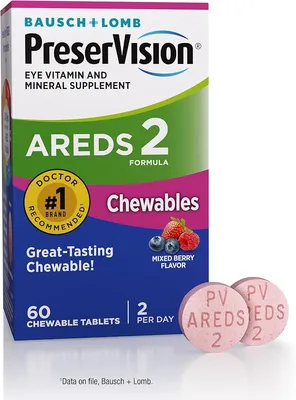
PreserVision AREDS 2 Formula
The clear first choice for anyone diagnosed with intermediate or advanced AMD — it delivers the exact doses used in the NIH-funded AREDS2 trial, and no other drugstore eye supplement has evidence that strong.
- Based on the NIH-funded AREDS2 trial of 4,203 participants
- Associated with about a 25% reduction in risk of progressing to late-stage AMD
- Exact trial doses: lutein 10 mg, zeaxanthin 2 mg, vitamin C 500 mg, vitamin E 400 IU, zinc 80 mg, copper 2 mg
Both products come from Bausch + Lomb, both sit on the same pharmacy shelf, and both promise to support your eyes — but they are built for two different jobs. PreserVision AREDS 2 Formula matches the nutrient doses tested in the National Eye Institute’s AREDS2 trial of 4,203 adults, which is why ophthalmologists recommend it for diagnosed intermediate or advanced macular degeneration. Bausch + Lomb Ocuvite 50+ is a lighter, once-daily general eye vitamin with 6 mg of lutein and 9 mg of zinc, at roughly $18 versus about $28. The right answer depends almost entirely on what your eye doctor sees at the back of your eye.
The Short Answer
For a diagnosed eye disease, dose is everything. If an eye doctor has told you that you have intermediate AMD, or advanced AMD in one eye, PreserVision AREDS 2 Formula is the product that matches the clinical trial. It contains lutein 10 mg, zeaxanthin 2 mg, vitamin C 500 mg, vitamin E 400 IU, zinc 80 mg, and copper 2 mg — the same combination studied in the National Eye Institute’s AREDS2 research. Nothing else on the drugstore shelf carries that level of evidence.
If your eyes are healthy, or you have only early changes that your doctor is simply watching, the full AREDS formula is more than the research says you need. Bausch + Lomb Ocuvite 50+ covers general macular nutrition — lutein, zeaxanthin, a small omega-3 dose, and a gentle 9 mg of zinc — in one soft gel a day for roughly $18. It is easier on the stomach and easier to combine with a multivitamin.
The mistake to avoid is substituting Ocuvite for AREDS 2 when you have been told to take AREDS 2. They are not interchangeable, and the label on Ocuvite does not claim they are.
PreserVision AREDS 2 vs Ocuvite 50+: Head-to-Head
Here is how the two compare on the details that actually change your decision. Doses and prices below come from our published product reviews.
| PreserVision AREDS 2 Formula | Bausch + Lomb Ocuvite 50+ | |
|---|---|---|
| What it’s for | Slowing progression of diagnosed intermediate or advanced AMD | General eye nutrition after 50 |
| Lutein / zeaxanthin | 10 mg / 2 mg (trial doses) | 6 mg lutein plus zeaxanthin |
| Zinc | 80 mg (plus copper 2 mg) | 9 mg |
| Vitamin C / E | 500 mg / 400 IU | Not at AREDS levels |
| Omega-3 | None | 150 mg |
| Daily dose | 2 soft gels | 1 soft gel |
| Clinical evidence | Doses match the NIH AREDS2 trial (4,203 participants) | No trial of this formula for AMD progression |
| Typical price | About $28 | About $18 (roughly 50 days) |
| Best for | Diagnosed intermediate/advanced AMD | Healthy eyes, prevention-minded, budget-conscious |
The zinc line is the one most people skim past. An 80 mg dose is nearly nine times what is in Ocuvite 50+, and it is the main reason PreserVision causes stomach upset in some people. It is also the reason PreserVision requires copper alongside it.
What the Research Says About PreserVision AREDS 2
Here’s what the research actually shows. The Age-Related Eye Disease Study (AREDS), run by the National Eye Institute, followed roughly 3,600 adults for five or more years and found that a high-dose antioxidant and zinc combination reduced the risk of progressing to late-stage AMD by about 25% in people who already had intermediate AMD or advanced AMD in one eye. That is a meaningful number — but only for that group. In people with no AMD or only early AMD, the formula did not show a benefit.
AREDS2, published in JAMA in 2013, enrolled 4,203 participants and asked a follow-up question: could lutein 10 mg and zeaxanthin 2 mg safely replace beta-carotene, which had been linked to higher lung cancer risk in people who smoke? The answer was yes. Ten-year follow-up data published in 2022 found that the lutein and zeaxanthin version performed at least as well as the beta-carotene version, without the cancer signal. That is why every current AREDS 2 product, PreserVision included, uses carotenoids instead of beta-carotene.
AREDS2 also tested a lower-zinc version — 25 mg instead of 80 mg — and found no statistically significant difference in outcomes. That finding matters for anyone whose stomach rebels at the full dose; some eye supplement brands offer formulas built on that lower 25 mg zinc dose for exactly this reason — ask your eye doctor about lower-zinc options.
What the evidence does not show: AREDS 2 does not restore vision you have already lost, and it has not been shown to prevent AMD from developing in the first place. It slows progression in people who already have a moderate amount of disease. Our guide to AREDS 2 explained: formula, ingredients, and alternatives walks through each ingredient in more detail.
What the Research Says About Ocuvite 50+
Ocuvite is a nutrition product, not a trial replica, and Bausch + Lomb does not market it as an AREDS formula. There is no clinical trial testing whether Ocuvite 50+ slows AMD progression, and there is unlikely to be one — the doses are too far from the studied amounts to expect the same result.
What can be said is that lutein and zeaxanthin are the two carotenoids concentrated in the macula, the small central part of the retina responsible for sharp detail vision. Higher dietary intake of these pigments has been associated with lower rates of AMD in observational research, which is what motivated the AREDS2 trial in the first place. Ocuvite 50+ supplies 6 mg of lutein — a reasonable amount compared with a typical Western diet, but 40% below the 10 mg used in the trial.
The 150 mg of omega-3 is a nice inclusion, and it is honestly too small to do much. Studies of omega-3 for dry eye have generally used 1,000 mg or more of combined EPA and DHA daily. Treat Ocuvite’s omega-3 as a bonus, not a reason to skip fish oil if your doctor has recommended it.
The fair summary: Ocuvite 50+ is a sensible, inexpensive way to make sure you are getting macular carotenoids if your diet is light on leafy greens, eggs, and orange peppers. It is not therapy.
Zinc, Stomach Upset, and the Kidney Question
This is where the two products differ most in real-world tolerability, and it is the question we see most often from readers.
The tolerable upper intake level for zinc set by the National Academy of Medicine is 40 mg per day for adults. PreserVision AREDS 2 delivers 80 mg — double that — deliberately, because that is the dose the trial used and the dose the benefit was measured at. The trade-off is that high zinc can cause nausea and stomach upset, and long-term high intake can interfere with copper absorption, which is why the formula includes 2 mg of copper.
If you have chronic kidney disease, this deserves a real conversation, not a guess. Zinc and other minerals are cleared by the kidneys, and people with reduced kidney function handle mineral loads differently. There is no blanket rule that AREDS 2 is unsafe with kidney disease, but the dose is high enough that your nephrologist or eye doctor should weigh in before you start. The same goes for anyone on diuretics or with a history of kidney stones.
Other groups who should check first: people taking certain antibiotics (tetracyclines and quinolones bind to zinc, and doses should be separated by a few hours), anyone on blood thinners such as warfarin (vitamin E 400 IU can add to bleeding risk), and anyone with a history of copper metabolism problems. We cover this in more depth in AREDS 2 side effects: who should not take PreserVision?
Ocuvite 50+, at 9 mg of zinc, sits comfortably below the upper limit and is much easier to stack alongside a daily multivitamin without doubling up.
Which Should You Choose?
If your eye doctor has diagnosed intermediate or advanced AMD
Take PreserVision AREDS 2 Formula, or another product that matches the AREDS2 doses exactly. Do not substitute Ocuvite to save $10 a month — the whole point of this formula is that the doses were the ones tested. If the 80 mg zinc upsets your stomach, ask your doctor about a formula using the lower 25 mg zinc dose tested in AREDS2 rather than stopping altogether.
If you have healthy eyes or only early AMD
Bausch + Lomb Ocuvite 50+ is the more sensible pick. The AREDS research did not find benefit in people without at least intermediate disease, so the high-dose formula is more than the evidence supports. One soft gel a day at about $18 is easy to maintain, and the gentler zinc dose won’t clash with your multivitamin.
If you have a family history of AMD but no diagnosis
Family history raises your risk, but it does not change the evidence: AREDS 2 was not shown to prevent AMD in people who don’t have it. A carotenoid-focused product plus a diet rich in leafy greens is the reasonable middle path. Get dilated eye exams on the schedule your doctor sets — catching intermediate AMD early is what determines when the AREDS formula becomes worthwhile.
If you already take a multivitamin and fish oil
You may be closer to covered than you think. In that case, adding a standalone carotenoid product avoids stacking extra vitamin C, E, and zinc on top of what you already take. Bring both labels to your pharmacist and add up the zinc before you buy anything new.
If cost is the deciding factor
Ocuvite 50+ at roughly $18 for about 50 days is the least expensive option here. But if you have diagnosed AMD, the cheaper product is not a bargain — it is a different product for a different purpose. Look at store-brand AREDS 2 formulas instead; several match the trial doses at a lower price. Our roundup of the best eye supplements for macular health after 50 compares them side by side.
Our Picks
Best for diagnosed AMD: PreserVision AREDS 2 Formula
At about $28 and a 4.7/5 rating in our review, PreserVision AREDS 2 Formula is the clear first choice for anyone with intermediate or advanced AMD. It is the only widely available eye supplement built directly on a major NIH-funded clinical trial, with the exact studied doses — lutein 10 mg, zeaxanthin 2 mg, vitamin C 500 mg, vitamin E 400 IU, zinc 80 mg, copper 2 mg — and it is the formula most recommended by U.S. ophthalmologists. Downsides are real but manageable: two soft gels a day rather than one, a soybean oil base that makes it unsuitable for vegans, and a zinc dose that can cause stomach upset.
Best budget general eye vitamin: Bausch + Lomb Ocuvite 50+
For adults over 50 who want macular support without a diagnosis driving the decision, Bausch + Lomb Ocuvite 50+ is the easiest one to stick with — one soft gel, roughly $18 for about 50 days, and 4.3/5 in our review. It pairs lutein and zeaxanthin with 150 mg of omega-3 and a gentle 9 mg of zinc. Just be clear-eyed about the limits: 6 mg of lutein is below the 10 mg trial dose, the omega-3 is too small to help dry eyes, and it is not appropriate as a stand-in for AREDS 2.
Middle ground: Ocuvite Eye Performance
Ocuvite Eye Performance splits the difference at about $25, delivering the full AREDS2 carotenoid doses — lutein 10 mg and zeaxanthin 2 mg — plus 250 mg of EPA and DHA and lower-dose B vitamins and zinc in a single capsule. It rates 4.3/5 in our review and makes sense if you want trial-level carotenoids without the 80 mg zinc load, and you don’t already take fish oil. It carries less vitamin C and E than the full AREDS2 formula, so it is a preventive product, not an AREDS substitute.
Premium carotenoid option: MacuHealth Plus+
MacuHealth Plus+ is the only option here that supplies all three macular carotenoids — lutein, zeaxanthin, and meso-zeaxanthin — in a patented 10:10:2 ratio, backed by published research from the Waterford Institute of Technology, with a lower 25 mg zinc dose. It earns 4.6/5 in our review. The catch is price and evidence depth: about $45 for a 90-day supply, less clinical evidence than AREDS2 for slowing AMD specifically, and limited pharmacy availability — it is usually bought online or through an eye care practice.
Best for layering: Pure Encapsulations Lutein/Zeaxanthin
If you already take a good multivitamin and don’t want to double up on vitamins C and E or zinc, Pure Encapsulations Lutein/Zeaxanthin gives you the AREDS2 carotenoid doses — 10 mg and 2 mg — and nothing else. It is hypoallergenic (no gluten, soy, dairy, or GMOs), third-party tested, GMP-certified, rated 4.6/5, and about $35. The trade-off: at that price you are paying a premium for two ingredients, and if you’re not taking a multivitamin you’ll be missing the rest of the formula.
When to Talk to Your Doctor
Before you buy either product, consult your doctor or eye doctor — this choice genuinely hinges on a clinical finding you cannot see for yourself. Only a dilated eye exam or retinal imaging can tell whether you have no AMD, early AMD, or the intermediate stage where the AREDS formula has been shown to help. Ask directly: “Am I at the stage where AREDS 2 is worth taking?”
Bring the bottle, or a photo of the label, to that visit and to your pharmacist. Ask specifically about:
- Kidney disease or a history of kidney stones — the 80 mg zinc dose in PreserVision is double the 40 mg adult upper limit and warrants a personalized decision.
- Blood thinners — vitamin E at 400 IU may add to bleeding risk with warfarin or similar medications.
- Antibiotics — tetracyclines and quinolones bind to zinc; timing usually needs to be separated.
- Your other supplements — total up zinc, copper, and vitamin E across everything you take.
- Smoking history — this is why AREDS2 replaced beta-carotene; confirm any product you buy uses lutein and zeaxanthin instead.
Call your eye doctor promptly, rather than waiting for a scheduled visit, if straight lines start to look wavy, a blurry or dark spot appears in your central vision, or colors seem faded. Those can be signs that dry AMD is converting to the wet form, which is treatable — but time matters, and no supplement substitutes for that appointment.
Sources:
- National Eye Institute — Age-Related Eye Disease Studies (AREDS/AREDS2) — Trial design, participant numbers, and the ~25% reduction in progression to late AMD in people with intermediate AMD.
- AREDS2 Research Group, JAMA 2013 — Lutein + Zeaxanthin and Omega-3 Fatty Acids for Age-Related Macular Degeneration — 4,203 participants; lutein 10 mg/zeaxanthin 2 mg substitution and the 25 mg vs 80 mg zinc comparison.
- JAMA Ophthalmology 2022 — Long-term Outcomes of AREDS2 (10-year follow-up) — Ten-year data supporting lutein/zeaxanthin over beta-carotene, including lung cancer risk in people who smoked.
- NIH Office of Dietary Supplements — Zinc Fact Sheet for Health Professionals — 40 mg/day tolerable upper intake level, copper interference, GI side effects, and antibiotic interactions.
- Mayo Clinic — Dry Macular Degeneration — AMD staging, symptoms of progression such as wavy lines and central blurring, and when to seek care.
- Bausch + Lomb PreserVision product information — Manufacturer information on PreserVision AREDS 2 formulations, including the Mini Gels format.
- Bausch + Lomb Ocuvite product information — Manufacturer information on Ocuvite eye vitamin products and their positioning as general eye nutrition.
All Products We Reviewed
- Based on the NIH-funded AREDS2 trial of 4,203 participants
- Associated with about a 25% reduction in risk of progressing to late-stage AMD
- Exact trial doses: lutein 10 mg, zeaxanthin 2 mg, vitamin C 500 mg, vitamin E 400 IU, zinc 80 mg, copper 2 mg
- The formula most recommended by U.S. ophthalmologists
- Smaller, easier-to-swallow Mini Gels format available with the same nutrient formula
- High 80 mg zinc dose may cause stomach upset
- Two soft gels daily, not once-daily
- Soybean oil base — not vegan
- More than needed for general eye health if you have no AMD diagnosis
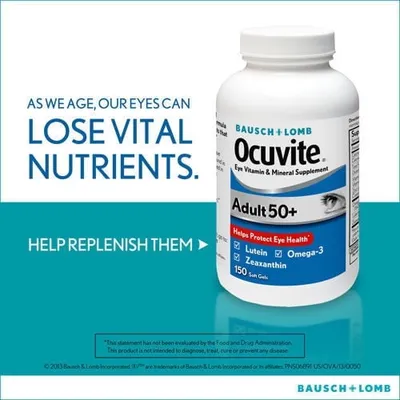
- About $18 for roughly 50 days — the most affordable option here
- Convenient once-daily soft gel
- Includes omega-3 alongside lutein and zeaxanthin
- Low 9 mg zinc dose is gentler and easier to combine with a multivitamin
- 6 mg lutein is below the 10 mg trial dose
- Not an AREDS formula — not appropriate for diagnosed AMD
- 150 mg omega-3 is too low to meaningfully help dry eyes
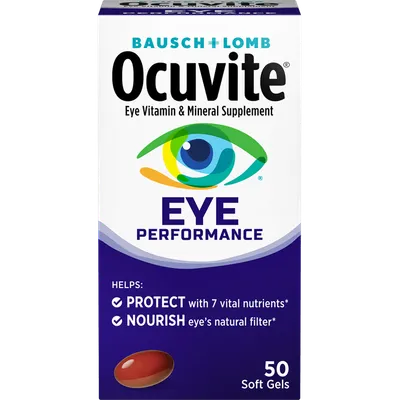
- Lutein 10 mg and zeaxanthin 2 mg plus 250 mg EPA+DHA in one capsule
- Includes lower-dose B vitamins and zinc
- Costs less than PreserVision at about $25
- All-in-one if you don't already take fish oil
- Lower vitamin C and E than the full AREDS2 formula
- Omega-3 dose is modest — not a fish oil replacement
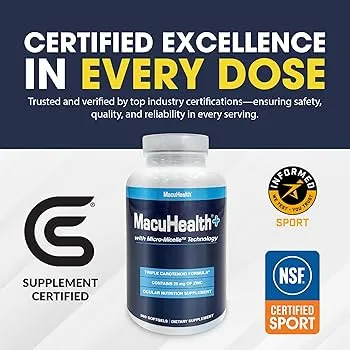
- Only option supplying lutein, zeaxanthin, and meso-zeaxanthin
- Patented 10:10:2 ratio with published research from the Waterford Institute of Technology
- Lower 25 mg zinc dose means fewer stomach issues than full AREDS formulas
- Premium price — about $45 for a 90-day supply
- Less clinical evidence than AREDS2 for slowing AMD specifically
- Limited pharmacy availability; usually bought online or through an eye care practice
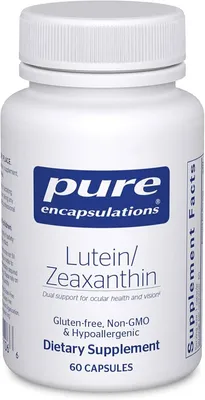
- Lutein 10 mg and zeaxanthin 2 mg, standalone
- Hypoallergenic — no gluten, soy, dairy, GMOs, or additives
- Third-party tested and GMP-certified
- No AREDS2 vitamins or minerals — incomplete if you don't take a multivitamin
- Premium price at about $35 for a two-ingredient product
Frequently Asked Questions
Is Ocuvite the same as PreserVision?
No. Both are made by Bausch + Lomb, but PreserVision AREDS 2 Formula matches the nutrient doses used in the NIH's AREDS2 clinical trial, while Ocuvite 50+ is a lighter general eye vitamin with 6 mg of lutein and 9 mg of zinc. Ocuvite is not an AREDS formula and is not appropriate as a substitute if your doctor has recommended AREDS 2 for diagnosed macular degeneration.
Can I take Ocuvite instead of AREDS 2 for macular degeneration?
Not if you have been diagnosed with intermediate or advanced AMD. The roughly 25% reduction in progression risk seen in the AREDS research was measured at specific high doses, and Ocuvite 50+ delivers far less lutein, zinc, vitamin C, and vitamin E than those doses. Ask your eye doctor before switching for any reason, including cost.
Is AREDS 2 safe for kidneys?
There is no blanket warning against AREDS 2 in kidney disease, but the 80 mg zinc dose is double the 40 mg tolerable upper intake level for adults, and minerals are cleared by the kidneys. If you have chronic kidney disease, reduced kidney function, or a history of kidney stones, check with your nephrologist or eye doctor before starting. The AREDS2 trial also tested a lower 25 mg zinc dose, and some brands offer formulas at that level, which may be an option.
Can I take PreserVision with my daily multivitamin?
Often yes, but add up the totals first. Many multivitamins contain 8 to 15 mg of zinc plus vitamin E, which stacks on top of PreserVision's 80 mg zinc and 400 IU vitamin E. Show both labels to your pharmacist, who can tell you in a couple of minutes whether the combination is reasonable for you.
Do I need eye vitamins at all if I don't have macular degeneration?
The AREDS research did not find a benefit in people with healthy eyes or only early AMD, so a high-dose formula is not supported by the evidence for prevention. A general product such as Ocuvite 50+ can help fill gaps if your diet is low in leafy greens, eggs, and orange and yellow vegetables. Regular dilated eye exams matter more than any supplement.