
Can You Take PreserVision AREDS 2 With a Multivitamin Like Centrum Silver?
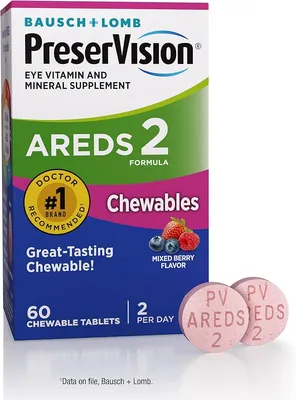
PreserVision AREDS 2 Formula
The right choice for someone diagnosed with intermediate or advanced AMD, and the formula most U.S. ophthalmologists recommend. It pairs safely with one standard multivitamin for most people, as long as you count your total zinc.
- Based on the NIH-funded AREDS2 trial of 4,203 participants
- Associated with a 25% reduction in risk of advancing to late-stage AMD
- Contains the exact trial doses: lutein 10 mg, zeaxanthin 2 mg, vitamin C 500 mg, vitamin E 400 IU, zinc 80 mg, copper 2 mg
If your eye doctor handed you a bottle of eye vitamins and you already take a daily multivitamin, the question is a fair one — and the answer, for most people, is yes. The AREDS2 trial that produced this formula enrolled 4,203 adults and allowed them to keep taking a standard daily multivitamin, so the combination is not new territory. What does deserve a second look is zinc: PreserVision AREDS 2 Formula delivers 80 mg daily, already well past the 40 mg upper limit set for adults, and a multivitamin like Centrum Silver Adults 50+ stacks more on top. Read both labels, skip any third zinc source, and run the combination past your doctor or pharmacist.
The Detailed Answer
Here’s what the research actually shows. The AREDS2 formulation was never designed to replace a general multivitamin — it was designed to sit on top of ordinary nutrition for people at risk of advancing age-related macular degeneration (AMD). In both the original AREDS and the follow-up AREDS2 study, participants were permitted to take a standard daily multivitamin alongside the study pills, and the great majority of them did. That is a meaningful detail: the 25% reduction in risk of progressing to late-stage AMD that made this formula famous was measured in people who were, in many cases, also taking a multivitamin.
So the combination itself is well-trodden ground. The care you need to take is about arithmetic, not danger.
The zinc math is the part that matters
PreserVision AREDS 2 Formula contains vitamin C 500 mg, vitamin E 400 IU, zinc 80 mg, copper 2 mg, lutein 10 mg and zeaxanthin 2 mg, split across two soft gels taken daily. That zinc dose is the headline. The National Institutes of Health sets the tolerable upper intake level for zinc at 40 mg a day for adults — the AREDS formula deliberately exceeds it, which is one reason it is meant to be taken under a doctor’s supervision rather than picked off a shelf on a hunch.
A 50+ multivitamin typically supplies somewhere near the recommended daily amount of zinc, which is 11 mg for men and 8 mg for women. Added to 80 mg, that puts most people in the 88–95 mg range. Clinically, that extra 8–15 mg is a small increment on an already-high dose — but it is not nothing, and it is exactly why the answer is “yes, with a label check” rather than a flat yes.
| Nutrient | PreserVision AREDS 2 daily dose | Adult RDA (NIH) | Upper limit (NIH) |
|---|---|---|---|
| Zinc | 80 mg | 8–11 mg | 40 mg |
| Copper | 2 mg | 0.9 mg | 10 mg |
| Vitamin C | 500 mg | 75–90 mg | 2,000 mg |
| Vitamin E | 400 IU | 15 mg (about 22 IU) | 1,000 mg alpha-tocopherol |
The practical rule: a single standard multivitamin on top of AREDS 2 keeps you inside the upper limits for vitamin C, vitamin E and copper. Zinc is the only one already over, and the only one worth counting.
Copper, and why you should not strip it out
High-dose zinc blocks copper absorption, and prolonged high zinc intake can cause copper-deficiency anemia. That is precisely why the AREDS formula includes copper 2 mg — it is a built-in safeguard, not a filler ingredient. Your multivitamin likely adds a small amount of copper as well, which is fine; the upper limit for copper is 10 mg a day, and you will not come close.
What you should not do is take a zinc lozenge, an immune-support blend, or a separate zinc tablet on top of both. Three zinc sources is where people drift into territory associated with nausea, a metallic taste, lowered copper status, and in the original AREDS trial, more hospitalizations for urinary-tract causes in the zinc groups.
Beta-carotene is the other label to check
AREDS2 removed beta-carotene from the formula and replaced it with lutein and zeaxanthin, because beta-carotene supplementation was linked to a higher risk of lung cancer in people who smoke or used to smoke. PreserVision AREDS 2 Formula contains no beta-carotene. Many general multivitamins do.
If you smoke now or smoked in the past, read your multivitamin label for beta-carotene and ask your pharmacist whether to switch to a version without it. For everyone else, the amount in a standard multivitamin is modest and not a reason to skip it.
Related Questions
Do I still need a multivitamin if I take PreserVision AREDS 2?
It is not an eye-health requirement, but it is reasonable nutritional insurance. The AREDS 2 formula covers six nutrients at macular-specific doses and ignores everything else — no B12, no vitamin D, no folate, no magnesium. Centrum Silver Adults 50+ fills that gap for about $0.16 a day, is USP Verified for purity and potency, and takes one tablet a day. If you already eat well and your bloodwork is clean, you may not need it; if you want broad coverage, it is a sensible companion rather than a duplicate. AREDS 2 Explained: Formula, Ingredients, and Alternatives walks through what the formula does and does not include.
Can I take Ocuvite and PreserVision at the same time?
There is no reason to, and it is the one pairing we would steer you away from. Bausch + Lomb Ocuvite 50+ is a lighter, once-daily eye formula at about $18 with a lower zinc dose of 9 mg and less lutein than the clinical-trial amount — it is built for general macular support, not diagnosed AMD. Stacking it on AREDS 2 just adds zinc and lutein you are already getting at study doses. If you are weighing one against the other, PreserVision vs Ocuvite: Which Is Better for Your Eyes After 50? lays out the difference.
Does the high zinc dose cause stomach upset when combined with a multivitamin?
It can, and the multivitamin may make it slightly more noticeable. Zinc 80 mg is the most common reason people stop taking AREDS 2, and nausea is the usual complaint. Taking both with food — the eye vitamin with breakfast, the multivitamin with dinner — resolves it for most people. If it does not, AREDS 2 Side Effects: Who Should Not Take PreserVision? covers who tends to struggle with the formula and what the alternatives are.
Should I take them at the same time of day?
Separating them by several hours is a small, free improvement. Calcium and iron — both common in 50+ multivitamins — compete with zinc for absorption, so taking the multivitamin at a different meal than your two AREDS 2 soft gels makes sense. There is no evidence that taking them together harms anything; it simply may reduce how much of each mineral you absorb.
When to Talk to Your Doctor
The bottom line: for a person with intermediate or advanced AMD who takes one standard multivitamin, this combination is normal practice and matches what trial participants did. But talk to your doctor or pharmacist before you start, and bring both bottles with you — label reading beats guesswork.
Make that conversation a priority if any of the following apply:
- You take any other zinc-containing product, including immune-support blends, cold lozenges, prostate formulas, or a second eye vitamin. This is the single most common way people overshoot.
- You have reduced kidney function. Mineral clearance changes, and dosing decisions should be individualized.
- You take a blood thinner such as warfarin. Vitamin E 400 IU may add to bleeding risk, and this needs a prescriber’s review.
- You smoke or used to smoke, and your multivitamin lists beta-carotene.
- You have unexplained fatigue, numbness, or anemia while on long-term high-dose zinc — these can signal low copper and warrant bloodwork.
- You take antibiotics (tetracyclines or quinolones) or a thyroid medication, which zinc can bind to; your pharmacist can space the doses.
One last point worth considering: AREDS 2 was never shown to prevent AMD in people who do not have it, and it does not improve vision that has already been lost. It is a risk-reduction tool for a specific diagnosis. If no one has told you that you have intermediate or advanced AMD, ask your eye doctor whether you need this formula at all — a gentler option, or just a multivitamin, may be the better fit.
Sources:
- National Eye Institute — About AREDS and AREDS2 — Trial design, participant numbers, formula composition, and the removal of beta-carotene in AREDS2.
- AREDS2 Research Group, JAMA 2013 — Lutein + zeaxanthin and omega-3 fatty acids for age-related macular degeneration — Primary AREDS2 publication; 4,203 participants and permitted concurrent multivitamin use.
- NIH Office of Dietary Supplements — Zinc Fact Sheet for Health Professionals — Zinc RDA of 8–11 mg, tolerable upper intake level of 40 mg, copper-deficiency risk, and antibiotic interactions.
- NIH Office of Dietary Supplements — Copper Fact Sheet for Health Professionals — Copper RDA of 0.9 mg and upper limit of 10 mg per day.
- NIH Office of Dietary Supplements — Vitamin E Fact Sheet for Health Professionals — Vitamin E RDA, 1,000 mg upper limit, and anticoagulant bleeding-risk interaction.
- NIH Office of Dietary Supplements — Vitamin C Fact Sheet for Health Professionals — Vitamin C RDA of 75–90 mg and 2,000 mg upper limit.
- NIH Office of Dietary Supplements — Vitamin A and Carotenoids Fact Sheet — Beta-carotene supplementation and increased lung cancer risk among people who smoke.
- Mayo Clinic — Zinc — Side effects of high-dose zinc, including nausea and upset stomach, and drug interactions.
Products We Recommend
- Based on the NIH-funded AREDS2 trial of 4,203 participants
- Associated with a 25% reduction in risk of advancing to late-stage AMD
- Contains the exact trial doses: lutein 10 mg, zeaxanthin 2 mg, vitamin C 500 mg, vitamin E 400 IU, zinc 80 mg, copper 2 mg
- Includes copper to offset the copper-blocking effect of high-dose zinc
- No beta-carotene, which matters for current and former smokers
- Zinc 80 mg is double the 40 mg adult upper limit and can cause stomach upset
- Two soft gels daily rather than a once-daily pill
- Soybean oil base; not vegan
- Targets AMD specifically — more than most people need for general eye health
- About $28 a month, roughly double a basic eye vitamin
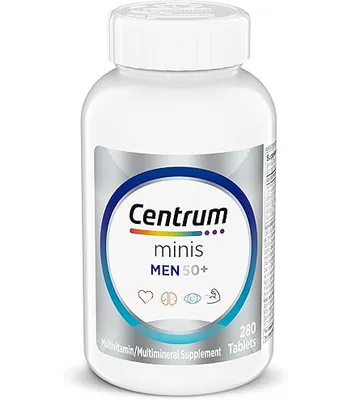
- USP Verified for purity and potency
- One tablet daily and sold in virtually every pharmacy
- Very affordable at about $0.16 a day
- Backed by the Physicians' Health Study II, the largest multivitamin randomized trial
- Fills gaps AREDS 2 ignores, such as B12 and vitamin D
- Uses synthetic nutrient forms including folic acid and cyanocobalamin
- Contains artificial colorants some people prefer to avoid
- Modest calcium and magnesium doses that will not correct a real deficiency
- Adds zinc on top of an already high AREDS 2 dose — check the label
- Some versions contain beta-carotene, which matters if you smoke or used to
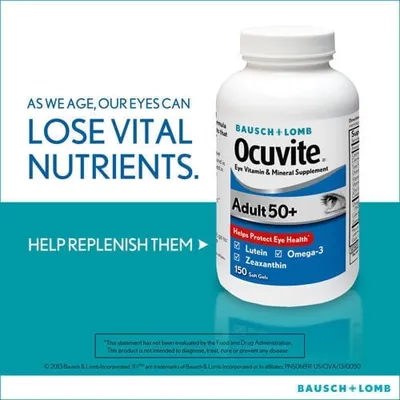
- Lower zinc dose of 9 mg, so it combines easily with a multivitamin
- Once-daily soft gel
- About $18, roughly half the price of an AREDS 2 supplement
- Includes lutein, zeaxanthin, omega-3s and zinc in a gentle formula
- Lutein dose is below the 10 mg used in the AREDS2 trial
- Not the AREDS2 formula and not appropriate for diagnosed AMD
- Omega-3 content too low to meaningfully help dry eyes
- Redundant if you already take PreserVision AREDS 2
Frequently Asked Questions
How much zinc is too much in one day?
The National Institutes of Health sets the tolerable upper intake level for zinc at 40 mg a day for adults. PreserVision AREDS 2 Formula contains 80 mg, deliberately exceeding that limit because the AREDS trials tested it at that dose under medical supervision. Adding one standard multivitamin pushes the total to roughly 88–95 mg, which is why a third zinc source should be avoided and the combination discussed with your doctor.
Will a multivitamin interfere with how AREDS 2 works?
There is no evidence that it does. Participants in the AREDS and AREDS2 trials were permitted to take a standard daily multivitamin, and the benefit measured in those studies was seen in people who were taking one. Calcium and iron in a multivitamin may slightly reduce zinc absorption, so taking the two products at different meals is a reasonable precaution.
Can I take AREDS 2 with a multivitamin that contains iron?
Generally yes, but space them a few hours apart, since iron and zinc compete for absorption. Most multivitamins formulated for adults over 50, including Centrum Silver Adults 50+, are low in iron or iron-free. If you take a separate prescription iron supplement, ask your pharmacist how to time all three.
Do I need a zinc-free AREDS formula if I already take a multivitamin?
Not usually — one multivitamin adds only about 8 to 15 mg of zinc, a small increment on an already-high dose. Lower-zinc or zinc-free AREDS variations are typically considered for people who cannot tolerate the gastrointestinal effects or who have a medical reason to limit zinc. That is a decision to make with your eye doctor, not on your own.
What should I do if PreserVision AREDS 2 upsets my stomach?
Take both soft gels with a full meal rather than on an empty stomach, and move your multivitamin to a different meal. High-dose zinc is the usual culprit, and food reliably reduces nausea for most people. If symptoms persist after two weeks, tell your doctor — switching formulations is possible, and the smaller soft-gel format uses the same zinc dose, not a lower one.