
Best Supplements for Hair Thinning Over 50: What Actually Helps
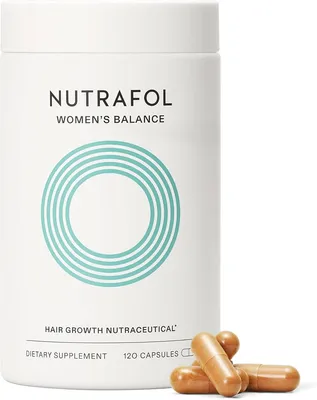
Nutrafol Women's Balance
The strongest evidence-backed option for women whose thinning tracks with perimenopause or menopause — it is the only hair supplement with peer-reviewed, placebo-controlled trial data in that specific group, though the price and pill count are real obstacles.
- Peer-reviewed, placebo-controlled RCT data specifically in peri- and postmenopausal women
- Multi-ingredient formula targets DHT, stress, nutrient gaps, and inflammation at once
- Combines saw palmetto, ashwagandha, curcumin, biotin, and marine collagen
Hair thinning after 50 is common, and the supplement aisle is happy to sell you a solution. Here’s what the research actually shows: pills help most when they correct something that is genuinely missing — low iron, low thyroid output, too little protein — and help very little when your levels are already normal. That makes bloodwork (ferritin, TSH, vitamin D, zinc, and a complete blood count) the most valuable $0–$100 you can spend before buying anything. From there, the choices narrow quickly: iron such as MegaFood Blood Builder at about $24 if your ferritin is low, Nutrafol Women’s Balance at about $88 a month if menopause is the driver, and for men with pattern thinning, a conversation about topical minoxidil rather than a capsule.
What Hair Thinning After 50 Actually Is
Most people lose somewhere between 50 and 100 hairs a day and never notice. Thinning becomes visible when more hairs enter the resting phase at once, when new hairs come back finer than the ones they replaced, or when follicles gradually shrink and stop producing altogether.
After 50, two different processes are usually at work, and they call for different responses. Sorting out which one you have is the difference between a supplement that helps and $90 a month spent on nothing.
Pattern thinning versus diffuse shedding
Pattern hair loss (androgenetic alopecia) is hereditary and hormone-sensitive. In men it recedes at the temples and thins the crown; in women it widens the part and thins across the top while the hairline stays put. By widely cited estimates it affects some 50 million men and 30 million women in the United States, and it progresses slowly over years.
Telogen effluvium is diffuse shedding — hair coming out in the shower and on the pillow, all over the head rather than in one spot. It typically starts 2 to 3 months after a trigger such as illness, surgery, rapid weight loss, a new medication, or iron deficiency, and it often resolves within 6 to 9 months once the trigger is removed. This is the type most likely to respond to a nutritional fix.
Why the hair cycle changes with age
Each follicle cycles through a growing phase (anagen) that lasts 2 to 7 years, a brief transition, and a resting phase (telogen) of about 3 months before the hair falls and a new one begins. With age, the growing phase shortens and the replacement hair emerges thinner. You can have the same number of follicles at 65 as at 35 and still have noticeably less hair, simply because each strand has less diameter.
That matters for expectations. A supplement can support follicles that are still cycling. It cannot restart follicles that have miniaturized to the point of dormancy.
The causes nobody mentions in the ads
Hormones get the headlines, but in adults over 50 the correctable causes are often more mundane:
- Iron deficiency — common in women who had heavy bleeding before menopause, in people with gastrointestinal blood loss, and in anyone eating little red meat.
- Thyroid disease — both underactive and overactive thyroid cause diffuse thinning, and hypothyroidism becomes more common with age.
- Low protein intake — hair is almost entirely keratin, a protein, and appetite often shrinks after 60.
- Medications — beta-blockers, anticoagulants, some antidepressants, retinoids, and excess thyroid replacement can all provoke shedding.
- Zinc or vitamin D deficiency — less common, but worth ruling out.
The Science, Simplified: What Supplements Can and Can’t Do
Here’s the single most useful finding across the nutritional hair literature: correcting a deficiency helps, and adding more of a nutrient you already have enough of does not. A 2019 review in Dermatology and Therapy examined vitamins and minerals in hair loss and found that micronutrient deficiency may be a modifiable risk factor in non-scarring hair loss, while a 2017 review in Dermatology Practical & Conceptual concluded that documented deficiencies should be corrected, that evidence for supplementing without a deficiency is lacking, and that some supplements may actually worsen hair loss or cause toxicity.
Think of it like watering a garden. If the soil is bone dry, water transforms it. If the soil is already moist, more water does nothing useful and eventually rots the roots. Nearly every hair supplement on the market is sold as if your soil is dry. For most people over 50, some of it is and some of it isn’t — and a blood test tells you which.
Where the evidence is strongest
Iron. The association between low ferritin (the storage form of iron) and diffuse hair shedding is the best-documented nutritional link. Many clinicians treat ferritin below 30 ng/mL as deficient, and some aim higher in people with active shedding, though trials showing that raising ferritin regrows hair are limited and mixed.
Protein. Older adults are generally advised to take in about 1.0 to 1.2 grams of protein per kilogram of body weight daily — roughly 68 to 82 grams for someone who weighs 150 pounds. Chronic under-eating of protein shows up in hair before it shows up anywhere else you’d notice.
Multi-ingredient botanical formulas. Nutrafol Women’s Balance has peer-reviewed, placebo-controlled trial data in perimenopausal and postmenopausal women specifically, which is unusual in this category — most hair supplements have no trial data at all. The trials are manufacturer-supported and modest in size, so treat the result as promising rather than settled.
Where the evidence is weak
Biotin. The adequate intake for adults is 30 micrograms a day, and true biotin deficiency is rare outside of specific genetic conditions, long-term anticonvulsant use, or heavy alcohol use. Supplement doses are often 100 to 300 times that amount with no added benefit if your levels are normal.
Collagen. Pleasant to take, generally safe, and supported mostly by skin research rather than hair research. If you are already taking it for joints or skin, fine — our guide to the best collagen supplements for women over 50 covers what the trials do and don’t show. Don’t buy it expecting a hair result.
Vitamin D. Low vitamin D is associated with several hair disorders, but association is not causation, and supplementing above your needs has not been shown to thicken hair.
What supplements will not do
They will not reverse hereditary pattern hair loss. For that, the two treatments with FDA approval are topical minoxidil (available over the counter) and, for men, prescription finasteride. If pattern thinning is your diagnosis, a supplement is at best a supporting player — and your pharmacist or dermatologist can tell you in one visit which category you’re in.
Practical Recommendations: What to Do, in Order
The sequence matters more than the brand. Doing step one first saves most people money.
Step 1: Get bloodwork before you buy anything
Ask your doctor for a complete blood count, ferritin, TSH with free T4, 25-hydroxy vitamin D, and zinc. If shedding started suddenly, bring a full list of your medications and the dates you started them — the timing often identifies the culprit without any test at all.
Wait for the results. A supplement bought on a guess is a supplement you’ll be taking for six months without knowing whether it ever had a target.
If your ferritin is low: MegaFood Blood Builder
MegaFood Blood Builder supplies 26 mg of elemental iron paired with vitamin C for better absorption, costs about $24, and carries a 4.7 out of 5 rating on our site. It’s whole-food-based, non-GMO, glyphosate-tested, and far gentler on digestion than ferrous sulfate — which is the main reason people abandon iron therapy.
The caution is firm: iron is only useful if your ferritin is genuinely low, and iron supplementation without deficiency can cause harm, particularly in anyone with hemochromatosis. Separate the dose from levothyroxine, calcium supplements, and antacids by several hours, since all of them block absorption. Expect to re-test ferritin in about three months and to wait another two to three months after that before shedding visibly slows.
If you’re in or past menopause: Nutrafol Women’s Balance
Nutrafol Women’s Balance is the top pick for women whose thinning tracks with menopause. It combines saw palmetto, ashwagandha, curcumin, biotin, and marine collagen to address DHT, stress, nutrient gaps, and inflammation together, it was physician-developed, and it rates 4.5 out of 5 on our site.
The drawbacks are real. It costs about $88 a month at subscription pricing — roughly $1,056 a year — and requires four capsules daily, which is a lot for anyone already managing several prescriptions. The botanical amounts are hidden inside a proprietary blend, there’s no USP Verified or NSF certification, and the marine collagen makes it unsuitable for anyone with a fish or shellfish allergy. Our full Nutrafol Women’s Balance review walks through whether the price is justified, and our guide to the best supplements for menopause hair loss compares it against the alternatives.
If convenience matters more than precision: MaryRuth’s Liquid Morning Multivitamin + Hair Growth
MaryRuth’s Liquid Morning Multivitamin + Hair Growth folds a full daily multivitamin and a hair-growth blend into one liquid dose for about $40, rated 4.3 out of 5. For people who dislike swallowing capsules, or who were planning to buy a multivitamin anyway, the combined format offsets some of the cost.
Two honest caveats. Biotin only helps if you’re deficient, and most people aren’t. And high-dose biotin can interfere with thyroid, hormone, and troponin blood tests — the FDA has previously warned that it may skew results, including the troponin test used to diagnose a heart attack. Tell any lab or emergency department that you take it, and stop it several days before scheduled bloodwork if your doctor advises.
The unglamorous basics most people skip
- Protein at every meal. Aim for 25 to 30 grams at breakfast and lunch, not just dinner.
- Zinc only if low. The RDA is 8 mg for women and 11 mg for men, and the tolerable upper limit is 40 mg a day. Long-term high-dose zinc causes copper deficiency, which itself can thin hair.
- Vitamin D to the recommended intake. That’s 600 IU daily through age 70 and 800 IU after age 70, with an upper limit of 4,000 IU unless your doctor is treating a documented deficiency.
- Gentle handling. Less heat, looser ties, and a wide-tooth comb won’t regrow hair, but they stop you losing strands you still have.
What men over 50 should look for
We don’t currently review a men’s-specific hair formula, so here are the generic criteria. Choose a product with no added iron — men rarely need supplemental iron and excess is harmful. Keep zinc at or below about 25 mg. Saw palmetto appears in many men’s formulas on the theory that it blunts DHT, but the human evidence is thin and should not be mistaken for finasteride. Favor third-party-tested products with disclosed amounts.
Most importantly: for male pattern thinning, over-the-counter topical minoxidil has FDA approval and decades of trial data behind it. A supplement is the smaller lever. Ask your doctor or pharmacist which applies to you before spending on capsules.
What to Look For on the Label — and What to Avoid
Supplements are regulated as food, not drugs, so the label is doing a lot of unsupervised work. Four things to check.
Third-party testing
Look for USP Verified, NSF Certified, or ConsumerLab approval on the bottle. These seals confirm that what’s listed is what’s inside and that the product is free of common contaminants. Note that several popular hair supplements, including Nutrafol Women’s Balance, do not carry one — that isn’t disqualifying, but it means you’re trusting the brand’s own quality control.
Proprietary blends
When a label lists “Hair Growth Complex, 1,200 mg” followed by a list of botanicals, you cannot tell how much of each you’re getting. The blend could be 1,190 mg of the cheapest ingredient. If a product you’re considering uses one, weigh that against whatever trial evidence exists for the exact formula.
Doses that exceed safe limits
More is not better, and with three nutrients, more causes the very problem you’re treating:
- Selenium — the upper limit is 400 micrograms a day; chronic excess causes hair and nail loss.
- Preformed vitamin A (retinol) — the upper limit is 3,000 micrograms RAE daily, and too much is a recognized cause of hair loss.
- Zinc — above 40 mg a day long-term, copper deficiency follows.
Add up everything you take, including your multivitamin, before assuming you’re under these ceilings.
Marketing red flags
Before-and-after photos with different lighting and hairstyles. Claims of regrowth in 30 days, when the hair cycle alone means nothing visible happens for 8 to 12 weeks. Any product that promises to reverse baldness. And subscription plans that are easy to start and hard to cancel — check the cancellation terms before the first charge.
When to Talk to Your Doctor
Some hair thinning is simply the hair cycle doing what it does after 50. Some is a signal. Make an appointment rather than a purchase if any of the following apply.
- Sudden or heavy shedding — handfuls in the shower, or noticeably more hair on the pillow over a few weeks. Ask for ferritin and a complete blood count.
- Thinning with fatigue, weight change, cold intolerance, constipation, or a racing heart — ask for TSH and free T4. Thyroid disease is one of the most common and most treatable causes of diffuse thinning in adults over 50.
- Shedding that began 2 to 3 months after a new prescription — bring the full list. Beta-blockers, anticoagulants, antidepressants, retinoids, and over-replacement of thyroid hormone are all known culprits, and your pharmacist can review the timing against your records.
- Patchy loss, scaling, redness, burning, or scarring on the scalp — these need a dermatologist, not a supplement. Scarring alopecias destroy follicles permanently if untreated.
Also ask before you start, not after, if you take blood thinners (curcumin and high-dose fish-derived ingredients can add to bleeding risk), levothyroxine (iron and calcium block absorption), or medications for blood pressure or diabetes. Tell your doctor and any lab about high-dose biotin before bloodwork. And if you are over 70 and already taking five or more medications, bring every supplement bottle to your next visit for a full review — the fewer moving parts, the easier it is to see what’s actually working.
The bottom line: test first, treat the cause you find, and judge any supplement at the six-month mark rather than the six-week one.
Sources:
- Almohanna HM et al. The Role of Vitamins and Minerals in Hair Loss: A Review. Dermatology and Therapy, 2019 — Supports that supplementation helps in documented deficiency and that excess vitamin A and selenium can cause hair loss; also the ferritin discussion.
- Mayo Clinic — Hair loss: symptoms, causes and treatment — Supports medication-related hair loss, minoxidil and finasteride as the FDA-approved treatments, and when to see a doctor.
- NIH Office of Dietary Supplements — Iron Fact Sheet for Health Professionals — Supports iron RDA, absorption interactions with calcium and antacids, and risks of iron excess.
- NIH Office of Dietary Supplements — Zinc Fact Sheet for Health Professionals — Supports zinc RDA of 8 mg (women) and 11 mg (men), upper limit of 40 mg, and copper deficiency from long-term high intake.
- NIH Office of Dietary Supplements — Biotin Fact Sheet for Health Professionals — Supports the 30 mcg adequate intake and the rarity of true biotin deficiency.
- NIH Office of Dietary Supplements — Selenium Fact Sheet for Health Professionals — Supports the 400 mcg upper limit and hair and nail loss from chronic excess.
- NIH Office of Dietary Supplements — Vitamin A Fact Sheet for Health Professionals — Supports the 3,000 mcg RAE upper limit for preformed vitamin A and hair loss from excess.
- NIH Office of Dietary Supplements — Vitamin D Fact Sheet for Health Professionals — Supports 600 IU daily through age 70, 800 IU after age 70, and the 4,000 IU upper limit.
- Bauer J et al. Evidence-based recommendations for optimal dietary protein intake in older people (PROT-AGE). JAMDA, 2013 — Supports the 1.0–1.2 g/kg/day protein recommendation for older adults.
- Guo EL, Katta R. Diet and hair loss: effects of nutrient deficiency and supplement use. Dermatology Practical & Conceptual, 2017 — Supports the general position that supplementation benefits deficient individuals and lacks evidence otherwise.
Products We Recommend
- Peer-reviewed, placebo-controlled RCT data specifically in peri- and postmenopausal women
- Multi-ingredient formula targets DHT, stress, nutrient gaps, and inflammation at once
- Combines saw palmetto, ashwagandha, curcumin, biotin, and marine collagen
- Physician-developed with dermatologist endorsement
- Expensive — about $88 a month at subscription pricing, roughly $1,056 a year
- Four capsules daily is a lot for anyone already taking multiple pills
- Botanical amounts are hidden inside a proprietary blend
- No USP Verified or NSF certification
- Contains marine collagen — not for fish or shellfish allergies
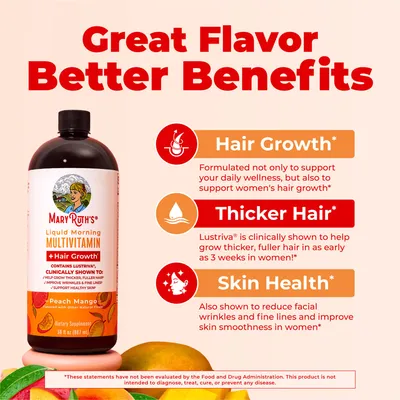
- Convenient liquid format combining a full multivitamin with a hair-growth blend
- Replaces a separate multivitamin, which offsets the price
- Vegan-friendly options available within the brand line
- Good fit for anyone who struggles with capsules
- Biotin only helps if you are deficient, and most people are not
- High-dose biotin can interfere with thyroid, hormone, and troponin lab tests
- No collagen — pair with a stand-alone collagen if that is part of your plan
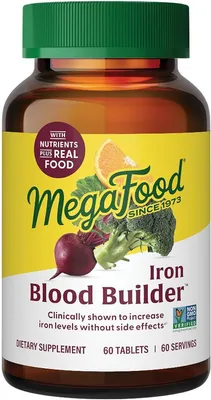
- 26 mg elemental iron with vitamin C for better absorption
- Far gentler on digestion than ferrous sulfate
- Non-GMO, glyphosate-tested, whole-food-based formulation
- Well-tolerated for long-term use when ferritin is low
- About $24 — the least expensive option here
- Only useful if your ferritin is genuinely low — confirm with bloodwork first
- Iron without deficiency can cause harm, especially with hemochromatosis
- Must be separated from levothyroxine, calcium, and antacids by several hours
Frequently Asked Questions
Do hair growth supplements actually work after 50?
They work best when they correct a real deficiency — low iron, low zinc, or inadequate protein — and much less reliably when your nutrient levels are already normal. Multi-ingredient botanical formulas such as Nutrafol Women's Balance have placebo-controlled trial data in menopausal women, but the studies are modest in size and manufacturer-supported. No supplement reverses hereditary pattern hair loss.
What causes hair thinning after 50 besides menopause?
The most common correctable causes are iron deficiency, thyroid disease (both underactive and overactive), low protein intake, and medication side effects from beta-blockers, anticoagulants, antidepressants, and retinoids. Hereditary pattern hair loss also progresses with age in both men and women. A complete blood count, ferritin, TSH, vitamin D, and zinc panel identifies most of them.
Is biotin good for thinning hair over 50?
Only if you are genuinely deficient, which is uncommon — the adequate intake is just 30 micrograms a day and most diets supply it. High-dose biotin can also interfere with thyroid, hormone, and troponin lab tests, and the FDA has previously warned that this may distort results used to diagnose a heart attack. Tell your doctor and any lab if you take it.
How long do hair supplements take to work after 50?
Plan on 3 to 6 months before you see any change, because the hair growth cycle simply does not move faster than that. Shedding usually settles first, and visible density follows months later. If nothing has changed by month six, stop and revisit the cause with your doctor rather than switching brands.
Can men over 50 take women's hair supplements?
Generally no, mainly because many women's formulas include iron, which men rarely need and which can cause harm in excess. Men should look for iron-free formulas with disclosed ingredient amounts, zinc at or below 25 mg, and third-party testing. For male pattern thinning, over-the-counter topical minoxidil has far stronger evidence than any capsule.