
Nutrafol Women's Balance Review: Is It Worth It for Menopause Hair Loss?
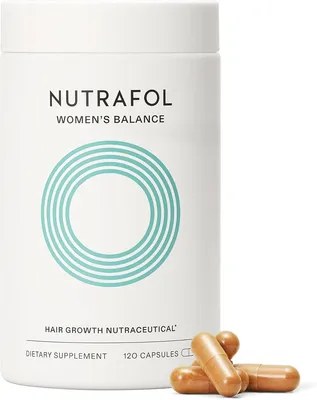
Nutrafol Women's Balance
Best overall for women 45 and older with hormonal thinning who have already ruled out thyroid, iron, and medication causes — the only hair supplement with menopause-specific peer-reviewed RCT data, and worth the price if you can commit for six months.
- Peer-reviewed, placebo-controlled trial data specifically in peri- and postmenopausal women
- Multi-ingredient formula targets DHT, stress, nutrient gaps, and inflammation at once
- Combines saw palmetto, ashwagandha, curcumin, biotin, and marine collagen
Nutrafol Women’s Balance runs about $88 a month and asks you to swallow four capsules a day — so the honest question is whether the evidence justifies roughly $1,056 a year. Here’s what the research actually shows: this is the one hair supplement with peer-reviewed, placebo-controlled trial data in peri- and postmenopausal women, and that puts it ahead of nearly every drugstore hair vitamin. It also hides its botanical amounts inside a proprietary blend, carries no third-party certification, and takes 3 to 6 months to show anything. Whether it is worth it depends almost entirely on why your hair is thinning.
Our Top Picks at a Glance
Three products, three different reasons your hair may be shedding. Match the product to the cause and you will spend less and see more.
| Product | Best for | Key spec | Price band | Our rating |
|---|---|---|---|---|
| Nutrafol Women’s Balance | Hormonal thinning during and after menopause | 4 capsules daily; saw palmetto, ashwagandha, curcumin, biotin, marine collagen | About $88/month | 4.5/5 |
| MaryRuth’s Liquid Morning Multivitamin + Hair Growth | Suspected nutrient gaps, or anyone who dislikes capsules | Liquid daily multivitamin with biotin and a hair-growth blend | About $40 | 4.3/5 |
| MegaFood Blood Builder | Thinning driven by confirmed low ferritin | 26 mg elemental iron with vitamin C | About $24 | 4.7/5 |
Prices are the site-stated figures from our own published reviews and move with sales and subscription terms. Confirm the current price and the current label before you order.
How We Evaluated
We did not run our own lab tests. This review weighs four things: published human trial evidence for the exact formula (not just for a single ingredient), how much the label actually tells you about doses, what the product costs per month and per year, and how the ingredients behave alongside the prescriptions women over 50 commonly take — thyroid medication, blood thinners, blood-pressure drugs, and diabetes medications.
We also gave weight to third-party testing marks such as USP Verified and NSF certification, because dietary supplements are not approved by the FDA for safety or effectiveness before they go on sale. Manufacturers are responsible for their own quality claims, so independent verification is one of the few outside checks a shopper has. Finally, we looked at what real users report about timelines — because a product that needs six months of $88 payments deserves an honest statement of when you can call it a failure.
Detailed Reviews
Best Overall: Nutrafol Women’s Balance
Who it’s for: women in perimenopause or after menopause with gradual, diffuse thinning — a widening part, a thinner ponytail, more scalp showing under bright light — who have already had thyroid, iron, and medication causes ruled out by a doctor.
Nutrafol Women’s Balance is the brand’s formula aimed specifically at women 45 and older, and it is the reason this product sits at the top of our list. The mix works on four fronts at once: saw palmetto to blunt DHT, the hormone byproduct linked to pattern hair loss; ashwagandha for the stress-hormone side of shedding; curcumin for inflammation; and biotin plus marine collagen for the raw materials of the hair shaft. It was developed by physicians and is widely recommended in dermatology offices.
The evidence is the strongest part of the story. In a six-month randomized, double-blind, placebo-controlled trial published in the Journal of Drugs in Dermatology, peri- and postmenopausal women with self-perceived thinning hair took four capsules a day of this formula or a placebo, and the supplement group showed greater gains in hair count and hair quality than placebo. Two honest cautions: the trial was funded by the manufacturer, and it enrolled fewer than 100 women — small by drug-trial standards. Still, almost no hair supplement on the shelf has anything comparable in this population.
The weak parts are the label and the price. Individual botanical amounts sit inside a proprietary blend, so you cannot tell how much saw palmetto or curcumin you are getting per day, and you cannot compare it ingredient-for-ingredient with a cheaper product. There is no USP Verified or NSF mark. At about $88 a month, a full year runs roughly $1,056, and the four-capsule daily dose is a genuine obstacle if you already take several pills. Because the formula contains marine collagen, skip it if you have a fish or shellfish allergy.
Pros: peer-reviewed trial data in exactly the right population; a formula that addresses several plausible causes at once; physician-developed with dermatologist backing; consistent, well-organized user reports of less shedding by month three.
Considerations: about $88 a month with no third-party certification; four capsules daily; proprietary blend hides the doses.
Verdict: the best evidence-backed choice for hormonal thinning after 45 — if you can absorb the cost for at least six months and your bloodwork is clean.
For how this compares with other menopause-focused options, see our roundup of the best supplements for menopause hair loss and thinning.
Best for Suspected Nutrient Gaps: MaryRuth’s Liquid Morning Multivitamin + Hair Growth
Who it’s for: women who dislike swallowing capsules, or who have been told their diet is thin on the basics and want one liquid dose that covers a daily multivitamin and a hair blend together.
MaryRuth’s Liquid Morning Multivitamin + Hair Growth costs about $40 and folds a full daily multivitamin, biotin, and a hair-growth blend into a single liquid dose. If it replaces a multivitamin you were buying anyway, the real added cost is smaller than the sticker suggests. The brand line includes vegan-friendly options, and the liquid format is a genuine relief for anyone managing a long medication list.
Here is the part most hair-vitamin marketing leaves out: biotin helps hair only if you are actually deficient, and biotin deficiency is rare in people eating a normal mixed diet, according to the NIH Office of Dietary Supplements. High-dose biotin can also interfere with common blood tests — it may skew troponin results used to diagnose heart attacks, along with thyroid and hormone panels. Tell your doctor and the lab that you take it, and ask whether to pause it before bloodwork.
Pros: one liquid dose covers a multivitamin plus a hair blend; easy for pill-averse users; vegan-friendly options in the brand line; offsets the cost of a separate multivitamin.
Considerations: biotin only helps if you are deficient, and most women are not; no collagen, so pair it with a stand-alone collagen if that is part of your plan; biotin can distort lab results.
Verdict: reasonable if a deficiency is suspected or confirmed, or if combined liquid dosing is what will keep you consistent — but it is not a substitute for Nutrafol’s trial evidence.
Best When Ferritin Is Low: MegaFood Blood Builder
Who it’s for: women whose bloodwork shows low ferritin, the stored-iron marker that is frequently behind diffuse shedding in women who still have heavy periods in perimenopause or who eat little red meat.
MegaFood Blood Builder is the cheapest product here at about $24, and it earns our highest rating — 4.7/5 — for a narrow but important job. It provides 26 mg of elemental iron with vitamin C to aid absorption, in a whole-food-based, non-GMO, glyphosate-tested formulation. Women consistently report far less constipation than with ferrous sulfate, which matters when iron repletion takes months.
The catch is absolute: do not take iron on a hunch. The recommended dietary allowance for women over 50 is only 8 mg a day, per the NIH Office of Dietary Supplements, and iron supplementation without deficiency can cause real harm, including dangerous accumulation in people with hemochromatosis. Ask for a ferritin level along with a CBC before you start, and separate iron from levothyroxine, antacids, and calcium by several hours, since they block each other’s absorption.
Pros: 26 mg elemental iron with vitamin C for absorption; much gentler on digestion than ferrous sulfate; non-GMO, glyphosate-tested, whole-food-based; well tolerated for the long stretch that ferritin repletion requires.
Considerations: useful only with confirmed low ferritin; iron without deficiency can be harmful; timing around other medications takes planning.
Verdict: if your ferritin is low, this $24 bottle may do more for your hair than an $88 botanical blend — and it is the first thing to fix.
Buyer’s Guide: What to Look For
Hair supplements fail most often not because the ingredients are useless but because they were aimed at the wrong cause. Work through these points before you subscribe to anything.
Match the product to the cause, not to the marketing
Thinning after 50 usually traces to one of four things: falling estrogen letting DHT dominate (pattern thinning at the part and crown), low ferritin or low vitamin D, thyroid disease, or a medication. Nutrafol Women’s Balance targets the first. Iron targets the second. Nothing in a bottle fixes an underactive thyroid or a drug side effect. Our guide to perimenopause symptoms and what actually helps walks through how hormonal shedding differs from the other patterns.
What a proprietary blend hides
When a label groups ten botanicals under one blend name with a single total weight, you cannot tell whether you are getting a researched dose of saw palmetto or a sprinkle of it. That is the central transparency problem with Nutrafol’s formula, and it is why trial evidence for the finished product matters so much here — it is the only way to judge a blend you cannot read. If you want to get fluent at spotting this, our walkthrough on how to read a supplement label shows exactly where the disclosure ends.
Third-party testing is the only outside check
Look for USP Verified, NSF certification, or ConsumerLab approval on the bottle or the brand’s site. These marks confirm the product contains what the label says and is free of specified contaminants. None of the three products in this review carries a USP Verified or NSF mark, though MegaFood’s glyphosate testing is a meaningful extra step. Absence of a mark is not proof of a problem — most supplements lack one — but its presence is the single best quality signal available to a shopper.
Give it 3 to 6 months, and take a photo first
Hair grows in cycles measured in months, so no supplement can show results in three weeks. The main published trial of the Nutrafol formula ran six months, with a long-term follow-up study reporting results at 12 months. Before your first capsule, take a photo of your part line in the same bathroom light, then repeat monthly. Without photos, memory will tell you whatever you hope to hear. If nothing has changed by month six, stop paying.
Interactions to check before you start
These are botanicals with real pharmacology, not inert vitamins. Saw palmetto may raise bleeding risk alongside warfarin, clopidogrel, or daily aspirin, and it acts on hormone pathways, which matters if you take hormone therapy or tamoxifen. Ashwagandha may interact with thyroid medication and sedatives, and rare cases of liver injury have been reported. Curcumin can add to the effect of blood thinners and may lower blood sugar, which matters if you take diabetes medication. Iron competes with levothyroxine and antacids. Bring the actual bottle to your pharmacist and ask for a five-minute interaction check — it is free.
What you probably don’t need
Skip 10,000 mcg biotin megadoses; more biotin does nothing extra if you are not deficient and it worsens lab interference. Skip any product promising regrowth in 30 days, “clinically proven” claims with no published study you can look up, or a keratin “treatment from within.” And skip stacking three hair supplements at once — you will triple the cost, double the interaction risk, and never know which one worked. Nutrafol vs cheaper hair vitamins is usually the wrong comparison; Nutrafol vs a $40 blood panel is the better one.
When to See Your Doctor
Talk with your doctor before starting any hair supplement, and especially before starting one at $88 a month. A basic workup — CBC, ferritin, TSH, and vitamin D — costs a fraction of a year of capsules and can point you to a fixable cause. Ask your pharmacist to review the botanical list against your prescriptions; saw palmetto, ashwagandha, and curcumin all have interaction potential with the drugs commonly used after 50.
Make the appointment sooner, not later, if you notice any of the following:
- Sudden or patchy loss, or hair coming out in clumps, rather than gradual overall thinning
- Shedding that began 2 to 3 months after an illness, surgery, crash diet, or major stress
- Scalp redness, scaling, burning, pain, or smooth shiny patches where hair will not return — scarring types of hair loss need prompt treatment to preserve follicles
- New facial hair, acne, or a deepening voice along with scalp thinning
- Shedding that started within months of a new prescription or a dose change — thyroid medication, beta-blockers, anticoagulants, some antidepressants, and retinoids are recognized culprits
Also worth asking about: topical minoxidil, the only over-the-counter medication with FDA approval for female pattern hair loss, and prescription options a dermatologist can weigh against your health history. Supplements and topicals are not rivals — many dermatologists use both. Do not start Nutrafol, or any of these products, if you are pregnant or breastfeeding, and skip the marine collagen formula entirely if you have a fish or shellfish allergy.
Sources:
- Ablon G, Kogan S. A Randomized, Double-Blind, Placebo-Controlled Study of a Nutraceutical Supplement for Promoting Hair Growth in Perimenopausal, Menopausal, and Postmenopausal Women With Thinning Hair (PMID 33400421) — Peer-reviewed six-month randomized, double-blind, placebo-controlled trial of the Nutrafol Women’s Balance formula in peri- and postmenopausal women.
- PubMed: nutraceutical hair growth trials in menopausal women — Search listing for the peer-reviewed six-month trials of the Nutrafol formula in women with thinning hair.
- NIH Office of Dietary Supplements — Biotin Fact Sheet for Health Professionals — Supports that biotin deficiency is rare and that supplementation helps hair mainly in deficiency.
- NIH Office of Dietary Supplements — Iron Fact Sheet for Health Professionals — Supports the 8 mg/day RDA for women over 50 and the risks of iron supplementation without deficiency.
- NCCIH — Saw Palmetto — Supports the reported side effects of saw palmetto (digestive symptoms, dizziness, headache) and general safety and regulatory context.
- NCCIH — Ashwagandha — Supports thyroid-medication and sedative interaction cautions and rare reports of liver injury.
- NCCIH — Turmeric — Supports curcumin’s adverse-effect profile, reports of liver injury with high-bioavailability formulations, and the general caution to discuss herb–drug combinations with a provider.
- Mayo Clinic — Hair Loss: Symptoms and Causes — Supports medication and illness-related causes of shedding and the warning signs that need prompt medical evaluation.
- Cleveland Clinic — Hair Loss in Women — Supports the pattern of hormonal thinning after menopause and the recommended workup.
- NCCIH — Federal Regulation of Herbal Products (Ashwagandha fact sheet) — Supports the statement that dietary supplements are not FDA-approved for safety or effectiveness before sale.
- USP Verified Mark — Verification Services — Explains what third-party USP verification confirms about supplement contents.
All Products We Reviewed
- Peer-reviewed, placebo-controlled trial data specifically in peri- and postmenopausal women
- Multi-ingredient formula targets DHT, stress, nutrient gaps, and inflammation at once
- Combines saw palmetto, ashwagandha, curcumin, biotin, and marine collagen
- Physician-developed with dermatologist endorsement
- Expensive — about $88 a month at subscription pricing, roughly $1,056 a year
- Four capsules daily is a lot for anyone already on multiple pills
- Botanical amounts are hidden inside a proprietary blend
- No USP Verified or NSF certification; contains marine collagen (fish/shellfish allergy risk)

- Convenient liquid format combining a full multivitamin with a hair-growth blend
- Vegan-friendly options available within the brand line
- Good fit for women who struggle with pills
- Replaces a separate multivitamin, which offsets the price
- Biotin only helps if you are deficient, and most women are not
- No collagen — pair with a stand-alone collagen if that is part of your plan
- High-dose biotin can interfere with thyroid, hormone, and troponin lab tests
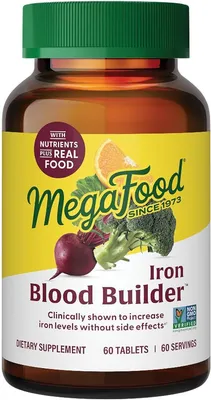
- 26 mg elemental iron with vitamin C for better absorption
- Far gentler on digestion than ferrous sulfate
- Non-GMO, glyphosate-tested, whole-food-based formulation
- Well tolerated over the months ferritin repletion takes
- Only useful if your ferritin is genuinely low — confirm with bloodwork first
- Iron without deficiency can cause harm, especially with hemochromatosis
- Must be separated from levothyroxine, calcium, and antacids by several hours
Frequently Asked Questions
Does Nutrafol really work for menopause hair loss?
In a six-month randomized, double-blind, placebo-controlled trial published in the Journal of Drugs in Dermatology, peri- and postmenopausal women taking four capsules daily of the Nutrafol Women's Balance formula showed greater improvement in hair count and hair quality than women taking a placebo. That is stronger evidence than nearly any other hair supplement offers. The trial was manufacturer-funded and enrolled fewer than 100 women, so treat it as promising rather than conclusive — and expect improvement in density and shedding, not full regrowth of long-lost hair.
How long does Nutrafol take to work?
Plan on 3 to 6 months before you judge it, because hair grows in cycles measured in months and the main published trial ran six months. Many women notice less shedding first, around month three, with visible density changes later. Photograph your part line in the same light before you start and once a month after; if nothing has changed by month six, stop spending.
Is Nutrafol worth the money compared with cheaper hair vitamins?
At about $88 a month, Nutrafol Women's Balance costs roughly $1,056 a year, versus about $40 for MaryRuth's Liquid Morning Multivitamin + Hair Growth or about $24 for MegaFood Blood Builder. The premium buys peer-reviewed trial data in menopausal women, which cheaper biotin vitamins do not have. But if low ferritin or a thyroid problem is driving your shedding, a blood test and a $24 iron supplement will likely do more than the expensive blend.
What are the side effects of Nutrafol Women's Balance?
The published trials of the formula describe it as well tolerated, though they were small and funded by the manufacturer. The individual ingredients carry known effects worth knowing: saw palmetto can cause mild stomach upset and headache, ashwagandha can cause digestive upset and drowsiness with rare reports of liver injury, and four capsules taken at once may sit poorly on an empty stomach. The formula contains marine collagen, so avoid it if you have a fish or shellfish allergy.
Can I take Nutrafol with thyroid medication or blood thinners?
Ask your doctor or pharmacist before you do. Ashwagandha may interact with thyroid medication, and saw palmetto and curcumin may add to the effect of warfarin, clopidogrel, or daily aspirin, raising bleeding risk. Bring the bottle to your pharmacy for an interaction check — it takes a few minutes and costs nothing.