
Best Butterbur for Hay Fever (2026)
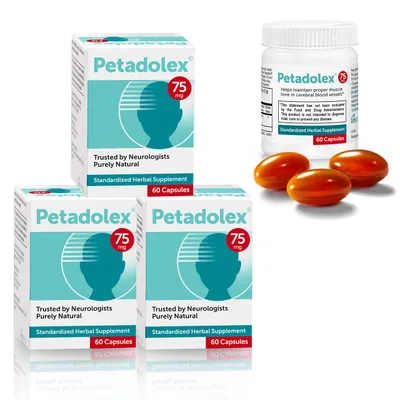
Linpharma Petadolex
Best overall — the gold-standard PA-free butterbur. If you're going to try butterbur, this is the brand to use. The clinical trial evidence applies specifically to this extract.
- PA-free butterbur — the specific extract used in BMJ-published trials
- Standardized to 15% petasin/isopetasin (active compounds)
- Head-to-head efficacy with cetirizine in 2002 Schapowal trial
Butterbur has the strongest single-supplement evidence base in allergy research — when you buy the right form. The wrong form can cause liver damage. This guide explains what to look for, what to avoid, and why Petadolex specifically is the brand that matters.
The 30-second answer
- Best overall: Linpharma Petadolex — PA-free, standardized to 15% petasin, the extract used in BMJ-published trials.
- Critical safety rule: Only PA-free (Pyrrolizidine Alkaloid removed) butterbur. Never generic butterbur, butterbur tea, or unprocessed extracts.
- Dose: 75mg PA-free extract twice daily.
- Onset: 1-3 days for most users; full effect at 1-2 weeks.
- The trial that matters: 2002 BMJ study (Schapowal) showed Petadolex matched cetirizine head-to-head with zero sedation.
- Avoid if: liver disease, pregnant, breastfeeding, under 6, or taking liver-stressing medications.
Now the detail.
Why butterbur has the strongest allergy supplement evidence
The 2002 BMJ trial by Schapowal is the cornerstone study. It randomized 125 patients with seasonal allergic rhinitis to either Petadolex (32mg three times daily) or cetirizine (10mg daily) for two weeks. Both produced equivalent symptom reduction on validated scales. The butterbur group reported zero sedation; the cetirizine group reported 10% drowsiness.
A 2004 follow-up by the same group (Schapowal, Phytotherapy Research) replicated the finding in a larger sample. A 2005 study (Lee, Phytomedicine) compared butterbur to fexofenadine (Allegra) with similar results.
This is rare in supplement research. Most “natural allergy” claims rest on cell or animal studies, or on weak human trials. Butterbur has multiple head-to-head trials against gold-standard antihistamines showing equivalent efficacy.
The mechanism explains why: petasin and isopetasin (the active compounds in butterbur) inhibit leukotriene synthesis — a major inflammatory pathway in allergic reactions that antihistamines don’t address. They also reduce histamine release from mast cells. Combined, the effect approximates a leukotriene modifier (like Singulair) plus a mast cell stabilizer in a single compound.
The PA-free safety issue
Unprocessed butterbur naturally contains pyrrolizidine alkaloids (PAs) — compounds that are hepatotoxic and potentially carcinogenic. PAs accumulate in the liver and can cause veno-occlusive disease, hepatitis, and liver failure.
This is why only PA-free butterbur is safe. Modern supplements use proprietary extraction to remove PAs to undetectable levels. The label should say PA-free, PA-removed, or specify pyrrolizidine alkaloid removal certification.
Brands to trust: Petadolex — made by Weber & Weber in Germany and sold in the US by Linpharma and as Nature’s Way Petadolex Pro-Active. This is the extract used in the clinical trials, with decades of European post-marketing surveillance data.
Brands to scrutinize: Generic butterbur from less-established brands. Read the label carefully — if PA-free isn’t explicitly stated, don’t buy it.
Brands to avoid: Bulk butterbur powder, butterbur tea, raw butterbur leaf, butterbur extracts without PA-removal certification. Even short-term use can cause liver injury.
Petadolex is the specific extract used in trials
The clinical evidence base for butterbur is mostly built on Petadolex specifically — the patented extract made by Weber & Weber (distributed in the US by Linpharma). When you read “butterbur reduced hay fever symptoms 40%” or “butterbur matched cetirizine,” the underlying study almost always used Petadolex.
This matters because herbal extracts are not generic. Different butterbur preparations have different petasin content, different PA removal processes, and potentially different efficacy. A generic butterbur supplement may or may not deliver the effects observed in trials.
If you’re going to use butterbur, use Petadolex. The price difference between Petadolex ($32/month) and generic butterbur ($16/month) is the cost of the trial-validated extract.
How butterbur compares to other allergy treatments
| Treatment | Onset | Sedation | Beers Criteria for 65+ | Evidence base |
|---|---|---|---|---|
| Petadolex butterbur | 1-3 days | None | Safe | Multiple RCTs vs. cetirizine, fexofenadine |
| Cetirizine (Zyrtec) | Hours | Mild | Safe (low risk) | Extensive |
| Loratadine (Claritin) | Hours | Minimal | Safe (low risk) | Extensive |
| Fexofenadine (Allegra) | Hours | Minimal | Safe (low risk) | Extensive |
| Diphenhydramine (Benadryl) | Hours | Significant | Avoid (Beers Criteria) | Extensive |
| Quercetin + bromelain | 2-4 weeks | None | Safe | Mast cell stabilization, modest clinical trials |
| Nasal steroid spray | 3-7 days | None | Safe | Most effective for moderate-severe |
Where butterbur fits: First-line natural alternative for adults who want to avoid daily antihistamine use, or who experience side effects from second-generation antihistamines. Particularly relevant for adults over 65 transitioning off Benadryl-class first-generation antihistamines.
How to use butterbur
Standard regimen:
- Petadolex 75mg twice daily (or as directed on label — note that some products dose 32mg three times daily, which is the original trial protocol)
- Take with food to reduce GI upset
- Continue throughout your allergy season
- Stop during off-season (no benefit to year-round use; reduces overall liver exposure)
Pairing with other treatments:
- Petadolex + nasal steroid spray = strongest combination for moderate-severe allergies
- Petadolex + saline nasal rinse = good for sinus-heavy symptoms
- Petadolex as substitute for second-generation antihistamine = works well for many adults
Monitoring:
- If using >3 months continuously, ask your doctor about periodic liver function tests
- Stop and contact your doctor if you experience yellowing of skin/eyes, dark urine, abdominal pain, or unusual fatigue (signs of possible liver issues — rare but important to catch)
Who shouldn’t take butterbur
Avoid butterbur entirely if:
- You have any history of liver disease, hepatitis, or cirrhosis
- You’re pregnant or breastfeeding
- You’re under 6 years old
- You’re allergic to ragweed or related plants (Asteraceae family — cross-reactivity possible)
- You’re taking high-dose acetaminophen, methotrexate, isoniazid, or other liver-stressing medications
- You have a history of bile duct disease
- You’re on immunosuppressants (limited interaction data)
Talk to your doctor before starting butterbur if you’re on multiple medications, have chronic medical conditions, or are over 75.
What to skip
Generic butterbur supplements that don’t explicitly state PA-free. Liability risk is too high.
Butterbur tea, butterbur tincture, or butterbur leaf preparations. Traditional preparation methods don’t reliably remove PAs.
Higher-than-recommended doses. No evidence of additional benefit above 75mg twice daily; potentially adds liver burden.
Year-round continuous use. Take during allergy season; pause during off-season.
Butterbur for non-allergy uses without medical guidance. Some products are marketed for migraine prevention (some evidence) or other indications — discuss with your doctor before extended use.
The simple rule
PA-free Petadolex 75mg twice daily during allergy season. Start 1-2 weeks before peak pollen for full effect when symptoms hit. Combine with nasal steroid spray for moderate-severe cases. Skip generic butterbur, butterbur tea, and any product that doesn’t explicitly state PA-free.
For the broader allergy regimen, see our pillar guide to seasonal allergy supplements and the quercetin for allergies guide.
All Products We Reviewed
- PA-free butterbur — the specific extract used in BMJ-published trials
- Standardized to 15% petasin/isopetasin (active compounds)
- Head-to-head efficacy with cetirizine in 2002 Schapowal trial
- Most-recommended brand by integrative physicians
- More expensive than alternatives — about $1/day at clinical dose
- Mild GI upset or burping in ~5% of users
- Standardized butterbur root extract, 75 mg per veg capsule
- PA-free — each lot tested for pyrrolizidine alkaloids
- Budget option from a GMP-certified US manufacturer
- Widely available (iHerb, Amazon, vitamin retailers)
- Not the Petadolex extract used in the allergy trials — the evidence is extrapolated
- Capsules rather than softgels — some users report butterbur burps
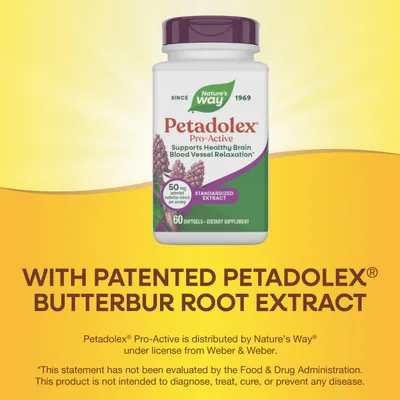
- Same PA-free Petadolex extract, sold by Nature's Way (the former Enzymatic Therapy line)
- GMP-certified, tested for PA content
- Slightly lower price per bottle than the Linpharma 75 mg version
- 50 mg softgels — easy to match the 50-75 mg doses used in the trials
- Same active ingredient as the Linpharma version — choice is mostly dose format and availability
- Capsule size is on the larger side
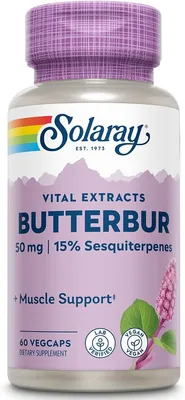
- States PA-free on label
- Lower cost than Petadolex brands
- Standardized petasin content
- Different extract than the one used in published clinical trials
- Less third-party validation than Petadolex
- Slightly lower per-capsule petasin content
- PA-free certification
- Most affordable butterbur option from a mainstream brand
- Widely available at chain pharmacies
- Generic butterbur — not the trial-validated Petadolex extract
- Lower standardized petasin content than Petadolex
- Limited third-party testing transparency
Frequently Asked Questions
What is butterbur and how does it work for hay fever?
Butterbur (Petasites hybridus) is a perennial plant whose root extracts have been used medicinally for centuries. The active compounds — petasin and isopetasin — inhibit leukotriene synthesis (a major inflammatory pathway in allergic reactions) and reduce histamine release from mast cells. The mechanism is similar to combining a leukotriene modifier (like Singulair/montelukast) with a mast cell stabilizer in one compound. Butterbur reduces both the immediate sneezing/runny nose response and the delayed inflammatory phase that causes congestion and sinus pressure. It does not cause sedation because it doesn't cross the blood-brain barrier the way first-generation antihistamines do. Most users notice symptom reduction within 1-3 days, with full effect at 1-2 weeks of consistent use.
Why does butterbur have to be PA-free?
Unprocessed butterbur naturally contains pyrrolizidine alkaloids (PAs) — compounds that are hepatotoxic (liver-damaging) and potentially carcinogenic. PAs accumulate in the liver and can cause veno-occlusive disease, hepatitis, and liver failure with prolonged exposure. Modern butterbur supplements use proprietary extraction processes that remove PAs to undetectable levels — this is what 'PA-free' means on the label. Petadolex (Linpharma; Nature's Way Petadolex Pro-Active) and PA-tested extracts such as NOW Foods Butterbur are the two most-validated PA-free brands. NEVER buy generic butterbur, butterbur tea, or butterbur products that don't explicitly state PA-free or PA-removal certification. Even short-term use of unprocessed butterbur can cause liver injury. The 2002 BMJ trial and subsequent research used Petadolex specifically — extract this from a research paper and treat it as a brand requirement, not a generic herb recommendation.
How does butterbur compare to cetirizine, fexofenadine, and other antihistamines?
Head-to-head trials show comparable efficacy. The 2002 Schapowal BMJ trial (n=125) compared Petadolex 32mg three times daily to cetirizine 10mg daily for two weeks in seasonal allergic rhinitis — both produced equivalent symptom reduction on SF-36 and patient global assessment scales. The butterbur group reported zero sedation; the cetirizine group reported 10% drowsiness. A 2005 study (Lee, Phytomedicine) compared butterbur to fexofenadine (Allegra) with similar findings of equivalent efficacy. Where butterbur differs from second-generation antihistamines: (1) Slower onset — butterbur takes 1-3 days; cetirizine works within hours. (2) Better tolerability for most users — no dry mouth, no sedation even at higher doses. (3) Different mechanism — butterbur reduces leukotrienes (which antihistamines don't address). Many integrative physicians recommend butterbur as a first-line OTC alternative for adults who prefer to avoid daily antihistamines or who experience side effects from second-generation antihistamines.
Is butterbur safe long-term?
PA-free butterbur (Petadolex specifically) has been studied for up to 5 months of continuous use in clinical trials with no serious adverse events. The longest-term safety data comes from European post-marketing surveillance — Petadolex has been on the German market for decades with an established safety profile. Common side effects (rare): mild GI upset, burping with the characteristic butterbur taste, occasional skin rash. Liver enzyme monitoring has not shown elevations in trials of PA-free extracts. That said, the long-term safety database is smaller than for established antihistamines. Standard prudent practice: take butterbur during your allergy season, stop during off-season, get periodic liver function tests if you're a heavy/long-term user, and avoid combining with other liver-stressing medications without your doctor's input. Do not use butterbur if you have any history of liver disease.
Who should NOT take butterbur?
Avoid butterbur entirely if: (1) You have any history of liver disease, hepatitis, or cirrhosis. (2) You're pregnant or breastfeeding — safety data are insufficient. (3) You're under 6 years old. (4) You're allergic to ragweed or related plants (Asteraceae family) — cross-reactivity is possible. (5) You're taking medications that stress the liver (acetaminophen at high doses, methotrexate, certain statins, isoniazid) — combining adds liver burden. (6) You have a history of bile duct disease. (7) You're on immunosuppressants — limited interaction data. Talk to your doctor before starting butterbur if you're on multiple medications, have any chronic medical conditions, or are over 75. The PA-free safety profile is good but not zero-risk.
How long until butterbur works for hay fever?
Butterbur acts faster than most natural allergy supplements. Most users report noticeable symptom reduction within 1-3 days of starting at the clinical dose (75mg PA-free extract twice daily). Full effect develops over 1-2 weeks of consistent use. This is significantly faster than quercetin (2-4 weeks for full effect) and comparable to second-generation antihistamines. The fast onset means butterbur works as both a reactive treatment (start it after allergy symptoms hit) and a preventive treatment (start 1 week before your allergy season for full coverage when pollen counts spike). Many adults use butterbur as their primary allergy supplement throughout the season. Some use it acutely during peak pollen days while maintaining a quercetin baseline year-round. The key is consistency during the allergy period — butterbur taken twice daily produces meaningful symptom control; once-daily dosing or skipping doses reduces effectiveness.
Can I take butterbur with other allergy medications?
Generally yes, with one important caveat: butterbur shouldn't be combined with sedating drugs without doctor input, even though butterbur itself is non-sedating. Combinations that work well: (1) Butterbur + nasal steroid spray (Flonase, Nasonex) — different mechanisms, additive benefit, very common combination. (2) Butterbur + saline nasal rinse — pure environmental complement. (3) Butterbur + vitamin C — no interactions, complementary mechanisms. (4) Butterbur as substitute for second-generation antihistamine — many people switch off Claritin/Zyrtec/Allegra to butterbur and find it adequate. Combinations to discuss with your doctor: (1) Butterbur + Singulair (montelukast) — both target leukotrienes; redundancy may not add benefit. (2) Butterbur + first-generation antihistamines — you should be off these anyway if over 65. (3) Butterbur + multiple liver-affecting medications — talk to your prescribing doctor. Avoid: butterbur + any unprocessed herbal liver tonics or PA-containing herbs (comfrey, coltsfoot).