
Best Adaptogens for Stress Over 50 (2026 Review)
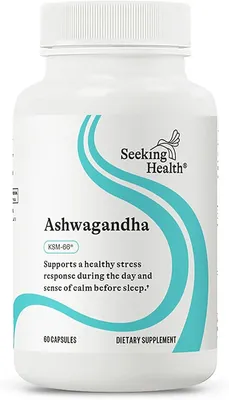
Jarrow Formulas Ashwagandha KSM-66
Best overall adaptogen for stress and sleep — KSM-66 has the strongest clinical evidence of any ashwagandha extract, and this is the cleanest version on the mainstream market.
- KSM-66 extract — the most clinically studied ashwagandha form
- 300mg per capsule (600mg daily matches trial dosing)
- Root-only extraction (higher withanolide concentration)
For chronic stress and poor sleep, ashwagandha KSM-66 at 600mg daily has the strongest evidence — Jarrow KSM-66 Ashwagandha is our top pick. For mental fatigue, low mood, and burnout-style exhaustion, Rhodiola rosea at 200-400mg daily (Gaia Herbs Rhodiola) is the better match. Holy basil fits stress that travels with blood sugar concerns. Reishi supports sleep and immunity. Cordyceps helps with exercise tolerance and age-related fatigue. The key to getting results from adaptogens is matching the herb to your primary symptom rather than buying whichever blend is currently on sale.
We spent six weeks reviewing the clinical literature on adaptogens, focusing on trials conducted in adults over 40 and dosing regimens that match real clinical evidence rather than proprietary-blend marketing. Below are the five adaptogens with enough published human data to earn a place on this list — and the honest context you need to pick the one that fits your situation.
Key Takeaways
- Ashwagandha KSM-66 at 600mg daily is the best-studied adaptogen for stress and sleep — multiple trials show 22-28% cortisol reduction after 8 weeks
- Rhodiola rosea at 200-400mg daily is the fastest-acting adaptogen — benefits often appear within 1-2 weeks for mental fatigue and burnout
- Holy basil (tulsi) helps with stress that comes with blood sugar or inflammation concerns — gentlest of the five
- Reishi mushroom is the traditional sleep adaptogen — works best for people with racing-mind insomnia rather than physical sleep disruption
- Cordyceps supports exercise tolerance and stamina rather than stress — choose it for age-related energy decline
- Match the adaptogen to your symptom profile — taking three adaptogens at once makes it impossible to know what’s working
What Are Adaptogens?
The term “adaptogen” was coined in 1947 by Soviet pharmacologist Nikolai Lazarev and refined in the 1960s by his student Israel Brekhman. To qualify as a true adaptogen, a substance must meet three criteria: it must be non-toxic at normal doses, produce a non-specific increase in the body’s resistance to stress, and help return the body to a balanced physiological state.
The modern scientific understanding centers on the HPA axis — the hypothalamic-pituitary-adrenal pathway that governs your stress response. When you encounter a stressor (work, grief, illness, lack of sleep), your hypothalamus signals your pituitary, which signals your adrenal glands to release cortisol. Cortisol mobilizes energy, sharpens attention, and suppresses non-essential functions like digestion and immune activity.
This system is built for short-term emergencies. It’s not built for decades of low-grade, chronic stress — which is what most adults over 50 are actually dealing with.
Adaptogens appear to modulate the HPA axis rather than simply suppress it. When cortisol is chronically elevated, they tend to lower it. When cortisol rhythm is flattened (common in burnout and long-term stress), they tend to help restore normal variation. This “bidirectional” effect is what distinguishes adaptogens from sedatives or stimulants.
The strongest clinical evidence is for ashwagandha and Rhodiola rosea. Holy basil, reishi, cordyceps, schisandra, and eleuthero have supporting evidence of varying quality. Ginseng (Panax) is often called an adaptogen but has a more stimulant-like profile and different risk considerations, so we’re not covering it here.
Why Adaptogens Matter More After 50
The stress response system changes with age, and the changes matter for choosing the right support.
Cortisol rhythm flattens. A healthy cortisol curve peaks in the early morning and drops across the day, hitting its lowest point in the hours before sleep. With age — and especially with chronic stress — this curve flattens. Morning cortisol can be blunted (contributing to low morning energy), while evening cortisol can stay elevated (contributing to difficulty falling asleep). A 2009 study in Psychoneuroendocrinology documented this flattening pattern in older adults and linked it to poorer sleep quality and more rapid cognitive decline.
Menopause and andropause add a layer. Declining estrogen disrupts the serotonin system and the thermoregulatory zone, amplifying the felt experience of stress. Declining testosterone in men has similar effects on mood and energy. Adaptogens don’t replace hormone therapy, but they can help stabilize the stress response system that’s working harder to compensate.
Sleep fragmentation feeds the problem. Poor sleep raises cortisol the next day, which worsens sleep the next night, which raises cortisol further. Adaptogens that support sleep — particularly ashwagandha and reishi — can interrupt this cycle without the dependence risks associated with prescription sedatives.
Medication load increases. Most adults over 50 are taking at least one prescription medication, and many are taking several. This changes the calculus for adaptogens. It’s not just “does this herb work?” — it’s “does this herb work without interfering with what’s already working?” That’s why we pay close attention to interactions in every product recommendation below.
Our Top Picks Compared
1. Jarrow Formulas Ashwagandha KSM-66 — Best Overall
Ashwagandha (Withania somnifera) is the most-studied adaptogen for stress, sleep, and cortisol regulation. Among ashwagandha extracts, KSM-66 is the most rigorously researched — a root-only extract standardized to 5% withanolides, the active compounds responsible for most of the herb’s effects.
How it works: Ashwagandha appears to modulate the HPA axis by reducing cortisol output and lowering the perceived-stress response. It also has mild GABAergic activity, which contributes to its calming effect on anxiety and sleep. Unlike a sedative, it doesn’t knock you out — it lowers the underlying arousal that makes it hard to settle down.
The evidence: A 2012 randomized controlled trial by Chandrasekhar et al. in chronically stressed adults showed that 300mg of KSM-66 twice daily for 60 days produced a 27.9% reduction in serum cortisol and significant improvements in perceived stress scores compared to placebo. A 2019 study in Medicine found that KSM-66 at 600mg daily improved sleep quality, sleep onset latency, and mental alertness after 8 weeks. Multiple additional trials have replicated the cortisol and stress findings.
Dosing: 300mg twice daily (600mg total), taken with meals. If using for sleep specifically, weight the evening dose more heavily — 200mg morning, 400mg evening is a reasonable variation. Allow 4-8 weeks for full effect.
Safety: Ashwagandha can increase thyroid hormone levels, which is beneficial for some people with subclinical hypothyroidism but can destabilize dosing for anyone on thyroid medication. Check with your doctor if you take levothyroxine or another thyroid drug. It may also enhance the effects of sedatives and immunosuppressants. Not recommended during active autoimmune flares without supervision, and should be avoided during pregnancy.
Who it’s best for: Adults over 50 whose primary complaint is chronic stress, anxiety, or fragmented sleep. Particularly useful when stress shows up as difficulty “switching off” at night. For men specifically interested in the testosterone-related effects, see our companion article: Does Ashwagandha Boost Testosterone?
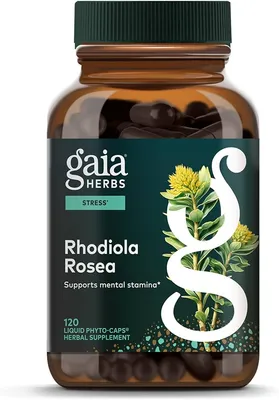
2. Gaia Herbs Rhodiola Rosea — Best for Mental Fatigue
Rhodiola rosea is the adaptogen for exhaustion-type stress — the kind where you’re not anxious, you’re just depleted. Traditional use across Scandinavia and Russia emphasized rhodiola for endurance, altitude tolerance, and recovery from physical and mental strain.
How it works: Rhodiola contains rosavins and salidroside, compounds that appear to modulate neurotransmitter systems involved in fatigue and mood. It has mild monoamine oxidase inhibition (similar in mechanism to some antidepressants, though far weaker), and it influences mitochondrial efficiency and ATP production. This combination gives rhodiola its signature effect: reduced fatigue without the stimulant feel of caffeine.
The evidence: A 2007 randomized trial by Darbinyan et al. in adults with stress-related fatigue found that 576mg of standardized rhodiola extract daily produced significant improvements in fatigue, attention, and quality of life within 28 days. A 2012 study in Phytomedicine showed measurable fatigue reduction after just one week of use. A 2015 trial in Phytotherapy Research used rhodiola for mild to moderate depression and found benefits comparable to sertraline with far fewer side effects, though the antidepressant effect was modest.
Dosing: 200-400mg of standardized extract (3% rosavins, 1% salidroside) once or twice daily, taken before noon. Rhodiola can be mildly stimulating, so evening doses often interfere with sleep.
Safety: The MAOI-like activity means you should be cautious combining rhodiola with SSRIs, SNRIs, or traditional MAO inhibitors. Interaction severity is generally mild, but the combination should be cleared by your prescribing physician. Rhodiola may also mildly lower blood pressure — worth noting if you take antihypertensives. Most herbalists recommend cycling rhodiola (8-12 weeks on, 2-4 weeks off) to maintain effectiveness.
Who it’s best for: Adults over 50 with burnout-style fatigue, mental exhaustion, or mild low mood — especially those who describe feeling “depleted” rather than “anxious.” Also a reasonable choice for age-related fatigue that hasn’t responded to basic lifestyle support. See our broader guide: Best Supplements for Energy After 60
3. Organic India Tulsi Holy Basil — Best for Stress with Metabolic Concerns
Holy basil (Ocimum sanctum, known as tulsi in Ayurvedic tradition) is the gentlest of the major adaptogens. It’s less studied than ashwagandha or rhodiola but has a useful combination of effects — mild stress relief plus support for blood sugar regulation and inflammation.
How it works: Holy basil contains eugenol, ursolic acid, and a collection of other compounds that appear to modulate cortisol, support insulin sensitivity, and reduce inflammatory cytokines. The mechanism is less well-defined than for ashwagandha, but the consistency of traditional use across millennia and the modest modern clinical data suggest real effects.
The evidence: A 2014 systematic review in the Journal of Ayurveda and Integrative Medicine pooled 24 clinical studies and found holy basil produced measurable improvements in blood glucose, blood pressure, anxiety scores, and perceived stress. A 2008 trial in Nepal Medical College Journal showed holy basil reduced fasting blood glucose by 17.6% and post-meal glucose by 7.3% over 30 days in adults with type 2 diabetes. Smaller studies have documented cortisol-lowering and anxiolytic effects, though the effect size is modest.
Dosing: 300-600mg of standardized extract daily, often split between morning and evening. Traditional use also includes tulsi tea (several cups daily), which can be a gentler and more palatable approach.
Safety: Holy basil is one of the safer adaptogens, but it can lower blood sugar. If you take metformin, insulin, or other diabetes medications, close glucose monitoring is warranted. It may also mildly thin the blood, so discuss with your doctor before surgery or if you take warfarin or aspirin regularly.
Who it’s best for: Adults over 50 whose stress travels with elevated fasting glucose, high-normal blood pressure, or inflammation markers. Also a good first-choice adaptogen for people who are cautious about supplementing and want the gentlest option with meaningful evidence.
4. Host Defense Reishi Mushroom — Best for Sleep and Immunity
Reishi (Ganoderma lucidum) is a medicinal mushroom with a 2,000-year history in East Asian traditional medicine, where it was called the “mushroom of immortality.” Modern research suggests the traditional reverence was overstated, but reishi does have real effects on sleep quality and immune modulation.
How it works: Reishi contains triterpenes and beta-glucans that appear to calm the nervous system, support regulatory immune function, and mildly lower blood pressure. The sleep effect seems to work through reduced sympathetic nervous system activity rather than direct sedation — which is why it’s particularly useful for racing-mind insomnia rather than physical sleep disruption.
The evidence: A 2012 study in Pharmacology, Biochemistry and Behavior showed reishi extract improved sleep time and sleep quality in animal models through serotonergic and GABAergic pathways. Human evidence is thinner but supportive — a 2005 trial found reishi reduced fatigue and improved quality of life in cancer patients, and a 2016 study in Journal of Ethnopharmacology showed reishi improved fatigue and well-being in adults with neurasthenia (a condition characterized by persistent fatigue and weakness).
Dosing: 1,500-3,000mg of dual-extracted reishi daily. “Dual-extracted” means both water and alcohol extraction, which captures both the water-soluble beta-glucans and the alcohol-soluble triterpenes. Look for products that specify fruiting body (not just mycelium grown on grain, which is a far weaker preparation).
Safety: Reishi can enhance the effects of blood thinners — avoid combining with warfarin or discuss closely with your doctor. It may also mildly lower blood pressure and blood sugar. Most people tolerate it well, though some report mild digestive upset initially.
Who it’s best for: Adults over 50 whose stress manifests as busy-mind insomnia, frequent illness during stressful periods, or general depletion. Reishi pairs well with ashwagandha for sleep support — take reishi during the day, ashwagandha in the evening.
5. Real Mushrooms Cordyceps-M — Best for Energy and Stamina
Cordyceps (Cordyceps militaris in most supplements, though traditional use referenced Cordyceps sinensis) is less of a stress adaptogen and more of an energy and performance adaptogen. If your primary complaint is age-related fatigue limiting your ability to exercise or get through the day, cordyceps deserves consideration.
How it works: Cordyceps contains cordycepin and adenosine analogs that appear to support mitochondrial ATP production and oxygen utilization. The effect is more like improved metabolic efficiency than direct stimulation — you produce energy more effectively rather than being artificially revved up.
The evidence: A 2010 study in the Journal of Alternative and Complementary Medicine found cordyceps supplementation improved exercise performance and VO2 max in healthy older adults after 12 weeks. A 2017 trial in the Journal of Dietary Supplements showed improved high-intensity exercise tolerance in active adults. Human evidence for general fatigue reduction (beyond exercise contexts) is thinner, though animal data is broader.
Dosing: 1,000-3,000mg of cordyceps extract daily. Look for fruiting body products with disclosed beta-glucan content — many cheap cordyceps supplements are mycelium-on-grain products with minimal active compounds. Real Mushrooms is one of the few brands that tests and discloses beta-glucan content.
Safety: Generally well-tolerated. May raise blood sugar slightly in some people, which is worth monitoring for diabetics. Some anecdotal reports of stimulant-like effects at high doses — start at the lower end of the dose range and build up.
Who it’s best for: Adults over 50 whose primary complaint is declining exercise tolerance, stamina loss, or physical fatigue (rather than stress or anxiety). Also a reasonable addition for people already taking ashwagandha or rhodiola who want additional support for physical energy.
Adaptogen Safety and Interactions
Adaptogens are generally safe, but they’re not inert. Here are the interactions and cautions that matter most for adults over 50:
Thyroid medications. Ashwagandha can increase thyroid hormone levels, potentially destabilizing levothyroxine or methimazole dosing. Not a hard contraindication, but thyroid levels should be rechecked 6-8 weeks after starting ashwagandha, and dose adjustments may be needed.
Antidepressants. Rhodiola has mild MAOI-like activity and should be used cautiously with SSRIs, SNRIs, and MAO inhibitors. Serotonin syndrome from rhodiola-SSRI combinations is rare but documented. Discuss with your prescribing doctor before combining.
Blood thinners. Reishi mushroom and, to a lesser extent, holy basil can enhance the effects of warfarin, aspirin, and other anticoagulants. If you take blood thinners, consult your doctor and pharmacist before starting these adaptogens — INR monitoring may be needed.
Diabetes medications. Holy basil can meaningfully lower blood sugar, and cordyceps may slightly raise it. If you take metformin, insulin, or sulfonylureas, check blood sugar more frequently during the first month of use.
Sedatives and sleep medications. Ashwagandha and reishi both have mild sedative properties. Combining them with benzodiazepines, Z-drugs, or opioid pain medications can amplify sedation. Not dangerous at normal doses, but something to be aware of.
Immune-modulating medications. Reishi, cordyceps, and ashwagandha all have immune-modulating effects. If you take immunosuppressants (after organ transplant, for autoimmune disease, etc.), adaptogens should not be added without specialist input.
Pregnancy and breastfeeding. Most adaptogens lack adequate safety data in pregnancy and breastfeeding. While most readers of this article are past this stage, it’s worth noting if you’re advising adult children.
How to Choose Your Adaptogen
Rather than stacking multiple adaptogens (which most multi-herb “stress blends” do), pick the one that best matches your primary symptom:
If stress shows up as anxiety, tension, and difficulty falling asleep: Start with ashwagandha KSM-66. This is the most common stress pattern and has the best-matched evidence.
If stress shows up as mental fatigue, burnout, and low mood: Start with Rhodiola rosea. The HPA-axis-modulating mechanism fits the “depleted, not wired” profile better than ashwagandha does.
If stress travels with elevated blood sugar, blood pressure, or inflammation: Start with holy basil. The metabolic effects add value, and the herb itself is gentle.
If stress shows up as racing-mind insomnia and vulnerability to colds: Start with reishi mushroom. Takes longer to work but addresses the sleep-immune axis that other adaptogens don’t.
If your main issue is declining physical energy and exercise tolerance: Start with cordyceps. This isn’t a stress adaptogen so much as an energy adaptogen, and matching the herb to the mechanism matters.
Take one herb at a clinical dose for at least 8 weeks before deciding if it works. Keep a simple journal — stress score 1-10, sleep quality 1-10, energy 1-10 — so you can judge changes honestly rather than relying on memory. If you see no response after 12 weeks, try a different herb rather than adding a second one on top.
Approaches We Don’t Recommend
Several popular adaptogen categories didn’t make our list. Here’s why:
Proprietary “stress blends” at underdoses. Many products combine 8-12 herbs in a single capsule. Divided across so many ingredients, each herb ends up at 30-50mg — a fraction of the clinical dose. Multi-herb blends make sense for formulators and marketers, not for users who need meaningful effects.
Dong quai framed as an adaptogen. Dong quai is sometimes marketed as an adaptogen, particularly for women, but its mechanism is primarily mild phytoestrogenic activity rather than HPA-axis modulation. It doesn’t fit Brekhman’s definition and has a different safety profile — including bleeding risk and contraindications for estrogen-sensitive conditions.
Unstandardized “tonics” and traditional formulas. Some traditional Chinese or Ayurvedic formulas contain legitimate adaptogens, but the lack of standardization means batch-to-batch variation is extreme. Without knowing the withanolide, rosavin, or triterpene content, you can’t dose consistently or predict effects. Stick with standardized extracts for clinical-grade results.
“Super mushroom” blends with 10 mushrooms. Similar to the stress-blend problem. A product with reishi, cordyceps, lion’s mane, turkey tail, chaga, maitake, and shiitake at a combined 1,500mg serving is delivering 200mg of each mushroom — below the dose range in most clinical studies. Buy single-mushroom products and combine them yourself if needed.
Adaptogens marketed for cancer “support.” Some adaptogens have immune-modulating effects that make them inappropriate during active cancer treatment. Others may have mild hormonal activity that matters in estrogen-sensitive cancers. Never add adaptogens during cancer treatment or survivorship without oncologist approval.
The Bottom Line
Adaptogens are one of the more interesting categories of evidence-based supplements for adults over 50, but the market is crowded with underdosed blends and unsupported claims. The five on this list — ashwagandha, rhodiola, holy basil, reishi, and cordyceps — each have enough human evidence and traditional-use depth to earn their place. The difference between getting results and wasting money is choosing the right one for your actual symptom pattern and taking it at a clinical dose for long enough to judge the effect.
If you’re not sure where to start, Jarrow KSM-66 Ashwagandha is the most broadly applicable choice — the widest evidence base, the most common stress pattern it addresses, and a safety profile that fits most adults over 50 who aren’t on thyroid medication. Give it 8 weeks, track your sleep and stress honestly, and reassess.
As with any supplement, talk to your doctor and pharmacist before starting, especially if you take prescription medications. Bring the list above — the interactions are real and worth discussing.
For related reading, see our Best Anti-Aging Supplements guide and our article on Best Supplements for Brain Fog.
Sources
- Chandrasekhar et al., 2012 — Ashwagandha KSM-66 and cortisol in chronically stressed adults
- Langade et al., 2019 — Ashwagandha and sleep quality
- Darbinyan et al., 2007 — Rhodiola rosea for stress-related fatigue
- Olsson et al., 2009 — Rhodiola rosea SHR-5 extract for stress-related fatigue
- Edwards et al., 2012 — Rhodiola and mental fatigue
- Mao et al., 2015 — Rhodiola rosea versus sertraline for depression
- Jamshidi & Cohen, 2017 — Clinical efficacy and safety of tulsi (holy basil)
- Saxena et al., 2012 — Tulsi and stress-related symptoms
- Agrawal et al., 1996 — Holy basil and type 2 diabetes
- Chu et al., 2012 — Ganoderma lucidum (reishi) and sleep
- Tang et al., 2005 — Ganopoly (reishi extract) for fatigue in cancer patients
- Chen et al., 2010 — Cordyceps and exercise performance in older adults
- Hirsch et al., 2017 — Cordyceps militaris and high-intensity exercise tolerance
- Heaney et al., 2009 — Cortisol rhythm and aging
All Products We Reviewed
- KSM-66 extract — the most clinically studied ashwagandha form
- 300mg per capsule (600mg daily matches trial dosing)
- Root-only extraction (higher withanolide concentration)
- Third-party tested, non-GMO, gluten-free
- Not recommended for adults on thyroid medication without monitoring
- Can be mildly sedating — best taken in the evening
- Standardized to 3% rosavins and 1% salidroside (clinical-grade ratio)
- Purity-Tested program with full farm-to-bottle traceability
- Liquid phyto-caps preserve active compounds better than dry powder
- Works within 1-2 weeks for most people
- Mild MAOI-like activity — use caution with SSRIs and antidepressants
- Can be mildly stimulating — take before noon

- USDA Organic and Non-GMO Project Verified
- Multi-strain blend (Rama, Krishna, Vana tulsi) matching traditional use
- Emerging evidence for blood sugar and inflammation support
- Well-tolerated — one of the gentlest adaptogens
- Evidence base is smaller than ashwagandha or rhodiola
- May lower blood sugar — monitor closely if on diabetes medication

- Organic, full-spectrum Ganoderma lucidum (mycelium and fruiting body)
- Founded by renowned mycologist Paul Stamets
- Traditional use for sleep and immune support
- No fillers, grain-free formulation
- Can enhance blood thinner effects — avoid with warfarin
- Slower onset (6-12 weeks) than ashwagandha or rhodiola

- Fruiting body only — not mycelium grown on grain
- Standardized for beta-glucans (tested and disclosed on label)
- Third-party tested for heavy metals and contaminants
- Emerging evidence for exercise tolerance and VO2 max
- Evidence for humans is thinner than for ashwagandha or rhodiola
- May raise blood sugar in some people — monitor if diabetic
Frequently Asked Questions
What is the best adaptogen for stress over 50?
For most adults over 50 dealing with chronic stress, ashwagandha (specifically the KSM-66 extract at 600mg daily) has the strongest clinical evidence. A 2012 randomized controlled trial showed a 27% reduction in serum cortisol and significant improvements in perceived stress scores after 60 days. If your stress pattern includes mental fatigue, low mood, or burnout rather than anxiety and poor sleep, Rhodiola rosea is a better fit. Match the adaptogen to your symptom profile rather than assuming one herb fits everyone.
Can I take ashwagandha and rhodiola together?
Many people take them together, and there's no established interaction between the two herbs. However, combining adaptogens makes it harder to know which one is actually helping. A better approach is to try one at full clinical dose for 8-12 weeks, evaluate the effect, then decide whether to add the second. If you do combine them, take ashwagandha in the evening (it's mildly calming) and rhodiola in the morning (it's mildly stimulating). Discuss any combination with your doctor, especially if you take prescription medications.
Are adaptogens safe for adults on medications?
Most adaptogens have favorable safety profiles, but real interactions exist. Ashwagandha can increase thyroid hormone levels and may interact with thyroid medications, sedatives, and immunosuppressants. Rhodiola has mild MAOI-like activity and should be used cautiously with SSRIs and MAO inhibitors. Reishi mushroom can enhance blood thinners like warfarin. Holy basil may lower blood sugar and could require dose adjustments for diabetes medications. Always tell your doctor and pharmacist about any adaptogen you're considering — especially if you take medications for thyroid, mood, blood pressure, blood sugar, or clotting.
How long do adaptogens take to work?
Adaptogens work gradually, not immediately. Rhodiola often produces noticeable changes in fatigue and mental clarity within 1-2 weeks. Ashwagandha typically requires 4-8 weeks for full effect on stress, sleep, and cortisol. Reishi and holy basil generally take 6-12 weeks of consistent daily use before benefits become clear. If you've taken an adaptogen at the clinical dose for 12 weeks with no noticeable change, it's reasonable to try a different herb or reassess whether your symptoms have a root cause that needs medical attention.
Which adaptogen is best for sleep?
Ashwagandha KSM-66 at 600mg daily has the strongest sleep data — a 2019 study showed improved sleep quality, sleep onset latency, and total sleep time after 8 weeks. Reishi mushroom is the traditional sleep adaptogen and is well-suited to people whose sleep is disrupted by an overactive mind rather than physical discomfort. Holy basil can also support sleep indirectly by lowering stress-driven arousal. Rhodiola and cordyceps are more stimulating and should generally be taken earlier in the day.
Do adaptogens really lower cortisol?
Several do, with measurable evidence. Ashwagandha KSM-66 has the strongest data — multiple trials show cortisol reductions of 22-28% after 8 weeks in chronically stressed adults. Rhodiola rosea modulates the HPA axis rather than simply lowering cortisol, which is why it helps with burnout-style fatigue where cortisol rhythm is often flattened rather than elevated. Holy basil has shown modest cortisol-lowering effects in smaller trials. The effect isn't dramatic in the way a pharmaceutical would be, but it's real and clinically meaningful for many people.
Are adaptogens safe for women with hormone-sensitive cancer?
This is an important safety question, and the honest answer is caution. Ashwagandha may have mild estrogenic activity in some laboratory models and is generally not recommended for women with estrogen-receptor-positive breast cancer without oncologist approval. Holy basil and reishi are considered safer in this context but should still be cleared by your care team. Rhodiola has no known estrogenic activity and is typically considered safer. Never add any adaptogen to your regimen if you're in active cancer treatment or survivorship without explicit approval from your oncologist.