
Best Anti-Aging Supplements That Actually Work (2026)
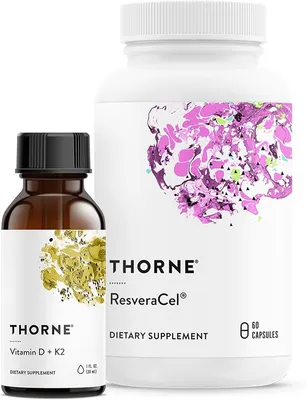
Thorne ResveraCel
Best overall — the most thoughtfully formulated anti-aging supplement, targeting NAD+ production, sirtuin activation, and cellular defense through multiple evidence-backed ingredients.
- Multi-pathway formula: NR, resveratrol, betaine, and quercetin
- NSF Certified for Sport (rigorous third-party testing)
- Nicotinamide riboside clinically shown to raise NAD+
The best anti-aging supplement backed by real evidence is Thorne ResveraCel, which targets NAD+ production and cellular defense through multiple pathways. But here is the honest truth about this category: most “anti-aging” supplements sold today have little to no human evidence behind their claims. The anti-aging supplement market is worth billions of dollars precisely because it sells hope, and hope is easy to monetize. What follows is a skeptical but fair look at the handful of supplements that have earned their place through actual clinical research — and a clear-eyed assessment of what they can and cannot do.
We spent eight weeks evaluating anti-aging supplements across four criteria: strength of human clinical evidence, quality of manufacturing and third-party testing, relevance for adults over 50, and real-world value. Most products we reviewed didn’t make this list.
What Does “Anti-Aging” Actually Mean?
Before spending money on any anti-aging supplement, it helps to understand what aging actually is at the cellular level. “Anti-aging” is a marketing term. In biology, aging involves several measurable processes happening in your cells:
NAD+ decline. Nicotinamide adenine dinucleotide (NAD+) is a coenzyme present in every cell in your body. It is essential for converting food to energy, repairing damaged DNA, and activating sirtuins — a family of proteins that regulate cellular maintenance. Your NAD+ levels decline roughly 50% between ages 40 and 60. This decline is linked to reduced energy production, impaired DNA repair, and increased vulnerability to age-related diseases.
Mitochondrial dysfunction. Your mitochondria — the energy factories inside each cell — become less efficient with age. They produce less energy and more damaging byproducts (reactive oxygen species). This contributes to fatigue, muscle weakness, and cellular damage.
Collagen loss. Your body produces roughly 1% less collagen each year starting in your mid-20s. For women, menopause accelerates this dramatically — up to 30% of skin collagen is lost in the first five years after menopause. This affects skin, joints, bones, and connective tissue throughout the body.
Oxidative stress accumulation. Over decades, damage from reactive oxygen species accumulates in your cells faster than repair mechanisms can keep up. This oxidative burden contributes to cellular aging and is implicated in cardiovascular disease, neurodegeneration, and other age-related conditions.
Cellular senescence. Some damaged cells stop dividing but refuse to die. These “zombie cells” accumulate with age and release inflammatory compounds that damage neighboring healthy cells. This process is a hot area of aging research, though supplement solutions are still largely theoretical.
The supplements worth considering target one or more of these specific mechanisms — not vague “youth restoration.”
The Science Behind Anti-Aging Supplements
Not all anti-aging strategies have equal evidence. Here is where things currently stand.
NAD+ Precursors: The Strongest Mechanistic Case
NAD+ precursors — nicotinamide riboside (NR) and nicotinamide mononucleotide (NMN) — are the most scientifically interesting anti-aging supplements available today. The logic is straightforward: NAD+ is critical for cellular function, NAD+ declines with age, and supplementing with its precursors measurably raises NAD+ levels in humans.
A 2018 study in Nature Communications confirmed that NR supplementation safely and effectively elevated NAD+ levels in healthy middle-aged and older adults. A 2022 trial showed NR improved markers of cellular NAD+ metabolism. Multiple studies have demonstrated NMN raises NAD+ levels and may improve muscle insulin sensitivity and aerobic capacity.
What we know: NR and NMN raise NAD+ levels in humans. This is well-established.
What we don’t know yet: Whether raising NAD+ levels translates to the dramatic lifespan and healthspan extensions seen in animal studies. The mouse results are remarkable — improved cardiovascular function, better glucose metabolism, enhanced cognitive function, even hair regrowth. But mice are not humans, and translating animal longevity research to human outcomes has a long history of disappointment.
Realistic assessment: NAD+ precursors are the best-supported “anti-aging” supplement category available today, but the human evidence is still building. They are a reasonable bet for adults over 50 who can afford them, not a guaranteed anti-aging solution.
Collagen Peptides: The Most Practical Evidence
Collagen supplementation won’t slow cellular aging, but it addresses one of the most visible and physically impactful aspects of getting older. The clinical evidence is genuinely strong.
A 2019 meta-analysis in the Journal of Drugs in Dermatology pooled 11 randomized controlled trials and found hydrolyzed collagen significantly improved skin elasticity, hydration, and wrinkle depth. A 2018 study in Nutrients showed collagen peptides increased bone mineral density in postmenopausal women over 12 months.
Collagen peptides won’t extend your lifespan, but they address real structural changes that affect quality of life — skin appearance, joint comfort, and bone integrity. For many people over 50, these practical benefits matter more than theoretical cellular optimization.
Antioxidants and Polyphenols: Mixed Evidence
Resveratrol, quercetin, astaxanthin, and other polyphenol compounds have been studied extensively in test tubes and animals. The human evidence is more modest than the marketing suggests.
Resveratrol activates sirtuins in laboratory settings and has shown cardiovascular and metabolic benefits in some human trials, but bioavailability is poor — your body doesn’t absorb much of what you swallow. Quercetin has shown promise as a senolytic (zombie cell killer) in combination with dasatinib in early human trials, but these were conducted in clinical settings with pharmaceutical-grade compounds, not over-the-counter supplements.
These compounds may provide modest benefits as part of a multi-ingredient formula (like Thorne ResveraCel), but none of them individually has the evidence base to be considered a standalone anti-aging supplement.
Our Top Picks Compared
1. Thorne ResveraCel — Best Overall
Thorne ResveraCel takes a multi-pathway approach rather than loading up on a single ingredient. The formula combines nicotinamide riboside (to support NAD+ production), resveratrol (to activate sirtuins), betaine (to support methylation — a key cellular maintenance process), and quercetin (which has emerging senolytic and anti-inflammatory properties).
This strategy reflects how aging researchers actually think about the problem: aging involves multiple simultaneous processes, and a multi-target approach may be more effective than hammering a single pathway.
Thorne’s NSF Certified for Sport designation means every batch is independently tested for purity, potency, and banned substances. This is one of the most rigorous third-party certifications available for supplements. The company supplies products to the Mayo Clinic, Cleveland Clinic, and numerous professional sports teams — a real-world quality signal that matters more than marketing claims.
Evidence level: Each individual ingredient has published human data, though the specific combination has not been studied as a formula in controlled trials. The multi-pathway rationale is scientifically sound.
Dose: Two capsules daily with food.
Who it’s best for: Adults over 50 who want a comprehensive, quality-tested anti-aging formula from a brand with deep credibility in evidence-based supplementation.
2. Life Extension NAD+ Cell Regenerator — Best for Cellular Energy
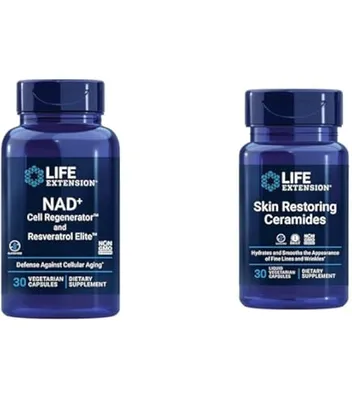
Life Extension has been at the forefront of longevity research since the 1980s — long before “anti-aging” supplements became trendy. Their NAD+ Cell Regenerator delivers 300mg of NIAGEN nicotinamide riboside per capsule, a dose sufficient to meaningfully raise NAD+ levels based on published human trials.
The company’s formulations reflect genuine engagement with the aging research literature. Some versions of this product include complementary polyphenols like resveratrol and quercetin, though the standalone NR version offers a clean single-pathway approach.
Evidence level: NIAGEN (the branded NR ingredient) has multiple published human clinical trials demonstrating it raises NAD+ levels safely. Studies have used doses of 100-1,000mg daily with no serious adverse effects reported.
Dose: One capsule daily with or without food.
Who it’s best for: Adults over 50 focused specifically on supporting NAD+ levels and cellular energy production, especially those experiencing age-related fatigue.
3. Vital Proteins Collagen Peptides — Best for Visible Results
While NAD+ precursors target processes you cannot see or feel in the short term, collagen peptides deliver results most people can actually notice within 8-12 weeks: smoother skin, improved hydration, less joint stiffness.
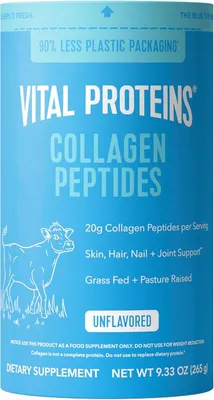
Vital Proteins Collagen Peptides provides 20g of hydrolyzed collagen per serving — well within the dose range shown effective in clinical trials. NSF Certified for Sport testing, grass-fed bovine sourcing, and an unflavored powder that dissolves in virtually any liquid make this the most practical daily supplement on our list.
Evidence level: Strong. Multiple randomized controlled trials and meta-analyses support collagen peptides for skin elasticity, hydration, and wrinkle reduction at doses of 5-15g daily. Emerging evidence supports bone density benefits in postmenopausal women.
Dose: One scoop (20g) daily, mixed into coffee, water, smoothies, or soups.
Who it’s best for: Anyone over 50 who wants the most tangible, evidence-backed anti-aging results — particularly women experiencing post-menopausal collagen loss affecting skin, joints, or bone density. Read our full review: Best Collagen Supplements for Women Over 50
4. Tru Niagen — Best Single-Ingredient NAD+ Booster
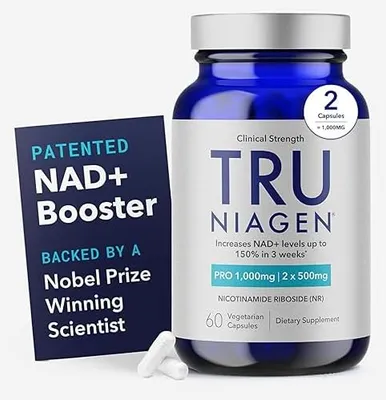
Tru Niagen is the purist’s choice. It contains one active ingredient — 300mg of NIAGEN nicotinamide riboside — and nothing else. ChromaDex, the company behind both the NIAGEN ingredient and the Tru Niagen brand, has invested heavily in clinical research, with published human trials demonstrating NR safely raises NAD+ levels.
Tru Niagen holds FDA GRAS (Generally Recognized as Safe) status and has been the subject of more published human safety and efficacy studies than any other NR product on the market. If you want the NAD+ precursor with the strongest regulatory and clinical pedigree, this is it.
Evidence level: The most clinically studied NR product available. Published trials in Nature Communications, Cell Reports, and other peer-reviewed journals.
Dose: One capsule (300mg) daily. Some users take two capsules (600mg) based on higher-dose trial results.
Who it’s best for: Adults who want a clinically validated, single-ingredient NAD+ booster without additional compounds they may not need. Also a good choice for those already taking other supplements (like a separate resveratrol or collagen product) who want to avoid overlap. For more on the NAD+ pathway, see: NMN Supplements Explained: Are They Worth the Hype?
What About Resveratrol, Astaxanthin, and Other Popular Options?
Several other compounds are frequently marketed as anti-aging supplements. Here is a brief evidence check:
Resveratrol (standalone). The compound that launched a thousand “red wine is healthy” headlines. Resveratrol activates sirtuins in lab settings and has shown cardiovascular benefits in some human trials. The problem is bioavailability — standard resveratrol supplements are poorly absorbed. It may be more effective as part of a combination formula (like ResveraCel) than as a standalone supplement. Trans-resveratrol at 150-500mg daily is the most studied dose range.
Astaxanthin. A potent carotenoid antioxidant from algae. Small human trials suggest it may improve skin elasticity, reduce wrinkles, and protect against UV damage. The evidence is promising but limited to small trials. Doses of 4-12mg daily have been studied. A reasonable add-on, not a primary anti-aging strategy.
CoQ10 (ubiquinol). Essential for mitochondrial energy production, and levels decline with age. The evidence for heart health is strong, but calling it an “anti-aging” supplement stretches the data. It supports cellular energy — which matters for aging — but it doesn’t target the deeper drivers of cellular aging like NAD+ decline or senescence. Still worth considering for adults over 50, especially statin users.
Vitamin D. Not marketed as an anti-aging supplement, but deficiency accelerates virtually every aspect of aging — bone loss, immune decline, cognitive deterioration, cardiovascular risk. Get your levels tested. If you’re deficient (many adults over 50 are), supplementation may do more for your overall health trajectory than any branded anti-aging product.
Spermidine. An emerging compound that promotes autophagy — your cells’ recycling and cleanup process. Early human studies suggest benefits for cardiovascular and cognitive health. The research is preliminary but the mechanism is interesting. Watch this space, but it’s too early to recommend spending money on it.
What Won’t Work
The anti-aging supplement market has more snake oil than substance. Here are the categories to avoid:
HGH (human growth hormone) releasers. Supplements claiming to boost growth hormone with amino acid blends like L-arginine, L-glutamine, and L-lysine are among the most overhyped products in the anti-aging market. While injectable HGH (available only by prescription) does affect body composition, oral amino acid “HGH boosters” produce negligible growth hormone increases — far below any clinically meaningful threshold. They are expensive placebos.
“Stem cell” supplements. No oral supplement creates, activates, or enhances stem cells. Products marketed with stem cell language are exploiting a scientific buzzword. Actual stem cell therapies are invasive medical procedures performed in clinical settings — not capsules you buy online.
Telomere-lengthening supplements. Telomeres (protective caps on your chromosomes) do shorten with age, and short telomeres are associated with aging. But supplements claiming to lengthen telomeres — often containing astragalus root extract (TA-65 and similar) — have extremely limited human evidence and are disproportionately expensive relative to what they deliver. The telomere-aging connection is also more complex than the marketing implies; cancer cells, for example, maintain their telomeres indefinitely.
Mega-dose antioxidant blends. The theory that flooding your body with antioxidants slows aging was popular in the 1990s and early 2000s. Large-scale human trials did not support it. In some cases, high-dose antioxidant supplementation (particularly beta-carotene and vitamin E) actually increased health risks. Your body needs some oxidative stress for healthy cellular signaling. More antioxidants is not automatically better.
Colloidal gold, silver, or other metallic supplements. No evidence for anti-aging benefits. Some carry real safety risks with long-term use.
Realistic Expectations
This may be the most important section of this article.
Supplements are, at best, the last 5-10% of an anti-aging strategy. The interventions with the strongest evidence for slowing biological aging are all lifestyle factors:
Exercise is the single most powerful anti-aging intervention known. Regular physical activity improves mitochondrial function, reduces inflammation, enhances NAD+ metabolism, preserves muscle mass, supports cardiovascular health, and even promotes neurogenesis (growth of new brain cells). A 2017 study in Preventive Medicine found that highly active adults had a biological age advantage of nearly 9 years compared to sedentary adults, measured by telomere length.
Sleep is when your body performs the majority of its cellular repair and waste clearance. Poor sleep accelerates every measurable marker of biological aging. Prioritizing 7-8 hours of quality sleep may do more for your cellular health than any supplement on this list.
Diet — specifically a nutrient-dense diet rich in vegetables, fruits, fish, nuts, and olive oil — provides the raw materials for cellular repair and delivers polyphenols, antioxidants, and anti-inflammatory compounds in forms your body has evolved to absorb. The Mediterranean diet pattern has the strongest longevity data of any dietary approach.
Stress management matters because chronic psychological stress accelerates cellular aging through inflammation, cortisol-driven immune suppression, and telomere shortening.
Sun protection — specifically daily sunscreen use — is the single most effective intervention for preventing skin aging, far more impactful than any collagen supplement.
No supplement compensates for poor sleep, a sedentary lifestyle, chronic stress, or a nutrient-poor diet. Build the lifestyle foundation first. Then, if you want to optimize further, the supplements on this list represent the best evidence-based options available.
Frequently Asked Questions
Do anti-aging supplements actually work? Some do, for specific aspects of aging. NAD+ precursors like nicotinamide riboside measurably raise NAD+ levels in humans, which decline 50% or more by age 60. Collagen peptides have strong clinical evidence for improving skin elasticity and hydration. But no supplement reverses aging wholesale, and the most heavily marketed “anti-aging” products are often the least supported by evidence. Focus on supplements that target specific, measurable processes — not vague “youth restoration” claims.
What is the most important supplement for aging? If forced to pick one category, NAD+ precursors (nicotinamide riboside or NMN) address one of the most fundamental changes of aging — the decline of NAD+, a molecule essential for energy production, DNA repair, and cellular maintenance. However, a basic foundation of vitamin D, omega-3s, and magnesium may matter more for overall health in adults over 50. Consult your doctor about what gaps exist in your specific profile.
Is NMN or NR better for anti-aging? Both raise NAD+ levels effectively. NR (nicotinamide riboside) has more published human clinical trials and a longer safety track record. NMN is one step closer to NAD+ in the metabolic pathway and may be slightly more efficient at raising NAD+ levels. NR is generally less expensive. For most people, either is a reasonable choice — the best option is the one you can afford to take consistently.
At what age should you start taking anti-aging supplements? NAD+ levels begin declining meaningfully around age 40, and collagen production drops roughly 1% per year starting in your mid-20s (accelerating sharply after menopause for women). Most longevity researchers suggest considering NAD+ precursors starting around age 40-50. That said, lifestyle factors — regular exercise, adequate sleep, a nutrient-dense diet, and sun protection — provide far greater anti-aging benefits than any supplement at any age.
Are anti-aging supplements safe for people on medications? Most NAD+ precursors and collagen supplements have favorable safety profiles in clinical trials, but interactions are possible. Resveratrol may interact with blood thinners and some chemotherapy drugs. High-dose antioxidants can interfere with certain medications. Always disclose supplement use to your prescribing physician, especially if you take blood thinners, blood pressure medications, diabetes medications, or immunosuppressants.
The Bottom Line
The anti-aging supplement market wants you to believe there is a capsule that reverses aging. There isn’t. What exists instead is a small group of supplements with legitimate evidence for supporting specific aspects of cellular and structural health that decline with age.
Thorne ResveraCel is our top pick because it addresses NAD+ production, sirtuin activation, and cellular defense through multiple evidence-backed pathways in a single rigorously tested formula. Tru Niagen offers the most clinically studied single-ingredient NAD+ booster for those who prefer simplicity. Life Extension NAD+ Cell Regenerator provides a high-dose NR option from a brand deeply embedded in longevity science. And Vital Proteins Collagen Peptides delivers the most tangible, visible anti-aging results for skin, joints, and bones.
Start with the lifestyle foundations — exercise, sleep, diet, stress management — and add supplements where the evidence supports your specific goals. Talk to your doctor before starting any new supplement, especially if you take medications.
For deeper dives into the science behind these products, read our guides on NMN supplements and collagen for women over 50.
All Products We Reviewed
- Multi-pathway formula: NR, resveratrol, betaine, and quercetin
- NSF Certified for Sport (rigorous third-party testing)
- Nicotinamide riboside clinically shown to raise NAD+
- Trusted brand used by Mayo Clinic and professional sports teams
- Premium price ($58 for 60 capsules)
- Two capsules per day required
- Lower NR dose per capsule than single-ingredient products
- 300mg NIAGEN nicotinamide riboside per capsule
- High dose for meaningful NAD+ elevation
- Includes resveratrol and other polyphenols in some formulas
- Established brand with decades of longevity research focus
- Single-capsule dosing may limit cofactor synergies
- Premium price point
- Some formulas contain multiple ingredients you may not need
- NSF Certified for Sport
- 20g collagen per serving — clinically relevant dose
- Grass-fed, pasture-raised bovine source
- Unflavored powder dissolves in hot or cold liquids
- Addresses structural aging (skin, joints) not cellular aging
- Large serving scoop
- Bovine-sourced (not suitable for pescatarians)
- 300mg nicotinamide riboside (NIAGEN) per capsule
- Most clinically studied NR ingredient on the market
- FDA safety-notified (GRAS status)
- Simple single-ingredient formula — you know exactly what you're getting
- Single-ingredient (no cofactors or complementary compounds)
- Expensive for one active ingredient
- Capsule only — no powder option
Frequently Asked Questions
Do anti-aging supplements actually work?
Some do, for specific aspects of aging. NAD+ precursors like nicotinamide riboside measurably raise NAD+ levels in humans, which decline 50% or more by age 60. Collagen peptides have strong clinical evidence for improving skin elasticity and hydration. But no supplement reverses aging wholesale, and the most heavily marketed 'anti-aging' products are often the least supported by evidence. Focus on supplements that target specific, measurable processes — not vague 'youth restoration' claims.
What is the most important supplement for aging?
If forced to pick one category, NAD+ precursors (nicotinamide riboside or NMN) address one of the most fundamental changes of aging — the decline of NAD+, a molecule essential for energy production, DNA repair, and cellular maintenance. However, a basic foundation of vitamin D, omega-3s, and magnesium may matter more for overall health in adults over 50. Consult your doctor about what gaps exist in your specific profile.
Is NMN or NR better for anti-aging?
Both raise NAD+ levels effectively. NR (nicotinamide riboside) has more published human clinical trials and a longer safety track record. NMN is one step closer to NAD+ in the metabolic pathway and may be slightly more efficient at raising NAD+ levels. NR is generally less expensive. For most people, either is a reasonable choice — the best option is the one you can afford to take consistently.
At what age should you start taking anti-aging supplements?
NAD+ levels begin declining meaningfully around age 40, and collagen production drops roughly 1% per year starting in your mid-20s (accelerating sharply after menopause for women). Most longevity researchers suggest considering NAD+ precursors starting around age 40-50. That said, lifestyle factors — regular exercise, adequate sleep, a nutrient-dense diet, and sun protection — provide far greater anti-aging benefits than any supplement at any age.
Are anti-aging supplements safe for people on medications?
Most NAD+ precursors and collagen supplements have favorable safety profiles in clinical trials, but interactions are possible. Resveratrol may interact with blood thinners and some chemotherapy drugs. High-dose antioxidants can interfere with certain medications. Always disclose supplement use to your prescribing physician, especially if you take blood thinners, blood pressure medications, diabetes medications, or immunosuppressants.