
Best Bone Health Supplements for Women Over 50 (2026)
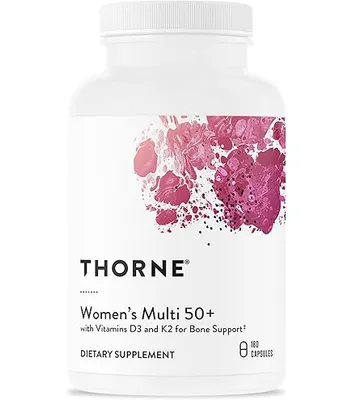
Thorne Basic Bone Nutrients
Best overall — the most complete bone support formula with premium third-party testing.
- Comprehensive formula: calcium, magnesium, D3, K2, and boron
- NSF Certified for Sport — third-party tested
- Calcium citrate form (better absorption for older adults)
The best bone health supplement for women over 50 is Thorne Basic Bone Nutrients. It combines calcium citrate, magnesium, vitamin D3, vitamin K2, and boron — every nutrient your bones need in one NSF-certified formula. If your budget is tighter or you simply want a straightforward calcium supplement, Citracal Maximum Plus D3 offers excellent calcium citrate absorption at roughly half the price.
We spent four weeks evaluating five bone health supplements on calcium form, supporting nutrients, third-party testing, absorption quality, and real-world value for postmenopausal women.
Why Bone Health Becomes Critical After 50
Bone loss is one of the most consequential — and most preventable — health changes women face after menopause. Estrogen plays a major role in maintaining bone density, and when estrogen levels drop during menopause, bone breakdown accelerates dramatically.
Women can lose up to 20% of their bone density in the five to seven years following menopause, according to the National Osteoporosis Foundation. Roughly one in two women over 50 will break a bone due to osteoporosis in their remaining lifetime.
The right supplement strategy can slow this loss significantly. But “calcium supplement” is far too simple a description for what your bones actually need. Calcium alone is only part of the equation — your body requires vitamin D3, vitamin K2, magnesium, and several trace minerals to properly build and maintain bone tissue.
How We Chose These Supplements
We evaluated bone health supplements across six criteria that matter most for women over 50:
Calcium form. Calcium citrate absorbs without stomach acid, making it the preferred form for older adults (stomach acid production declines with age). Calcium carbonate is cheaper but requires a full meal and adequate stomach acid for absorption.
Supporting nutrients. Calcium without vitamin D3 is poorly absorbed. D3 without K2 may allow calcium to deposit in arteries rather than bones. Magnesium activates vitamin D and supports calcium metabolism. We favored formulas that address the full bone-building pathway.
Dosing. The goal is typically 500-600mg of supplemental calcium per serving (you get the rest from food). Higher doses in a single sitting actually reduce absorption.
Third-party testing. NSF, USP, or other independent certifications that verify what’s on the label matches what’s in the bottle. This matters especially for minerals, where contamination with lead or other heavy metals is a documented risk.
Pill burden. Some comprehensive formulas require 3-4 large tablets daily. We noted this because compliance is everything — a supplement you stop taking helps no one.
Value. Cost per day for the recommended serving, factoring in whether you’d need to buy additional supplements (D3, K2, magnesium) separately.
Best Overall: Thorne Basic Bone Nutrients
Thorne Basic Bone Nutrients stands out because it eliminates the need to buy and manage multiple separate supplements. Each daily serving (4 capsules) delivers calcium citrate, magnesium citrate, vitamin D3 (1,000 IU), vitamin K2 (MK-7 form, 200mcg), and boron — the complete bone support stack.
The calcium citrate form is a meaningful advantage. A 2015 study published in the Journal of Clinical Pharmacology confirmed that calcium citrate provides roughly 22-27% better bioavailability than calcium carbonate, regardless of whether it’s taken with food. For women who take proton pump inhibitors (omeprazole, lansoprazole) or H2 blockers for acid reflux, citrate is especially important — these medications reduce the stomach acid needed to absorb carbonate forms.
The inclusion of vitamin K2 as MK-7 is another significant differentiator. Research published in Osteoporosis International in 2013 showed that MK-7 supplementation at 180mcg daily significantly reduced age-related bone loss in postmenopausal women over a three-year period. MK-7 stays active in the body for approximately 72 hours, compared to just 4-6 hours for the MK-4 form — meaning daily dosing is sufficient and reliable.
Thorne’s NSF Certified for Sport designation means each batch is independently tested for purity, label accuracy, and the absence of over 270 substances banned in competition. While you may not be a competitive athlete, this testing also catches heavy metal contamination — a real concern with mineral supplements.
The main drawback is the 4-capsule daily dose. The capsules are moderate-sized and can be split between morning and evening (which may actually improve calcium absorption), but it’s still more to manage than a single tablet.
Who it’s best for: Women who want one bottle covering all their bone health bases, with premium testing credentials. Especially valuable for women on acid-reducing medications.
Best Calcium Citrate: Citracal Maximum Plus D3
Citracal has been the go-to calcium citrate recommendation from pharmacists and physicians for decades, and for good reason. The formula is straightforward: 630mg calcium citrate plus 500 IU vitamin D3 per two-tablet serving.
The calcium citrate form means you can take it any time — with food, without food, morning or night. This flexibility matters for real-world compliance. If you’ve ever stopped taking a supplement because the timing requirements were inconvenient, Citracal removes that barrier.
At roughly $0.30 per day, the value is exceptional for a quality calcium citrate product. The Bayer healthcare brand provides pharmacy-level quality assurance, and Citracal is one of the most pharmacist-recommended calcium supplements in the United States.
The limitation is what it does not include. There is no vitamin K2, no magnesium, and only 500 IU of vitamin D3 (most current evidence suggests adults over 50 benefit from 1,000-2,000 IU of D3 daily). You would likely need to add a separate D3/K2 supplement and a magnesium supplement to get complete bone support. That said, many women over 50 are already taking vitamin D — so Citracal slots neatly alongside an existing D3 supplement.
The tablets are large. This is an honest reality of calcium citrate — you need more citrate salt to deliver the same amount of elemental calcium compared to carbonate. If swallowing large tablets is difficult, consider Thorne’s capsule format instead.
Who it’s best for: Women who want a trusted, affordable calcium citrate they can take any time, and who already supplement with vitamin D3 and magnesium separately.
Best Budget: Nature Made Calcium 600+D3
If cost is a primary concern, Nature Made Calcium 600+D3 delivers USP-verified calcium at under $0.15 per day. USP (United States Pharmacopeia) verification is the gold standard for supplement testing in the United States — it independently confirms that the product contains what the label states, dissolves properly, and is free of harmful contaminants.
The formula provides 600mg calcium carbonate plus 400 IU vitamin D3 per tablet. Calcium carbonate delivers more elemental calcium per tablet than citrate (allowing a smaller pill), and it’s the form used in the majority of clinical trials on calcium and bone density.
The trade-off is absorption. Calcium carbonate requires adequate stomach acid and must be taken with food. A 2012 study in Calcified Tissue International found that calcium carbonate absorption dropped by approximately 50% in individuals with low stomach acid (achlorhydria) — a condition that becomes more common with age and with acid-reducing medications.
If you have healthy digestion, eat regular meals, and don’t take PPIs or H2 blockers, calcium carbonate is a perfectly reasonable choice. The cost savings are substantial.
Nature Made does not include vitamin K2 or magnesium, and 400 IU of D3 is below what most experts now recommend for adults over 50. Plan to supplement D3 separately.
Who it’s best for: Women on a tight budget who have healthy digestion, eat regular meals, and are willing to take D3 and K2 separately.
Best Plant-Based: Garden of Life mykind Organics Plant Calcium
For women who prefer organic, plant-derived supplements, Garden of Life mykind Organics Plant Calcium delivers calcium from Icelandic red algae — a whole-food source that comes naturally paired with magnesium and over 70 trace minerals that support bone matrix formation.
The formula includes 800mg plant calcium, 1,000 IU vegan D3 (from lichen), and vitamin K2 in a USDA Organic, Non-GMO Project Verified package. The whole-food matrix is meaningful — a 2016 study in Biological Trace Element Research found that algae-derived calcium demonstrated superior bone-building properties compared to calcium carbonate in cell studies, possibly due to its porous honeycomb structure and naturally present trace minerals like strontium, vanadium, and silicon.
The organic certification means no synthetic binders, fillers, or chemical solvents were used in extraction. For women who scrutinize ingredient labels, this is one of the cleanest bone supplements available.
At $35 for a one-month supply, it’s not the cheapest option. You’re paying for organic sourcing, plant-based ingredients, and a more complete nutrient profile. The 3-tablet daily dose is manageable, and the slim tablets are easier to swallow than some conventional calcium supplements.
Who it’s best for: Women who prioritize organic, plant-based, whole-food supplements and want a more complete formula than standard calcium alone.
Best Whole-Food: New Chapter Bone Strength Take Care
New Chapter takes a similar approach to Garden of Life but adds its signature fermentation process. The calcium in Bone Strength Take Care comes from sustainably harvested red algae (Lithothamnion) and is fermented with beneficial probiotics before encapsulation.
New Chapter’s fermentation process is designed to improve mineral bioavailability and reduce digestive discomfort. While clinical evidence specifically comparing fermented vs. non-fermented calcium absorption is limited, fermentation is a well-established method for increasing mineral bioavailability in food science. Anecdotally, many users report that New Chapter’s products are gentler on the stomach than conventional mineral supplements.
The formula delivers 770mg plant calcium, 1,000 IU D3, K2 (both MK-4 and MK-7 forms), magnesium, and an impressive array of over 70 whole-food trace minerals. The inclusion of both K2 forms is unique on this list — MK-4 works quickly to support bone-forming cells (osteoblasts) while MK-7 provides sustained K2 activity over days.
New Chapter is a Certified B Corporation, and their algae is sustainably harvested from pristine Icelandic waters. If environmental and ethical sourcing matter to you, this brand walks the walk.
At $38, it’s the priciest option on this list. Whether the fermentation process and dual K2 forms justify the premium over Garden of Life’s similar product depends on your personal priorities and digestive sensitivity.
Who it’s best for: Women who want a whole-food, sustainably sourced bone formula with fermentation for gentle digestion and the most comprehensive trace mineral profile.
How to Choose the Right Bone Supplement
Selecting the right bone health supplement depends on a few personal factors. Here’s a quick decision framework:
Check your stomach. If you take acid-reducing medications (PPIs, H2 blockers) or have digestive issues, choose calcium citrate (Thorne, Citracal) over calcium carbonate (Nature Made). Citrate absorbs regardless of stomach acid levels.
Count your calcium from food. Before choosing a supplement dose, estimate your dietary calcium. One cup of milk or yogurt provides roughly 300mg. Leafy greens, cheese, fortified orange juice, and canned sardines with bones are also significant sources. The goal is 1,200mg total daily — not 1,200mg from supplements alone. Over-supplementing calcium provides no extra benefit and may increase kidney stone risk.
Decide on a complete formula vs. individual supplements. Thorne, Garden of Life, and New Chapter include D3, K2, and magnesium alongside calcium. Citracal and Nature Made provide calcium and basic D3 only — you would need to add K2 and magnesium separately. A complete formula is simpler; individual supplements give you more control over each dose.
Consider your budget realistically. If the supplement costs too much, you won’t take it consistently. Nature Made at $12/month with a separate D3/K2 supplement ($10-15/month) may actually be more cost-effective than a $35-38 all-in-one — and consistency matters more than perfection.
Talk to your doctor about testing. A DEXA bone density scan establishes your baseline and helps your doctor determine how aggressively to approach supplementation. Blood levels of vitamin D (25-hydroxyvitamin D) and calcium should be checked periodically, especially if you’re supplementing at higher doses. If you take bisphosphonates (alendronate, risedronate) for osteoporosis, your doctor may have specific guidance on calcium timing — bisphosphonates must be taken on an empty stomach, separated from calcium by at least 30 minutes.
Don’t forget the non-supplement basics. Weight-bearing exercise (walking, dancing, light strength training) stimulates bone formation more effectively than any supplement. Adequate protein intake supports the collagen matrix that gives bones flexibility. Supplements fill nutritional gaps — they don’t replace a bone-healthy lifestyle.
Frequently Asked Questions
What is the best type of calcium for women over 50?
Calcium citrate is generally the best form for women over 50. Unlike calcium carbonate, citrate does not require stomach acid for absorption — and stomach acid production naturally declines with age. Calcium citrate can also be taken on an empty stomach without losing effectiveness. Women taking acid-reducing medications like omeprazole should especially favor citrate forms.
How much calcium should a woman over 50 take daily?
The National Institutes of Health recommends 1,200mg of total calcium daily for women over 50. This includes calcium from food sources like dairy, leafy greens, and fortified foods. Most women get 400-600mg from diet alone, so a supplement providing 500-600mg typically fills the gap. Taking more than 500mg at once reduces absorption — split your dose if needed.
Why do bone supplements include vitamin K2?
Vitamin K2 directs calcium to your bones and teeth instead of letting it accumulate in your arteries and soft tissues. Research published in Osteoporosis International found that K2 supplementation significantly reduced bone loss in postmenopausal women. The MK-7 form of K2 is preferred because it stays active in your body longer than MK-4. If you take blood thinners like warfarin, consult your doctor before taking K2.
Can calcium supplements cause heart problems?
A widely discussed 2012 meta-analysis raised concerns about calcium supplements and cardiovascular risk, but subsequent large-scale studies — including a 2016 analysis of over 74,000 women — found no significant increase in heart disease from moderate calcium supplementation. Taking calcium with vitamin K2 may further reduce any theoretical risk by preventing arterial calcification. Staying within recommended doses (no more than 500-600mg per supplement dose) is the safest approach.
Should I take calcium and magnesium together or separately?
You can take calcium and magnesium together — they do not significantly compete for absorption at normal supplemental doses. In fact, magnesium supports calcium metabolism and helps activate vitamin D, which in turn improves calcium absorption. Some combination formulas like Thorne Basic Bone Nutrients include both minerals together. However, if you take high doses of either mineral (over 500mg), spacing them a few hours apart may optimize absorption.
The Bottom Line
Bone health after menopause requires more than just a calcium tablet. The most effective approach combines calcium (ideally citrate) with vitamin D3, vitamin K2, and magnesium — plus the weight-bearing exercise and protein intake that supplements can’t replace.
Thorne Basic Bone Nutrients is our top pick because it delivers the complete bone support stack in one NSF-certified product. If simplicity and budget matter more, pair Citracal Maximum Plus D3 with a separate D3/K2 supplement for a cost-effective combination.
Whatever you choose, consistency matters most. A supplement you take every day for a year does far more for your bones than a perfect supplement you abandon after two weeks. Consult your doctor about bone density testing and personalized supplementation, especially if you have risk factors for osteoporosis or take medications that affect bone health.
All Products We Reviewed
- Comprehensive formula: calcium, magnesium, D3, K2, and boron
- NSF Certified for Sport — third-party tested
- Calcium citrate form (better absorption for older adults)
- Includes MK-7 form of vitamin K2
- Requires 4 capsules daily for full dose
- Higher price than single-nutrient calcium supplements
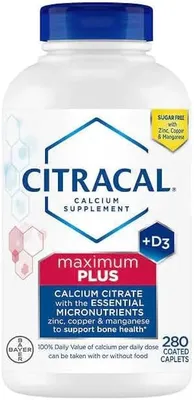
- Calcium citrate (no stomach acid needed for absorption)
- 630mg calcium + 500 IU D3 per serving
- Can take with or without food
- Trusted Bayer healthcare brand
- No vitamin K2 or magnesium included
- Large tablet size may be difficult to swallow

- USP Verified for purity and potency
- Very affordable — under $0.15 per day
- Widely available at every pharmacy
- Includes 400 IU vitamin D3
- Calcium carbonate form (needs stomach acid to absorb)
- No K2 or magnesium
- Must take with food for proper absorption

- Organic, plant-based calcium from algae
- Includes D3, K2, magnesium, and trace minerals
- USDA Organic and Non-GMO Project Verified
- Whole-food matrix may improve absorption
- Requires 3 tablets daily
- Higher cost per serving than conventional options
- Lower calcium per serving (800mg) than some competitors
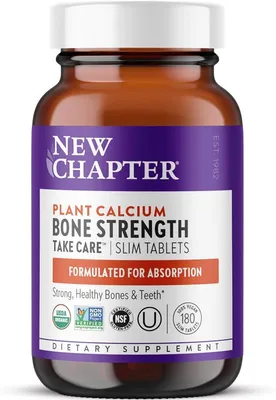
- Plant-sourced calcium from sustainably harvested red algae
- Fermented for enhanced absorption and gentler digestion
- Includes D3, K2, magnesium, and 70+ trace minerals
- Certified B Corporation with strong sustainability practices
- Most expensive option on this list
- Slim tablets but still 3 per day
- Lower calcium dose per serving (770mg) than conventional options
Frequently Asked Questions
What is the best type of calcium for women over 50?
Calcium citrate is generally the best form for women over 50. Unlike calcium carbonate, citrate does not require stomach acid for absorption — and stomach acid production naturally declines with age. Calcium citrate can also be taken on an empty stomach without losing effectiveness. Women taking acid-reducing medications like omeprazole should especially favor citrate forms.
How much calcium should a woman over 50 take daily?
The National Institutes of Health recommends 1,200mg of total calcium daily for women over 50. This includes calcium from food sources like dairy, leafy greens, and fortified foods. Most women get 400-600mg from diet alone, so a supplement providing 500-600mg typically fills the gap. Taking more than 500mg at once reduces absorption — split your dose if needed.
Why do bone supplements include vitamin K2?
Vitamin K2 directs calcium to your bones and teeth instead of letting it accumulate in your arteries and soft tissues. Research published in Osteoporosis International found that K2 supplementation significantly reduced bone loss in postmenopausal women. The MK-7 form of K2 is preferred because it stays active in your body longer than MK-4. If you take blood thinners like warfarin, consult your doctor before taking K2.
Can calcium supplements cause heart problems?
A widely discussed 2012 meta-analysis raised concerns about calcium supplements and cardiovascular risk, but subsequent large-scale studies — including a 2016 analysis of over 74,000 women — found no significant increase in heart disease from moderate calcium supplementation. Taking calcium with vitamin K2 may further reduce any theoretical risk by preventing arterial calcification. Staying within recommended doses (no more than 500-600mg per supplement dose) is the safest approach.
Should I take calcium and magnesium together or separately?
You can take calcium and magnesium together — they do not significantly compete for absorption at normal supplemental doses. In fact, magnesium supports calcium metabolism and helps activate vitamin D, which in turn improves calcium absorption. Some combination formulas like Thorne Basic Bone Nutrients include both minerals together. However, if you take high doses of either mineral (over 500mg), spacing them a few hours apart may optimize absorption.