
Best Digestive Enzymes for Seniors (2026)

Enzymedica Digest Gold + ATPro
Best overall — the most effective enzyme formula for seniors thanks to pH-versatile Thera-blend technology that works in both your stomach and intestines.
- Thera-blend enzymes work across full pH range of the digestive tract
- #1 best-selling enzyme brand in the U.S.
- Includes ATPro blend for enhanced enzyme activation
The best digestive enzyme supplement for most seniors is Enzymedica Digest Gold + ATPro, which uses Thera-blend technology so the enzymes remain active across the full pH range of your digestive tract — from the strong acid of your stomach through the alkaline environment of your small intestine. Most enzyme supplements only work in one pH zone, which means they stop functioning as food moves through your system. For seniors on a budget, NOW Super Enzymes offers a comprehensive blend with ox bile (for fat digestion) and betaine HCl (for stomach acid support) at roughly half the price.
We spent five weeks evaluating digestive enzyme supplements across three criteria: breadth and activity of enzyme coverage, quality of manufacturing, and value for daily use. We also prioritized formulas that address the specific digestive changes that happen after 50 — not just generic enzyme blends designed for younger adults.
Why Digestion Changes After 50
If meals that never bothered you before now leave you bloated, gassy, or uncomfortably full for hours afterward, you are not imagining things. Your digestive system genuinely changes with age, and understanding these changes helps you choose the right supplement.
Your Stomach Produces Less Acid
Hydrochloric acid (HCl) is the first line of digestive defense. It breaks down proteins, activates digestive enzymes, kills harmful bacteria in food, and helps absorb minerals like iron, calcium, and magnesium. After 50, your stomach’s parietal cells gradually produce less HCl — a condition called hypochlorhydria.
Research suggests up to 10-30% of adults over 60 have significantly reduced stomach acid production. If you take a proton pump inhibitor (omeprazole, pantoprazole, lansoprazole), you are deliberately suppressing stomach acid further. This is necessary for conditions like GERD, but the digestive consequences are real: poor protein breakdown, mineral malabsorption, and an environment where food ferments rather than digests efficiently.
Your Pancreas Slows Down
Your pancreas produces the bulk of your digestive enzymes — lipase (for fats), protease (for proteins), and amylase (for carbohydrates). These are released into your small intestine after food leaves your stomach. After 50, pancreatic enzyme secretion gradually declines.
This decline is usually subclinical — meaning it does not show up on standard tests — but it is sufficient to cause bloating, gas, and a feeling of heaviness after meals, particularly meals high in fat or protein. A heavy steak dinner at 65 asks more of your pancreas than it can comfortably deliver.
Bile Flow Becomes Less Efficient
Your gallbladder stores and releases bile, which emulsifies dietary fat so that lipase enzymes can actually break it down. With age, bile becomes less concentrated and the gallbladder contracts less efficiently. If you have had your gallbladder removed (cholecystectomy) — a common surgery in adults over 50 — you have no bile reservoir at all, and bile drips continuously rather than being released in a concentrated burst when fat arrives.
The result is poor fat digestion: greasy stools, bloating after fatty meals, and discomfort that gets labeled as “I just can’t eat that anymore.” In many cases, supplemental ox bile and lipase can restore comfortable fat digestion.
The Cumulative Effect
These three changes — less stomach acid, fewer pancreatic enzymes, and reduced bile flow — happen simultaneously and compound each other. Food that would have been efficiently broken down at age 35 now passes through your system only partially digested. The undigested food ferments in your intestines, producing gas and bloating. Nutrients that should have been absorbed pass through, contributing to deficiencies in B12, iron, calcium, and other essential nutrients.
This is why digestive enzyme supplements can be genuinely helpful for adults over 50 — they replace what your body is producing less of.
How We Chose These Supplements
Enzyme Breadth and Activity
A good digestive enzyme supplement should cover all three macronutrients: fats (lipase), proteins (protease), and carbohydrates (amylase). We also looked for additional enzymes that address common problem foods: lactase (for dairy), cellulase (for plant fiber), and alpha-galactosidase (for beans and cruciferous vegetables). Enzyme activity, measured in standardized units (like HUT for protease and FIP for lipase), matters more than milligram weight.
pH Versatility
Your digestive tract ranges from pH 1-2 (stomach) to pH 6-7 (small intestine). Many enzyme supplements only work in one of these ranges and become inactive in the other. Enzymedica’s Thera-blend technology specifically addresses this by providing enzymes active across multiple pH levels — a genuine advantage, not just marketing.
Third-Party Testing
Digestive enzymes are proteins, and they degrade over time — especially with heat and moisture exposure. Third-party testing confirms that the enzyme activity on the label is actually present when you take the capsule, not just when it was manufactured.
Relevant Additions for Seniors
Products that include ox bile (for fat digestion) and betaine HCl (for stomach acid support) scored higher because they address age-specific digestive changes that pure enzyme blends miss.
Best Overall: Enzymedica Digest Gold + ATPro
Enzymedica is the #1 selling enzyme brand in the U.S., and Digest Gold is their flagship product for a reason. The formula uses Thera-blend technology — a proprietary approach that combines multiple strains of each enzyme type, selected to function across the full pH spectrum of your digestive tract.
Why does this matter? Standard lipase might work in the alkaline environment of your small intestine but become inactive in your stomach’s acid. Thera-blend lipase uses multiple lipase variants that cover the full pH range. The result is more complete digestion across the entire transit from stomach to small intestine to large intestine.
The ATPro component is an addition of ATP (adenosine triphosphate), magnesium, and a proprietary phytochemical blend that Enzymedica claims enhances the body’s natural enzyme production alongside the supplemental enzymes. The evidence for this addition is less robust than for the core enzyme blend, but it does not detract from the product.
What’s in it: Amylase Thera-blend (for starches), lipase Thera-blend (for fats), protease Thera-blend (for proteins), cellulase (for plant fiber), maltase (for malt sugars), invertase (for sucrose), glucoamylase (for complex carbs), alpha-galactosidase (for beans and vegetables), pectinase (for fruit fiber), xylanase (for grains), and the ATPro energy blend.
Evidence level: Enzyme replacement therapy for digestive insufficiency is well-established in gastroenterology. The specific Thera-blend technology has been evaluated in clinical studies showing improved protein digestion compared to single-source enzyme products. Enzymedica publishes third-party assays confirming enzyme activity at the time of expiration, not just manufacture.
Dose: One capsule with each meal. Take a second capsule with particularly large or heavy meals.
Who it’s best for: Seniors experiencing bloating, gas, or heaviness after meals who want the most comprehensive enzyme formula available. The pH-versatile design is especially valuable if you have low stomach acid or take PPIs, because the enzymes will still function in your altered stomach environment.
Best Value: NOW Super Enzymes
NOW Super Enzymes is the workhorse of this list — a comprehensive formula that includes something most enzyme products leave out: ox bile extract and betaine HCl.
The ox bile inclusion is significant for seniors. Bile emulsifies dietary fat, making it accessible to lipase enzymes. If your gallbladder is sluggish with age, or if you have had it removed, supplemental ox bile can dramatically improve fat digestion and reduce the greasy, bloated feeling after meals containing butter, oil, cheese, or fatty meats.
Betaine HCl provides supplemental stomach acid — directly addressing the hypochlorhydria that affects so many adults over 60. This is especially useful if you have stopped taking a PPI and your stomach acid production has not fully recovered, or if you produce less HCl naturally.
What’s in it: Betaine HCl (for stomach acid), ox bile extract (for fat emulsification), pancreatin 10X (a blend of amylase, protease, and lipase derived from porcine pancreas), bromelain (pineapple-derived protease), and papain (papaya-derived protease).
Evidence level: Pancreatin is the most clinically studied enzyme replacement, used extensively in clinical settings for pancreatic insufficiency. Ox bile supplementation has published evidence supporting fat digestion improvement in postcholecystectomy patients. Betaine HCl has been used for decades as stomach acid support, though large randomized trials are limited.
Dose: One tablet with each meal.
Who it’s best for: Budget-conscious seniors who want comprehensive enzyme support, particularly those with gallbladder issues, poor fat digestion, or suspected low stomach acid. The inclusion of ox bile and betaine HCl makes this the most complete formula for age-related digestive decline. Not suitable for vegetarians due to bovine and porcine ingredients.
Important note: If you have active ulcers or gastritis, avoid betaine HCl — adding acid to an already inflamed stomach lining will worsen symptoms. Consult your doctor first.
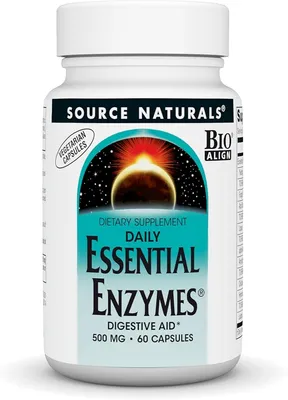
Best Budget: Source Naturals Daily Essential Enzymes
Source Naturals Daily Essential Enzymes provides broad-spectrum enzyme coverage at the lowest price per serving on this list. The Bio-Aligned formula includes enzymes for protein, carbohydrate, fat, and fiber digestion in a vegetarian capsule.
At roughly $0.14 per capsule, this is an accessible entry point for seniors who want to try enzyme supplementation without a significant financial commitment. The formula is simpler than Enzymedica or NOW — no ox bile, no betaine HCl, no pH-optimized blends — but it covers the fundamental enzyme categories that decline with age.
What’s in it: A 500mg proprietary blend including lipase, amylase, protease, cellulase, lactase, maltase, and sucrase.
Evidence level: The individual enzyme types are well-established. The proprietary blend format means you cannot verify the amount of each individual enzyme, which is this product’s main limitation. That said, Source Naturals has been in the supplement business since 1982 and follows GMP standards.
Dose: One capsule with each meal. Two capsules for larger or heavier meals.
Who it’s best for: Seniors on a tight budget who want basic enzyme support for everyday meals. If you try this and find it insufficient, upgrading to Enzymedica Digest Gold will provide broader enzyme coverage and pH versatility.
Best Hypoallergenic: Pure Encapsulations Digestive Enzymes Ultra
If you have food allergies, autoimmune conditions, or multiple chemical sensitivities, most digestive enzyme supplements are a minefield of potential triggers. Pure Encapsulations was founded specifically to address this problem — their products are free from gluten, dairy, soy, corn, eggs, nuts, peanuts, artificial colors, flavors, sweeteners, coatings, and shellfish.
Digestive Enzymes Ultra contains 13 plant-based enzymes designed by physicians for use in clinical settings where patients cannot tolerate common allergens. The formula covers protein, fat, carbohydrate, fiber, and lactose digestion without any animal-derived ingredients.
What’s in it: Protease (three types), amylase, lipase, lactase, cellulase, alpha-galactosidase, glucoamylase, invertase, peptidase (with DPP-IV activity for gluten and casein), phytase (for phytic acid in grains), and hemicellulase.
The inclusion of DPP-IV peptidase activity is noteworthy. DPP-IV is the enzyme that breaks down the gluten and casein proteins that cause problems for people with sensitivities. This does not make it safe for people with celiac disease to eat gluten, but it may reduce symptoms from trace gluten exposure in people with non-celiac gluten sensitivity.
Evidence level: Pure Encapsulations is one of the most respected professional-grade supplement brands in the U.S. Their products are widely used in functional medicine and integrative health practices. Each product undergoes third-party testing for purity and potency.
Dose: One to two capsules with each meal.
Who it’s best for: Seniors with food allergies, autoimmune conditions, histamine intolerance, or multiple food sensitivities who need a “clean” enzyme formula with no potential triggers. Also a good choice if you have had reactions to other enzyme supplements and are not sure which ingredient caused the problem.
How to Choose the Right Digestive Enzyme
Match the Enzyme to the Symptom
Bloating after fatty foods (cheese, fried food, butter, nuts): You need lipase and possibly ox bile. NOW Super Enzymes is the strongest option for fat digestion.
Bloating after protein-heavy meals (steak, chicken, beans): You need protease and possibly betaine HCl to support stomach acid for protein breakdown. Enzymedica Digest Gold provides broad protease coverage.
Gas from vegetables, beans, and high-fiber foods: You need alpha-galactosidase and cellulase. Both Enzymedica and Pure Encapsulations include these.
Dairy intolerance developing with age: You need lactase specifically. All four products on this list include some lactase, but a dedicated lactase supplement (like Lactaid) provides a higher, more targeted dose.
General post-meal heaviness and slow digestion: A comprehensive blend like Enzymedica Digest Gold or NOW Super Enzymes covers the broadest range of digestive situations.
When to Take Them
Take digestive enzymes immediately before or with the first bites of a meal. They need to be present in your stomach when food arrives. Taking them on an empty stomach or hours after eating is much less effective.
If you eat three main meals per day, you will use one capsule per meal — budget accordingly when comparing prices. A $35 bottle of 90 capsules lasts one month at three capsules per day.
When to See a Doctor Instead
Digestive enzymes are appropriate for age-related enzyme decline and mild digestive discomfort. They are not appropriate as the sole treatment for:
Persistent, severe bloating or abdominal pain. This warrants evaluation for conditions like small intestinal bacterial overgrowth (SIBO), gastroparesis, or inflammatory bowel disease.
Unintentional weight loss with digestive symptoms. This combination requires medical evaluation to rule out pancreatic insufficiency, celiac disease, or other malabsorption conditions.
Pale, greasy, foul-smelling stools (steatorrhea). This suggests significant fat malabsorption that may indicate pancreatic exocrine insufficiency — a condition requiring prescription-strength pancreatic enzyme replacement (like Creon), not over-the-counter supplements.
New digestive symptoms after age 50. Any new, persistent digestive change after 50 warrants at least a conversation with your doctor to rule out conditions that screening can catch early.
Frequently Asked Questions
Why do I get bloated after eating now that I’m older? Your body produces fewer digestive enzymes with each decade after 50. Your stomach makes less hydrochloric acid (affecting up to 40% of adults over 60), your pancreas secretes fewer lipase, protease, and amylase enzymes, and your gallbladder becomes less efficient at releasing bile for fat digestion. The result is that foods you digested easily at 30 now sit longer in your stomach and intestines, producing gas, bloating, and that heavy feeling after meals. Medications like PPIs further reduce stomach acid.
Should I take digestive enzymes before or after meals? Take digestive enzymes immediately before or with the first few bites of a meal. The enzymes need to be present in your stomach when food arrives to work effectively. Taking them after eating is less effective because the food has already begun moving through your digestive system without enzymatic help. If you forget until mid-meal, take them anyway — it is better late than skipping the dose entirely.
Can digestive enzymes interact with medications? Most digestive enzymes are safe alongside common medications, but there are a few interactions to be aware of. Enzymes may affect the absorption rate of some medications by speeding up stomach emptying. If you take acarbose (a diabetes medication that works by blocking carbohydrate digestion), do not take amylase-containing enzymes as they work against each other. Ox bile supplements may affect absorption of fat-soluble medications. Take enzymes and medications at least 30 minutes apart as a precaution, and always inform your doctor about all supplements you take.
How long does it take for digestive enzymes to start working? Digestive enzymes typically work within that same meal — most people notice reduced bloating and discomfort within 30-60 minutes of eating when taking enzymes with food. This is different from probiotics, which take weeks to shift your gut microbiome. If you do not notice any improvement after using enzymes consistently for 1-2 weeks across a variety of meals, the root cause of your digestive issues may not be enzyme insufficiency. Consult your doctor for further evaluation.
Do I need digestive enzymes if I already take a probiotic? They address completely different problems. Probiotics add beneficial bacteria to your gut microbiome, supporting immune function, nutrient synthesis, and gut barrier integrity. Digestive enzymes break down the food you eat into absorbable nutrients. If your issue is gas and bloating from poor food breakdown, enzymes are what you need. If your issue is irregular bowel habits, antibiotic recovery, or general gut health, probiotics are more relevant. Many seniors benefit from both — but try them separately first so you know which is helping. For our probiotic recommendations, see: Best Probiotics for Seniors
The Bottom Line
Digestive discomfort after meals is not an inevitable part of aging that you simply have to accept. Your body produces fewer digestive enzymes after 50, but supplementing them is straightforward and usually provides relief within the first meal.
Enzymedica Digest Gold + ATPro is our top pick because its pH-versatile Thera-blend enzymes function across your entire digestive tract — especially valuable if you have low stomach acid or take PPIs. NOW Super Enzymes is the best value pick, offering a comprehensive formula with ox bile and betaine HCl that addresses three age-related changes (low enzymes, low bile, low stomach acid) in one affordable tablet. Source Naturals Daily Essential Enzymes provides dependable budget coverage. And Pure Encapsulations Digestive Enzymes Ultra is the safest choice for seniors with allergies, sensitivities, or autoimmune conditions.
Start with one capsule per meal, assess after 1-2 weeks, and adjust from there. Consult your doctor before starting digestive enzymes if you have a diagnosed digestive condition, active ulcers, or are on medications that affect digestion.
For related reading, see our guides on Best Probiotics for Seniors and Digestive Enzymes After 60.
All Products We Reviewed
- Thera-blend enzymes work across full pH range of the digestive tract
- #1 best-selling enzyme brand in the U.S.
- Includes ATPro blend for enhanced enzyme activation
- Comprehensive formula: amylase, lipase, protease, cellulase, and more
- Vegan, non-GMO, gluten-free, soy-free
- Premium price at ~$0.55 per capsule
- Some users may not need the ATPro addition
- Capsule count per bottle varies — check serving size carefully
- Includes ox bile extract for fat digestion — rare in enzyme supplements
- Contains betaine HCl to support stomach acid levels
- Comprehensive blend: bromelain, pancreatin, papain, lipase, protease
- Excellent value at ~$0.16 per capsule
- Contains bovine and porcine-sourced ingredients (not vegetarian)
- Ox bile may cause loose stools in some people initially
- Large tablet size
- Bio-Aligned formula with broad-spectrum enzyme coverage
- 500mg proprietary blend per capsule
- Budget-friendly at ~$0.14 per capsule
- Vegetarian capsules
- Proprietary blend obscures individual enzyme amounts
- Less comprehensive than Enzymedica or NOW formulas
- No ox bile or HCl for stomach acid support
- Hypoallergenic — free from all major allergens
- Designed by physicians for clinical use
- 13 plant-based enzymes for comprehensive coverage
- Ideal for patients with multiple food sensitivities
- GMP-certified, third-party tested
- Most expensive option on this list
- No ox bile or betaine HCl
- Designed more for sensitivity management than heavy-duty digestion
Frequently Asked Questions
Why do I get bloated after eating now that I'm older?
Your body produces fewer digestive enzymes with each decade after 50. Your stomach makes less hydrochloric acid (a condition called hypochlorhydria, affecting up to 40% of adults over 60), your pancreas secretes fewer lipase, protease, and amylase enzymes, and your gallbladder becomes less efficient at releasing bile for fat digestion. The result is that foods you digested easily at 30 now sit longer in your stomach and intestines, producing gas, bloating, and that heavy feeling after meals. Medications like PPIs further reduce stomach acid.
Should I take digestive enzymes before or after meals?
Take digestive enzymes immediately before or with the first few bites of a meal. The enzymes need to be present in your stomach when food arrives to work effectively. Taking them after eating is less effective because the food has already begun moving through your digestive system without enzymatic help. If you forget until mid-meal, take them anyway — it is better late than skipping the dose entirely.
Can digestive enzymes interact with medications?
Most digestive enzymes are safe alongside common medications, but there are a few interactions to be aware of. Enzymes may affect the absorption rate of some medications by speeding up stomach emptying. If you take acarbose (a diabetes medication that works by blocking carbohydrate digestion), do not take amylase-containing enzymes as they work against each other. Ox bile supplements may affect absorption of fat-soluble medications. Take enzymes and medications at least 30 minutes apart as a precaution, and always inform your doctor about all supplements you take.
How long does it take for digestive enzymes to start working?
Digestive enzymes typically work within that same meal — most people notice reduced bloating and discomfort within 30-60 minutes of eating when taking enzymes with food. This is different from probiotics, which take weeks to shift your gut microbiome. If you do not notice any improvement after using enzymes consistently for 1-2 weeks across a variety of meals, the root cause of your digestive issues may not be enzyme insufficiency. Consult your doctor for further evaluation.
Do I need digestive enzymes if I already take a probiotic?
They address completely different problems. Probiotics add beneficial bacteria to your gut microbiome, supporting immune function, nutrient synthesis, and gut barrier integrity. Digestive enzymes break down the food you eat into absorbable nutrients. If your issue is gas and bloating from poor food breakdown, enzymes are what you need. If your issue is irregular bowel habits, antibiotic recovery, or general gut health, probiotics are more relevant. Many seniors benefit from both — but try them separately first so you know which is helping.