
Best Omega-3 Fish Oil Supplements for Seniors (2026)

Nordic Naturals Ultimate Omega
Best overall — top-tier purity, absorption, and EPA/DHA content.
- 1,280mg EPA/DHA per serving (2 softgels)
- Triglyceride form (best absorption)
- Third-party tested (IFOS 5-star rated)
The best omega-3 fish oil for most seniors is Nordic Naturals Ultimate Omega. It delivers 1,280mg of combined EPA and DHA per serving in the triglyceride form — which your body absorbs significantly better than the cheaper ethyl ester form found in most budget fish oils. If cost is your primary concern, Kirkland Signature Fish Oil provides decent EPA/DHA at a fraction of the price, though you’ll need more capsules.
We evaluated nine fish oil supplements over five weeks, comparing EPA/DHA content per serving, purity testing (heavy metals, oxidation), absorption form, and real-world value for adults over 60.
Why Omega-3s Matter More After 60
Omega-3 fatty acids — specifically EPA (eicosapentaenoic acid) and DHA (docosahexaenoic acid) — are among the most well-researched nutrients for cardiovascular health. Your body can’t produce them efficiently on its own, so they must come from food or supplements.
After 60, omega-3s become especially important for three reasons:
Heart protection. EPA and DHA lower triglycerides (a major cardiovascular risk factor), may reduce blood pressure, and support healthy heart rhythm. The REDUCE-IT trial showed that high-dose EPA reduced cardiovascular events by 25% in high-risk patients.
Brain health. DHA is a structural component of brain cell membranes. Adequate omega-3 intake is associated with slower cognitive decline and reduced risk of age-related brain changes.
Inflammation management. Omega-3s help resolve inflammation rather than just suppressing it. Chronic low-grade inflammation — sometimes called “inflammaging” — accelerates many age-related conditions, including joint pain, cardiovascular disease, and cognitive decline.
The Label Trap: Fish Oil vs. EPA/DHA
This is the single most common mistake people make with fish oil supplements, and the industry doesn’t make it easy to avoid.
A label that says “1,000mg Fish Oil” does not mean you’re getting 1,000mg of omega-3s. Standard fish oil is roughly 30% EPA/DHA, meaning that 1,000mg capsule delivers only about 300mg of the omega-3s you actually need.
Always check the Supplement Facts panel for the EPA and DHA lines. Add those two numbers together. That’s your actual omega-3 dose. Aim for at least 1,000mg of combined EPA/DHA daily.
Concentrated fish oils solve this problem by removing non-omega-3 fats, delivering 60-90% EPA/DHA per capsule. They cost more per bottle but less per effective dose.
Triglyceride vs. Ethyl Ester: The Absorption Question
Fish oil comes in two main forms, and the difference in absorption is significant:
Triglyceride (TG) form is how omega-3s exist naturally in fish. Your body recognizes and absorbs this form efficiently. Studies show triglyceride-form fish oil achieves 50-70% higher blood levels than ethyl ester at the same dose.
Ethyl ester (EE) form is created during the concentration process. It’s cheaper to produce but requires your body to convert it back to triglycerides before use. This extra step reduces absorption, especially without a high-fat meal.
Most premium fish oils re-convert their concentrate back to triglyceride form. Budget fish oils typically stay as ethyl esters. You can often tell by checking the label — if it says “triglyceride form” or “rTG,” that’s the better-absorbed version.
Our Top 3 Picks Compared
1. Nordic Naturals Ultimate Omega — Best Overall
Nordic Naturals is the most recommended fish oil brand by healthcare practitioners in the U.S., and the Ultimate Omega is their flagship product. It delivers 1,280mg of EPA/DHA in two lemon-flavored softgels, using the triglyceride form.
Every batch is IFOS 5-star rated (the highest purity certification in the industry) and tested for over 400 contaminants including mercury, PCBs, and dioxins. The lemon flavor effectively eliminates the fishy aftertaste that plagues cheaper products.
Who it’s best for: Anyone who wants the highest-quality fish oil with proven purity and minimal side effects.
2. Kirkland Signature Fish Oil — Best Value
If you have a Costco membership and don’t mind taking 3-4 capsules daily, Kirkland delivers functional omega-3 supplementation at roughly $0.07 per day. The USP verification provides basic quality assurance.
The trade-offs are real: lower EPA/DHA per capsule (300mg), ethyl ester form, and a higher likelihood of fish burps. But at this price, it’s hard to argue against the value.
Who it’s best for: Budget-conscious buyers who prioritize affordability over convenience and absorption.
3. Viva Naturals Triple-Strength Omega-3 — Best Mid-Range
Viva Naturals hits the sweet spot: triglyceride form with high EPA/DHA concentration (1,400mg per serving) at about two-thirds the cost of Nordic Naturals. IFOS purity certification rounds out a strong value proposition.
The softgels are large — if swallowing pills is a challenge, the Nordic Naturals option may be more comfortable.
Who it’s best for: Those who want premium absorption and purity without paying top-tier prices.
How Much Should You Take?
For most adults over 60, aim for 1,000-2,000mg of combined EPA/DHA daily. Here’s how that breaks down by goal:
- General heart health: 1,000mg EPA/DHA daily
- High triglycerides: 2,000-4,000mg daily (work with your doctor)
- Joint inflammation support: 2,000mg+ daily
- Cognitive support: At least 1,000mg daily, emphasizing DHA
If you eat fatty fish (salmon, mackerel, sardines) two or more times per week, you may already be getting 500-1,000mg of EPA/DHA from food and need less from supplements.
What to Know Before You Buy
Take with food. Fat-soluble supplements need dietary fat for absorption. Taking fish oil with meals can improve absorption by up to 300% compared to an empty stomach.
Store properly. Fish oil oxidizes when exposed to heat, light, and air. Keep your bottle tightly sealed in a cool, dark place. If your fish oil smells strongly fishy or rancid, discard it — oxidized fish oil may be counterproductive.
Check for purity certifications. IFOS (International Fish Oil Standards) or USP verification are the gold standards. These certify low levels of mercury, PCBs, dioxins, and oxidation markers.
Watch for interactions. Fish oil has mild blood-thinning effects. If you take warfarin, aspirin, or other anticoagulants, inform your doctor. Doses up to 2g daily are generally considered safe alongside blood thinners, but higher doses require medical oversight.
The Bottom Line
Omega-3 fish oil is one of the most evidence-supported supplements for adults over 60. Nordic Naturals Ultimate Omega delivers the right form, the right dose, and industry-leading purity. If budget is a priority, Kirkland gets the job done at a fraction of the cost.
Whatever you choose, focus on the EPA/DHA numbers — not the “fish oil” number — and take it consistently with meals. Your heart, brain, and joints will benefit from the investment.
All Products We Reviewed
- 1,280mg EPA/DHA per serving (2 softgels)
- Triglyceride form (best absorption)
- Third-party tested (IFOS 5-star rated)
- Lemon-flavored — minimal fish burps
- Premium price
- Requires 2 softgels per serving
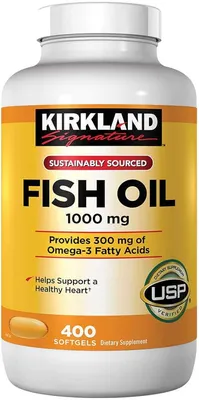
- Excellent value (roughly $0.07 per day)
- USP verified
- Widely available at Costco
- Only 300mg EPA/DHA per capsule (need 3-4 daily)
- Ethyl ester form (lower absorption)
- More likely to cause fish burps

- 2,200mg fish oil with 1,400mg EPA/DHA per serving
- Triglyceride form
- IFOS certified for purity
- Good mid-range price
- Large softgel size
- Some users report aftertaste
Frequently Asked Questions
How much omega-3 should a 65-year-old take?
Most health organizations recommend at least 1,000mg of combined EPA and DHA daily for cardiovascular benefit. The American Heart Association recommends 1g daily for people with documented heart disease, and up to 4g daily (under medical supervision) for reducing triglycerides. For general health, 1,000-2,000mg of combined EPA/DHA is a well-supported range.
Is fish oil actually good for your heart?
The evidence is strong. Multiple large-scale studies, including the VITAL trial (25,871 participants) and REDUCE-IT trial, show omega-3 supplementation reduces cardiovascular events. EPA and DHA lower triglycerides, may reduce blood pressure slightly, and support healthy heart rhythm. The benefits are most pronounced in people who don't eat fatty fish regularly.
What is the difference between fish oil and omega-3?
Fish oil is the carrier — it's extracted from fatty fish like anchovies, sardines, and mackerel. Omega-3 fatty acids (EPA and DHA) are the active ingredients inside the fish oil. A '1,000mg fish oil' capsule might contain only 300mg of actual EPA/DHA. Always check the EPA and DHA numbers on the Supplement Facts panel, not just the total fish oil amount.
Should I take fish oil in the morning or at night?
Timing doesn't significantly affect absorption, but taking fish oil with your largest meal improves absorption by up to 3 times compared to an empty stomach. The fat in your meal helps your body absorb the omega-3s. If fish oil causes reflux, taking it with dinner rather than breakfast may reduce that issue.
Can fish oil interact with blood pressure or blood thinning medications?
Fish oil has mild blood-thinning properties and may enhance the effects of anticoagulants like warfarin or antiplatelet drugs like aspirin. It may also modestly lower blood pressure, potentially adding to the effects of BP medications. Doses up to 2g daily are generally considered safe alongside these medications, but always inform your doctor about your fish oil use.