
Ubiquinol vs Ubiquinone: Which CoQ10 Form Is Better After 50?
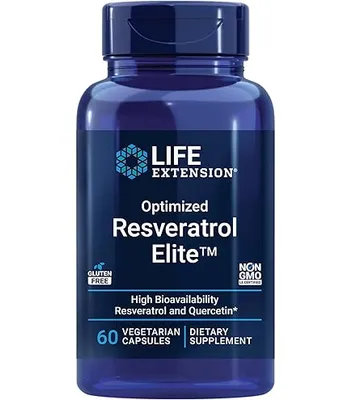
Life Extension Super Ubiquinol
Best ubiquinol — delivers the active form of CoQ10 from the most trusted source with enhanced absorption technology.
- Kaneka ubiquinol — the gold standard Japanese-sourced active CoQ10
- Enhanced bioavailability formulation for superior absorption
- 100mg per softgel at a competitive price for ubiquinol
For adults over 50, ubiquinol is generally the better form of CoQ10. Your body uses ubiquinol — the active, reduced form — for energy production and antioxidant protection. Ubiquinone is the conventional form that must be converted to ubiquinol before your body can use it, and this conversion becomes less efficient as you age. Studies show ubiquinol supplements achieve significantly higher blood levels than the same dose of ubiquinone in older adults, which means you get more benefit per capsule.
That said, both forms work. Ubiquinone is cheaper, has more clinical trial history, and remains a valid choice — especially at higher doses or with enhanced absorption formulations like Qunol’s water-soluble technology. We reviewed the evidence to help you decide which form fits your situation, budget, and health goals.
What Is Ubiquinone?
Ubiquinone is the oxidized form of coenzyme Q10 (CoQ10) — the form that has been available as a supplement since the 1970s and used in the majority of clinical research. When someone says “CoQ10” without specifying a form, they almost always mean ubiquinone.
Your body naturally produces ubiquinone, which then cycles between its oxidized state (ubiquinone) and its reduced state (ubiquinol) as part of cellular energy production. In the mitochondria — the energy factories inside every cell — CoQ10 shuttles electrons along the electron transport chain, a process essential for producing ATP (the energy currency your cells run on).
How Ubiquinone Works
When you take a ubiquinone supplement, your body must first convert it to ubiquinol before using it. This conversion happens in the intestinal wall, liver, and blood. Once converted:
- Energy production. Ubiquinol donates electrons in the mitochondrial electron transport chain, directly supporting ATP synthesis. Your heart, which beats roughly 100,000 times daily, is the most energy-demanding organ and depends heavily on this process.
- Antioxidant protection. In its reduced form (ubiquinol), CoQ10 neutralizes free radicals that damage cell membranes, DNA, and proteins. This antioxidant role is especially important in heart and vascular tissue, which are exposed to high levels of oxidative stress.
- LDL protection. Ubiquinol helps prevent the oxidation of LDL cholesterol. Oxidized LDL is a key driver of atherosclerotic plaque formation — the process that leads to heart attacks and strokes.
Ubiquinone is well-studied, widely available, and less expensive than ubiquinol. The standard dose used in most clinical trials is 100-300mg daily, taken with a meal containing fat.
The Conversion Problem
Here is the critical issue for adults over 50: the efficiency of converting ubiquinone to ubiquinol declines with age.
Research by Peter Langsjoen, a cardiologist who has studied CoQ10 for decades, has documented that blood levels of ubiquinol relative to total CoQ10 decline as people age. In younger adults, 90-95% of the CoQ10 in blood exists as ubiquinol. By age 70-80, this ratio shifts, reflecting reduced conversion capacity.
This does not mean ubiquinone stops working in older adults. It means you may need a higher dose of ubiquinone to achieve the same blood levels that a lower dose of ubiquinol provides. Some manufacturers address this with enhanced absorption technologies — Qunol’s water-and-fat-soluble formulation, for example, partially compensates for ubiquinone’s lower bioavailability.
What Is Ubiquinol?
Ubiquinol is the reduced, active form of CoQ10. It is what ubiquinone becomes after your body converts it — the form that directly participates in energy production and antioxidant defense.
Ubiquinol supplements became commercially available in 2006 when Kaneka Corporation, a Japanese chemical company, developed a stable form that could survive the manufacturing process and shelf storage. Before this, ubiquinol’s instability (it readily oxidizes back to ubiquinone when exposed to air) made it impractical as a supplement.
How Ubiquinol Works
Ubiquinol works through the same mechanisms as ubiquinone — it is the same molecule, just in a different redox state. The difference is that ubiquinol skips the conversion step:
- No conversion required. Ubiquinol is absorbed directly into the bloodstream in its active form. This is particularly important for adults over 50, whose conversion enzymes work less efficiently.
- Higher blood levels per dose. Multiple studies show that ubiquinol supplementation achieves higher plasma CoQ10 levels than the same dose of ubiquinone. The magnitude varies by study and population, but ranges from 2-fold to 6-fold higher levels.
- Same cellular roles. Once in circulation, ubiquinol performs the same energy production and antioxidant functions as converted ubiquinone. The body continuously cycles CoQ10 between its two forms as needed.
The standard ubiquinol dose is 100-200mg daily, typically lower than ubiquinone doses because of the improved absorption.
Head-to-Head: The Evidence Compared
Bioavailability — How Much Gets Into Your Blood
This is the central question in the ubiquinol vs. ubiquinone debate, and the evidence consistently favors ubiquinol for older adults.
Langsjoen (2008). A study by Peter and Alena Langsjoen examined CoQ10 absorption in patients with advanced heart failure who had not responded well to standard ubiquinone supplementation (average dose 450mg/day, mean plasma level 1.6 mcg/mL). When switched to ubiquinol (average dose 580mg/day), mean plasma levels rose to 6.5 mcg/mL — roughly a 4-fold increase. The study concluded that ubiquinol was “clearly superior” for raising blood CoQ10 levels in patients with severe heart failure and impaired absorption.
Hosoe (2007). A single-dose and steady-state study published in Regulatory Toxicology and Pharmacology compared ubiquinol and ubiquinone absorption in healthy volunteers. After a single 300mg dose, ubiquinol achieved significantly higher plasma CoQ10 levels than ubiquinone. Over 28 days of 300mg daily supplementation, ubiquinol raised plasma levels by 7.2 mcg/mL compared to 2.6 mcg/mL for ubiquinone — a roughly 2.8-fold advantage.
Mohr, Bowry, and Stocker (1992). An earlier foundational paper in Biochimica et Biophysica Acta established that ubiquinol is the predominant form of CoQ10 in human plasma (over 90% in healthy young adults) and demonstrated its role as a lipid-soluble antioxidant in LDL particles. This work laid the groundwork for understanding why delivering the reduced form directly might be advantageous, especially when natural conversion is impaired.
Clinical Outcomes — Do They Produce Different Results?
This is where the picture gets more complicated. Most large-scale CoQ10 clinical trials used ubiquinone — simply because it was the only form available for decades.
The Q-SYMBIO Trial (2014). This landmark randomized controlled trial enrolled 420 patients with moderate-to-severe heart failure across nine countries. Patients received 100mg of ubiquinone three times daily (300mg total) or placebo for two years. The CoQ10 group had a 43% reduction in cardiovascular death and a 42% reduction in all-cause mortality — striking results.
Critically, this trial used ubiquinone, not ubiquinol. It demonstrated that ubiquinone at adequate doses clearly works. The question is whether ubiquinol could achieve similar or better results at lower doses — that trial has not been conducted yet.
The KiSel-10 Study (2013). A Swedish trial gave elderly participants (average age 78) 200mg of ubiquinone daily plus selenium over four years. The supplemented group had a 53% reduction in cardiovascular mortality compared to placebo. Again, ubiquinone — not ubiquinol — at a moderate dose produced significant outcomes.
No head-to-head outcome trials. There are no large randomized trials directly comparing ubiquinol to ubiquinone for hard clinical outcomes (heart attacks, strokes, or death). The bioavailability studies clearly show ubiquinol raises blood levels more efficiently, but we cannot say with certainty that higher blood levels automatically translate to proportionally better clinical outcomes. CoQ10 may have a threshold effect, where once blood levels reach a certain point, additional increases yield diminishing returns.
What the Evidence Tells Us
Taken together:
- Ubiquinol is better absorbed, particularly in older adults and those with impaired conversion — this is well-established across multiple studies
- Ubiquinone at adequate doses clearly works, as demonstrated by Q-SYMBIO (300mg/day) and KiSel-10 (200mg/day)
- For adults over 50, ubiquinol offers a practical advantage — you can take a lower dose (100-200mg) and likely achieve the blood levels that required 200-300mg of ubiquinone in trials
- No outcome trial has directly compared the two forms, so the clinical superiority of ubiquinol is inferred from bioavailability data, not proven by head-to-head results
- Both forms are safe with minimal side effects at standard doses
When to Choose Ubiquinol
Ubiquinol is the stronger choice if:
You are over 50. The age-related decline in ubiquinone-to-ubiquinol conversion efficiency is the single biggest reason to choose ubiquinol. After 50, your body produces less CoQ10 overall and converts what it has less efficiently. Ubiquinol bypasses this bottleneck entirely.
You take a statin medication. Statins reduce CoQ10 production by 25-40% by blocking the HMG-CoA reductase pathway. When your body is already making less CoQ10, efficient supplementation matters more. Ubiquinol’s superior absorption helps compensate for statin-driven depletion with fewer capsules.
You have heart failure or other cardiovascular conditions. The Langsjoen study showed the biggest ubiquinol advantage in patients with advanced heart failure, whose absorption of ubiquinone was particularly poor. If your doctor has recommended CoQ10 for a heart condition, ubiquinol is the form most likely to achieve therapeutic blood levels.
You want simplicity. With ubiquinol, you can take 100mg daily and have reasonable confidence that you are achieving meaningful blood levels. With ubiquinone, you may need 200-300mg to achieve similar levels — which means more capsules and higher total cost that offsets the per-capsule savings.
Dose: 100-200mg ubiquinol daily with a meal containing fat. 100mg is sufficient for general heart health support. 200mg may be appropriate for statin users or those with specific cardiovascular concerns — consult your doctor.
When to Choose Ubiquinone
Ubiquinone remains a valid choice if:
You are under 50 with efficient conversion. If you are in your 30s or 40s and taking CoQ10 proactively, your body’s conversion machinery is still working well. A 200mg ubiquinone dose will convert efficiently to ubiquinol, and you will save 30-60% compared to ubiquinol products.
Budget is your primary concern. Ubiquinone supplements cost significantly less per milligram. If you are on a fixed income and the price difference between ubiquinol and ubiquinone is the difference between supplementing and not supplementing, ubiquinone at a higher dose is far better than skipping CoQ10 entirely.
You use a water-soluble formulation. Qunol Ultra CoQ10 uses a patented formulation that improves ubiquinone absorption by making it both water- and fat-soluble. This partially compensates for ubiquinone’s inherent absorption disadvantage, narrowing the gap with ubiquinol. At roughly $0.37 per day, it represents excellent value.
You need an allergen-free product. Thorne’s ubiquinone CoQ10 is NSF Certified for Sport and free of soy, gluten, dairy, and all major allergens. Most ubiquinol products contain soy lecithin in the softgel. If you have soy sensitivity or multiple food allergies, Thorne’s ubiquinone may be your best option.
Dose: 200-300mg ubiquinone daily with a meal containing fat. If using a standard formulation, take it with your largest meal to maximize fat-dependent absorption. If using Qunol’s water-soluble formulation, meal timing is less critical but still recommended.
CoQ10 and Statin Users: A Special Case
If you take a statin for cholesterol management, CoQ10 supplementation deserves special attention regardless of which form you choose.
Statins block HMG-CoA reductase — the enzyme your body uses to produce both cholesterol and CoQ10. Studies show statins can reduce blood CoQ10 levels by 25-40%. This depletion may contribute to the muscle pain (myalgia), weakness, cramps, and fatigue that 10-30% of statin users experience.
The evidence that CoQ10 reduces statin-related muscle symptoms is encouraging but not conclusive. Some randomized trials show significant improvement, while others show no benefit. The variability likely reflects differences in dosing, CoQ10 form, and individual patient characteristics.
What we can say:
- CoQ10 supplementation is safe alongside statins and does not interfere with statins’ cholesterol-lowering effects
- 200mg of ubiquinol daily is the most commonly recommended dose for statin users experiencing muscle symptoms
- If you use ubiquinone for cost reasons, 300mg daily is a reasonable dose to compensate for lower absorption
- Give it at least 8-12 weeks of consistent daily use before evaluating whether it helps your muscle symptoms
- Always discuss CoQ10 supplementation with the prescribing physician for your statin — they can help monitor your response
Our Product Recommendations
Life Extension Super Ubiquinol — Best Ubiquinol
Life Extension uses Kaneka ubiquinol — the original, patented Japanese-sourced ubiquinol used in most clinical research. The enhanced bioavailability formulation includes a proprietary delivery system designed to improve absorption further. The addition of PQQ (pyrroloquinoline quinone) supports mitochondrial biogenesis, essentially helping your cells create new mitochondria alongside the CoQ10 that fuels them.
Who it’s best for: Adults over 50 who want the most effective CoQ10 form from the most trusted source. The Kaneka provenance means you are getting the same form studied in the bioavailability research. Especially valuable for statin users and those with cardiovascular concerns. Read our full review: Life Extension Super Ubiquinol
Qunol Ultra CoQ10 — Best Water-Soluble Ubiquinone
Qunol’s patented formulation makes ubiquinone both water- and fat-soluble, which partially overcomes the absorption disadvantage of standard ubiquinone. This means you get better absorption from ubiquinone than you would from a conventional formulation, without paying the premium for ubiquinol. The #1 cardiologist-recommended brand in the U.S. at the most affordable price point in this comparison.
Who it’s best for: Budget-conscious adults who want effective CoQ10 supplementation without paying the ubiquinol premium. The water-soluble formulation makes this the strongest ubiquinone option available — a genuine value leader. Read our full review: Qunol Ultra CoQ10
Thorne CoQ10 — Best Third-Party Tested
Thorne’s NSF Certified for Sport designation means every batch is independently tested for purity, potency, label accuracy, and banned substances — the most rigorous third-party standard in the supplement industry. The formula uses ubiquinone (not ubiquinol), so absorption will be lower for older adults, but the allergen-free profile (no soy, gluten, dairy, or common allergens) and unmatched quality verification make it the top choice for purity-focused buyers.
Who it’s best for: Those who prioritize independent quality verification, have allergen sensitivities (especially soy), or whose healthcare providers specify Thorne products. Used by practitioners at the Mayo Clinic and Cleveland Clinic. Read our full review: Thorne CoQ10
Frequently Asked Questions
What is the difference between ubiquinol and ubiquinone? Ubiquinone is the oxidized form of CoQ10 — the conventional form used in most older supplements and clinical trials. Your body must convert it to ubiquinol (the reduced, active form) before it can use it for energy production and antioxidant protection. Ubiquinol is the pre-converted, ready-to-use form. Both are legitimate forms of CoQ10, but they differ in absorption efficiency, especially as you age. After 40-50, your body’s ability to convert ubiquinone to ubiquinol declines, which is why many pharmacists and cardiologists recommend ubiquinol for older adults.
Is ubiquinol really worth the extra cost over ubiquinone? For adults over 50, the extra cost is generally justified. Ubiquinol typically costs 30-60% more than ubiquinone at the same dose, but it achieves significantly higher blood levels — meaning you may need a lower dose to reach the same therapeutic level. A 100mg ubiquinol capsule may deliver the equivalent blood levels of 200-300mg of ubiquinone in an older adult. When you factor in the dose difference, the per-effective-dose cost gap narrows considerably. For adults under 40 with efficient conversion, ubiquinone at a higher dose is a reasonable money-saving alternative.
How much CoQ10 should a 60-year-old take? For general heart health and energy support, 100-200mg of ubiquinol daily is the most widely recommended range for adults over 60. If you take a statin medication, 200mg daily may help offset the CoQ10 depletion that statins cause. If you use ubiquinone instead, consider a higher dose (200-300mg) to compensate for reduced conversion efficiency. Always take CoQ10 with a meal containing fat, as it is fat-soluble and absorbs poorly on an empty stomach. Consult your doctor for personalized dosing.
Can CoQ10 help with statin side effects? Statins block HMG-CoA reductase, the same enzyme pathway your body uses to produce CoQ10. This can reduce blood CoQ10 levels by 25-40%, which may contribute to the muscle pain, weakness, and fatigue that 10-30% of statin users experience. Several clinical trials suggest that 100-200mg of CoQ10 daily may reduce statin-related muscle symptoms, though results vary between individuals. The evidence is strong enough that many cardiologists routinely recommend CoQ10 for statin users experiencing muscle complaints. Ubiquinol may be preferable for statin users because it skips the conversion step.
Does the brand of CoQ10 matter? Yes, significantly. CoQ10 quality varies widely between manufacturers. Look for products that use Kaneka ubiquinol or ubiquinone — Kaneka is the original Japanese manufacturer and the source used in most clinical research. Third-party testing (NSF, USP, or IFOS certification) provides additional assurance that the product contains what the label claims. Life Extension and Thorne both use Kaneka-sourced CoQ10 and undergo rigorous testing. Avoid generic CoQ10 products that do not disclose their source or lack third-party verification.
The Bottom Line
Both ubiquinol and ubiquinone are the same molecule in different states — and both forms of CoQ10 can support your heart health, energy production, and cellular protection. The question is which form gets you the most benefit for your dollar and your biology.
If you are over 50, ubiquinol has a meaningful edge. Your body absorbs it more efficiently, you need fewer capsules, and you bypass the conversion step that slows down with age. Life Extension Super Ubiquinol delivers the gold-standard Kaneka ubiquinol at a competitive price.
If budget is your priority, ubiquinone is not a consolation prize. The Q-SYMBIO and KiSel-10 trials proved that ubiquinone at adequate doses produces significant cardiovascular benefits. Qunol’s water-soluble formulation narrows the absorption gap at the lowest price point in the category.
Whatever form you choose, take it daily with food, give it at least a month to build up in your tissues, and talk to your doctor — especially if you take a statin or blood pressure medication.
For related reading, see our guides on Best CoQ10 Supplements, How Much CoQ10 Should You Take After 60?, and Can You Take CoQ10 with Blood Thinners?.
All Products We Reviewed
- Kaneka ubiquinol — the gold standard Japanese-sourced active CoQ10
- Enhanced bioavailability formulation for superior absorption
- 100mg per softgel at a competitive price for ubiquinol
- Includes PQQ for additional mitochondrial support
- Contains soy (from lecithin in the softgel)
- PQQ adds cost that may not be necessary for everyone
- Softgel only — no capsule alternative
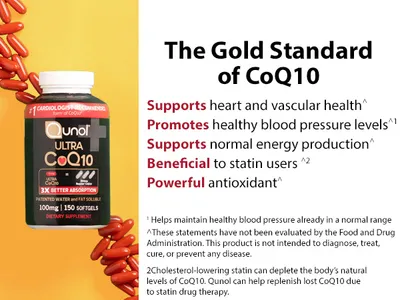
- Patented water-and-fat-soluble formulation improves absorption
- 100mg per softgel at the most affordable price in this category
- The #1 cardiologist-recommended CoQ10 brand
- Works well even without a high-fat meal
- Contains soy lecithin
- Uses ubiquinone, not ubiquinol (requires conversion)
- Softgel only — no capsule option
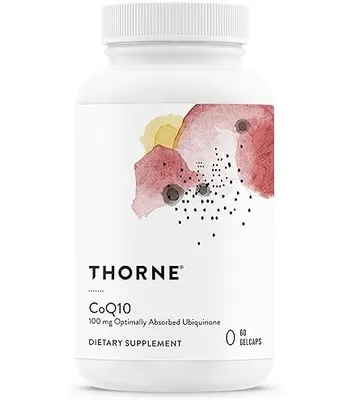
- NSF Certified for Sport — the highest level of third-party testing
- Free from soy, gluten, dairy, and all major allergens
- Used by Mayo Clinic and Cleveland Clinic practitioners
- Clean formula with minimal excipients
- Uses ubiquinone form (requires body conversion)
- Higher price per serving than Qunol for the same form
- Lower absorption than ubiquinol products for adults over 50
Frequently Asked Questions
What is the difference between ubiquinol and ubiquinone?
Ubiquinone is the oxidized form of CoQ10 — the conventional form used in most older supplements and clinical trials. Your body must convert it to ubiquinol (the reduced, active form) before it can use it for energy production and antioxidant protection. Ubiquinol is the pre-converted, ready-to-use form. Both are legitimate forms of CoQ10, but they differ in absorption efficiency, especially as you age. After 40-50, your body's ability to convert ubiquinone to ubiquinol declines, which is why many pharmacists and cardiologists recommend ubiquinol for older adults.
Is ubiquinol really worth the extra cost over ubiquinone?
For adults over 50, the extra cost is generally justified. Ubiquinol typically costs 30-60% more than ubiquinone at the same dose, but it achieves significantly higher blood levels — meaning you may need a lower dose to reach the same therapeutic level. A 100mg ubiquinol capsule may deliver the equivalent blood levels of 200-300mg of ubiquinone in an older adult. When you factor in the dose difference, the per-effective-dose cost gap narrows considerably. For adults under 40 with efficient conversion, ubiquinone at a higher dose is a reasonable money-saving alternative.
How much CoQ10 should a 60-year-old take?
For general heart health and energy support, 100-200mg of ubiquinol daily is the most widely recommended range for adults over 60. If you take a statin medication, 200mg daily may help offset the CoQ10 depletion that statins cause. If you use ubiquinone instead, consider a higher dose (200-300mg) to compensate for reduced conversion efficiency. Always take CoQ10 with a meal containing fat, as it is fat-soluble and absorbs poorly on an empty stomach. Consult your doctor for personalized dosing.
Can CoQ10 help with statin side effects?
Statins block HMG-CoA reductase, the same enzyme pathway your body uses to produce CoQ10. This can reduce blood CoQ10 levels by 25-40%, which may contribute to the muscle pain, weakness, and fatigue that 10-30% of statin users experience. Several clinical trials suggest that 100-200mg of CoQ10 daily may reduce statin-related muscle symptoms, though results vary between individuals. The evidence is strong enough that many cardiologists routinely recommend CoQ10 for statin users experiencing muscle complaints. Ubiquinol may be preferable for statin users because it skips the conversion step.
Does the brand of CoQ10 matter?
Yes, significantly. CoQ10 quality varies widely between manufacturers. Look for products that use Kaneka ubiquinol or ubiquinone — Kaneka is the original Japanese manufacturer and the source used in most clinical research. Third-party testing (NSF, USP, or IFOS certification) provides additional assurance that the product contains what the label claims. Life Extension and Thorne both use Kaneka-sourced CoQ10 and undergo rigorous testing. Avoid generic CoQ10 products that do not disclose their source or lack third-party verification.