
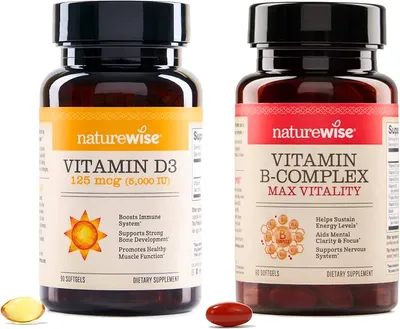
NatureWise Vitamin D3 5000 IU
Best value high-dose vitamin D3 for adults over 50 with diagnosed deficiency — affordable, well-absorbed, and the dose doctors commonly prescribe for repletion.
- 5000 IU dose — the repletion dose many doctors recommend for deficiency
- Organic olive oil base for enhanced fat-soluble vitamin absorption
- Non-GMO, gluten-free, and free of common allergens
- Exceptional value — large bottle lasts up to a year for pennies per day
- 5000 IU is too high for maintenance use without doctor supervision
- No third-party certification as rigorous as USP or NSF
- Softgel only — not available in tablet, gummy, or liquid form
NatureWise Vitamin D3 5000 IU is the best value high-dose vitamin D3 for adults over 50 who have been told their levels are low. It delivers the repletion dose that many doctors and endocrinologists prescribe, uses organic olive oil to enhance absorption, and comes in a large bottle that lasts up to a year at a cost of just pennies per day. If your blood work shows deficiency and your doctor recommends 5000 IU, this is the product that delivers quality without overpaying.
What Is NatureWise Vitamin D3 5000 IU?
NatureWise is a U.S.-based supplement company that has built a loyal following by keeping things simple: clean formulations, honest labeling, and competitive pricing. Their Vitamin D3 5000 IU has become one of the best-selling vitamin D products in the country, consistently ranking among the top vitamin D supplements on major retail platforms.
The 5000 IU dose addresses a specific need. While 1000-2000 IU is appropriate for maintenance in most adults, those with diagnosed deficiency — blood levels below 20 ng/mL — often need a higher dose to replete their stores within a reasonable timeframe. The Endocrine Society’s clinical practice guidelines suggest that adults with deficiency may require 5000-6000 IU daily for 8-12 weeks, making NatureWise’s dosage a practical match for real-world clinical recommendations.
What’s Inside
Each mini softgel contains 5000 IU (125 mcg) of vitamin D3 (cholecalciferol) dissolved in organic olive oil. The softgel shell is made from gelatin, glycerin, and water. No wheat, gluten, dairy, soy, eggs, fish, shellfish, tree nuts, or peanuts.
The D3 is cholecalciferol — the same form your body produces from sun exposure and the form research shows is approximately 87% more potent than D2 (ergocalciferol) at raising and maintaining blood levels.
The organic olive oil is both the carrier and an absorption enhancer. Vitamin D3 is fat-soluble, and research consistently shows that taking it with fat improves uptake. By pre-dissolving D3 in olive oil, NatureWise ensures that fat is always present at the moment of absorption — even if you take the softgel with a low-fat meal or on an empty stomach. The olive oil is certified organic, meaning no synthetic pesticides or processing solvents.
NatureWise also produces this product as Non-GMO verified and has it third-party tested for purity, though the product does not carry a USP or NSF certification.
What the Research Says
The research on vitamin D deficiency in older adults makes a compelling case for supplementation. About 42% of American adults have insufficient vitamin D levels (below 30 ng/mL), and the rate is higher in adults over 50 due to reduced sun exposure, decreased skin synthesis capacity, and medications that interfere with vitamin D metabolism.
At the 5000 IU dose, the repletion evidence is strong. A 2011 randomized trial published in Anticancer Research found that supplementing healthy adults with 5000 IU of vitamin D3 daily for 28 weeks safely raised blood levels to a mean of 66 ng/mL — well within the optimal range — with no adverse effects. The researchers concluded that 5000 IU daily was a reasonable dose for adults aiming to reach blood levels above 40 ng/mL.
For immune function, the 2017 BMJ meta-analysis of 25 randomized controlled trials with over 11,000 participants found that daily vitamin D supplementation reduced acute respiratory infections by 12% overall. The benefit was most dramatic — a 70% reduction — in participants who were severely deficient at baseline. This makes high-dose D3 particularly relevant for the deficient adults it’s designed for.
Beyond immunity, adequate vitamin D levels support muscle function and balance. A 2019 meta-analysis in Osteoporosis International found that vitamin D supplementation reduced fall risk in older adults, particularly those with baseline deficiency. Falls are a leading cause of injury and hospitalization in adults over 65, making vitamin D’s role in muscle function clinically significant.
Vitamin D also plays a documented role in mood regulation. A 2014 meta-analysis in Nutrients found that vitamin D supplementation had a moderate beneficial effect on depression, particularly in individuals with low baseline vitamin D levels.
Who Is This Best For?
NatureWise Vitamin D3 5000 IU is a strong fit if you:
- Have been diagnosed with vitamin D deficiency — blood levels below 20 ng/mL typically call for a repletion dose in the 5000 IU range
- Live in a northern latitude or get limited sun exposure — adults who spend most of their time indoors, wear sunscreen consistently, or live above the 37th parallel often need higher doses
- Have darker skin — melanin reduces the skin’s ability to produce vitamin D from sunlight, increasing supplementation needs
- Want the best value per dollar — NatureWise’s large bottles (up to 360 softgels) provide a year’s supply for roughly $15
- Prefer a clean formula — Non-GMO, organic olive oil base, free of major allergens
This is NOT the right product for someone who simply wants a maintenance dose of vitamin D. If your blood levels are already in the 30-50 ng/mL range, 1000-2000 IU is likely sufficient, and 5000 IU daily could push you above the optimal range over time. Always base your dose on blood work, not guesswork.
How to Take It
Take one softgel daily with a meal that contains some fat. While the organic olive oil base provides a built-in fat source, taking it with your largest meal of the day further optimizes absorption.
Timing: Morning or midday is ideal. Some individuals report that taking vitamin D late in the evening may interfere with sleep, though evidence is limited. Taking it with breakfast or lunch is a simple way to avoid this concern.
Monitoring is essential: Unlike lower-dose vitamin D, 5000 IU warrants periodic blood work. Your doctor should check your 25(OH)D level after 8-12 weeks to determine whether you’ve reached the target range (typically 30-50 ng/mL, though some practitioners target 40-60 ng/mL). Once replete, your doctor will likely reduce you to a 1000-2000 IU maintenance dose.
Interactions: Thiazide diuretics combined with high-dose vitamin D can raise calcium to problematic levels. Corticosteroids reduce vitamin D effectiveness. Weight-loss medications like orlistat can impair fat-soluble vitamin absorption — space by 2 hours.
Always consult your doctor before starting 5000 IU vitamin D supplementation. This dose is appropriate for diagnosed deficiency and should be guided by blood work, not self-diagnosis.
The Bottom Line
NatureWise Vitamin D3 5000 IU does exactly what many doctors prescribe for vitamin D deficiency: it delivers a clinically meaningful repletion dose in a well-absorbed format at a price that eliminates cost as a barrier. The organic olive oil base, clean ingredient profile, and Non-GMO verification add quality touches at a budget price point. Pair it with regular blood work and your doctor’s guidance, and this is one of the most straightforward supplement decisions you can make after 50.
Frequently Asked Questions
Is 5000 IU of vitamin D3 safe for adults over 50?
For most adults with diagnosed vitamin D deficiency, 5000 IU daily is within the range that many endocrinologists and geriatricians prescribe. The Endocrine Society states that adults may need 1,500-2,000 IU daily for maintenance, but those with deficiency (blood levels below 20 ng/mL) often need 5,000-10,000 IU daily for 8-12 weeks to replete their stores. The upper tolerable intake set by the Institute of Medicine is 4,000 IU, but many experts consider this overly conservative. Your doctor should monitor your 25(OH)D blood levels to ensure you stay in the optimal range.
How long does it take for 5000 IU of vitamin D to raise blood levels?
Most people see a meaningful increase in blood levels within 4-8 weeks of consistent daily supplementation. A general rule of thumb is that every 1000 IU of daily vitamin D3 raises blood levels by approximately 10 ng/mL, though individual responses vary based on body weight, baseline levels, skin pigmentation, and fat absorption. Your doctor will likely recheck your levels after 8-12 weeks to assess progress and adjust the dose.
Should I take 5000 IU of vitamin D forever?
Probably not at this dose. 5000 IU is typically a repletion dose — used to bring deficient blood levels up to the optimal range (30-50 ng/mL). Once your levels are adequate, most doctors reduce the maintenance dose to 1,000-2,000 IU daily. Staying on 5000 IU long-term without monitoring could potentially push levels too high (above 100 ng/mL), which carries risks including hypercalcemia. Regular blood work lets you and your doctor find the right maintenance dose.
Why does NatureWise use organic olive oil?
Vitamin D3 is fat-soluble, meaning it absorbs dramatically better when taken with dietary fat. By dissolving D3 in organic olive oil inside the softgel, NatureWise ensures there's always a fat source present — even if you take it on a light or low-fat meal. Olive oil also provides oleic acid, a monounsaturated fat with well-documented health benefits. The organic certification means the olive oil is free of synthetic pesticides and solvents, which matters for a supplement you take daily.