
Best Curcumin Supplements for Inflammation (2026)
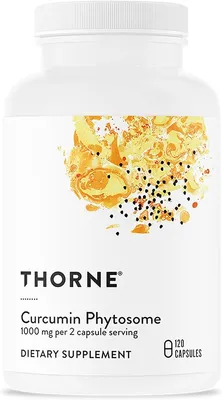
Thorne Meriva Curcumin Phytosome
Best overall — the gold standard for curcumin absorption and third-party verified quality.
- Meriva phytosome — up to 29x better absorption than standard curcumin
- NSF Certified for Sport — rigorous third-party testing
- Strong clinical evidence for joint inflammation and pain
The best curcumin supplement for most adults over 50 is Thorne Meriva Curcumin Phytosome. It uses a patented phospholipid delivery system clinically shown to absorb up to 29 times better than standard curcumin powder, and it carries NSF Certified for Sport verification — one of the most rigorous third-party testing standards available. If budget is a factor, Jarrow Curcumin Phytosome uses the same Meriva technology at about 30% less cost.
We spent months reviewing the clinical literature on curcumin bioavailability and comparing nine curcumin supplements on absorption technology, third-party testing, ingredient quality, and real-world feedback from adults managing joint inflammation.
Why Curcumin Matters for Inflammation After 50
Chronic low-grade inflammation increases with age. Researchers sometimes call it “inflammaging,” and it plays a role in joint pain, cardiovascular disease, cognitive decline, and many other conditions that become more common after 50.
Curcumin — the primary active compound in turmeric — is one of the most studied natural anti-inflammatory substances. It works by inhibiting NF-kB, a molecule that travels into cell nuclei and activates genes related to inflammation. Multiple clinical trials have demonstrated its benefits for joint pain, particularly in osteoarthritis.
The challenge with curcumin is absorption. Standard curcumin extract has notoriously poor bioavailability — your body eliminates most of it before it can reach your bloodstream. This is why the form of curcumin matters as much as the dose. Advanced delivery systems like Meriva phytosome technology solve this problem, and choosing the right form is the single most important factor in whether your curcumin supplement actually works.
How We Chose These Products
We evaluated each curcumin supplement across five criteria that matter most for adults over 50:
- Absorption technology — Standard curcumin absorbs poorly. We prioritized supplements using clinically validated bioavailability enhancers (phytosome, BCM-95, or micelle technology)
- Third-party testing — Independent verification of purity, potency, and absence of heavy metals and contaminants
- Clinical evidence — Preference for specific formulations studied in peer-reviewed human trials
- Ingredient transparency — Clear labeling of curcuminoid content, delivery technology, and inactive ingredients
- Value per absorbed dose — Cost per serving adjusted for actual bioavailability, not just milligrams on the label
Our Top 3 Picks Compared
1. Thorne Meriva Curcumin Phytosome — Best Overall
Thorne’s curcumin supplement uses Meriva, a patented phytosome technology developed by Indena S.p.A. in Italy. The phytosome process wraps curcumin in sunflower-derived phospholipids, creating a structure that passes through the intestinal lining far more effectively than free curcumin.
The absorption difference is dramatic. A pharmacokinetic study published in the Journal of Natural Products found that Meriva delivered 29 times more curcumin to the bloodstream compared to an equivalent dose of standard curcumin extract. That means Thorne’s 500mg Meriva capsule may deliver more usable curcumin than several grams of standard extract.
Thorne’s NSF Certified for Sport designation adds another layer of confidence. NSF tests each batch for purity, potency, and over 270 substances banned in competitive athletics — a level of scrutiny that catches contamination issues other testing programs miss.
Who it’s best for: Anyone who wants the most clinically supported curcumin formulation with the strongest third-party verification. Read our full Thorne Meriva review for detailed ingredient analysis.
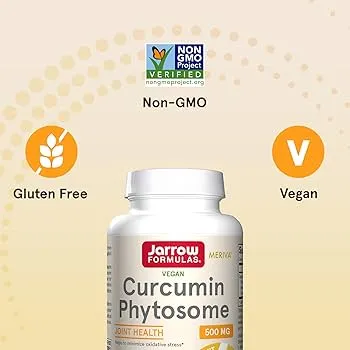
2. Jarrow Curcumin Phytosome — Best Value
Jarrow uses the same Meriva phytosome technology as Thorne, which means you get the same absorption advantage at a lower price. The 500mg capsule delivers an equivalent dose of phytosome-bound curcumin.
Where Jarrow falls slightly short is third-party testing. The company conducts in-house quality testing and GMP compliance, but does not carry an independent certification like NSF or USP. For most people, this is an acceptable trade-off for the roughly $10 savings per bottle. For those who prioritize independent verification, Thorne is worth the premium.
Who it’s best for: Budget-conscious shoppers who want phytosome absorption technology without the premium price. See our full Jarrow Curcumin review for a head-to-head comparison with Thorne.
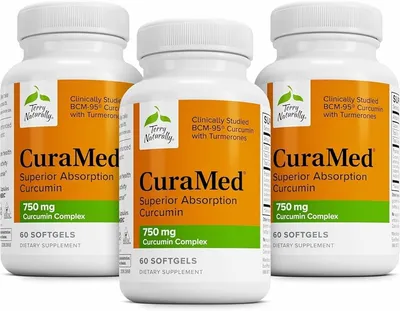
3. Nature’s Way CuraMed — Best Alternative Technology
CuraMed uses BCM-95, a different absorption-enhancement approach that combines curcumin extract with turmeric essential oils. The essential oils (specifically ar-turmerone) help improve absorption, though published comparisons suggest BCM-95 does not match Meriva’s absorption levels.
That said, BCM-95 does absorb meaningfully better than standard curcumin, and CuraMed has a solid track record with generally positive user feedback. Nature’s Way is widely available at retail pharmacies and health food stores, which makes it convenient to purchase in person.
The softgel format contains soy lecithin, which is a consideration for anyone with a soy sensitivity.
Who it’s best for: Those who prefer a softgel format or want to buy from retail stores rather than online. Read our full CuraMed review for complete ingredient details.
How to Choose the Right Curcumin Supplement
Absorption technology is non-negotiable. Do not buy standard curcumin extract without a bioavailability enhancer. You will absorb very little of it. Look for Meriva (phytosome), BCM-95, Longvida, or NovaSOL on the label. Piperine (black pepper extract) also improves absorption, though less dramatically than phytosome technology.
Ignore the milligram number on standard extracts. A 1,000mg capsule of standard curcumin may deliver less actual curcumin to your bloodstream than a 500mg Meriva capsule. Bioavailability matters more than dose size.
Check for third-party testing. Look for NSF, USP, or independent lab verification. The curcumin supplement market has a quality problem — a 2019 analysis found that some turmeric supplements contained undeclared synthetic curcumin or were contaminated with lead.
Watch for drug interactions. Curcumin can interact with blood thinners (warfarin, aspirin), diabetes medications (by lowering blood sugar), and some chemotherapy drugs. It may also affect liver enzyme activity, which impacts how your body processes certain medications. Talk to your doctor before starting curcumin if you take prescription drugs.
Give it at least a month. Curcumin modulates inflammatory pathways gradually. Unlike ibuprofen, it does not provide immediate pain relief. Most clinical trials measure outcomes at 4-8 weeks. Commit to consistent daily use for at least 30 days before judging whether it is helping.
Curcumin and Turmeric: Understanding the Difference
Turmeric is the golden-yellow spice used in curry dishes. Curcumin is the specific compound within turmeric responsible for most of its health benefits. Raw turmeric root contains only about 2-5% curcumin by weight.
Cooking with turmeric is wonderful and may offer modest health benefits, but you cannot realistically eat enough turmeric to achieve the curcumin doses used in clinical trials. That is why targeted curcumin supplements exist — they concentrate and enhance the absorption of the active compound.
For a deeper look at the science connecting curcumin to joint health, see our guide on turmeric for joint pain. If you are exploring multiple approaches to joint support, our roundup of best glucosamine supplements and our guide to anti-inflammatory supplements cover complementary options.
The Bottom Line
Curcumin is one of the best-studied natural anti-inflammatory compounds available, and for adults over 50 dealing with joint stiffness or chronic inflammation, it is worth trying. The key is choosing a form that your body can actually absorb.
Thorne Meriva Curcumin Phytosome is our top recommendation. It combines the most clinically validated absorption technology with the strongest third-party testing available. If the price is a stretch, Jarrow Curcumin Phytosome uses the same technology for less.
Whichever you choose, take it daily with food, give it at least a month, and discuss it with your healthcare provider — especially if you take blood thinners or other prescription medications.
All Products We Reviewed
- Meriva phytosome — up to 29x better absorption than standard curcumin
- NSF Certified for Sport — rigorous third-party testing
- Strong clinical evidence for joint inflammation and pain
- Free of gluten, soy, dairy, and artificial additives
- Premium price compared to standard curcumin extracts
- Two capsules per serving
- Same Meriva phytosome technology as Thorne
- 500mg per capsule — effective single-capsule dose
- Approximately 30% less expensive than Thorne
- Not NSF certified (though Jarrow does conduct in-house testing)
- Less clinical data specifically on this product vs. Thorne
- BCM-95 enhanced absorption formula
- Includes turmeric essential oils for additional bioavailability
- Well-established brand with wide retail availability
- BCM-95 absorbs less effectively than Meriva phytosome in head-to-head studies
- Softgel format contains soy lecithin
Frequently Asked Questions
How long does curcumin take to reduce inflammation?
Most clinical trials show meaningful improvements in joint pain and inflammatory markers after 4-8 weeks of consistent daily use. Some people notice reduced morning stiffness within 2-3 weeks, but full anti-inflammatory benefits typically require at least one month of supplementation. Curcumin is not a fast-acting pain reliever like ibuprofen — it works gradually by modulating inflammatory pathways.
Is curcumin better than turmeric for inflammation?
Yes, for supplemental purposes. Turmeric root contains only 2-5% curcumin by weight, which is the active compound responsible for anti-inflammatory effects. Eating turmeric in food is beneficial but delivers far less curcumin than a standardized supplement. A curcumin supplement standardized to 95% curcuminoids provides a clinically meaningful dose in one or two capsules, which you could not realistically achieve through dietary turmeric alone.
Can you take curcumin with blood pressure medication?
Curcumin is generally considered safe alongside most blood pressure medications. However, curcumin may have mild blood-thinning properties and can interact with anticoagulants like warfarin or antiplatelet drugs like clopidogrel. It may also affect the metabolism of certain medications processed by the liver. Always consult your doctor before adding curcumin to your routine if you take prescription medications.
What is the best form of curcumin to take?
Phytosome (Meriva) and micelle formulations absorb significantly better than standard curcumin extract. Standard curcumin has notoriously poor bioavailability — your body absorbs and uses very little of what you swallow. Meriva phytosome technology wraps curcumin in phospholipids, improving absorption up to 29 times over standard extracts. BCM-95 and piperine-enhanced formulations also improve absorption, though to a lesser degree than phytosome delivery.
Can curcumin replace anti-inflammatory drugs like ibuprofen?
Curcumin should not be viewed as a direct replacement for prescription anti-inflammatory medications without your doctor's guidance. However, several clinical trials have found curcumin comparable to ibuprofen for managing knee osteoarthritis pain over 4-6 weeks, with fewer gastrointestinal side effects. A 2014 study in the Journal of Medicinal Food found that curcumin was as effective as ibuprofen for knee OA pain relief while causing fewer stomach complaints.