
Glucosamine vs Chondroitin: Which Is Better for Joint Pain?
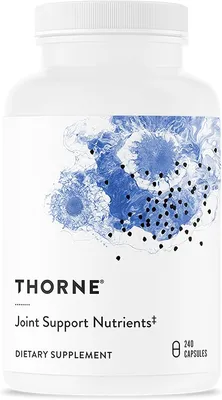
Thorne Joint Support Complex
Best premium option — the highest quality joint formula for those who prioritize third-party testing and brand credibility.
- NSF Certified for Sport — rigorous third-party testing
- Contains glucosamine, chondroitin, and MSM (triple combination)
- Trusted brand used by Mayo Clinic and professional sports teams
For most adults over 50 with joint pain, taking glucosamine and chondroitin together is more effective than either one alone — and the science backs this up. The landmark GAIT trial, the largest study ever conducted on these supplements, found the combination significantly reduced moderate-to-severe knee pain, even though neither supplement alone outperformed placebo in the full study population. If you must choose one, glucosamine sulfate has stronger standalone evidence from European trials. But the real question is not “which one is better” — it is whether these supplements can help your specific joint problem, and how to use them effectively.
We reviewed the major clinical trials (GAIT, GUIDE, MOVES, and LEGS), consulted current European and American rheumatology guidelines, and evaluated three widely available combination products to give you a clear, evidence-based comparison.
Key Takeaways
- Combination beats either alone — the landmark GAIT trial found glucosamine + chondroitin together significantly reduced moderate-to-severe knee pain; neither alone beat placebo in the overall study
- Glucosamine sulfate has stronger standalone evidence than glucosamine HCl (European GUIDE and MOVES trials)
- 8-12 weeks of daily use before judging effectiveness — these work gradually, not like painkillers
- 1,500 mg/day glucosamine + 1,200 mg chondroitin are the research-standard doses
- Shellfish allergy: traditional glucosamine is shell-derived, but allergenic proteins are in flesh (most are safe); plant versions exist
- MSM adds a third layer of anti-inflammatory support — Doctor’s Best and Thorne include all three
What Is Glucosamine?
Glucosamine is a natural compound found in healthy cartilage — the tough, flexible tissue that cushions your joints. Your body produces glucosamine to build and maintain cartilage, tendons, ligaments, and the synovial fluid that lubricates joint movement.
As a supplement, glucosamine is typically derived from shellfish shells (shrimp, crab, lobster) or produced synthetically from corn fermentation. It comes in two main forms:
Glucosamine sulfate is the form used in most positive European clinical trials and is recommended by the European League Against Rheumatism (EULAR). The sulfate component may contribute independently to cartilage health, since sulfate is required for the synthesis of glycosaminoglycans — the structural building blocks of cartilage.
Glucosamine hydrochloride (HCl) contains more pure glucosamine per gram than the sulfate form because HCl is a smaller molecule. It was the form used in the large U.S.-based GAIT trial. However, it has less supportive clinical evidence for osteoarthritis than the sulfate form.
The standard studied dose is 1,500mg per day, typically taken as 500mg three times daily with meals or as a single 1,500mg dose.
How Glucosamine Is Thought to Work
Glucosamine supplementation is believed to provide the raw building material your body needs to repair and maintain cartilage. Beyond this structural role, research suggests glucosamine may:
- Stimulate chondrocytes (cartilage cells) to produce more proteoglycans and collagen — the structural molecules that give cartilage its cushioning properties
- Inhibit enzymes (like matrix metalloproteinases) that break down cartilage
- Reduce inflammatory mediators in joint tissue, providing modest anti-inflammatory effects
- Support the production of hyaluronic acid, a key component of joint fluid
The effects are gradual. Glucosamine does not work like ibuprofen or acetaminophen — it does not block pain signals. Instead, it supports the underlying tissue, which is why it takes months to evaluate its effectiveness.
What Is Chondroitin?
Chondroitin sulfate is another natural component of cartilage. While glucosamine provides raw building material, chondroitin plays a different structural role — it helps cartilage retain water, which gives it the sponginess and shock-absorbing capacity your joints depend on.
Chondroitin supplements are typically derived from bovine (cow) or shark cartilage. The standard studied dose is 800-1,200mg per day.
How Chondroitin Is Thought to Work
Chondroitin’s mechanisms are complementary to glucosamine’s:
- Water retention. Chondroitin attracts and holds water within the cartilage matrix, maintaining the hydrated, cushioning properties that allow cartilage to absorb impact. Dehydrated cartilage is stiff, brittle, and more easily damaged.
- Enzyme inhibition. Chondroitin inhibits enzymes (elastase, hyaluronidase, and others) that degrade cartilage tissue. This protective action may slow the cartilage breakdown that defines osteoarthritis progression.
- Anti-inflammatory effects. Multiple studies show chondroitin reduces inflammatory markers in joint tissue, including IL-1beta and NF-kB pathway activity.
- Stimulates cartilage repair. Like glucosamine, chondroitin appears to stimulate chondrocytes to produce new cartilage matrix components.
Because glucosamine and chondroitin work through different but complementary mechanisms — one providing building material, the other protecting existing cartilage and maintaining hydration — combining them is a logical strategy that the clinical evidence supports.
Head-to-Head: The Evidence Compared
The GAIT Trial (2006) — The Largest Study
The Glucosamine/Chondroitin Arthritis Intervention Trial (GAIT) was the gold standard: a large, NIH-funded, multicenter, randomized, double-blind, placebo-controlled trial published in the New England Journal of Medicine. It enrolled 1,583 patients with knee osteoarthritis and compared five groups: glucosamine HCl alone, chondroitin sulfate alone, the combination, celecoxib (Celebrex), and placebo.
Overall results: In the full study population, neither glucosamine alone nor chondroitin alone significantly outperformed placebo for pain reduction. Celecoxib (the prescription drug) did outperform placebo.
The critical subgroup finding: In patients with moderate-to-severe knee pain — the group that arguably needed the most help — the glucosamine-chondroitin combination showed a statistically significant 79.2% response rate compared to 54.3% for placebo. This was a meaningful result that led most rheumatologists to recommend the combination for people with moderate-to-severe osteoarthritis pain.
Important caveat: The GAIT trial used glucosamine HCl, not glucosamine sulfate. Many European researchers have argued this matters — the sulfate form has more positive standalone data, and the sulfate moiety itself may contribute to cartilage health.
The GUIDE Study (2007) — Glucosamine Sulfate vs NSAIDs
The GUIDE trial compared pharmaceutical-grade glucosamine sulfate (1,500mg once daily) against acetaminophen (3,000mg daily) and placebo in 318 patients with knee osteoarthritis over six months.
Results: Glucosamine sulfate significantly outperformed placebo for pain reduction (measured by WOMAC pain score). It was at least as effective as acetaminophen — a remarkable finding given glucosamine’s superior safety profile. This study strongly supports glucosamine sulfate as a standalone treatment, particularly when safety and long-term use are priorities.
The MOVES Study (2014) — Combination vs Celecoxib
The MOVES trial was a head-to-head comparison of glucosamine sulfate plus chondroitin sulfate (500mg + 400mg, three times daily) against celecoxib 200mg in 606 patients with painful knee osteoarthritis over six months.
Results: The combination of glucosamine and chondroitin reduced knee pain comparably to celecoxib — a prescription NSAID — over six months. Both treatments showed similar reductions in pain, stiffness, and functional limitation. This trial demonstrated that the combination can provide pain relief comparable to a prescription anti-inflammatory, without the cardiovascular and gastrointestinal risks associated with long-term NSAID use.
The LEGS Study (2014) — Cartilage Preservation
The LEGS trial used MRI to measure actual cartilage volume changes over two years in 605 patients. This study asked a different question: do these supplements slow the physical destruction of cartilage?
Results: The combination of glucosamine sulfate and chondroitin sulfate showed a trend toward reduced cartilage loss in the medial tibial compartment of the knee, though this did not reach statistical significance in the full analysis. Chondroitin sulfate alone showed the most consistent cartilage-protective effect.
What the Evidence Tells Us
Taken together across all major trials:
- The combination of glucosamine and chondroitin is more consistently effective than either alone, particularly for moderate-to-severe joint pain
- Glucosamine sulfate has better standalone evidence than glucosamine HCl — the form matters
- Chondroitin may offer the most cartilage-protective benefit for slowing structural joint deterioration
- The combination is comparably effective to celecoxib (a prescription NSAID) with a far superior safety profile for long-term use
- Three months is the minimum trial period — all positive trials ran for at least 3-6 months
When to Choose Glucosamine
Glucosamine may be the better single supplement if:
You have early-stage osteoarthritis. The GUIDE study showed glucosamine sulfate was effective for pain management comparable to acetaminophen, with a better safety profile for long-term daily use.
You want a simpler, less expensive regimen. Glucosamine alone costs less than combination products. If budget is a primary concern and your pain is mild, a glucosamine sulfate supplement is a reasonable starting point.
You are concerned about long-term NSAID use. If you currently take daily ibuprofen, naproxen, or acetaminophen for joint pain, glucosamine sulfate may allow you to reduce or replace those — talk to your doctor about this as a strategy, especially given the gastrointestinal and cardiovascular risks of long-term NSAID use in older adults.
Choose glucosamine sulfate over HCl. The evidence is materially stronger for the sulfate form. If a product does not specify “sulfate,” assume it uses HCl and look elsewhere.
Dose: 1,500mg glucosamine sulfate daily, ideally split into three 500mg doses with meals, or taken as a single dose with a meal.
When to Choose Chondroitin
Chondroitin may be the better focus if:
Your priority is preserving remaining cartilage. The LEGS study showed chondroitin had the most consistent cartilage-protective effect. If your X-rays show early cartilage narrowing and your goal is to slow structural deterioration, chondroitin’s cartilage-hydrating and enzyme-inhibiting properties are particularly relevant.
You cannot tolerate glucosamine due to shellfish concerns. While glucosamine allergic reactions are rare even in shellfish-allergic individuals (the allergens are in the flesh, not the shell), some people prefer to avoid any shellfish-derived products. Chondroitin from bovine cartilage is a shellfish-free option with solid independent evidence.
You have moderate-to-advanced osteoarthritis. European guidelines from ESCEO (European Society for Clinical and Economic Aspects of Osteoporosis, Osteoarthritis and Musculoskeletal Diseases) include chondroitin as a recommended treatment for knee osteoarthritis.
Dose: 800-1,200mg chondroitin sulfate daily, taken with meals.
Can You Take Both Together?
Yes — and for most people with joint pain, you should. The evidence across the GAIT trial, the MOVES study, and real-world clinical practice supports the combination as more effective than either ingredient alone. The mechanisms are complementary: glucosamine supplies building material for cartilage repair, chondroitin protects existing cartilage and maintains hydration, and together they modulate inflammatory pathways from multiple angles.
Recommended combined dose: 1,500mg glucosamine + 800-1,200mg chondroitin daily.
Consider adding MSM. A 2006 pilot study in Osteoarthritis and Cartilage found the triple combination (glucosamine + chondroitin + MSM) was more effective than the pair alone. MSM (methylsulfonylmethane) is a sulfur-containing compound with anti-inflammatory properties and a good safety profile. Doctor’s Best Glucosamine Chondroitin MSM provides all three at a reasonable price.
Timeline: Commit to at least 3 months of daily use before evaluating. Both supplements work gradually by supporting cartilage structure — they are not painkillers. If you see no improvement after 3 months of consistent use at full doses, consult your doctor about alternative approaches.
Safety: The combination has been studied extensively and has an excellent safety profile. It does not carry the cardiovascular or gastrointestinal risks associated with long-term NSAID use. The most common side effects are mild GI discomfort (nausea, heartburn) that typically resolves within the first week. Consult your doctor before starting if you take blood thinners (especially warfarin), as glucosamine may enhance anticoagulant effects.
European vs American Guidelines: Why the Disagreement?
If you have looked into this topic before, you may have noticed that European rheumatology guidelines are more supportive of glucosamine and chondroitin than American guidelines. Here is why.
European guidelines (EULAR, ESCEO) recommend glucosamine sulfate and chondroitin sulfate for knee osteoarthritis, based primarily on European trials that used pharmaceutical-grade glucosamine sulfate (the Rottapharm/DONA brand). These trials showed consistent benefits for pain reduction and cartilage preservation.
American guidelines (ACR, AAOS) are more skeptical, based partly on the GAIT trial results (which used glucosamine HCl, not sulfate) and partly on a philosophical preference for pharmaceutical-grade evidence. The American College of Rheumatology conditionally recommends against glucosamine and chondroitin, while acknowledging the evidence is not conclusive.
The practical takeaway: The form of glucosamine matters. European trials using pharmaceutical-grade glucosamine sulfate at 1,500mg daily have produced more consistently positive results than American trials using glucosamine HCl. If you try glucosamine, use the sulfate form.
Our Product Recommendations
Thorne Joint Support Complex — Best Premium Option
Thorne’s NSF Certified for Sport designation means every batch is independently tested for purity, potency, and banned substances. The formula combines glucosamine, chondroitin, and MSM — the triple combination supported by the pilot study data. Thorne products are used by the Mayo Clinic, Cleveland Clinic, and multiple professional sports teams.
Who it’s best for: Those who prioritize manufacturing quality and third-party verification above all else. The premium price reflects genuine quality assurance that most supplement brands do not provide. Read our full review: Thorne Joint Support Complex
NOW Glucosamine & Chondroitin — Best Value
NOW Foods delivers clinically relevant doses (1,100mg glucosamine + 800mg chondroitin) at roughly $0.33 per day — the most affordable combined formula on this list. GMP-certified manufacturing provides baseline quality assurance. The main limitation is that NOW uses glucosamine HCl rather than the sulfate form preferred in European trials.
Who it’s best for: Budget-conscious seniors who want clinically relevant doses of both ingredients without paying premium prices. If you are trying the combination for the first time and want to assess effectiveness before investing in a premium brand, this is a reasonable starting point.
Doctor’s Best Glucosamine Chondroitin MSM — Best Triple Combination
Doctor’s Best uses glucosamine sulfate (the form with stronger European trial evidence), chondroitin sulfate, and OptiMSM — the highest-purity MSM available. The four-capsule serving size is high, but it delivers the complete triple combination at a mid-range price.
Who it’s best for: Those who want the sulfate form of glucosamine (matching the European trial evidence) plus the anti-inflammatory benefit of MSM, in a single product at a reasonable price.
Frequently Asked Questions
Is glucosamine or chondroitin better for knee pain? The evidence slightly favors glucosamine sulfate as a standalone supplement, based on multiple European trials showing it reduces knee pain and slows cartilage loss in osteoarthritis. However, the largest U.S. trial (GAIT) found that neither glucosamine nor chondroitin alone significantly outperformed placebo for the overall study group — but the combination of both was significantly effective for moderate-to-severe knee pain. Most rheumatologists now recommend the combination rather than either ingredient alone.
How long does it take for glucosamine and chondroitin to work? Plan on at least 8-12 weeks (3 months) of consistent daily use before evaluating effectiveness. Both glucosamine and chondroitin work gradually — they support cartilage structure and reduce joint inflammation over time, not like a painkiller that provides immediate relief. Some people notice mild improvement within 4-6 weeks, but the clinical trials that showed significant benefits all ran for 3-6 months. If you see no improvement after 3 months of consistent use at proper doses, these supplements may not be effective for your specific joint issue.
Can I take glucosamine if I’m allergic to shellfish? It depends on the source. Traditional glucosamine is derived from shellfish shells (shrimp, crab, lobster). However, the allergenic proteins in shellfish are in the flesh, not the shell — and most studies suggest shellfish-derived glucosamine is safe even for people with shellfish allergies. That said, if your allergy is severe or you want to avoid any risk, vegetarian glucosamine sourced from corn fermentation is available. Doctor’s Best offers a shellfish-sourced product, while some brands offer plant-based alternatives.
What is the difference between glucosamine sulfate and glucosamine HCl? Glucosamine sulfate is the form used in most positive European clinical trials and is recommended by EULAR. The sulfate component may itself contribute to cartilage health, as sulfate is needed for glycosaminoglycan synthesis in cartilage. Glucosamine HCl contains more pure glucosamine per gram but has less clinical evidence supporting its use for osteoarthritis. The GAIT trial used glucosamine HCl, which some researchers argue contributed to its less impressive standalone results compared to European sulfate trials.
Should I add MSM to glucosamine and chondroitin? MSM (methylsulfonylmethane) is a sulfur compound with anti-inflammatory properties that may complement glucosamine and chondroitin. A 2006 pilot study in Osteoarthritis and Cartilage found that the combination of glucosamine, chondroitin, and MSM was more effective than glucosamine and chondroitin alone for knee osteoarthritis. The evidence for MSM as a standalone joint supplement is modest but positive. Adding MSM is reasonable — it is inexpensive, has a good safety profile, and may provide additional benefit. Doctor’s Best Glucosamine Chondroitin MSM includes all three.
The Bottom Line
Glucosamine and chondroitin are not miracle cures for joint pain — but they are among the few supplements with genuine, large-scale clinical trial evidence supporting their use for osteoarthritis. The combination is more effective than either alone, it is comparably effective to celecoxib (a prescription NSAID) for pain relief, and it carries none of the cardiovascular or gastrointestinal risks of long-term NSAID use.
Choose glucosamine sulfate over HCl when possible. Take it with chondroitin for the best-supported combination. Consider adding MSM for additional anti-inflammatory benefit. Commit to 3 months of daily use before judging effectiveness. And consult your doctor before starting, particularly if you take blood thinners.
For related reading, see our guides on Best Glucosamine Supplements, Turmeric for Joint Pain, and Best Supplement for Knee Pain After 60.
All Products We Reviewed
- NSF Certified for Sport — rigorous third-party testing
- Contains glucosamine, chondroitin, and MSM (triple combination)
- Trusted brand used by Mayo Clinic and professional sports teams
- Free from major allergens
- Premium price point
- Large capsule size
- Glucosamine dose may be below the 1500mg studied in trials (check label)
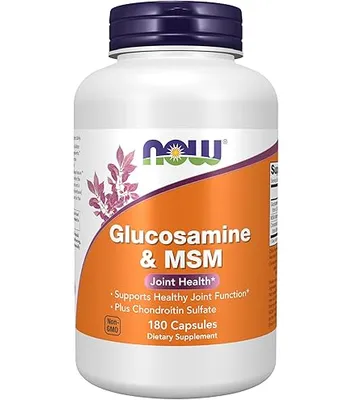
- 1,100mg glucosamine + 800mg chondroitin per serving
- Clinically relevant doses of both ingredients
- GMP-certified manufacturing facility
- Excellent value at roughly $0.33 per day
- Uses glucosamine HCl, not the sulfate form preferred in European studies
- Contains shellfish-derived glucosamine
- Three capsules per serving — higher pill burden
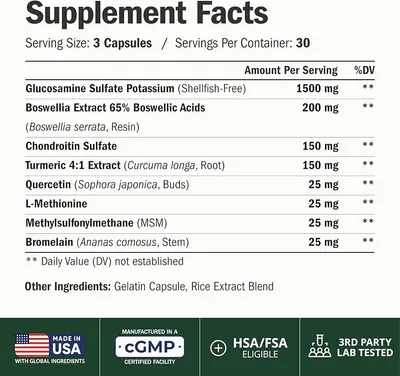
- Triple combination: glucosamine, chondroitin, and MSM
- Uses glucosamine sulfate (the form with the most European trial evidence)
- OptiMSM brand methylsulfonylmethane (purest form available)
- Good mid-range price with comprehensive formula
- Four capsules per serving — high pill burden
- Not third-party tested by an independent lab (like NSF or USP)
- Contains shellfish-derived glucosamine
Frequently Asked Questions
Is glucosamine or chondroitin better for knee pain?
The evidence slightly favors glucosamine sulfate as a standalone supplement, based on multiple European trials showing it reduces knee pain and slows cartilage loss in osteoarthritis. However, the largest U.S. trial (GAIT) found that neither glucosamine nor chondroitin alone significantly outperformed placebo for the overall study group — but the combination of both was significantly effective for moderate-to-severe knee pain. Most rheumatologists now recommend the combination rather than either ingredient alone.
How long does it take for glucosamine and chondroitin to work?
Plan on at least 8-12 weeks (3 months) of consistent daily use before evaluating effectiveness. Both glucosamine and chondroitin work gradually — they support cartilage structure and reduce joint inflammation over time, not like a painkiller that provides immediate relief. Some people notice mild improvement within 4-6 weeks, but the clinical trials that showed significant benefits all ran for 3-6 months. If you see no improvement after 3 months of consistent use at proper doses, these supplements may not be effective for your specific joint issue.
Can I take glucosamine if I'm allergic to shellfish?
It depends on the source. Traditional glucosamine is derived from shellfish shells (shrimp, crab, lobster). However, the allergenic proteins in shellfish are in the flesh, not the shell — and most studies suggest shellfish-derived glucosamine is safe even for people with shellfish allergies. That said, if your allergy is severe or you want to avoid any risk, vegetarian glucosamine sourced from corn fermentation (like Glucosamine Hydrochloride from fungal sources) is available. Doctor's Best offers a shellfish-sourced product, while some brands offer plant-based alternatives.
What is the difference between glucosamine sulfate and glucosamine HCl?
Glucosamine sulfate is the form used in most positive European clinical trials and is recommended by the European League Against Rheumatism (EULAR). The sulfate component may itself contribute to cartilage health, as sulfate is needed for glycosaminoglycan synthesis in cartilage. Glucosamine HCl contains more pure glucosamine per gram (because HCl is a smaller molecule than sulfate), but has less clinical evidence supporting its use for osteoarthritis. The GAIT trial used glucosamine HCl, which some researchers argue contributed to its less impressive standalone results compared to European sulfate trials.
Should I add MSM to glucosamine and chondroitin?
MSM (methylsulfonylmethane) is a sulfur compound with anti-inflammatory properties that may complement glucosamine and chondroitin. A 2006 pilot study in Osteoarthritis and Cartilage found that the combination of glucosamine, chondroitin, and MSM was more effective than glucosamine and chondroitin alone for knee osteoarthritis. The evidence for MSM as a standalone joint supplement is modest but positive. Adding MSM is reasonable — it is inexpensive, has a good safety profile, and may provide additional benefit. Doctor's Best Glucosamine Chondroitin MSM includes all three.