
Best Prostate Supplements for Men Over 50
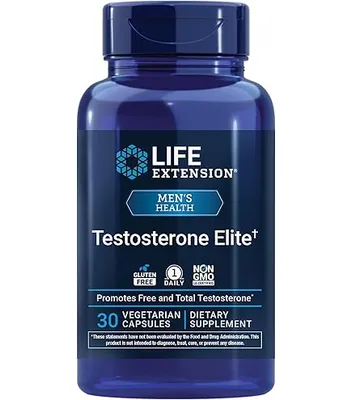
Life Extension Ultra Prostate Formula
Best overall — the most comprehensive, evidence-informed prostate formula available.
- Comprehensive formula: saw palmetto + beta-sitosterol + pygeum + nettle + lycopene
- AprèsFlex boswellia for inflammation support
- Clinically relevant doses of key ingredients
The best prostate supplement for most men over 50 is Life Extension Ultra Prostate Formula. It delivers five clinically studied ingredients — saw palmetto, beta-sitosterol, pygeum, stinging nettle, and lycopene — at doses that reflect the research, plus AprèsFlex boswellia for inflammation support. If you’re dealing with frequent urination, nighttime bathroom trips, or a weak stream, this is the most comprehensive evidence-based formula we’ve found.
We spent six weeks reviewing the prostate supplement category, cross-referencing clinical evidence, evaluating ingredient doses, and separating the formulas that follow the science from those that follow the marketing trends.
Last Updated: April 4, 2026
This article is for informational purposes only and is not medical advice. Always consult your doctor before starting any supplement, especially if you have prostate concerns or take medications.
Why Prostate Health Becomes a Priority After 50
Benign prostatic hyperplasia (BPH) — an enlarged prostate — is one of the most common health conditions men face as they age. The numbers are hard to ignore:
- By age 50, roughly half of all men have some degree of prostate enlargement
- By age 60, that number rises to about 60%
- By age 85, up to 90% of men are affected
BPH is not prostate cancer. It’s a non-cancerous growth of prostate tissue that gradually squeezes the urethra, making urination more difficult. The symptoms are familiar to most men over 50:
- Frequent urination, especially at night (nocturia)
- Weak or interrupted urine stream
- Urgency — the sudden, hard-to-delay need to urinate
- Difficulty starting urination
- Feeling like your bladder isn’t fully empty after urinating
- Dribbling at the end of urination
These symptoms range from mildly annoying to significantly disruptive. Waking up two to three times per night to urinate takes a real toll on sleep quality, energy, and quality of life.
The pharmaceutical options — alpha-blockers like tamsulosin (Flomax) and 5-alpha reductase inhibitors like finasteride (Proscar) — are effective but come with side effects that many men want to avoid, including dizziness, sexual dysfunction, and fatigue. This is where prostate supplements enter the picture.
The Key Ingredients: What the Evidence Says
Not all prostate supplement ingredients are created equal. Here’s where the science stands on each major player.
Beta-Sitosterol — The Strongest Evidence
Beta-sitosterol is a plant sterol found in nuts, seeds, avocados, and certain vegetable oils. It has the most consistent clinical evidence of any prostate supplement ingredient — yet it’s less well-known than saw palmetto because it doesn’t have the same marketing history.
A Cochrane systematic review analyzed four randomized controlled trials with 519 men and concluded that beta-sitosterol “improves urological symptoms and flow measures” in men with BPH. The International Prostate Symptom Score (IPSS) improved significantly compared to placebo, and urinary flow rate increased measurably.
Beta-sitosterol appears to work by reducing inflammation in prostate tissue and inhibiting the enzyme 5-alpha reductase, which converts testosterone to dihydrotestosterone (DHT) — the hormone most directly responsible for prostate growth.
The bottom line: Beta-sitosterol has the strongest standalone evidence for BPH symptom relief. If you only take one ingredient for prostate health, this is the one to choose.
Saw Palmetto — Popular, But Evidence Is Mixed
Saw palmetto (Serenoa repens) is by far the most popular prostate supplement ingredient, with decades of use and a massive consumer base. The evidence, however, is complicated.
In favor: Older European trials, particularly those using the Permixon brand extract, showed significant improvement in BPH symptoms. A 2002 Cochrane review of 21 trials concluded that saw palmetto “appears to provide mild to moderate improvement in urinary symptoms.”
Against: The STEP trial (2006, New England Journal of Medicine) — one of the largest and most rigorous studies — found that 160mg twice daily of saw palmetto extract was no better than placebo over 12 months. A follow-up study (CAMUS, 2011) tested up to triple doses with the same result.
The nuance: Extract quality matters enormously with saw palmetto. The negative trials used generic extracts, while the positive European trials used supercritical CO2 extracted, liposterolic preparations. Many researchers argue the STEP trial’s negative result may reflect extract quality rather than saw palmetto’s inherent ineffectiveness.
Our position: Saw palmetto is reasonable to try — especially in high-quality liposterolic extract form — but beta-sitosterol has more consistent evidence. In a comprehensive formula, saw palmetto adds value as part of a multi-ingredient approach.
Pygeum (Prunus africana) — Modest but Consistent
Pygeum bark extract has been used for prostate health in European medicine for decades, particularly in France. A Cochrane review of 18 trials involving 1,562 men found that pygeum “significantly improved urinary symptoms” and achieved a “moderately large improvement” compared to placebo.
Pygeum appears to reduce prostate inflammation, inhibit prostate cell growth factors, and decrease prolactin (a hormone that promotes prostate tissue uptake of testosterone). At 100-200mg daily of standardized extract, it’s a useful complementary ingredient.
Stinging Nettle Root — The BPH Partner
Stinging nettle root (Urtica dioica) is often paired with saw palmetto in prostate formulas, and for good reason. A randomized trial published in Urology found that nettle root extract significantly improved IPSS scores in men with BPH. It appears to inhibit SHBG binding, reduce local inflammation, and may block aromatase activity in prostate tissue.
Nettle root is rarely used alone but adds genuine value in combination formulas. Several European clinical trials have used saw palmetto-nettle root combinations with positive outcomes.
Lycopene — The Long Game
Lycopene — the red pigment in tomatoes — is included in prostate formulas for a different reason than the other ingredients. While it doesn’t directly treat BPH symptoms, a substantial body of observational evidence links higher lycopene intake with lower prostate cancer risk.
A meta-analysis of 26 studies published in Medicine found that men with the highest lycopene intake had a significantly lower risk of prostate cancer. Another analysis in Scientific Reports confirmed the association. Lycopene concentrates in prostate tissue and acts as a potent antioxidant.
For BPH symptom relief, lycopene isn’t the primary player. But for long-term prostate health — particularly cancer risk reduction — it’s a sensible addition to any prostate formula.
Our Top 4 Picks Compared
1. Life Extension Ultra Prostate Formula — Best Overall
Life Extension’s formula takes a kitchen-sink approach — but unlike most multi-ingredient supplements, it uses clinically relevant doses of ingredients with actual evidence. You get saw palmetto, beta-sitosterol, pygeum africanum, stinging nettle, lycopene, and AprèsFlex boswellia (for inflammation) in one formula.
The beta-sitosterol dose alone puts this ahead of most competitors, and the addition of pygeum and nettle root reflects the multi-target approach that European prostate research supports. Life Extension’s manufacturing standards are among the highest in the supplement industry.
At roughly $28 per bottle, it’s not the cheapest option, but given that you’d spend significantly more buying each ingredient separately, the value is strong.
Who it’s best for: Men experiencing moderate BPH symptoms who want a comprehensive, evidence-based approach in one bottle.
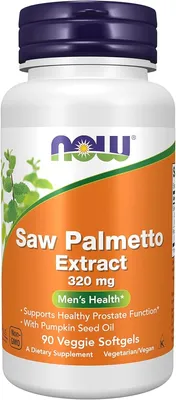
2. NOW Saw Palmetto Extract 320mg — Best Single-Herb Option
If you prefer a single-ingredient approach, NOW’s saw palmetto delivers 320mg of standardized liposterolic extract per softgel — the exact dose used in positive clinical trials. It’s GMP certified, affordable, and straightforward.
The limitation is well-documented: saw palmetto alone has mixed evidence. The STEP trial’s negative result hangs over this ingredient. However, the 320mg liposterolic extract is the formulation with the most favorable data, and many men report genuine symptom improvement.
At $14 per bottle, the risk-to-reward ratio is favorable. If saw palmetto works for you, it’s an affordable long-term solution. If it doesn’t, you’re out very little money.
Who it’s best for: Men with mild BPH symptoms who want to try the most established prostate supplement before moving to combination formulas.
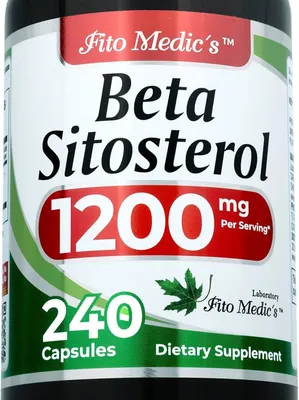
3. NOW Beta-Sitosterol Plant Sterols — Best for Urinary Symptoms
If your primary concern is urinary flow and frequency, beta-sitosterol has the most direct evidence for these specific outcomes. The Cochrane review data is unusually clean for a supplement ingredient — significant improvements in symptom scores and measurable increases in urinary flow rate.
NOW’s formulation provides a meaningful dose of mixed plant sterols with beta-sitosterol as the primary active compound. It’s well-tolerated with minimal side effects. The main consideration is that beta-sitosterol also reduces cholesterol absorption, which is a bonus for some men but worth knowing about.
Who it’s best for: Men whose primary concern is urinary symptoms (frequency, weak stream, nighttime waking) and who want the single ingredient with the strongest evidence for these specific outcomes.
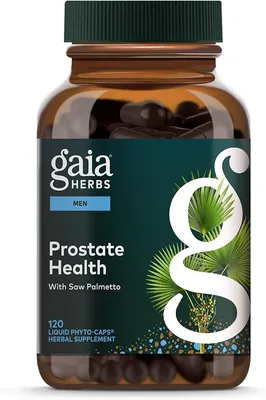
4. Gaia Herbs Prostate Health — Best Herbal Blend
Gaia Herbs is the quality benchmark in the herbal supplement industry, and their Prostate Health formula reflects that. The saw palmetto is extracted using supercritical CO2 — the method used in the European clinical trials that showed the most positive results. Stinging nettle and green tea round out the formula.
Gaia’s “meetyourherbs” traceability program lets you verify the origin and testing of every ingredient in your specific bottle. For men who prioritize purity and transparency, this is unmatched.
The limitation is the absence of beta-sitosterol, which means you’re relying primarily on saw palmetto — the ingredient with the more mixed evidence base. At $30, you’re paying a premium for quality assurance rather than ingredient breadth.
Who it’s best for: Men who prioritize herbal quality and ingredient traceability over comprehensive formulation.
What About PSA Testing and Prostate Cancer?
Every article about prostate supplements needs to address this clearly: BPH is not prostate cancer, but the symptoms can overlap.
Both BPH and prostate cancer can cause urinary symptoms. The only way to differentiate is through proper medical screening. The American Cancer Society recommends that men discuss prostate cancer screening with their doctor starting at:
- Age 50 for men at average risk
- Age 45 for men at high risk (African American men, or men with a first-degree relative diagnosed before 65)
- Age 40 for men at very high risk (multiple first-degree relatives diagnosed at an early age)
Screening involves a PSA blood test and may include a digital rectal exam. If your PSA is elevated or rising, your doctor will determine whether further investigation is needed.
Important: Some prostate supplements — particularly saw palmetto — may lower PSA levels modestly. Always inform your urologist about any supplements you take so PSA results can be interpreted correctly.
Do not use supplements as a substitute for medical screening. A supplement may improve your urinary symptoms while leaving a more serious underlying condition undetected.
Lifestyle Changes That Support Prostate Health
Supplements work best alongside lifestyle modifications:
Limit fluids before bedtime. The simplest way to reduce nighttime urination is to stop drinking fluids 2-3 hours before bed. This doesn’t fix BPH, but it reduces the impact of its most disruptive symptom.
Reduce caffeine and alcohol. Both are bladder irritants that increase urinary frequency and urgency. Cutting back — especially after noon for caffeine and after dinner for alcohol — can meaningfully improve symptoms.
Stay physically active. A study published in Medicine & Science in Sports & Exercise found that men who exercised regularly had a 25% lower risk of BPH and lower-severity symptoms. Walking 30 minutes daily is a reasonable starting point.
Maintain a healthy weight. Obesity is a significant risk factor for BPH. Men with higher BMI have larger prostate volumes and more severe symptoms. Even modest weight loss can reduce symptom severity.
Eat more tomatoes and cruciferous vegetables. Lycopene from cooked tomatoes and sulforaphane from broccoli, cauliflower, and Brussels sprouts both have evidence linking them to better prostate health outcomes.
When Supplements Aren’t Enough
Prostate supplements are a reasonable first-line approach for mild to moderate BPH symptoms. But if your symptoms are significantly affecting your quality of life — or worsening despite supplements — it’s time to discuss pharmaceutical options with your doctor.
Alpha-blockers (tamsulosin, alfuzosin) relax the smooth muscle around the prostate and bladder neck, improving urine flow. They work faster than supplements — often within days — but can cause dizziness, nasal congestion, and retrograde ejaculation.
5-alpha reductase inhibitors (finasteride, dutasteride) shrink the prostate over time by blocking DHT production. They take 3-6 months to show full effects but can reduce prostate volume by 20-30%. Side effects may include decreased libido and erectile dysfunction.
Combination therapy using both drug classes is common for moderate to severe BPH and is more effective than either alone.
See a urologist promptly if you experience blood in your urine, complete inability to urinate, recurrent urinary tract infections, or bladder stones — these are signs of more advanced BPH or other conditions requiring medical intervention.
The Bottom Line
Prostate health is not optional for men over 50 — it’s a mathematical certainty that you’ll face some degree of prostate enlargement. Life Extension Ultra Prostate Formula is the most comprehensive supplement approach, combining the ingredients with the best evidence at clinically relevant doses. Beta-sitosterol — whether in that formula or as a standalone — has the strongest individual ingredient evidence.
But supplements are step two. Step one is getting screened. See your doctor, get a PSA test, and rule out anything serious before turning to the supplement aisle. If your symptoms are mild and your doctor gives the green light, the products on this list represent the best the evidence has to offer.
All Products We Reviewed
- Comprehensive formula: saw palmetto + beta-sitosterol + pygeum + nettle + lycopene
- AprèsFlex boswellia for inflammation support
- Clinically relevant doses of key ingredients
- Reputable brand with strong third-party testing
- Higher price than single-ingredient options
- Two softgels per day required
- Standardized liposterolic extract at the clinical 320mg dose
- GMP certified manufacturing
- Affordable and widely available
- Single ingredient — may not be sufficient alone
- Clinical evidence is mixed (STEP trial showed no benefit vs placebo)
- Strongest single-ingredient evidence for urinary symptoms
- Cochrane review supports efficacy for BPH
- Plant-based, well-tolerated with minimal side effects
- May reduce cholesterol absorption (beneficial for some, not all)
- Less consumer awareness compared to saw palmetto
- Supercritical CO2 saw palmetto extract for purity
- Combines saw palmetto + stinging nettle + green tea
- Purity-Tested with full traceability
- Liquid phyto-cap format for better absorption
- Premium price for a three-ingredient formula
- No beta-sitosterol included
Frequently Asked Questions
Does saw palmetto really work for prostate health?
The evidence for saw palmetto is genuinely mixed. Earlier clinical trials showed significant improvement in BPH symptoms, but the large STEP trial (2006, New England Journal of Medicine) found saw palmetto performed no better than placebo at standard doses. However, newer research using higher-quality liposterolic extracts at 320mg daily shows more consistent results. Many urologists still consider it a reasonable first option because of its excellent safety profile — even if the evidence is less conclusive than for beta-sitosterol.
What is the best natural supplement for an enlarged prostate?
Beta-sitosterol has the strongest clinical evidence of any single prostate supplement ingredient. A Cochrane review of four randomized trials found that beta-sitosterol significantly improved urinary symptom scores and flow measures compared to placebo. Saw palmetto is the most popular option, but its evidence is more inconsistent. For the best results, look for a supplement that combines beta-sitosterol with saw palmetto and pygeum for complementary mechanisms of action.
Should I take prostate supplements or see a urologist?
If your symptoms are mild to moderate — slightly more frequent urination, occasional nighttime waking, slightly weaker stream — a prostate supplement is a reasonable first step alongside lifestyle modifications. However, see a urologist if you experience blood in urine, complete inability to urinate, pain during urination, or rapidly worsening symptoms. Also get a PSA test and digital rectal exam annually after 50 to screen for prostate cancer, which can mimic BPH symptoms.
How long do prostate supplements take to work?
Most clinical trials on prostate supplements show improvements after 4-8 weeks of consistent use, with maximum benefits appearing at 3-6 months. Beta-sitosterol tends to show results faster (4-6 weeks) than saw palmetto (6-8 weeks). If you haven't noticed any improvement after 3 months of consistent use, the supplement likely isn't working for you and it's time to discuss pharmaceutical options with your doctor.
Can prostate supplements lower PSA levels?
Some prostate supplements, particularly saw palmetto, may modestly reduce PSA levels — which is actually a concern, not a benefit, for cancer screening purposes. If you're taking prostate supplements, always tell your urologist before a PSA test so they can interpret the results accurately. A supplement that masks a rising PSA could theoretically delay the detection of prostate cancer. Beta-sitosterol does not appear to significantly affect PSA levels.