
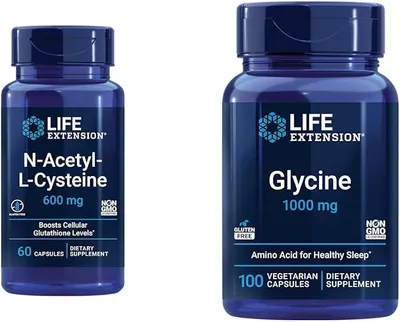
Life Extension Glycine 1000mg
Best budget sleep supplement — glycine is one of the most effective and least expensive ways to improve sleep quality. The 3g research dose works through body temperature regulation, not sedation, making it safe and non-habit-forming.
- Extremely affordable — roughly $10 for a 100-capsule bottle
- 3g before bed is a research-validated dose for sleep quality
- Works through a different mechanism than melatonin — can be combined
- Additional benefits for joints, liver, and antioxidant production
- Requires 3 capsules to reach the research dose of 3g
- Less well-known than melatonin or magnesium for sleep
- Mild sweet taste if capsules are opened (not unpleasant, but noticeable)
Life Extension Glycine 1000mg is the sleep supplement almost nobody talks about — and that’s a shame, because the research behind it is remarkably clean. Three grams of glycine taken before bed has been shown to improve subjective sleep quality, reduce time to fall asleep, decrease daytime drowsiness, and enhance next-day cognitive performance. It costs roughly $10 per bottle, works through a completely different mechanism than melatonin, and has virtually no side effects. For adults over 50 looking for affordable, evidence-backed sleep support, glycine is the hidden gem of the supplement aisle.
What Is Glycine?
Glycine is the simplest amino acid — a building block of protein that your body both produces and obtains from food (it’s abundant in bone broth, meat, and gelatin). It plays roles in protein synthesis, collagen production, neurotransmitter signaling, and antioxidant defense.
What makes glycine interesting for sleep is its effect on body temperature. Sleep researchers have known for decades that a drop in core body temperature is one of the primary triggers for sleep onset. Glycine lowers core body temperature by dilating blood vessels in the extremities, allowing heat to dissipate from the body’s surface. It also modulates serotonin levels in the brain and acts on NMDA receptors involved in the sleep-wake cycle.
Life Extension — a company with over 40 years of focus on longevity science — offers glycine in a straightforward 1000mg capsule. Three capsules deliver the 3-gram dose used in clinical research. The product is pure glycine with no fillers, proprietary blends, or unnecessary additives.
What’s Inside
Each vegetarian capsule contains:
- 1000mg of glycine (free-form amino acid)
Inactive ingredients are minimal: vegetable cellulose (capsule), silica, and vegetable stearate. No gluten, dairy, soy, sugar, or artificial ingredients.
The simplicity is the point. Glycine is glycine — there’s no “proprietary form” or branded ingredient to pay a premium for. What you’re paying for with Life Extension is quality manufacturing standards and third-party testing.
What the Research Says
The sleep research on glycine is impressive for how consistent and clean the results are.
The foundational study was published in Sleep and Biological Research (2006) by researchers at the Ajinomoto Company in Japan. They gave participants 3g of glycine before bed and measured both subjective and objective sleep outcomes. Glycine significantly improved subjective sleep quality, reduced sleepiness the next morning, and improved performance on memory tasks the following day. Participants reported feeling more “clear-headed” and “lively” compared to placebo.
A follow-up study published in Frontiers in Neuroscience (2012) confirmed these findings and demonstrated the mechanism: glycine activates NMDA receptors in the suprachiasmatic nucleus (the brain’s master clock), which triggers peripheral vasodilation and a drop in core body temperature. The researchers showed that this temperature drop closely mimics the natural thermoregulatory pattern that precedes healthy sleep onset.
A 2015 study in the Journal of Pharmacological Sciences found that glycine also has neuroprotective effects and supports the production of glutathione — the body’s master antioxidant. For older adults, this dual action (sleep support plus neuroprotection) makes glycine particularly valuable.
Research in Amino Acids (2012) demonstrated that glycine supplementation improved sleep quality specifically in people with restricted sleep schedules — suggesting it helps you get more restorative benefit from the sleep you do get, not just more sleep overall.
Who Is This Best For?
Glycine fills a unique niche in the sleep supplement market:
- Adults over 50 on a budget — at roughly $10 per bottle, this is the most cost-effective sleep supplement available with solid clinical evidence
- People who want to complement melatonin or magnesium — glycine works through body temperature regulation (different from melatonin’s circadian signaling or magnesium’s GABA support), making it stackable
- Anyone who experiences morning grogginess from melatonin — glycine actually improves next-day alertness and cognitive performance, the opposite of melatonin’s common side effect
- People interested in multi-benefit supplements — glycine supports sleep, collagen production (joints and skin), liver function, and glutathione synthesis
- Those who prefer non-sedating sleep support — glycine doesn’t make you drowsy; it prepares your body for sleep through temperature regulation
If you need strong, immediate help falling asleep, glycine alone may not be sufficient. It works best as part of a comprehensive sleep support approach, either on its own for mild sleep issues or combined with other supplements for more significant challenges.
How to Take It
Take 3 capsules (3g total) approximately 30-60 minutes before bed with water. The capsules can be taken with or without food.
If swallowing three capsules is inconvenient, the capsules can be opened and the powder mixed into water or a non-caffeinated beverage. Glycine has a mildly sweet taste (it’s actually used as a natural sweetener in some applications), so it dissolves pleasantly in warm water.
Glycine has no known significant drug interactions at the 3g dose. It’s non-sedating, so there’s no risk of next-day impairment — in fact, the research shows the opposite. It does not create tolerance or dependency with ongoing use.
For maximum sleep benefit, some practitioners recommend combining glycine with magnesium glycinate (which itself contains glycine) and low-dose melatonin (300mcg-1mg). Introduce each supplement one at a time over the course of several weeks so you can identify what’s helping.
The Bottom Line
Glycine is the sleep supplement that should be famous but isn’t. The research is clean — consistent improvements in sleep quality, reduced daytime sleepiness, and better cognitive performance the next day. The cost is negligible. The side effect profile is essentially zero. And unlike melatonin, it doesn’t cause morning grogginess or vivid dreams.
For adults over 50 who want an affordable, evidence-backed addition to their sleep routine — whether as a standalone or combined with magnesium and melatonin — glycine delivers remarkable value for its price.
As with any supplement, consult your doctor before adding glycine to your routine, especially if you take prescription medications or have kidney disease. Glycine is processed by the kidneys, and individuals with impaired kidney function should discuss appropriate dosing with their healthcare provider.
Frequently Asked Questions
How much glycine should I take for sleep?
The research dose is 3 grams taken 30-60 minutes before bed. Since Life Extension capsules are 1000mg each, that means taking 3 capsules. This is the exact dose used in the clinical studies published in Sleep and Biological Research and Frontiers in Neuroscience. Going higher doesn't appear to provide additional benefit. Glycine has an excellent safety profile — the body produces it naturally, and it's abundant in dietary protein.
Is glycine safe for seniors to take every night?
Yes. Glycine is a non-essential amino acid that your body already produces and uses for multiple functions including protein synthesis, collagen production, and neurotransmitter regulation. Supplemental glycine at 3g nightly has not shown adverse effects in clinical studies. It is not habit-forming and does not produce tolerance — the same dose works consistently over time. Still, inform your doctor about any supplement you take regularly.
Can I take glycine with melatonin or magnesium?
Yes — glycine works through a different mechanism than both melatonin and magnesium, so they complement each other well. Glycine lowers core body temperature and modulates serotonin. Melatonin regulates circadian rhythm signaling. Magnesium supports GABA receptors. Many sleep-focused practitioners recommend combining low-dose melatonin, magnesium glycinate, and supplemental glycine for comprehensive sleep support. Start each one individually to identify which helps before stacking.
Does glycine have benefits beyond sleep?
Yes. Glycine is a building block for collagen (supporting joint and skin health), helps protect the liver, supports the body's production of glutathione (the master antioxidant), and has anti-inflammatory properties. Research in the Journal of Pharmacological Sciences has shown neuroprotective effects. For adults over 50, the combination of sleep support, joint support, and antioxidant production makes glycine one of the highest-value supplements available.