
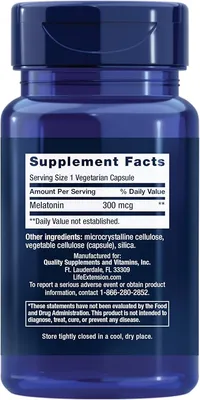
Life Extension Melatonin 300mcg
Best micro-dose melatonin for seniors — closer to physiological replacement than the mega-doses that dominate the market. Ideal for adults who've had side effects from standard melatonin or want the most science-aligned approach.
- Micro-dose (300mcg) matches physiological melatonin production levels
- Far less morning grogginess and vivid dreams than standard 3-10mg doses
- Based on MIT research by Dr. Richard Wurtman
- Extremely affordable — roughly $8 for a 200-capsule bottle
- May not feel 'strong enough' for people accustomed to higher doses
- Capsules are small, which some people find hard to handle
- Not widely available in retail stores — mainly online
Life Extension Melatonin 300mcg challenges everything you think you know about melatonin dosing. While the supplement industry pushes 3mg, 5mg, even 10mg tablets, research from MIT shows that 300 micrograms — one-tenth of the standard dose — is actually closer to what your body produces naturally and may work better for many adults over 50. Less morning grogginess, fewer vivid dreams, and more natural sleep architecture. At roughly $8 for 200 capsules, it’s also the most affordable evidence-based sleep supplement on the market.
What Is Life Extension Melatonin 300mcg?
Most melatonin products deliver 3-10mg per dose. Life Extension’s 300mcg (0.3mg) capsule delivers a fraction of that — and that’s intentional. This dosage is based on the pioneering work of Dr. Richard Wurtman, a neuroscientist at MIT who is widely considered the father of melatonin research.
Dr. Wurtman’s research revealed a fundamental problem with standard melatonin products: they deliver far too much. The human pineal gland produces roughly 30-80 micrograms of melatonin per night. A 3mg supplement delivers 37 to 100 times more than your body would naturally produce. This supraphysiological flood of melatonin can desensitize receptors, disrupt sleep architecture, cause vivid nightmares, and leave you groggy the next morning.
The 300mcg dose was specifically chosen because Dr. Wurtman’s research showed it produces blood melatonin levels that match what a healthy young adult naturally produces at night — genuine physiological replacement, not hormonal overdose.
Life Extension adopted this evidence-based dosing long before it became trendy. They’ve been a leader in longevity science since 1980 and consistently formulate based on clinical research rather than consumer expectations.
What’s Inside
Each capsule contains:
- 300mcg (0.3mg) of melatonin
That’s it. Inactive ingredients are minimal: microcrystalline cellulose, vegetable cellulose (capsule), and silica. No artificial colors, flavors, or preservatives.
The capsules are small — appropriate for the tiny dose — and vegetarian. The bottle contains 200 capsules, which at one per night, lasts over six months for less than $8.
Life Extension conducts third-party testing on raw materials and finished products. For melatonin, this verification is critical. A widely cited 2017 study in the Journal of Clinical Sleep Medicine tested 31 melatonin products and found actual content ranged from 83% less to 478% more than what labels claimed. With a micro-dose product, accuracy matters even more — you’re targeting a precise physiological level, and a product that’s off by even 100mcg could significantly alter the intended effect.
What the Research Says
The scientific case for low-dose melatonin is compelling and well-established.
Dr. Wurtman’s foundational research, published in PNAS (Proceedings of the National Academy of Sciences), demonstrated that 300mcg of melatonin produced blood levels consistent with normal nocturnal melatonin concentrations in young adults. Higher doses (3mg and above) produced supraphysiological levels that remained elevated well into the morning — explaining the grogginess so many people experience.
A 2001 study in Sleep Medicine Reviews by Zhdanova and Wurtman found that 300mcg melatonin improved sleep onset latency and sleep efficiency in older adults without the residual daytime effects associated with higher doses. The researchers specifically recommended that older adults use the lowest effective dose.
A 2005 study published in Sleep Medicine compared 0.3mg and 3mg melatonin head-to-head in elderly insomniacs. Both doses improved sleep onset latency. But the 0.3mg dose restored blood melatonin to youthful nocturnal levels, while the 3mg dose produced levels 10-20 times higher than normal. The researchers concluded that “physiological melatonin replacement” at 0.3mg was preferable to the pharmacological doses commonly sold.
More recently, a 2022 review in Journal of Pineal Research reaffirmed that melatonin receptor desensitization from chronic high-dose use is a real phenomenon, and that lower doses may maintain receptor sensitivity over time — meaning the same dose continues to work month after month without needing to increase.
Who Is This Best For?
Life Extension Melatonin 300mcg is ideal for:
- Adults over 50 who’ve experienced side effects from standard melatonin — vivid dreams, morning grogginess, headaches, or waking up at 3am are common signs that your dose is too high
- People who want true physiological replacement — this dose restores youthful melatonin levels without flooding your system
- Long-term melatonin users concerned about receptor desensitization — the micro-dose is less likely to reduce receptor sensitivity over time
- Anyone who prefers the most evidence-aligned approach — the MIT research behind this dosing is among the most rigorous in melatonin science
- Budget-conscious buyers — 200 capsules for $8 is extraordinary value
This may not be enough for people with severe circadian rhythm disruption, jet lag across many time zones, or shift workers who need a stronger circadian signal. In those cases, a 1-3mg dose may be more appropriate short-term, with a step-down to 300mcg for maintenance.
How to Take It
Take one capsule 30-60 minutes before your intended bedtime. Take it at the same time each night to reinforce your circadian rhythm.
Keep your environment dark after taking melatonin. Even dim light from screens or bathroom lights suppresses melatonin’s effects. If you need to use the bathroom at night, use a dim red or amber night light rather than turning on overhead lights.
If you’re currently taking 3-5mg melatonin and want to transition down, you can switch directly to 300mcg. Some people prefer a gradual step-down (3mg to 1mg for a week, then to 300mcg), but there’s no medical necessity for this — melatonin does not cause withdrawal.
Give the lower dose at least 2 weeks before judging its effectiveness. If your melatonin receptors have been somewhat desensitized by higher doses, they may need a few days to regain full sensitivity.
As with any melatonin product, discuss use with your doctor if you take blood pressure medications, blood thinners, diabetes medications, immunosuppressants, or CNS depressants.
The Bottom Line
Life Extension Melatonin 300mcg represents what happens when you follow the science instead of the marketing. The research is clear: most people are taking 10 to 100 times more melatonin than their brain needs, and this excess causes the very side effects that make them think melatonin “doesn’t work.” The 300mcg dose is physiological replacement — restoring what your aging pineal gland no longer produces at youthful levels, without overwhelming your receptors.
For adults over 50, this is the smartest way to use melatonin: the right dose, backed by the right research, at a price that makes the decision easy.
Consult your doctor before starting melatonin, even at low doses, if you take prescription medications — particularly blood pressure drugs, blood thinners, diabetes medications, or immunosuppressants. Persistent sleep problems may indicate conditions that require medical evaluation beyond supplementation.
Frequently Asked Questions
Why is 300mcg melatonin better than 3mg or 5mg?
The human pineal gland naturally produces roughly 30-80mcg of melatonin per night. A 3mg supplement delivers 37-100 times more than your body would produce naturally, flooding your receptors and causing supraphysiological blood levels. Research by Dr. Richard Wurtman at MIT found that 300mcg (0.3mg) produces blood melatonin levels that closely match natural youthful production, improves sleep without side effects, and doesn't desensitize melatonin receptors. Higher doses can actually worsen sleep quality in some people.
Will 300mcg of melatonin be enough to help me sleep?
For many adults over 50, yes. The MIT research showed that 300mcg was just as effective as higher doses for improving sleep onset and sleep quality. If you've been taking 3-5mg and experiencing side effects (grogginess, vivid dreams, headaches, waking at 3am), switching to 300mcg often resolves those issues while maintaining the sleep benefit. If 300mcg doesn't feel sufficient after 2 weeks, you can try 500mcg before jumping to milligram doses.
Can I switch from a higher dose melatonin to 300mcg?
Yes. There's no withdrawal from reducing your melatonin dose. You can switch directly from 3-5mg to 300mcg. Some sleep specialists recommend a brief transition — dropping to 1mg for a week, then to 300mcg — but this isn't strictly necessary. Your melatonin receptors, which may have been somewhat desensitized by high doses, typically resensitize within a few days, which can make the lower dose feel more effective over time.
Is Life Extension a trustworthy brand for melatonin?
Yes. Life Extension has been in the supplement industry since 1980 and is known for evidence-based formulations and rigorous quality testing. They publish Certificates of Analysis for their products and use third-party testing to verify potency and purity. For melatonin specifically, brand quality matters enormously — a 2017 study found that melatonin content in supplements ranged from -83% to +478% of what labels claimed. Life Extension's testing standards provide confidence that you're getting exactly 300mcg per capsule.