
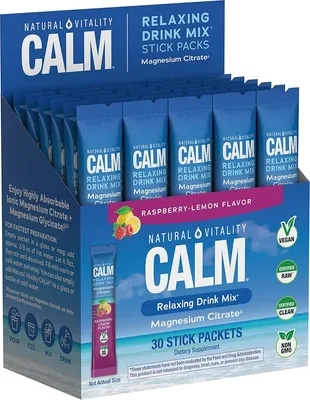
Natural Vitality CALM Magnesium Supplement
Best drinkable magnesium for relaxation and sleep — the powder format offers unmatched dosing flexibility, and the evening ritual of a warm magnesium drink naturally supports a wind-down routine.
- Drinkable powder format with pleasant raspberry-lemon flavor
- Flexible dosing — start low and increase gradually
- Magnesium citrate is well-absorbed and bioavailable
- Vegan, gluten-free, Non-GMO Project Verified
- Magnesium citrate can cause loose stools at higher doses
- Must be mixed with water — less convenient than capsules for travel
- Contains organic flavors and organic stevia — some people dislike the sweetener
Natural Vitality CALM is the most popular magnesium drink in America, and for adults over 50, it offers something capsules can’t: the ability to start with a tiny dose and gradually increase until you find exactly the right amount for your body. The raspberry-lemon powder dissolves in warm water to create a fizzy, mildly sweet drink that many people incorporate into their nightly wind-down routine. It’s a simple, affordable way to address the magnesium gap that affects up to 80% of older Americans.
What Is Natural Vitality CALM?
Natural Vitality is a wellness brand now owned by Nestlé Health Science. CALM has been their flagship product for over 20 years, earning a cult following among people who use it for stress relief, relaxation, and sleep support. The product has evolved over the years but the core concept remains the same: highly bioavailable magnesium citrate delivered in a pleasant-tasting drink.
The “CALM” name isn’t just marketing. Magnesium is directly involved in the regulation of the nervous system — it helps activate the parasympathetic nervous system (your “rest and digest” mode) and regulates neurotransmitters that signal the brain to wind down. When you’re magnesium-deficient — as most adults over 50 are — your nervous system can stay in a state of low-grade activation that interferes with relaxation and sleep.
The drinkable format turns supplementation into a ritual. Rather than popping another capsule, you’re making yourself a warm drink before bed — which itself supports the behavioral sleep hygiene that sleep specialists recommend.
What’s Inside
Each 2-teaspoon serving provides:
- 325mg of magnesium (from magnesium citrate) — 77% of the daily value
- Organic raspberry-lemon flavor and organic stevia for taste
- Citric acid creates the characteristic fizz when mixed with hot water
That’s a clean ingredient list. No artificial colors, flavors, or preservatives. The product is vegan, gluten-free, and Non-GMO Project Verified. Also available in unflavored, cherry, and other flavor variations.
Magnesium citrate is formed in the glass when you mix the powder (which contains magnesium carbonate and citric acid) with water. The reaction you see — the fizzing — is the magnesium citrate forming. This is a well-absorbed form of magnesium, significantly more bioavailable than magnesium oxide (the cheap form found in many drugstore supplements).
What the Research Says
Magnesium’s role in sleep is supported by multiple lines of evidence.
A 2012 randomized, double-blind, placebo-controlled study in the Journal of Research in Medical Sciences gave 500mg of magnesium daily to elderly subjects with insomnia. The magnesium group showed significant improvements in insomnia severity index, sleep time, sleep efficiency, and melatonin concentration compared to placebo.
A 2021 systematic review in BMC Complementary Medicine and Therapies examining 3 randomized controlled trials found that magnesium supplementation was associated with improved subjective measures of insomnia, including sleep onset latency (time to fall asleep) in older adults.
The mechanism is well-understood. Magnesium regulates GABA (gamma-aminobutyric acid) receptors in the brain — GABA is the primary inhibitory neurotransmitter responsible for calming neural activity. Magnesium also regulates the stress hormone cortisol and helps maintain healthy melatonin production, both of which directly affect sleep quality.
Magnesium deficiency, meanwhile, is remarkably common. The Journal of the American College of Nutrition estimates that 56-68% of American adults don’t meet the RDA for magnesium, with rates even higher in adults over 50 due to decreased absorption efficiency, medication interactions, and dietary changes.
Who Is This Best For?
CALM is particularly well-suited for:
- Adults over 50 who are new to magnesium — the powder format lets you start with half a teaspoon and work up gradually, avoiding the digestive discomfort that can come from jumping to a full dose
- People who enjoy evening routines — making a warm drink before bed becomes a relaxation ritual in itself
- Anyone who dislikes swallowing pills — the drinkable format is easier on people who take multiple medications and don’t want another capsule
- Budget-conscious buyers — at around $22 for 8 ounces (roughly a month’s supply at moderate dosing), it’s very affordable per serving
- People who want both relaxation and regularity — magnesium citrate’s mild laxative effect is a welcome side benefit for many older adults
CALM is not ideal if you need to take magnesium while traveling (capsules are more portable) or if you’re sensitive to the laxative effects of citrate-form magnesium. In that case, magnesium glycinate would be a gentler choice.
How to Take It
Mix 1-2 teaspoons in 2-3 ounces of hot water. Let it fizz and dissolve completely, then add cool water to reach your preferred temperature. Drink 30-60 minutes before bedtime.
Start low. Begin with 1 teaspoon (about 150mg magnesium) for the first 3-5 days. If you tolerate it well — no loose stools or digestive discomfort — increase to 1.5 teaspoons, then to the full 2-teaspoon serving over the course of 1-2 weeks. Rushing to the full dose is the most common reason people have digestive side effects.
You can also add CALM to room-temperature or cold water, though it dissolves faster in hot water. Some people mix it into herbal tea for an enhanced bedtime drink.
If you take medications, especially blood pressure drugs, diuretics, or antibiotics like tetracycline or fluoroquinolones, talk to your doctor before adding magnesium. Magnesium can interact with several medication classes.
The Bottom Line
Natural Vitality CALM turns magnesium supplementation into a relaxing nightly ritual. The drinkable format, flexible dosing, and pleasant taste make it the easiest entry point for adults over 50 who want to address magnesium deficiency while improving their sleep quality. It won’t knock you out like a sedative — but it will help your body and brain shift into the relaxation mode that makes falling asleep easier.
Always consult your doctor before starting magnesium supplementation, especially if you take blood pressure medications, diuretics, or have kidney disease. Magnesium is cleared by the kidneys, and impaired kidney function can lead to magnesium accumulation.
Frequently Asked Questions
Does Natural Vitality CALM help with sleep?
Many users report that CALM helps them relax and fall asleep more easily when taken 30-60 minutes before bed. Magnesium plays a role in regulating GABA receptors in the brain, which promote calmness and sleep readiness. A 2012 study in the Journal of Research in Medical Sciences found that magnesium supplementation improved insomnia severity, sleep time, and sleep efficiency in elderly subjects. CALM isn't a sedative — it supports your body's natural relaxation process.
How much Natural Vitality CALM should I take before bed?
Start with 1 teaspoon (about 150mg of magnesium) dissolved in hot water. If you tolerate that well after a few days, gradually increase to the full serving of 2 teaspoons (325mg of magnesium). Going too high too fast can cause loose stools — this is the most common side effect of magnesium citrate. Most adults over 50 find their sweet spot between 1 and 2 teaspoons.
Is magnesium citrate good for older adults?
Yes. Magnesium citrate is one of the more bioavailable forms of magnesium, meaning your body absorbs it relatively well compared to cheaper forms like magnesium oxide. An estimated 50-80% of Americans over 50 don't get enough magnesium from diet alone, making supplementation important. The citrate form does have a mild laxative effect, which some people see as a benefit and others as a drawback.
Can you take CALM with blood pressure medication?
Magnesium can lower blood pressure, so combining it with blood pressure medication may cause an additive effect. This isn't necessarily dangerous, but your doctor should be aware you're taking magnesium so they can monitor your blood pressure and adjust medication doses if needed. Never start magnesium supplementation without informing your prescribing physician, especially if you take ACE inhibitors, ARBs, or calcium channel blockers.