
Best B Vitamins for Energy After 60 (2026)
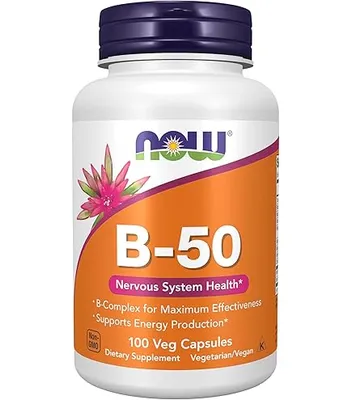
NOW Foods B-50 Complex
Best value B-complex overall — covers all eight B vitamins at meaningful doses for energy, nerve health, and homocysteine support at roughly $10 for a 100-day supply.
- Comprehensive — delivers all 8 B vitamins at therapeutic 50mg doses
- Best value on the market at roughly $0.10 per day
- Vegan, non-GMO, GMP-certified manufacturing
The best B vitamin for energy after 60 is NOW Foods B-50 Complex — a comprehensive B-complex delivering all eight B vitamins at therapeutic doses for roughly $0.10 per day. If you’ve been diagnosed with B12 deficiency specifically, Jarrow Formulas Methyl B-12 1000mcg provides the active methylcobalamin form in a sublingual lozenge that absorbs through the tissue under your tongue, bypassing the stomach acid decline that makes B12 absorption unreliable after 60. B12 deficiency alone affects up to 20% of adults over 60 and is one of the most common — and most overlooked — causes of persistent fatigue.
We evaluated five B vitamin supplements across form quality (methylated vs. standard), dosing adequacy, delivery method, third-party testing, and value for adults over 60 dealing with age-related absorption changes and energy decline.
Why B Vitamins Matter More After 60
B vitamins are involved in over 100 enzymatic reactions that keep your body running — from converting food into cellular energy to building red blood cells to maintaining the myelin sheath that insulates your nerves. After 60, three physiological changes make adequate B vitamin intake harder to achieve through diet alone.
Stomach acid production drops. Your stomach needs hydrochloric acid to free B12 from the proteins in food. A condition called atrophic gastritis — chronic inflammation of the stomach lining that reduces acid output — affects an estimated 10-30% of adults over 60. If your stomach can’t liberate B12 from food, it doesn’t matter how much meat, fish, or dairy you eat.
Medications deplete B vitamins. Metformin, the most prescribed type 2 diabetes drug, reduces B12 absorption by 10-30% according to a 2016 study in the Journal of Clinical Endocrinology & Metabolism. Proton pump inhibitors (Prilosec, Nexium, Prevacid) suppress the stomach acid needed to release B12 from food. Long-term diuretic use can deplete B1 (thiamine). If you take any of these medications — and millions of adults over 60 do — your B vitamin status deserves monitoring.
Homocysteine rises. Three B vitamins — B6, B12, and folate — work together to metabolize homocysteine, an amino acid linked to cardiovascular disease, stroke, and cognitive decline when levels are elevated. As B vitamin status declines with age, homocysteine tends to creep up. The Framingham Offspring Study found that B12 deficiency prevalence in the general population was about 9%, but concentrated heavily in older adults, with inadequate intake or absorption being the primary driver.
The National Academy of Medicine addressed this directly: adults over 50 should get most of their B12 from supplements or fortified foods rather than relying on dietary sources.
B12 Deficiency: The Silent Epidemic
B12 deficiency deserves its own section because it’s both widespread and widely missed. Symptoms develop so gradually that they’re often attributed to “just getting older” — which delays diagnosis and treatment for months or years.
Early symptoms include unexplained fatigue, weakness, and brain fog. These overlap with dozens of other conditions, which is why B12 deficiency rarely gets caught early unless a doctor specifically tests for it.
Progressive symptoms can include tingling or numbness in the hands and feet (peripheral neuropathy), difficulty walking, memory problems, mood changes, and a swollen or inflamed tongue. Prolonged severe deficiency can cause nerve damage that becomes irreversible — making early detection genuinely important.
Standard blood tests can miss it. A serum B12 level between 200-400 pg/mL falls in a gray zone where functional deficiency may already be causing symptoms despite “normal” lab results. Methylmalonic acid (MMA) is a far more sensitive marker. When cells lack adequate B12, MMA accumulates in the blood. Elevated MMA confirms functional B12 deficiency even when serum B12 looks acceptable. If you have symptoms and your serum B12 is in the low-normal range, ask your doctor to check MMA.
Who is at highest risk? Adults over 60 who take metformin, PPIs, or H2 blockers. Anyone who has had gastric surgery or has celiac disease or Crohn’s disease. Vegetarians and vegans (B12 comes almost exclusively from animal products). Heavy alcohol consumers. And anyone with atrophic gastritis — which can be silent for years before B12 symptoms appear.
How We Evaluated
We assessed B vitamin supplements on five criteria that matter most for adults over 60:
Form quality. Are the B vitamins in their active (coenzymated) forms — methylcobalamin, methylfolate, pyridoxal-5-phosphate — or standard synthetic forms like cyanocobalamin, folic acid, and pyridoxine? Active forms skip conversion steps that become less efficient with age.
Dosing adequacy. Do the doses meaningfully exceed the RDA? The RDA represents the minimum to prevent deficiency, not the amount needed to correct suboptimal levels or counteract medication-induced depletion. For adults over 60 with absorption challenges, therapeutic doses are often necessary.
Standalone vs. complex vs. multi. A B-complex covers all eight B vitamins. A standalone B12 targets the single most common deficiency. A multivitamin with good B vitamin content handles B vitamins alongside other nutrients. We evaluated when each approach makes sense.
Third-party testing. Does an independent lab verify that the product contains what the label claims? NSF and USP certifications are the gold standards in this category.
Value. Cost per day of meaningful supplementation. The cheapest supplement isn’t always the best value — but an overpriced one with no additional benefit isn’t either.
Our Top Picks
Best B-Complex Overall: NOW Foods B-50 Complex
NOW Foods B-50 Complex has been a staple in pharmacies and health food stores for decades, and the reason is simple: it delivers a comprehensive, properly-dosed B-complex at a price that makes daily supplementation almost negligible.
Each vegan capsule provides 50mg (or 50mcg, for vitamins dosed in micrograms) of every major B vitamin — thiamine, riboflavin, niacin (as niacinamide, to avoid flushing), B5, B6, folate, B12, and biotin, plus choline and inositol. The 50mg dose across the board far exceeds RDA values, placing these firmly in the therapeutic range for energy metabolism, nerve support, and homocysteine management.
The trade-off for the price is form quality. NOW B-50 uses standard forms — cyanocobalamin for B12 and folic acid for folate — rather than the active methylated forms. For the roughly 85-90% of the population without MTHFR gene variants that impair conversion, this is perfectly adequate. Your body converts these standard forms through normal enzymatic pathways.
At $10 for 100 capsules — over three months of daily use — this is the supplement equivalent of a rounding error in your monthly budget. NOW Foods has been manufacturing since 1968, is GMP-certified, and consistently passes independent quality audits.
Who it’s best for: Adults over 60 who want broad-spectrum B vitamin support for energy, nerve health, and homocysteine management at the lowest possible cost, and who don’t have known MTHFR gene variants.
Best Standalone B12: Jarrow Formulas Methyl B-12 1000mcg
Jarrow Formulas Methyl B-12 1000mcg pairs the right B12 form with the right delivery method. The cherry-flavored sublingual lozenge dissolves under the tongue in 2-3 minutes, and the methylcobalamin absorbs directly through the oral mucosa into the bloodstream — bypassing the stomach entirely.
This matters because B12 absorption through the gut requires both adequate stomach acid and a protein called intrinsic factor, both of which decline after 60. A 2003 study in the British Journal of Clinical Pharmacology found that sublingual B12 was as effective as intramuscular B12 injections at correcting deficiency — making sublingual supplements a practical at-home alternative to monthly B12 shots.
The 1,000mcg dose accounts for the low absorption rate of supplemental B12. Your body absorbs roughly 1-2% of a 1,000mcg oral dose, delivering 10-20mcg of usable B12 — well above the 2.4mcg RDA. This is the dose most commonly used in clinical studies and recommended by geriatric pharmacists.
The limitation is obvious: this is B12 only. If you need the full spectrum of B vitamins for energy metabolism and homocysteine support, you’ll want a B-complex (like NOW B-50) alongside it — or instead of it.
Who it’s best for: Adults over 60 with confirmed or suspected B12 deficiency, those taking metformin or PPIs, and anyone with digestive conditions that impair nutrient absorption.
Best Whole-Food B-Complex: Garden of Life Vitamin Code Raw B-Complex
Garden of Life takes a fundamentally different approach. Rather than isolated synthetic vitamins, their Raw B-Complex delivers B vitamins grown in a matrix of organic fruits and vegetables through a proprietary culturing process. Each serving also includes live probiotics and digestive enzymes.
The philosophy is that B vitamins delivered within a whole-food matrix are recognized and utilized more naturally by the body than isolated forms. This is a reasonable hypothesis — whole-food supplements do contain naturally occurring cofactors that isolated vitamins lack. However, clinical evidence directly comparing absorption of whole-food B vitamins versus isolated B vitamins is limited, and the studies that exist show mixed results.
What’s not debatable is the ingredient quality. The product is USDA Organic, Non-GMO Project Verified, RAW (processed below 115°F), vegan, and gluten-free. If clean ingredient sourcing is a priority, this formula is difficult to beat.
At roughly $20 for a 60-capsule supply (30 days at 2 capsules per day), it costs about double what NOW B-50 does per month. That premium buys you organic whole-food sourcing and probiotics, but not necessarily better B vitamin absorption.
Who it’s best for: Adults over 60 who prefer whole-food-based supplements, want added probiotic and enzyme support, and are willing to pay a modest premium for organic sourcing.
Best Coenzymated B-Complex: Country Life Coenzyme B-Complex
Country Life’s Coenzyme B-Complex addresses the methylation question head-on by providing every B vitamin in its active, coenzymated form. That means methylfolate (as Quatrefolic — a highly bioavailable patented form) instead of folic acid. Methylcobalamin instead of cyanocobalamin. Pyridoxal-5-phosphate instead of pyridoxine. Riboflavin-5-phosphate instead of riboflavin.
These active forms skip the enzymatic conversion steps that standard B vitamins require. For the estimated 10-15% of the population with MTHFR gene variants that significantly impair folate conversion — and the additional percentage with less severe variants — coenzymated forms can make a meaningful difference in how effectively your body uses supplemental B vitamins.
The Quatrefolic methylfolate in this formula is worth highlighting. It’s the glucosamine salt of (6S)-5-methyltetrahydrofolic acid, which is the most stable and bioavailable form of methylfolate currently available. Several clinical studies have demonstrated its superiority over folic acid for raising folate status, particularly in individuals with MTHFR polymorphisms.
At roughly $15 for a 60-capsule supply (30 days at 2 capsules per day), it slots neatly between the budget-friendly NOW B-50 and the premium whole-food approach of Garden of Life. Country Life is a smaller brand than NOW or Garden of Life, but they’ve been manufacturing supplements since 1971 and maintain strong quality standards.
Who it’s best for: Adults over 60 who know they carry MTHFR gene variants, who haven’t responded to standard B vitamin supplementation, or who want the assurance of active forms without paying premium-multi prices.
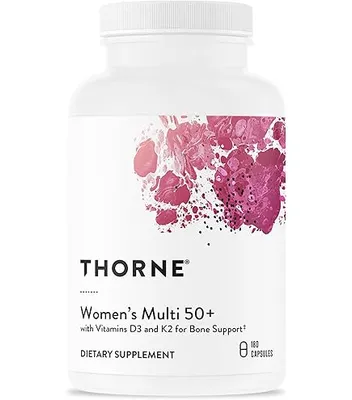
Best Multi with B Vitamins: Thorne Basic Nutrients 2/Day
Thorne Basic Nutrients 2/Day isn’t a B-complex — it’s a comprehensive multivitamin that happens to contain well-dosed, methylated B vitamins alongside chelated minerals, vitamins A, C, D, E, K, and zinc. We include it here because many adults over 60 take both a multivitamin and a B-complex, when a well-formulated multi can cover both needs.
Thorne uses methylcobalamin for B12 and methylfolate (as L-5-MTHF) for folate, matching the active forms found in dedicated methylated B-complexes. The iron-free formula is appropriate for most adults over 50 — postmenopausal women and men over 50 rarely need supplemental iron, and excess iron contributes to oxidative stress.
The NSF Certified for Sport designation sets Thorne apart. Every batch is independently tested for purity, potency, and the absence of over 270 banned substances. Only about 1% of supplements carry this certification. It’s the reason Thorne is one of the most recommended supplement brands among integrative medicine physicians.
At roughly $45 for a 60-capsule supply (30 days), this is the most expensive option on our list. But if you’re currently buying a separate multivitamin and a separate B-complex, Thorne may actually save money by combining both into one product — while delivering higher ingredient quality than most standalone options.
Who it’s best for: Adults over 60 who want methylated B vitamins within a comprehensive, NSF-certified daily multivitamin rather than managing multiple standalone supplements.
Methylated vs. Synthetic B Vitamins
This is one of the most common questions in B vitamin supplementation, and the answer is less black-and-white than supplement marketing suggests.
Standard (synthetic) forms — folic acid, cyanocobalamin, pyridoxine — have been used in the vast majority of clinical trials proving that B vitamin supplementation works. They are well-absorbed, effective, and affordable. Your body converts them to active forms through a series of enzymatic reactions.
Methylated (active) forms — methylfolate, methylcobalamin, pyridoxal-5-phosphate — are already in the form your cells use. They skip the conversion steps entirely.
The MTHFR factor. The MTHFR gene encodes an enzyme critical for converting folic acid to methylfolate. Variants in this gene (C677T and A1298C) reduce the enzyme’s efficiency. The C677T variant alone affects roughly 10-15% of the population significantly, with an additional 30-40% carrying one copy of a variant that causes mild reduction. For individuals with two copies of C677T, folic acid conversion may be reduced by up to 70%.
When to choose methylated: If you’ve tested positive for MTHFR variants. If you’ve taken standard B vitamins for months without improvement in energy, mood, or homocysteine levels. If you have a family history of cardiovascular disease and elevated homocysteine. If you want to eliminate any chance of a conversion bottleneck.
When synthetic is fine: If you have no known MTHFR variants. If standard B vitamins have worked well for you historically. If budget is a primary concern — methylated supplements typically cost 50-100% more than equivalent standard formulas.
The pragmatic approach: Methylated forms work for everyone — they don’t require functional MTHFR enzymes. Standard forms work for most people. If you can afford the modest price premium of methylated (Country Life Coenzyme B-Complex at $15/month vs. NOW B-50 at $3.30/month), it’s a reasonable insurance policy. If budget matters, standard forms are far better than no supplementation at all.
Signs You May Need B Vitamin Testing
Not everyone over 60 needs to rush to the lab. But certain red flags warrant a conversation with your doctor and targeted blood work.
Persistent fatigue that doesn’t improve with sleep. Fatigue has many causes — thyroid dysfunction, anemia, depression, sleep apnea, medication side effects. But B12 deficiency is one of the most treatable causes, and it’s routinely missed because doctors don’t always test for it unless prompted.
Tingling, numbness, or “pins and needles” in hands or feet. Peripheral neuropathy is a hallmark of B12 deficiency and can become permanent if not addressed. If you’re experiencing new or worsening neuropathy, ask for B12 and MMA testing before assuming it’s diabetic neuropathy or aging.
Memory problems or brain fog. The Oxford OPTIMA trial found that B vitamin supplementation (B6, B12, and folic acid) reduced the rate of brain atrophy by 30% over two years in older adults with mild cognitive impairment and elevated homocysteine. Among those with the highest homocysteine, brain shrinkage slowed by 53%. This doesn’t prove B vitamins prevent dementia, but it suggests that maintaining adequate levels may support cognitive health — and testing is the first step.
Elevated homocysteine on blood work. If your homocysteine level is above 12 μmol/L, B vitamin supplementation (B6, B12, and folate together) is the first-line intervention most doctors recommend. Homocysteine is an independent risk factor for cardiovascular disease, stroke, and cognitive decline.
Taking metformin, PPIs, or H2 blockers long-term. These medications are among the most prescribed in adults over 60, and all three are associated with B12 depletion. The American Diabetes Association recommends periodic B12 monitoring for all patients on long-term metformin therapy.
Following a vegetarian or vegan diet. B12 occurs almost exclusively in animal products. Plant-based eaters over 60 face a double absorption challenge: dietary absence compounded by age-related absorption decline. Supplementation is essential, not optional.
Consult your doctor before starting any new supplement, especially if you take prescription medications. B vitamins are generally safe, but vitamin B6 in particular should be kept below 100mg daily from all sources to avoid potential nerve issues.
Frequently Asked Questions
How do I know if I’m B12 deficient?
Common symptoms include unexplained fatigue, brain fog, tingling or numbness in hands and feet, difficulty walking, and mood changes. The tricky part is that a standard serum B12 test can miss early deficiency — levels may appear “normal” while functional deficiency is already causing symptoms. Ask your doctor for both a serum B12 test and a methylmalonic acid (MMA) test. Elevated MMA is a more sensitive marker that catches deficiency before serum B12 drops below the standard range. Adults over 60 who take metformin, proton pump inhibitors, or follow a vegetarian diet should be tested routinely.
Should I take methylated or synthetic B vitamins?
For most people, standard (synthetic) forms work well and cost less. Your body converts folic acid to methylfolate and cyanocobalamin to methylcobalamin through normal enzymatic pathways. However, an estimated 10-15% of the population carries MTHFR gene variants that reduce this conversion efficiency significantly. If you’ve tested positive for MTHFR variants, or if you’ve taken standard B vitamins without improvement, switch to methylated forms (methylfolate, methylcobalamin, pyridoxal-5-phosphate). You don’t need genetic testing first — methylated forms work for everyone, they just cost more.
Can B vitamins actually boost energy?
B vitamins don’t provide energy the way caffeine does. They serve as essential coenzymes in the metabolic pathways that convert food into cellular energy (ATP). If your B vitamin levels are adequate, taking more won’t give you an energy boost — the excess gets excreted in your urine. But if you’re deficient — and many adults over 60 are, especially in B12 — restoring adequate levels can meaningfully reduce fatigue within 1-4 weeks. A 2016 review in Nutrients confirmed that B vitamin supplementation improved subjective energy in populations with marginal status.
Do I need a B12 test before supplementing?
Testing is ideal but not strictly required to start supplementing. B12 is water-soluble with no established upper toxicity limit, and doses of 1,000mcg daily are considered safe for long-term use. However, testing is important for two reasons: severe deficiency (below 200 pg/mL) may need B12 injections rather than oral supplements, and neurological symptoms like numbness or balance problems warrant medical evaluation regardless. If you’re over 60, ask for B12 and methylmalonic acid tests at your next annual checkup.
Can I take a B complex and a multivitamin together?
Yes, but check the labels for vitamin B6 overlap. Long-term B6 intake above 100mg daily has been linked to peripheral neuropathy in some individuals. If your multivitamin provides 25mg of B6 and your B complex adds 50mg, you’re at 75mg — still within safe limits. Above 100mg combined, talk to your pharmacist about adjusting. All other B vitamins are water-soluble with wide safety margins and are excreted when taken in excess.
The Bottom Line
B vitamin deficiency after 60 is common, consequential, and inexpensive to address. The combination of declining stomach acid, widespread PPI and metformin use, and reduced absorption efficiency makes supplementation a smart default for most adults in this age group.
NOW Foods B-50 Complex is the place to start for most people — broad-spectrum B vitamin support at a price that makes daily supplementation effortless. If B12 deficiency is your primary concern, Jarrow Formulas Methyl B-12 in sublingual form delivers the active methylcobalamin where it can absorb regardless of stomach acid status. And if you’d rather consolidate everything into one daily supplement, Thorne Basic Nutrients 2/Day covers methylated B vitamins alongside comprehensive daily nutrition.
Get your B12 and homocysteine levels checked at your next doctor visit. If B12 is below 400 pg/mL or homocysteine is above 12 μmol/L, supplementation is worth discussing. The cost is minimal. The potential benefit — sustained energy, healthier nerves, sharper cognition, lower cardiovascular risk — is substantial.
Always consult your doctor before starting any new supplement, especially if you take prescription medications.
All Products We Reviewed
- Comprehensive — delivers all 8 B vitamins at therapeutic 50mg doses
- Best value on the market at roughly $0.10 per day
- Vegan, non-GMO, GMP-certified manufacturing
- Clean formula with no artificial colors, flavors, or preservatives
- Uses standard forms (cyanocobalamin, folic acid) — not methylated
- Capsule is moderately large, which some seniors find difficult to swallow
- B6 at 50mg is safe but worth tracking if also taking a multivitamin
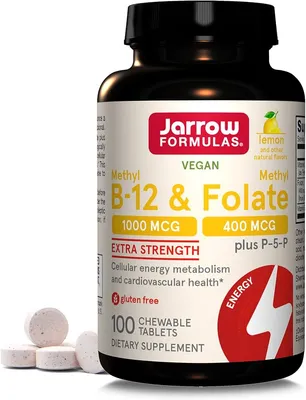
- Methylcobalamin — the active form your body uses without conversion
- Sublingual lozenge bypasses stomach acid issues common after 60
- Pleasant cherry flavor, dissolves in 2-3 minutes
- Outstanding value at roughly $0.10 per day
- B12 only — does not cover the other seven B vitamins
- Contains xylitol and mannitol (sugar alcohols) for sweetness
- No USP or NSF third-party certification
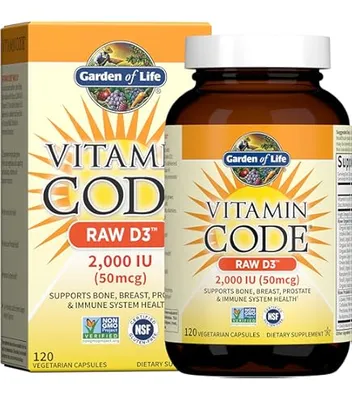
- Whole-food cultured B vitamins — grown in a matrix of organic fruits and vegetables
- Includes live probiotics and enzymes for digestion
- RAW, vegan, gluten-free, Non-GMO Project Verified
- No synthetic binders or fillers
- Roughly double the price of NOW B-50 for similar B vitamin doses
- Requires 2 capsules per day (vs. 1 for NOW)
- Whole-food matrix has not been proven to improve B vitamin absorption over isolated forms
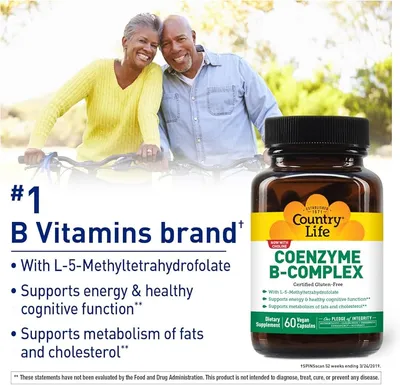
- Coenzymated (active) forms of all B vitamins including methylfolate and methylcobalamin
- Good middle ground between standard and premium pricing
- Gluten-free, certified vegan
- Includes Quatrefolic methylfolate — a highly bioavailable patented form
- Lower doses than NOW B-50 for some B vitamins
- Smaller brand with less consumer recognition
- Two capsules per day for the full listed dose
- NSF Certified for Sport — independent purity and potency verification
- Methylated B vitamins (methylfolate, methylcobalamin) plus chelated minerals
- Iron-free — appropriate for most adults over 50
- Only 2 capsules per day covers B vitamins plus 20+ other essential nutrients
- Premium price — 4x the cost of a standalone B-complex
- B vitamin doses are moderate (designed for maintenance, not therapeutic correction)
- Available primarily online — not stocked in most pharmacies
Frequently Asked Questions
How do I know if I'm B12 deficient?
Common symptoms include unexplained fatigue, brain fog, tingling or numbness in hands and feet, difficulty walking, and mood changes. The tricky part is that a standard serum B12 test can miss early deficiency — levels may appear 'normal' while functional deficiency is already causing symptoms. Ask your doctor for both a serum B12 test and a methylmalonic acid (MMA) test. Elevated MMA is a more sensitive marker that catches deficiency before serum B12 drops below the standard range. Adults over 60 who take metformin, proton pump inhibitors, or follow a vegetarian diet should be tested routinely.
Should I take methylated or synthetic B vitamins?
For most people, standard (synthetic) forms work well and cost less. Your body converts folic acid to methylfolate and cyanocobalamin to methylcobalamin through normal enzymatic pathways. However, an estimated 10-15% of the population carries MTHFR gene variants that reduce this conversion efficiency significantly. If you've tested positive for MTHFR variants, or if you've taken standard B vitamins without improvement, switch to methylated forms (methylfolate, methylcobalamin, pyridoxal-5-phosphate). You don't need genetic testing first — methylated forms work for everyone, they just cost more.
Can B vitamins actually boost energy?
B vitamins don't provide energy the way caffeine does. They serve as essential coenzymes in the metabolic pathways that convert food into cellular energy (ATP). If your B vitamin levels are adequate, taking more won't give you an energy boost — the excess gets excreted in your urine. But if you're deficient — and many adults over 60 are, especially in B12 — restoring adequate levels can meaningfully reduce fatigue within 1-4 weeks. A 2016 review in Nutrients confirmed that B vitamin supplementation improved subjective energy in populations with marginal status.
Do I need a B12 test before supplementing?
Testing is ideal but not strictly required to start supplementing. B12 is water-soluble with no established upper toxicity limit, and doses of 1,000mcg daily are considered safe for long-term use. However, testing is important for two reasons: severe deficiency (below 200 pg/mL) may need B12 injections rather than oral supplements, and neurological symptoms like numbness or balance problems warrant medical evaluation regardless. If you're over 60, ask for B12 and methylmalonic acid tests at your next annual checkup.
Can I take a B complex and a multivitamin together?
Yes, but check the labels for vitamin B6 overlap. Long-term B6 intake above 100mg daily has been linked to peripheral neuropathy in some individuals. If your multivitamin provides 25mg of B6 and your B complex adds 50mg, you're at 75mg — still within safe limits. Above 100mg combined, talk to your pharmacist about adjusting. All other B vitamins are water-soluble with wide safety margins and are excreted when taken in excess.