
Best Multivitamins for Adults Over 50 (2026)
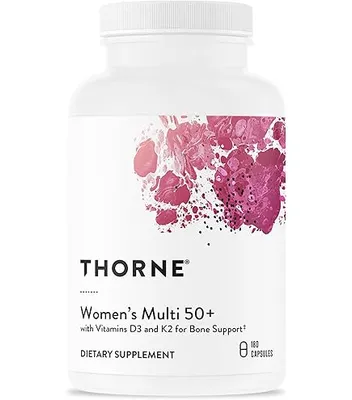
Thorne Basic Nutrients
Best overall for quality-conscious adults who want the most bioavailable nutrient forms and rigorous third-party testing.
- Methylated B vitamins (methylfolate, methylcobalamin)
- Bioavailable mineral forms (citrate, bisglycinate)
- NSF Certified for Sport — independent third-party testing
The best multivitamin for most adults over 50 is Thorne Basic Nutrients for its methylated B vitamins, bioavailable minerals, and NSF-certified quality. But here’s the honest truth: for the majority of people — especially those watching their budget — Centrum Silver Adults 50+ is the proven, practical choice. It’s USP-verified, costs about $0.16 per day, and is the only multivitamin backed by a large randomized controlled trial showing reduced cancer risk in male physicians over a decade of follow-up.
We spent five weeks comparing six multivitamins across nutrient forms, dosing, third-party testing, value, and specific considerations for adults over 50. This guide covers what we found.
Why Multivitamins Matter More After 50
Your body absorbs nutrients differently at 60 than it did at 30. Several age-related changes make supplementation more relevant — not because supplements replace a good diet, but because the gaps widen.
Stomach acid declines. By age 60, an estimated 10-30% of adults have reduced stomach acid (hypochlorhydria), according to research published in Alimentary Pharmacology & Therapeutics. This directly impairs absorption of vitamin B12, iron, calcium, and magnesium from food. The Institute of Medicine specifically recommends that adults over 50 get their B12 from supplements or fortified foods rather than relying on dietary sources alone — the crystalline form in supplements does not require stomach acid for absorption.
Vitamin D synthesis drops. Your skin’s ability to produce vitamin D from sunlight decreases significantly with age. A 70-year-old produces roughly 75% less vitamin D from the same sun exposure compared to a 20-year-old. Combine that with more time spent indoors and the widespread use of sunscreen, and vitamin D deficiency becomes one of the most common nutritional shortfalls in older adults.
B12 deficiency is common and underdiagnosed. The CDC estimates that roughly 1 in 31 adults over 50 has low B12 levels. Symptoms — fatigue, brain fog, tingling in hands and feet — are frequently attributed to “just getting older” rather than investigated as a treatable deficiency. Untreated B12 deficiency can cause irreversible nerve damage.
Calorie needs decrease, but nutrient needs don’t. Most adults eat less as they age. Fewer calories means fewer opportunities to hit nutrient targets from food alone. A well-chosen multivitamin fills the gaps that a 1,800-calorie diet leaves behind.
How We Evaluated
Not all multivitamins are created equal, and the differences matter far more than most people realize. Here is what we looked at:
Nutrient forms. This is the single biggest quality differentiator. Methylated B vitamins (methylfolate, methylcobalamin) are already in their active form — your body can use them immediately. Synthetic forms (folic acid, cyanocobalamin) require enzymatic conversion that becomes less efficient with age. Roughly 30-40% of the population carries MTHFR gene variants that further impair this conversion. We strongly favored products using methylated forms, though we recognize that synthetic forms still work for the majority of people.
Third-party testing. USP Verification and NSF Certification are the two gold standards. Both involve independent lab testing confirming that the product contains what the label claims, dissolves properly, and is free from harmful contaminants. Products without third-party certification may still be fine — but you’re trusting the manufacturer’s word rather than independent verification.
Dosing for 50+. We looked for iron-free formulas (most adults over 50 don’t need supplemental iron), adequate vitamin D3 (at least 600 IU, ideally 1,000+), and meaningful B12 levels. We also noted whether products exceeded the Tolerable Upper Intake Level (UL) for any nutrient, which can be a concern with “mega-dose” formulas.
Pill burden and convenience. A multivitamin that requires four large capsules daily will have lower compliance than a single-tablet formula. We noted serving size because the most effective supplement is the one you actually take.
Value. We calculated cost per day for the recommended serving. A $45 bottle with a two-month supply is cheaper per day than a $20 bottle lasting three weeks.
Our Top Picks
Best Overall: Thorne Basic Nutrients
Thorne Basic Nutrients earns the top spot for one reason: it uses the nutrient forms that aging bodies absorb best. Methylfolate instead of folic acid. Methylcobalamin instead of cyanocobalamin. Magnesium citrate instead of magnesium oxide (which has notoriously poor absorption). Zinc bisglycinate instead of zinc oxide.
These aren’t marketing gimmicks. A 2014 study in the British Journal of Clinical Pharmacology demonstrated that methylfolate produced 700% higher plasma folate levels compared to the same dose of folic acid in individuals with MTHFR polymorphisms. Even without MTHFR variants, methylated forms showed superior bioavailability.
Thorne’s NSF Certified for Sport designation means each batch undergoes independent testing for over 270 banned substances, heavy metals, and label accuracy. While the “for Sport” label sounds irrelevant for a 65-year-old, the testing rigor is identical — and it catches the same heavy metal contamination and potency issues that affect anyone.
The formula is iron-free, which is appropriate for the vast majority of adults over 50. It’s also free of gluten, soy, dairy, and artificial preservatives.
The downsides are real. At $45 for a month’s supply (~$1.50/day), it costs roughly ten times what Centrum Silver costs per day. The four-capsule-per-day serving is also a bigger commitment than a single tablet. And the vitamin D3 dose (400 IU) is lower than what most experts now recommend for older adults — you may want a standalone vitamin D3 supplement alongside it.
Who it’s best for: Adults over 50 who prioritize bioavailable nutrient forms and third-party testing, and who don’t mind the premium cost or multiple capsules.
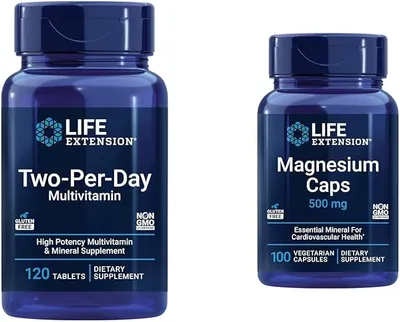
Best Value: Life Extension Two-Per-Day
Life Extension Two-Per-Day delivers a surprising amount of quality at a budget-friendly price. At roughly $0.33 per day, it provides high-potency doses of most key nutrients — often exceeding the RDA by 2-10x — while including some active nutrient forms that you normally only find in premium products.
The formula includes methylfolate (400mcg), mixed tocopherols (full-spectrum vitamin E rather than just alpha-tocopherol), and a hefty 25mg zinc. The B12 dose (300mcg methylcobalamin) is well above the RDA and appropriate for adults who may have reduced absorption.
Where Life Extension compromises is on consistency. Some nutrients appear in bioavailable forms while others remain synthetic. There’s also no independent third-party certification (USP or NSF), though Life Extension has a reputation for self-testing and publishes certificates of analysis on request.
The two-tablet-per-day format is manageable, though the tablets are on the larger side. If you struggle with large pills, the capsule version (Two-Per-Day Capsules) is available at the same price.
Who it’s best for: Adults over 50 who want higher-than-basic nutrient potency without paying premium prices, and who are comfortable with a brand that self-tests rather than holding third-party certifications.
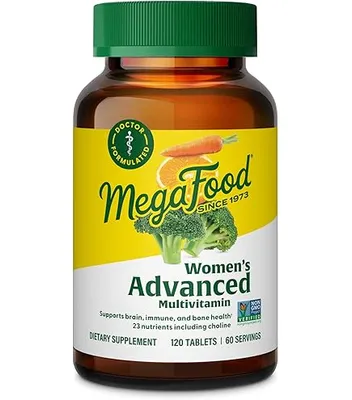
Best for Women: MegaFood Multi for Women 55+
MegaFood Multi for Women 55+ takes a fundamentally different approach. Rather than packing high doses of isolated nutrients into a tablet, MegaFood cultures each nutrient with whole foods — growing vitamins and minerals in a matrix of organic broccoli, brown rice, oranges, and other foods.
The practical benefit is digestive tolerance. If standard multivitamins upset your stomach or make you nauseous (even with food), MegaFood’s whole-food format is gentler. The company specifically markets the ability to take these on an empty stomach — a claim backed by the food matrix that buffers the nutrients.
The formula includes methylated folate and B12, plus extras like astaxanthin (a potent antioxidant) and lutein (for eye health) — nutrients not found in most multivitamins. These additions reflect common concerns for women over 55: macular degeneration risk and skin aging.
MegaFood is a Certified B Corporation and carries Non-GMO Project Verification. The ingredients are sourced from partnered farms, and the company publishes transparency reports showing heavy metal and pesticide testing results.
The trade-offs: nutrient potency is moderate compared to Life Extension or Thorne. You won’t find mega-doses here — MegaFood’s philosophy is closer to “food-level” amounts. The formula is specifically designed for women, with nutrients like iron excluded and others (calcium, D3) calibrated for postmenopausal needs. At $40 per month, it’s a premium price for moderate nutrient levels.
Who it’s best for: Women over 55 who have sensitive stomachs, prefer whole-food supplements, and value gentle digestion over maximum potency.
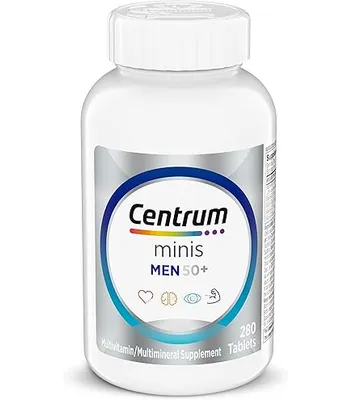
Most Trusted: Centrum Silver Adults 50+
Centrum Silver Adults 50+ has something no other multivitamin on this list can claim: large-scale clinical trial evidence.
The Physicians’ Health Study II — a randomized, double-blind, placebo-controlled trial of 14,641 male physicians aged 50+ — found that daily Centrum Silver reduced total cancer incidence by 8% over 11 years of follow-up. The study, published in JAMA in 2012, was the first major trial to demonstrate a measurable health benefit from a daily multivitamin. A 2023 follow-up study (COSMOS-Mind) using Centrum Silver showed that daily multivitamin use was associated with a statistically significant slowing of cognitive decline in older adults.
Centrum Silver also carries USP Verification — the same independent quality seal as Nature Made. The USP mark confirms purity, potency, dissolution, and freedom from contaminants.
From a convenience standpoint, nothing beats one small tablet per day, available at every pharmacy, grocery store, and big-box retailer in the country for about $0.16 per day.
The honest downsides: Centrum Silver uses synthetic B vitamin forms (folic acid, cyanocobalamin) rather than methylated versions. It contains artificial colors and some additives that health-conscious consumers may prefer to avoid. Nutrient potency is modest — it aims to meet the RDA rather than exceed it. But the RDA targets are specifically designed to meet the needs of 97-98% of healthy individuals, so “modest” doesn’t mean “inadequate.”
Who it’s best for: Adults over 50 who want a proven, USP-verified, one-tablet-a-day multivitamin at the lowest possible cost — especially those who value clinical trial evidence over premium formulation.
Best Whole-Food: Garden of Life Vitamin Code 50 & Wiser Women
Garden of Life Vitamin Code 50 & Wiser Women pushes the whole-food approach further than MegaFood. The “RAW” label means nutrients are cultured in raw, uncooked whole foods — and the formula includes live probiotics and digestive enzymes alongside the vitamins and minerals.
The probiotic and enzyme addition is genuinely useful. Many women over 50 experience reduced digestive enzyme production, and the enzymes in Vitamin Code may support nutrient breakdown and absorption. The probiotics (500 million CFU of Lactobacillus and Bifidobacterium strains) provide modest gut health support, though this is a lower dose than you’d find in a dedicated probiotic supplement.
The formula contains no binders, fillers, or synthetic nutrients — the cleanest ingredient list on this list by a wide margin. It’s USDA Organic, Non-GMO Project Verified, and free of gluten, dairy, and soy.
The caveats: four capsules per day is a significant commitment. The capsules should be refrigerated to maintain probiotic viability, which makes travel inconvenient. The formulation is women-specific, so it’s not appropriate for men. And at $35 per month, you’re paying more per day than Centrum Silver or Nature Made for lower absolute nutrient potency — the value proposition is the whole-food delivery system, not the milligram counts.
Who it’s best for: Women over 50 who want the cleanest, most natural multivitamin possible, with built-in digestive support, and who don’t mind refrigeration or a four-capsule daily serving.
Best Budget: Nature Made Multi 50+
Nature Made Multi 50+ shares Centrum Silver’s core strength — USP Verification — at an even lower price point. At under $0.20 per day, it’s the least expensive multivitamin on this list while still carrying independent quality certification.
The softgel format is easier to swallow than tablets for many older adults, which is a real compliance advantage. One softgel per day keeps the routine simple.
Nutrient levels are adequate — Nature Made targets the RDA without significantly exceeding it. The formula is iron-free and includes 600 IU of vitamin D3, which is a reasonable base (though many experts recommend 1,000-2,000 IU for adults over 50).
Like Centrum Silver, Nature Made uses synthetic B vitamin forms throughout. It also contains soybean oil in the softgel base, which is a consideration for those with soy sensitivities (though the amount is small and most people with soy allergies tolerate soybean oil).
The simplicity is both a strength and a limitation. Nature Made doesn’t include eye-health nutrients, extra antioxidants, or probiotics. It provides the basic nutritional safety net — nothing more, nothing less.
Who it’s best for: Budget-conscious adults over 50 who want USP-verified quality in a one-softgel-per-day format without unnecessary complexity.
Quick Comparison
Here’s how the six products stack up on the factors that matter most:
Best nutrient forms: Thorne Basic Nutrients (methylated Bs, chelated minerals) > Life Extension (partial methylation) > MegaFood/Garden of Life (whole-food matrix) > Centrum Silver/Nature Made (synthetic forms)
Best third-party testing: Thorne (NSF) and Centrum Silver/Nature Made (USP) are independently certified. Life Extension, MegaFood, and Garden of Life rely on in-house or non-major-certification testing.
Best convenience: Centrum Silver and Nature Made (one pill/day) > Life Extension (two/day) > Thorne, MegaFood, Garden of Life (four/day)
Best price per day: Nature Made ($0.20) > Centrum Silver ($0.16) > Life Extension ($0.33) > Garden of Life ($1.17) > MegaFood ($1.33) > Thorne ($1.50)
Best for sensitive stomachs: MegaFood and Garden of Life (whole-food matrix, can take on empty stomach) > Thorne (capsules, generally well-tolerated) > Life Extension/Centrum/Nature Made (take with food recommended)
Synthetic vs. Whole-Food: Does It Matter?
This is the most debated question in the multivitamin world, and the honest answer is: it depends on what you mean by “matter.”
The case for whole-food multivitamins: Nutrients embedded in a food matrix may be recognized and processed by your body more naturally. Small studies suggest whole-food forms cause less digestive upset. The absence of synthetic binders and fillers appeals to people who read ingredient labels carefully. Brands like MegaFood and Garden of Life invest heavily in sourcing and transparency.
The case for synthetic multivitamins: The overwhelming majority of clinical evidence — including the Physicians’ Health Study II — used standard synthetic multivitamins. No large-scale trial has demonstrated that whole-food multivitamins produce better health outcomes than synthetic ones. Synthetic vitamins are chemically identical to their natural counterparts (vitamin C is vitamin C regardless of source). And synthetic formulas can deliver higher potencies at lower cost.
Where the distinction genuinely matters: B vitamins. Methylfolate is meaningfully superior to folic acid for the 30-40% of the population with MTHFR variants. Methylcobalamin is the active form of B12 that doesn’t require enzymatic conversion. These aren’t whole-food vs. synthetic differences — they’re active vs. inactive form differences. A synthetic multivitamin with methylated Bs (like Thorne) combines the advantages of both approaches.
Our take: Don’t pay a premium for “whole food” on the label alone. Pay attention to the specific nutrient forms listed on the Supplement Facts panel. A well-formulated synthetic multivitamin with active B vitamins and chelated minerals (like Thorne or Life Extension) may outperform a whole-food multivitamin with lower potency. Digestive tolerance is the one area where whole-food formulas have a genuine practical edge — if standard multivitamins upset your stomach, try MegaFood or Garden of Life.
What to Look For in a Multivitamin After 50
If none of the products on this list appeal to you, here are the key criteria for evaluating any multivitamin:
Methylated B vitamins. Look for methylfolate (or 5-MTHF) instead of folic acid, and methylcobalamin instead of cyanocobalamin. This matters more as you age, and it matters significantly if you carry MTHFR gene variants (which you may not know about — genetic testing is available but not required).
Adequate vitamin D3. At minimum 600 IU, ideally 1,000 IU or more. Many multivitamins shortchange vitamin D because it takes up capsule space. If your multi provides less than 1,000 IU, consider a separate D3 supplement — especially if blood work shows your 25-hydroxyvitamin D is below 30 ng/mL.
Iron-free formula. Unless a blood test shows iron deficiency, adults over 50 should avoid iron in their multivitamin. Excess iron is a pro-oxidant that your body cannot easily eliminate. Nearly every “50+” or “senior” multivitamin is already iron-free, but check the label.
Third-party testing. USP Verification or NSF Certification provides independent assurance that the product contains what the label claims. This matters because the supplement industry is not subject to the same pre-market approval that pharmaceuticals require. A 2015 investigation by the New York Attorney General’s office found that roughly 80% of tested herbal supplements at major retailers contained none of the labeled ingredients. Multivitamins have a better track record, but third-party testing removes the guesswork.
MTHFR considerations. If you or a family member has been diagnosed with an MTHFR variant, avoid any multivitamin containing folic acid. Folic acid can accumulate as unmetabolized folic acid (UMFA) in people who can’t convert it efficiently, and some researchers have raised concerns about high UMFA levels. Methylfolate bypasses this pathway entirely.
Reasonable doses. More is not always better. Mega-doses of fat-soluble vitamins (A, D, E, K) accumulate in body tissue and can reach harmful levels. Water-soluble vitamins (B complex, vitamin C) are excreted in urine when you take more than your body needs — meaning mega-doses of B vitamins mostly produce expensive urine. The RDA is a reasonable target for most nutrients. Moderate exceedances (2-3x RDA) are generally safe. Avoid products with 10,000% of the RDA for any nutrient unless directed by a healthcare provider.
Frequently Asked Questions
Do adults over 50 actually need a multivitamin?
Many adults over 50 have at least one nutritional gap. A 2017 analysis in the journal Nutrients found that over 90% of U.S. adults failed to meet adequate intake for vitamin D, and over 40% fell short on calcium, magnesium, and vitamins A, C, and E from food alone. A multivitamin does not replace a healthy diet, but it serves as a reasonable insurance policy against common deficiencies — especially if your appetite has decreased or your diet has become less varied.
What is the difference between methylated and synthetic B vitamins?
Methylated B vitamins (like methylfolate and methylcobalamin) are already in their active, usable form. Synthetic forms (like folic acid and cyanocobalamin) require your body to convert them through enzyme pathways that may be less efficient in older adults. Roughly 30-40% of the population carries MTHFR gene variants that further reduce this conversion. Methylated forms bypass these bottlenecks entirely, which is why they are generally preferred for adults over 50.
Should a multivitamin for seniors contain iron?
Most adults over 50 should choose an iron-free multivitamin. After menopause, women no longer lose iron through menstruation, and men rarely need supplemental iron at any age. Excess iron accumulates in the body and is associated with increased oxidative stress and organ damage. Only supplement iron if a blood test confirms iron-deficiency anemia — and even then, a standalone iron supplement under medical supervision is safer than a daily multi with iron.
Is a whole-food multivitamin better than a synthetic one?
The evidence is mixed. Whole-food multivitamins embed nutrients in a food matrix, which proponents argue improves absorption and reduces stomach upset. Some small studies support gentler digestion with food-based formulas, but no large-scale clinical trial has demonstrated superior health outcomes from whole-food multivitamins compared to well-formulated synthetic ones. The Physicians’ Health Study II — the largest multivitamin trial ever conducted — used a standard synthetic multivitamin (Centrum Silver) and still found meaningful benefits.
Can you take a multivitamin with prescription medications?
Most multivitamins are safe alongside common medications, but a few interactions matter. Vitamin K in multivitamins can interfere with blood thinners like warfarin. Calcium and iron can reduce absorption of thyroid medications (levothyroxine) and certain antibiotics — separate them by at least two hours. High-dose vitamin E may increase bleeding risk with blood thinners. Always tell your pharmacist or doctor about every supplement you take so they can check for interactions specific to your medications.
The Bottom Line
The “best” multivitamin for adults over 50 depends on what you value most.
If quality of nutrient forms is your priority, Thorne Basic Nutrients is the clear winner. Methylated B vitamins, chelated minerals, NSF certification — it’s the formula a pharmacist would design from scratch.
If you want the most evidence behind a product, Centrum Silver Adults 50+ is the only multivitamin with large-scale randomized controlled trial data showing real health benefits. The nutrient forms aren’t as sophisticated as Thorne’s, but the clinical evidence is stronger than anything else on the market.
If budget matters most, Nature Made Multi 50+ gives you USP-verified quality at under $0.20 per day. It’s basic, but it’s verified — and consistency beats perfection.
If your stomach is sensitive, MegaFood Multi for Women 55+ or Garden of Life Vitamin Code 50 & Wiser Women are the gentlest options, designed to be taken even on an empty stomach.
Whatever you choose, a multivitamin is a safety net — not a substitute for a nutrient-rich diet, regular exercise, and routine bloodwork. Talk to your doctor or pharmacist about which specific nutrients you may be falling short on, and let that guide your choice rather than marketing claims alone.
All Products We Reviewed
- Methylated B vitamins (methylfolate, methylcobalamin)
- Bioavailable mineral forms (citrate, bisglycinate)
- NSF Certified for Sport — independent third-party testing
- No iron — appropriate for most adults over 50
- Free of gluten, soy, dairy, and artificial preservatives
- Requires 4 capsules per day for full dose
- Premium price (~$1.50/day)
- Only 400 IU vitamin D3 (most seniors need more)
- High-potency formula — exceeds RDA on most nutrients
- Includes methylfolate, mixed tocopherols, and 25mg zinc
- Only 2 tablets per day
- Excellent value at ~$0.33/day
- Contains some synthetic nutrient forms alongside active ones
- No third-party certification (USP/NSF)
- Tablets are large
- Whole-food cultured nutrients — gentle on empty stomach
- Includes methylated folate and B12
- Added astaxanthin and lutein for eye and skin support
- Certified B Corporation, Non-GMO Project Verified
- Formulated specifically for women (not unisex)
- Lower potency than synthetic alternatives on some nutrients
- Premium price for moderate nutrient levels
- USP Verified for purity and potency
- Backed by the Physicians' Health Study II (largest multivitamin RCT)
- One tablet per day — maximum convenience
- Available at every pharmacy in the country
- Very affordable (~$0.16/day)
- Uses synthetic B vitamin forms (folic acid, cyanocobalamin)
- Contains artificial colors and some controversial additives
- Lower potency on several key nutrients
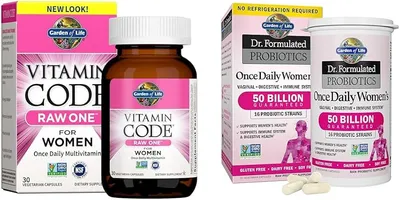
- RAW whole-food cultured nutrients
- Includes live probiotics and enzymes for digestion
- No binders, fillers, or synthetic nutrients
- USDA Organic, Non-GMO Project Verified
- Requires 4 capsules per day
- Must be refrigerated for probiotic viability
- Women-specific formulation — not suitable for men
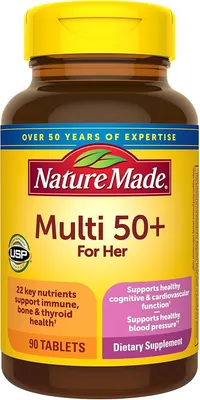
- USP Verified — independently tested for purity and potency
- One softgel per day — easy to swallow
- Costs under $0.20/day
- Most widely available multivitamin brand in the U.S.
- Uses synthetic B vitamin forms throughout
- Modest nutrient levels — meets RDA but doesn't exceed it
- Contains soybean oil
Frequently Asked Questions
Do adults over 50 actually need a multivitamin?
Many adults over 50 have at least one nutritional gap. A 2017 analysis in the journal Nutrients found that over 90% of U.S. adults failed to meet adequate intake for vitamin D, and over 40% fell short on calcium, magnesium, and vitamins A, C, and E from food alone. A multivitamin does not replace a healthy diet, but it serves as a reasonable insurance policy against common deficiencies — especially if your appetite has decreased or your diet has become less varied.
What is the difference between methylated and synthetic B vitamins?
Methylated B vitamins (like methylfolate and methylcobalamin) are already in their active, usable form. Synthetic forms (like folic acid and cyanocobalamin) require your body to convert them through enzyme pathways that may be less efficient in older adults. Roughly 30-40% of the population carries MTHFR gene variants that further reduce this conversion. Methylated forms bypass these bottlenecks entirely, which is why they are generally preferred for adults over 50.
Should a multivitamin for seniors contain iron?
Most adults over 50 should choose an iron-free multivitamin. After menopause, women no longer lose iron through menstruation, and men rarely need supplemental iron at any age. Excess iron accumulates in the body and is associated with increased oxidative stress and organ damage. Only supplement iron if a blood test confirms iron-deficiency anemia — and even then, a standalone iron supplement under medical supervision is safer than a daily multi with iron.
Is a whole-food multivitamin better than a synthetic one?
The evidence is mixed. Whole-food multivitamins embed nutrients in a food matrix (cultured in yeast or bound to plant compounds), which proponents argue improves absorption and reduces stomach upset. Some small studies support gentler digestion with food-based formulas, but no large-scale clinical trial has demonstrated superior health outcomes from whole-food multivitamins compared to well-formulated synthetic ones. The Physicians' Health Study II — the largest multivitamin trial ever conducted — used a standard synthetic multivitamin (Centrum Silver) and still found meaningful benefits.
Can you take a multivitamin with prescription medications?
Most multivitamins are safe alongside common medications, but a few interactions matter. Vitamin K in multivitamins can interfere with blood thinners like warfarin. Calcium and iron can reduce absorption of thyroid medications (levothyroxine) and certain antibiotics — separate them by at least two hours. High-dose vitamin E may increase bleeding risk with blood thinners. Always tell your pharmacist or doctor about every supplement you take so they can check for interactions specific to your medications.