
Best Black Cohosh Supplements (Pharmacist Picks)
Remifemin Black Cohosh
Best overall — the most clinically-studied black cohosh extract. If you want the version trials showed worked, this is it.
- The originator product — used in nearly all positive trial data
- Standardized isopropanolic Cimicifuga racemosa extract
- 20mg per tablet, taken twice daily (40mg total)
Black cohosh is the most-studied plant supplement for menopause hot flashes — and one of the most misunderstood. The evidence base lives or dies on a specific standardized extract, not on “black cohosh” as a generic category.
Buy the wrong product, and you’ve spent $20 on something that probably doesn’t work. Buy the right product, and you have a reasonable shot at meaningful hot flash reduction.
This guide covers what works, what to skip, and the safety considerations that make black cohosh a different decision than other supplements.
Key Takeaways
- Black cohosh reduces hot flashes by ~26% versus placebo in meta-analysis — meaningful but smaller effect than HRT.
- Most evidence comes from one standardized extract — isopropanolic Cimicifuga racemosa, sold as Remifemin.
- Generic non-standardized products are NOT equivalent — show inconsistent effects in trials.
- Maximum recommended duration: 6 months continuous use due to rare hepatotoxicity reports.
- Best fit: women with hot-flash-dominant menopause symptoms who can’t or prefer not to use HRT.
- Skip if: liver disease, hepatotoxic medications, breast cancer (without oncologist clearance), pregnant.
What black cohosh actually does
Black cohosh (Cimicifuga racemosa, also called Actaea racemosa) is a North American native plant traditionally used by Indigenous peoples and later adopted in European herbal medicine. The root contains triterpene glycosides (primarily 27-deoxyactein and cimiracemoside), phenolic compounds, and other active constituents.
The mechanism is debated. Earlier theories suggested estrogenic activity, but rigorous receptor-binding studies have been mixed. Current consensus: black cohosh likely works through serotonergic and dopaminergic effects relevant to hot flash regulation rather than direct estrogen receptor activity.
This non-estrogenic mechanism is clinically important — it’s why some oncologists clear black cohosh for women with hormone-receptor-positive breast cancer history, while soy isoflavones (which DO bind estrogen receptors) raise more concern.
The evidence
The most-cited evidence is the 2012 Cochrane review by Leach & Moore, which analyzed 16 trials (N = 2,027 menopausal women).
Findings:
- Mean hot flash frequency reduction: ~26% versus placebo.
- Effect size: smaller than HRT (75-85% reduction), comparable to or slightly less than soy isoflavones.
- Onset of effect: 4-12 weeks of consistent daily use.
- Approximately 1 in 3-4 women showed clinically meaningful response.
The earlier 2008 review by Borrelli & Ernst reached similar conclusions and specifically noted that trials using the standardized isopropanolic extract (Remifemin) showed more consistent positive results than trials using generic preparations.
Translation: if you take a standardized extract for 12+ weeks, your odds of meaningful hot flash reduction are 30-40%. For some women, the response is dramatic; for others, it’s nothing. There’s no reliable way to predict who will respond before trying.
Standardization matters more than brand
Active triterpene glycosides vary 5-10x between black cohosh products. The cheapest unstandardized “black cohosh root extract 540mg” from a random Amazon seller may have 1/10th the active compound content of Remifemin or a quality standardized product.
What to look for:
- “Standardized to 2.5% triterpene glycosides” on the label, OR
- “Standardized isopropanolic extract” (specifically Remifemin), OR
- “Standardized to 27-deoxyactein” with specified percentage.
What to avoid:
- “Black cohosh root powder” with no standardization specified.
- “Black cohosh root extract” with no concentration ratio (e.g., “4:1”) and no active compound percentage.
- Mass-market brands selling cheap unstandardized preparations.
- Proprietary blends that include black cohosh among many ingredients (you can’t dose properly).
The price difference between unstandardized and standardized is typically $5-15/month. The active-compound difference is large. Pay for standardization.
The pharmacist picks
1. Remifemin Black Cohosh — Best Overall
Remifemin is the originator black cohosh product — used in the majority of positive clinical trials, with 30+ years of European use and a well-characterized safety profile.
The product: Cimicifuga racemosa isopropanolic extract, 20mg per tablet. Standard dose: 1 tablet twice daily (40mg total).
Why it matters: The “evidence base” for black cohosh is largely the evidence base for this specific extract. Other extracts may produce similar effects, but the direct trial data is on Remifemin.
Cost: ~$32/month.
Trade-off: Premium price. The actual standardization details are proprietary — Enzymatic Therapy doesn’t publish the exact triterpene glycoside content the way some other manufacturers do.
Pick this if: You want the version trials showed worked. Especially relevant for women new to black cohosh who want to know they’re getting the studied extract.
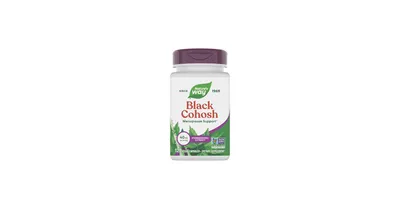
2. Nature’s Way Black Cohosh — Best Lower-Cost Pick
Nature’s Way uses a different but standardized black cohosh extract at adequate active compound content for a meaningfully lower price.
The product: 40mg black cohosh root extract per capsule, standardized to 2.5% triterpene glycosides. TRU-ID DNA verified for plant identity (some black cohosh products on the market have been adulterated with other Actaea species; DNA verification rules this out).
Cost: ~$18/month.
Trade-off: Different extract methodology than Remifemin. The clinical evidence on Remifemin doesn’t fully transfer, though the standardization specifications are similar.
Pick this if: You want quality standardization at a lower price point. Good first-time choice for women experimenting with black cohosh.
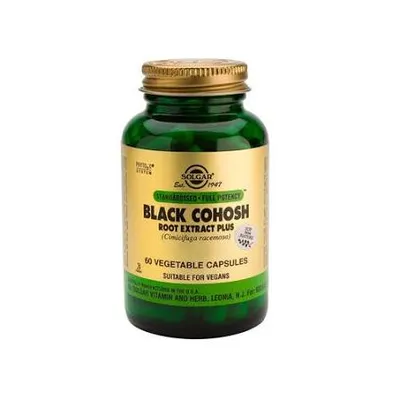
3. Solgar Black Cohosh Root Extract — Best for Manufacturing Standards
Solgar is one of the strictest supplement manufacturers in the industry — independent quality systems, full traceability, kosher certification.
The product: 100mg black cohosh root extract per capsule, standardized to 2.5% triterpene glycosides.
Cost: ~$22/month.
Trade-off: Higher per-capsule dose with single-dose-daily strategy (different from Remifemin’s split-dose approach). May push slightly beyond evidence-based range if taken twice daily; stick to once-daily dosing with this product.
Pick this if: You prioritize manufacturing quality and third-party testing rigor.
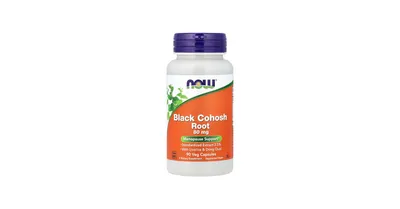
4. Now Foods Black Cohosh — Best Budget Pick
Now Foods produces standardized black cohosh at the lowest price point with adequate quality.
The product: 80mg black cohosh root extract per capsule, standardized to 2.5% triterpene glycosides.
Cost: ~$14/month.
Trade-off: Less direct evidence transfer than Remifemin. Higher per-capsule dose with single-dose strategy.
Pick this if: You’re trying black cohosh on a tight budget. Good “first attempt” product before committing to a premium brand.
5. Bonafide Relizen — Best Alternative for Black-Cohosh-Avoidant Women
Relizen isn’t black cohosh — it’s a Swedish flower pollen extract with a different mechanism — but it’s worth knowing about because it serves the same use case (hot flash reduction without HRT) for women who can’t take black cohosh.
The product: Swedish flower pollen cytoplasm and pistil extract.
Why it’s relevant here: Two clinical trials show hot flash reduction comparable to mid-range supplement effects. No hepatotoxicity concerns. No estrogen receptor activity (safer for breast cancer history). No drug interaction concerns.
Cost: ~$50/month.
Pick this if: You have liver concerns, breast cancer history, or are on hepatotoxic medications. See the dedicated Bonafide Relizen review for the deep dive.
Dosing and timing
Standard black cohosh dosing is 40mg total daily of standardized extract.
Split dosing (Remifemin pattern): 20mg morning + 20mg evening with meals. Smoother blood level, may produce more even symptom control.
Single dosing (most other brands): 40-80mg once daily with breakfast or dinner. Convenient but may produce more variable symptom control.
Timeline expectations:
- Week 1-2: minimal change. Don’t judge yet.
- Week 4-6: subtle differences may appear.
- Week 8-12: full effect emerges. This is when you decide if it’s working.
Take with food to minimize GI upset. Some women experience mild stomach discomfort the first 1-2 weeks; usually resolves.
Maximum continuous use: 6 months. Then take a 4-week break before restarting.
Safety — the parts that matter
Hepatotoxicity (rare but real)
Case reports of black cohosh-associated liver injury have been published since the early 2000s. The frequency is low — estimated at 1 case per several million doses — and causation in many reported cases remains debated (some involved confirmed contamination of the supplement with related but more toxic plant species).
Practical guidance:
- Get baseline liver enzymes (ALT, AST) before starting if you have any liver risk factors (alcohol use, hepatitis history, NAFLD).
- Repeat liver enzymes every 3 months during continuous use.
- Discontinue immediately and contact your doctor if you develop: jaundice (yellow eyes/skin), dark urine, light-colored stools, right-upper-quadrant abdominal pain, or unexplained fatigue with nausea.
- Skip black cohosh entirely if you have known liver disease, hepatitis B or C, or excessive alcohol use.
Breast cancer history
The non-estrogenic mechanism makes black cohosh theoretically safer than soy isoflavones for women with hormone-receptor-positive breast cancer history. But “theoretically safer” isn’t the same as “cleared by your oncologist.”
Many oncologists clear black cohosh for breast cancer survivors with persistent hot flashes; others prefer SSRIs (paroxetine, venlafaxine) or gabapentin. Ask before starting.
Drug interactions
Black cohosh has fewer drug interactions than many supplements but isn’t interaction-free:
- Hepatotoxic medications: combine with caution. High-dose acetaminophen (above 3g/day), methotrexate, isoniazid.
- Tamoxifen: unclear effect; talk to oncologist.
- CYP3A4 substrates: modest induction reported. Relevant for some immunosuppressants.
- St. John’s Wort: both affect serotonin pathways; combination not recommended.
Other contraindications
- Pregnancy and lactation.
- Active hormone-sensitive cancer treatment.
- Allergy to Ranunculaceae family plants.
What black cohosh doesn’t do
Black cohosh has reasonable evidence for hot flashes specifically. Other menopause symptoms have weaker or no evidence:
- Mood and anxiety: modest evidence; ashwagandha and magnesium have stronger support.
- Cognitive symptoms (“brain fog”): no significant evidence.
- Vaginal dryness: no evidence.
- Sleep: modest improvement if hot flashes are disrupting sleep; no direct sleep-improvement evidence.
- Libido: no evidence.
- Bone density: no evidence (despite some supplement marketing claims).
- Weight gain: no evidence.
If your dominant menopause symptoms aren’t hot flashes, black cohosh probably isn’t the right pick. See Best Menopause Supplements That Work for symptom-matched alternatives.
How black cohosh stacks against alternatives
| Symptom target | Black cohosh | HRT | SSRIs (paroxetine) | Soy isoflavones |
|---|---|---|---|---|
| Hot flash reduction | ~26% | 75-85% | 60-70% | ~30-40% |
| Mood improvement | Modest | Moderate | Strong | Modest |
| Vaginal dryness | None | Strong | None | Modest |
| Bone protection | None | Strong | None | Modest |
| Breast cancer risk | Likely safe | Increased (combined HRT) | Safe | Debated |
| Liver concerns | Rare hepatotoxicity | Minimal | Minimal | Minimal |
| Cost/month | $14-32 | Variable | $10-50 | $10-25 |
For most women with moderate-to-severe hot flashes, HRT is the strongest option when not contraindicated. Black cohosh is a reasonable alternative when HRT isn’t available or appropriate. See Hormone Replacement Therapy Guide for the full HRT discussion.
The bottom line
Black cohosh works modestly for hot flashes when you take a standardized extract for 12+ weeks. Effect size is meaningful but smaller than HRT. About 1 in 3-4 women see clinically meaningful improvement.
Stick to standardized products: Remifemin (most evidence), Nature’s Way Black Cohosh (best lower-cost), Solgar (best manufacturing), Now Foods (best budget). Skip generic unstandardized preparations.
Maximum 6 months continuous use. Get liver enzymes checked at baseline if you have risk factors. Stop and call your doctor if jaundice or right-upper-quadrant pain develops.
If hot flashes aren’t your dominant symptom — or if you have liver concerns — black cohosh probably isn’t the right pick. The broader menopause supplement guide covers the full toolkit.
Sources
- Leach & Moore, 2012 — Cochrane review of black cohosh
- Borrelli & Ernst, 2008 — Black cohosh systematic review
- Geller et al., 2009 — Safety and efficacy of black cohosh
- Wuttke et al., 2014 — Black cohosh mechanism review
- Naser et al., 2011 — Black cohosh and breast cancer safety
- Teschke et al., 2012 — Black cohosh hepatotoxicity assessment
All Products We Reviewed
- The originator product — used in nearly all positive trial data
- Standardized isopropanolic Cimicifuga racemosa extract
- 20mg per tablet, taken twice daily (40mg total)
- 30+ years of European use, well-characterized safety profile
- Premium price vs generics
- Standardization details proprietary — not fully disclosed on label
- 40mg standardized extract per capsule
- Standardized to 2.5% triterpene glycosides
- TRU-ID DNA verified for plant identity
- Lower cost than Remifemin
- Different extract methodology than Remifemin (less direct evidence transfer)
- Single-capsule dosing — Remifemin's split-dose may produce more even effect
- Standardized to 2.5% triterpene glycosides
- Solgar's strict third-party testing protocols
- Vegetarian capsules, kosher certified
- 100mg per capsule (different dose strategy than Remifemin)
- Higher per-capsule dose may push beyond evidence-based range when taken twice daily
- Take 1 capsule daily, not 2 (single-dose strategy)
- 80mg standardized extract per capsule (2.5% triterpene glycosides)
- Inexpensive — about $0.20-0.30 per dose
- Now's GMP-compliant manufacturing
- Good budget option for women new to black cohosh
- Higher per-capsule dose, single-dose strategy
- Less direct evidence transfer than Remifemin's specific extract
- Swedish flower pollen extract — different mechanism than black cohosh
- Non-hormonal — reasonable for women with breast cancer history
- Two clinical trials showing hot flash reduction
- No major drug interactions or hepatotoxicity concerns
- Premium price ($50/month at standard dosing)
- Different category — not technically black cohosh
Frequently Asked Questions
Does black cohosh actually work for menopause hot flashes?
Modestly, yes — but only the standardized extract. A 2008 Cochrane review of 16 trials found black cohosh produced approximately 26% reduction in hot flash frequency versus placebo. Trials using the standardized isopropanolic extract (Remifemin) showed consistent effects; trials using generic non-standardized black cohosh showed mixed results. Effect emerges at 4-12 weeks of consistent daily use. Effect size is meaningful but smaller than HRT (hormone replacement therapy reduces hot flashes by 75-85%) and similar to or slightly less than other plant-based options like soy isoflavones. Not a miracle pick — a real pick that helps roughly 1 in 3-4 women see meaningful hot flash reduction. Doesn't work for everyone, but the cost-to-benefit ratio is reasonable for women who can't or prefer not to use HRT.
What's the difference between Remifemin and generic black cohosh?
Remifemin uses a specific standardized extract — Cimicifuga racemosa isopropanolic extract — that's been used in nearly all positive clinical trials. Other brands selling 'black cohosh' may use whole root powder, ethanolic extracts of varying concentration, or unstandardized preparations. Active compounds (triterpene glycosides, primarily 27-deoxyactein) vary 5-10x between products. Practical implications: (1) Remifemin's evidence base does NOT automatically transfer to generic products. (2) Brands marketing 'standardized to 2.5% triterpene glycosides' (Nature's Way, Solgar, Now Foods) are likely closer to Remifemin in active compound content. (3) The cheapest non-standardized 'black cohosh root extract 540mg' from random sellers is essentially unstudied. Pay for standardization; the cost difference is $5-15/month and the active-compound difference is significant.
How long should I take black cohosh?
Maximum recommended continuous duration: 6 months. The German Commission E (the regulatory body that originally approved black cohosh for menopause use) recommended 6-month maximum based on theoretical concerns about long-term hormonal effects. Hepatotoxicity reports — though rare — also factor into this guideline. After 6 months, take a 4-week break before restarting. Reasonable usage patterns: (1) 6 months on, 1 month off, repeat through the menopause transition. (2) Use during specific symptom-heavy periods (e.g., the year your hot flashes peak) and discontinue when symptoms naturally ease. (3) For women with persistent severe symptoms beyond 2 years, discuss longer-term plant supplements OR HRT options with your doctor rather than indefinite black cohosh use.
Is black cohosh safe for women with breast cancer history?
Inconclusive — and the safer answer is to discuss with your oncology team. Black cohosh's mechanism is debated; it does NOT bind estrogen receptors classically (unlike soy isoflavones), but some research suggests serotonergic and other non-estrogenic mechanisms relevant to hot flashes. A 2008 review specifically examined breast cancer safety and found no clear evidence of harm in women with breast cancer history, but the studies were limited. The current oncology consensus: black cohosh is preferred over soy isoflavones for women with hormone-receptor-positive breast cancer history because of the non-estrogenic mechanism, BUT individual oncologist input is essential. Some oncologists clear black cohosh; others prefer SSRIs (paroxetine, venlafaxine), gabapentin, or oxybutynin for hot flash management in breast cancer survivors. Ask before starting.
What about black cohosh and liver health?
Hepatotoxicity is the main safety concern with black cohosh. Case reports of liver injury — including rare cases requiring transplant — have been published since the early 2000s. The frequency is low (estimated 1 case per several million doses), and causation is debated, but the European Medicines Agency and FDA both require hepatotoxicity warnings on black cohosh products. Practical guidance: (1) Get baseline liver enzymes (ALT, AST) before starting if you have any liver risk factors. (2) Repeat liver enzyme testing at 3-month intervals during continuous use. (3) Discontinue immediately and contact your doctor if jaundice (yellowing of skin or eyes), dark urine, or right-upper-quadrant abdominal pain develops. (4) Avoid combining with hepatotoxic medications (high-dose acetaminophen, methotrexate, isoniazid) without medical input. (5) Skip black cohosh entirely if you have known liver disease, hepatitis B or C, or excessive alcohol use. The risk is small in absolute terms but real.
Can I take black cohosh with HRT or other menopause supplements?
It's typically unnecessary to combine with HRT — HRT's hot flash effect is much stronger and adding black cohosh provides minimal additional benefit. Some women on lower-dose HRT add black cohosh and report subjective improvement; this is reasonable but not strongly evidence-based. For combination with other supplements: black cohosh plus magnesium glycinate (sleep, anxiety) is fine — no interactions. Black cohosh plus omega-3 — fine. Black cohosh plus ashwagandha — fine, mechanisms don't overlap. Black cohosh plus soy isoflavones — overlap of hot flash mechanism, modest additive benefit possible but no need to take both unless one alone is insufficient. Black cohosh plus DIM — fine. Black cohosh plus St. John's Wort — caution; both can affect serotonin pathways. Black cohosh plus SSRIs — clear with prescribing doctor first. The biggest concern remains liver effects: combining with any hepatotoxic medication or supplement requires medical input.
Who shouldn't take black cohosh?
Six groups should skip black cohosh entirely: (1) Women with active liver disease, hepatitis B or C, or severe NAFLD/NASH. (2) Women with breast cancer history — discuss with oncology team before starting (possibly cleared, possibly not depending on cancer type and current treatment). (3) Pregnant or nursing women. (4) Women on hepatotoxic medications (high-dose acetaminophen, methotrexate, isoniazid, certain TB drugs) without medical clearance. (5) Women with hormone-sensitive cancers undergoing active treatment. (6) Women allergic to plants in the Ranunculaceae family (including buttercup, anemone). Additionally, use caution if: you have a history of unexplained liver enzyme elevations, you're on multiple medications metabolized through CYP3A4, or you're under 35 (most evidence is in perimenopausal/postmenopausal women).