
Best Supplements for Menopause Libido (Pharmacist Picks)
Maca Team Red Maca
Best overall — red maca specifically has the strongest evidence in postmenopausal women, and The Maca Team's sourcing and testing standards are top-tier.
- Red maca specifically — the type with most direct postmenopausal evidence
- Raw, organic, fair trade Peruvian sourcing
- Tests for heavy metals and authenticity
Low libido during menopause is one of the most common — and most under-addressed — symptoms. Most women suffer in silence; many doctors don’t bring it up; supplements get marketed as miracle solutions when most don’t actually work.
The supplements that DO work, work modestly. They’re not a substitute for the bigger interventions: fixing vaginal dryness, addressing depression, evaluating medication side effects, and (increasingly) testosterone replacement under medical guidance.
This guide covers what has real evidence, what to skip, and how to think about supplements alongside the larger picture.
Key Takeaways
- Vaginal dryness must be fixed first — supplements don’t help if intercourse is painful.
- Best maca pick: The Maca Team Red Maca, 1,500-3,000mg daily — modest but real evidence in postmenopausal women.
- Best for stress-driven low libido: ashwagandha 600mg KSM-66 daily.
- Best with medical supervision: DHEA 25mg daily — restores androgen levels often crucial for libido.
- Strongest non-supplement option: transdermal testosterone (off-label in US) — outperforms supplements when libido is dominant complaint.
- Skip: yohimbe, generic “female enhancement” proprietary blends, self-prescribed high-dose DHEA.
What’s actually causing the low libido
Before picking a supplement, identify the dominant mechanism. Wrong mechanism = wrong supplement = no result.
1. Vaginal dryness and painful intercourse.
Estrogen decline thins vaginal tissue and reduces lubrication. Painful intercourse triggers anticipatory avoidance — desire shuts down because the body remembers pain.
Fix this first. Vaginal estrogen cream, tablet, or ring (prescription). Hyaluronic acid moisturizers (over-the-counter). DHEA suppositories (Intrarosa, prescription). Lubricants for intercourse.
If intercourse remains painful, no supplement will restore libido. See Natural Remedies for Vaginal Dryness for the full toolkit.
2. Testosterone decline.
Androgens decline ~50% from age 30 to age 50 in women. Low testosterone reduces sexual desire independently of estrogen. The decline is gradual but eventually crosses the threshold where libido becomes noticeably affected.
Address this with: DHEA (with medical supervision), or transdermal testosterone (off-label, prescribed by menopause specialists).
3. Sleep disruption and chronic fatigue.
Menopausal night sweats fragment sleep. Exhaustion competes with desire. Many women describe their low libido as “I’m just too tired” — and they’re not wrong.
Address this with: sleep optimization (magnesium, addressing hot flashes), and time/energy management.
4. Medication side effects.
SSRIs and SNRIs (paroxetine, sertraline, escitalopram, venlafaxine) suppress libido as a class effect. Beta-blockers, some hypertension medications, and some seizure medications also reduce desire.
Address this with: medication review with prescribing doctor. Switching antidepressants (bupropion has neutral or positive libido effects vs SSRIs) or adjusting doses can dramatically improve libido without any supplement.
5. Relationship factors and depression.
Low libido is often a symptom of relationship issues or depression rather than a hormonal problem. Supplements don’t fix these.
Address this with: therapy (individual or couples), depression screening and treatment.
What works — supplement by supplement
1. Maca Root (red or black) — Best Plant-Based Pick
Mechanism: Maca root (Lepidium meyenii) is a Peruvian root traditionally used for vitality and fertility. It does NOT bind estrogen receptors — the mechanism is unclear, possibly involving neurotransmitter modulation and adaptogenic stress effects.
The evidence: A 2008 study by Brooks et al. in Menopause randomized 14 postmenopausal women to maca 3,500mg daily versus placebo for 6 weeks. The maca group showed significant improvements in psychological symptoms and a trend toward improved sexual function. A 2015 study by Stojanovska et al. replicated effects in 29 postmenopausal women. A separate Brooks 2008 trial specifically measured Greene Climacteric Scale and showed reduced depression and anxiety, both indirectly supporting libido.
Type matters: Most clinical evidence specifically uses red or black maca. Yellow maca (the most common variety in supermarkets) has less direct trial support.
Dosing: 1,500-3,000mg daily of red or black maca powder or extract. Some women report better effects at the higher dose; start at 1,500mg for two weeks, increase if no effect.
Timeline: 6-12 weeks of consistent use. Don’t judge before week 6.
Safety: Generally well-tolerated. Theoretical concern with thyroid disorders due to glucosinolate content — clear with doctor if you have thyroid disease. Pregnancy and breastfeeding: avoid.
Pick: The Maca Team Red Maca — quality sourcing, third-party testing, the type with most direct evidence.
2. Ashwagandha (KSM-66) — Best for Stress-Driven Low Libido
Mechanism: Ashwagandha (Withania somnifera) reduces cortisol and modulates HPA axis function. For women whose low libido tracks with chronic stress, anxiety, and sleep disruption, addressing the underlying stress physiology indirectly improves desire.
The evidence: A 2015 Indian study in 50 women with low desire found ashwagandha 600mg daily produced significant improvements in Female Sexual Function Index scores over 8 weeks. Effect was modest but real. Mechanism likely indirect — through stress reduction, improved sleep, and modest cortisol/DHEA balance shifts.
Dosing: 600mg KSM-66 standardized extract daily, divided into two 300mg doses (one with breakfast, one with dinner).
Timeline: 8-12 weeks for full effect.
Safety: Caution with thyroid medications (can elevate thyroid hormone — relevant for women on levothyroxine). Caution with SSRIs and MAO inhibitors. Generally well-tolerated otherwise.
Pick: Jarrow Formulas KSM-66 Ashwagandha.
3. L-Arginine — Best for Blood-Flow-Driven Issues
Mechanism: L-arginine is converted to nitric oxide, which dilates blood vessels and improves genital blood flow. The mechanism is similar to how PDE5 inhibitors (sildenafil/Viagra) work — though much milder.
The evidence: A 2003 trial found a combination of L-arginine, ginseng, and other ingredients improved sexual function in women with arousal disorder. L-arginine alone has less robust trial data for women specifically, but mechanism is well-established.
Dosing: 3-6g daily, divided into 2-3 doses with meals. Lower end for tolerability; higher end for strongest effect.
Timeline: Some women report effects within 2-4 weeks (acute blood flow effects); chronic effects emerge over 8-12 weeks.
Safety: GI upset common at 6g+ daily. Can lower blood pressure — caution with antihypertensives. Avoid if you’ve had a heart attack (some studies suggest possible harm in MI patients).
Use case: Arousal and physical response have declined despite intact desire. Less helpful when desire itself is the issue.
4. Fenugreek — Best Emerging Option
Mechanism: Fenugreek (Trigonella foenum-graecum) seeds contain saponins that may modulate sex hormone-binding globulin (SHBG) and free testosterone availability. Specifically: at therapeutic doses, fenugreek may reduce SHBG and increase free androgens.
The evidence: A 2011 study by Steels et al. in 60 healthy postmenopausal women with low libido found fenugreek extract 600mg daily significantly improved sexual function scores over 8 weeks compared to placebo. Effect was statistically significant. Replication in larger trials is limited.
Dosing: 600mg standardized fenugreek seed extract daily (look for products standardized to 50% saponins or specifying Testofen extract for branded options).
Timeline: 8-12 weeks.
Safety: Maple-syrup-smell side effect (in sweat and urine — fenugreek is the source of the maple smell from breast-feeding mothers’ milk). Caution with warfarin or anti-platelets (mild anticoagulant effect). Caution if allergic to peanuts/legumes (cross-reactivity possible).
5. DHEA — Best with Medical Supervision
Mechanism: DHEA is an adrenal hormone that the body converts to testosterone and estrogen. Postmenopausal DHEA levels drop significantly; supplementation can restore physiological levels and indirectly raise testosterone.
The evidence: A 2014 meta-analysis found DHEA 25-50mg daily produced modest improvements in sexual function and well-being in postmenopausal women, with stronger effects on libido than mood. Topical (vaginal) DHEA — sold as Intrarosa, prescription — has more robust evidence specifically for vaginal symptoms.
Dosing: 25-50mg daily ORALLY — but only with medical supervision and baseline hormone testing. Start at 10-25mg if your DHEA-S is at the low end of age-appropriate range; 25-50mg if very low.
Timeline: 8-16 weeks.
Safety: Can elevate testosterone (acne, oily skin, mild facial hair) and estrogen (potentially relevant for hormone-sensitive cancers). Self-supplementing high doses can disrupt other hormones unpredictably. Not for women with breast, ovarian, or uterine cancer history without oncology clearance.
The right approach: Ask your doctor for a hormone panel including DHEA-S, total and free testosterone, and estradiol. If DHEA-S is below age-appropriate range, discuss DHEA 10-25mg as starting dose with retesting at 3 months.
What outperforms supplements when libido is the dominant issue
Transdermal testosterone (off-label in US).
The evidence: A 2019 systematic review in The Lancet Diabetes & Endocrinology examined 36 trials of testosterone in postmenopausal women and found significant improvements in sexual function — desire, arousal, orgasm.
The Endocrine Society and International Menopause Society both endorse cautious use for women with hypoactive sexual desire disorder.
The catch: there’s no FDA-approved testosterone product specifically for women in the US. Compounded transdermal testosterone is widely prescribed off-label by NAMS-certified menopause specialists.
Dose: typically 1-5mg daily transdermally, targeting upper-quartile premenopausal range. Side effects at appropriate doses are minimal; high doses cause acne, voice changes, mild facial hair.
The right candidate: postmenopausal woman with low libido as dominant complaint, otherwise stable on HRT or not needing systemic estrogen.
Not for: women with breast cancer history or unstable cardiovascular disease.
If supplements aren’t moving the needle and libido remains the dominant complaint, ask a NAMS-certified menopause specialist about transdermal testosterone. General internists’ comfort level with this varies widely.
What to skip
1. Yohimbe / yohimbine. Strong sympathomimetic. Raises blood pressure and heart rate. Anxiety inducer. Banned or restricted in many countries.
2. High-dose tribulus terrestris. Marketed for libido but minimal female libido evidence. Can elevate testosterone unpredictably.
3. DHEA without medical supervision. Right dose depends on baseline hormones. Self-supplementing 50-100mg daily can disrupt other hormones.
4. Generic “female enhancement” proprietary blends. Opaque dosing. Untested combinations. FDA periodically issues warnings about contaminated supplements in this category (with undisclosed pharmaceutical ingredients).
5. Horny goat weed (epimedium) at high doses. Modest evidence, cardiovascular concerns at higher doses.
6. Anything claiming “instant” or “immediate” effects. Real libido supplements take 6-12 weeks. “Instant” products are often pharmacologically active in unintended ways.
The framework
Step 1: Address vaginal dryness if present. Vaginal estrogen cream/tablet/ring is the gold standard. Hyaluronic acid moisturizers as alternative.
Step 2: Audit medications. SSRIs, SNRIs, beta-blockers, hormonal contraceptives — these often cause low libido. Discuss alternatives with prescribing doctor.
Step 3: Address sleep and energy. Magnesium, hot flash management, sleep hygiene. Exhaustion competes with desire.
Step 4: Address depression and relationship factors. Therapy, partner communication, individual mental health support.
Step 5: Now consider supplements. Match to dominant remaining mechanism:
- Stress-driven → ashwagandha
- Plant-based across-the-board support → maca
- Blood-flow → L-arginine
- Androgen-deficient → DHEA (medical supervision)
Step 6: Consider testosterone replacement if libido remains dominant complaint after Steps 1-5. NAMS-certified menopause specialist required.
Building your stack
Tier 1 (start here): Address vaginal dryness, audit medications, work on sleep. Often this alone produces meaningful improvement.
Tier 2 (plant-based): Maca 1,500-3,000mg daily + ashwagandha 600mg daily for 12 weeks.
Tier 3 (medical): Hormone panel including DHEA-S and testosterone. Discuss DHEA supplementation if appropriate, transdermal testosterone if libido remains dominant complaint.
Don’t skip to Tier 3 without working through Tier 1. Most low-libido cases respond meaningfully to Tier 1 alone.
The bottom line
Menopause-related low libido is multi-factorial — supplements alone rarely fix it. Address vaginal dryness, audit medications, work on sleep, and treat depression/relationship factors first. Then layer supplements matched to the dominant remaining mechanism.
For plant-based support: maca and ashwagandha have real but modest evidence. For androgen-deficient women: DHEA with medical supervision. For women whose libido remains the dominant complaint: transdermal testosterone (off-label, NAMS specialist).
For broader menopause symptom support, see Natural Ways to Improve Libido in Menopause for non-supplement approaches and Best Menopause Supplements That Work for the wider picture.
Sources
- Brooks et al., 2008 — Maca for postmenopausal symptoms
- Stojanovska et al., 2015 — Maca-GO and menopause
- Steels et al., 2011 — Fenugreek and female libido
- Dongre et al., 2015 — Ashwagandha and female sexual function
- Panjari & Davis, 2014 — DHEA in postmenopausal women
- Islam et al., 2019 — Testosterone in women systematic review
- Ito et al., 2003 — Combination supplement for female sexual function
All Products We Reviewed
- Red maca specifically — the type with most direct postmenopausal evidence
- Raw, organic, fair trade Peruvian sourcing
- Tests for heavy metals and authenticity
- Powder form allows flexible dosing 1,500-3,000mg
- Earthy taste — best mixed into smoothies or yogurt
- Powder format requires measuring vs convenient capsules
- 300mg KSM-66 per capsule — most-studied ashwagandha extract
- Specific evidence for sexual function in 600mg/day trials
- Reduces cortisol and improves stress-driven libido issues
- Well-tolerated with no major drug interactions for most
- Caution with thyroid medications
- Indirect mechanism — slower-acting than direct hormone interventions
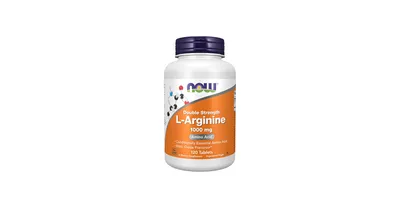
- 1,000mg L-arginine per capsule — flexible dosing 3-6g daily
- Improves nitric oxide pathways for genital blood flow
- Inexpensive — about $0.30-0.60 per day at clinical dose
- Some evidence for combination products with L-citrulline
- GI upset common at 6g+ daily dose
- Can lower blood pressure — caution with antihypertensives
- 600mg fenugreek seed extract per serving
- Standardized to 50% Trigonella saponins
- Emerging evidence in postmenopausal women specifically
- Inexpensive — about $0.15-0.20 per dose
- Maple-syrup-smell side effect (in sweat and urine)
- Caution if on warfarin or anti-platelets
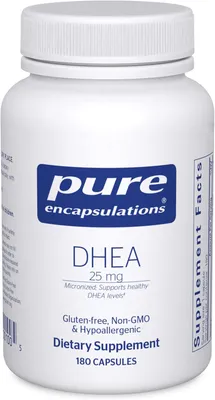
- 25mg DHEA — appropriate physiological dose for postmenopausal women
- Pure Encapsulations' rigorous purity testing
- USP-grade DHEA
- Most-studied DHEA dose for female libido
- Requires medical supervision and baseline hormone testing
- Can elevate testosterone (acne, oily skin, mild facial hair)
- Not for women with breast/ovarian/uterine cancer history without oncology clearance
Frequently Asked Questions
What causes low libido during menopause?
Five main mechanisms, often overlapping. (1) Estrogen decline → vaginal dryness and painful intercourse, which kills desire. This is often the dominant issue and is typically fixable. (2) Testosterone decline → androgens decline 50% from age 30 to age 50 in women; low testosterone reduces sexual desire independently of estrogen. (3) Sleep disruption and chronic fatigue from menopausal night sweats — exhaustion competes with desire. (4) Medications, especially SSRIs and SNRIs (paroxetine, sertraline, venlafaxine) which suppress libido as a class effect. (5) Relationship dynamics and depression — both significant and often unaddressed. The mechanism matters because it determines what intervention works. Vaginal dryness is fixed with vaginal estrogen, not maca. Testosterone deficiency responds to testosterone, not L-arginine. Depression-driven low libido needs depression treatment. Supplements work modestly when matched correctly; they don't work when the issue is something they can't address.
Does maca root actually work for menopause libido?
Modestly, yes — and the evidence is reasonable. A 2008 study in Menopause randomized 14 postmenopausal women to maca 3,500mg daily versus placebo for 6 weeks; the maca group showed significant improvement in psychological symptoms and a non-significant trend toward improved sexual function. Larger trials (Stojanovska et al. 2015 with 29 women, Brooks et al. 2008 with 14 women) replicated improvements in sexual function scores. Effect size is real but modest — maca won't restore libido lost to estrogen decline or vaginal dryness, but it can move the needle for women with mood-driven and energy-driven low desire. Best evidence is for red and black maca specifically; yellow maca (the most common type) has less direct trial support. Take 1,500-3,000mg daily of red or black maca powder or extract for 6-12 weeks before judging.
What about DHEA — is it safe to take for menopause libido?
DHEA can be effective but requires medical supervision. The mechanism: DHEA is an adrenal hormone precursor that the body converts to testosterone and estrogen. Postmenopausal DHEA levels drop significantly; supplementation can restore physiological levels. The evidence: A 2014 meta-analysis found DHEA 25-50mg daily produced modest improvements in sexual function and well-being in postmenopausal women, with stronger effects on libido than on mood. Topical DHEA (Intrarosa, prescription) for vaginal symptoms has more robust evidence than oral. The safety considerations: DHEA can elevate testosterone (causing acne, oily skin, mild facial hair) and estrogen (potentially relevant for hormone-sensitive cancers). Self-supplementing without baseline DHEA-S, testosterone, and estradiol levels means flying blind. The right approach: ask your doctor for a hormone panel; if DHEA-S is below age-appropriate range, discuss DHEA 10-25mg daily as a starting dose with retesting at 3 months. Not for women with breast, ovarian, or uterine cancer history without oncology clearance.
Should I just try testosterone replacement if my libido is the issue?
Increasingly, yes — and it outperforms supplements when libido is the dominant menopause complaint. The evidence for testosterone replacement in women: A 2019 systematic review in The Lancet Diabetes & Endocrinology examined 36 trials and found transdermal testosterone improved sexual function (desire, arousal, orgasm) in postmenopausal women with hypoactive sexual desire disorder. The Endocrine Society and International Menopause Society both endorse cautious use. The catch: there's no FDA-approved testosterone product specifically for women in the US. Compounded transdermal testosterone is widely prescribed off-label by menopause specialists. Dose: typically 1-5mg daily transdermally, targeting upper-quartile premenopausal range. Side effects at appropriate doses are minimal; high doses cause acne, voice changes, mild facial hair. The ideal candidate: postmenopausal woman with low libido as dominant symptom, otherwise stable on HRT or not needing systemic estrogen. Not for women with breast cancer history or unstable cardiovascular disease. Ask a menopause specialist (NAMS-certified) rather than a general internist; comfort level varies widely.
Can I take ashwagandha for menopause libido?
Yes, particularly if your low libido tracks with stress, anxiety, and sleep disruption. The mechanism: ashwagandha (Withania somnifera) reduces cortisol and modulates HPA axis function. For women whose low libido is partly cortisol-driven and stress-pattern-related, reducing the underlying stress physiology indirectly improves desire. Evidence specifically for libido: A 2015 Indian study in 50 women with low desire found ashwagandha 600mg daily produced significant improvements in Female Sexual Function Index scores over 8 weeks. Effect size was modest but real. Mechanism likely indirect — through stress reduction and improved sleep, both of which influence sexual desire. Dose: 600mg KSM-66 standardized extract daily, divided into two 300mg doses. Pair with sleep hygiene work for best effect. Caution if on thyroid medication (ashwagandha can elevate thyroid hormone) or SSRIs (clear with prescribing doctor).
What about vaginal dryness — does that affect libido?
Massively. Vaginal dryness from estrogen decline causes painful intercourse, which kills sexual desire faster than almost any other factor. You cannot fix libido with supplements while intercourse remains painful. Fix the dryness first; then evaluate whether libido needs additional support. The most effective interventions: (1) Vaginal estrogen — cream, tablet, or ring (prescription). The gold standard for genitourinary symptoms of menopause. Effective in 8-12 weeks. Minimal systemic absorption. Generally safe even for women with breast cancer history (with oncology input). (2) Hyaluronic acid vaginal moisturizers (over-the-counter, e.g., Replens). Non-hormonal alternative. (3) DHEA suppositories (Intrarosa, prescription) — local androgen effect, often better for tissue health than estrogen alone. (4) Lubricants for intercourse (water- or silicone-based). Doesn't address tissue health but reduces friction during sex. See our companion guide on [vaginal dryness natural remedies](/learn/womens-health/natural-remedies-vaginal-dryness-menopause/) for the full toolkit. The supplements in this guide work alongside dryness fixes; they don't substitute for them.
Are there supplements I should AVOID for menopause libido?
Five categories to skip. (1) Yohimbe and yohimbine — strong sympathomimetic, raises blood pressure and heart rate, anxiety inducer. Banned or restricted in many countries. (2) High-dose tribulus terrestris — marketed for libido but has minimal female libido evidence and can elevate testosterone unpredictably. (3) DHEA without medical supervision — the right dose depends on your baseline hormones. Self-supplementing 50-100mg daily can disrupt other hormones. (4) Generic 'female enhancement' or 'libido booster' proprietary blends — opaque dosing, untested ingredient combinations, often contain undisclosed pharmaceutical ingredients (FDA periodically issues warnings about contaminated supplements in this category). (5) Horny goat weed (epimedium) at high doses — modest evidence, but cardiovascular concerns at higher doses. Stick to the supplements with real human trial evidence in postmenopausal women: maca, ashwagandha, L-arginine, fenugreek, and (with medical supervision) DHEA.