
Best Fiber Supplements for Adults Over 60 (2026)
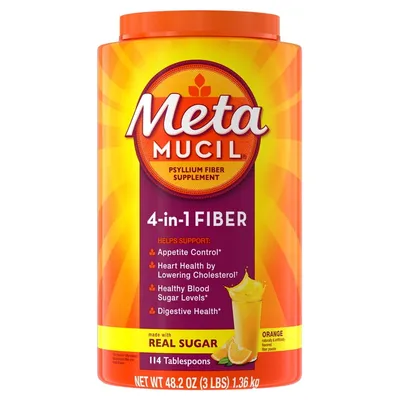
Metamucil Psyllium Fiber
Best overall — the gold standard fiber supplement with the broadest clinical evidence for regularity, cholesterol reduction, and blood sugar management in adults over 60.
- Psyllium husk — the most clinically studied fiber supplement ingredient
- FDA-approved health claim for lowering cholesterol
- Proven to support regularity, blood sugar management, and heart health
The best fiber supplement for most adults over 60 is Metamucil Psyllium Fiber. Psyllium husk is the most clinically studied supplemental fiber, with an FDA-approved health claim for lowering cholesterol and strong evidence for improving regularity and supporting blood sugar management. If gas and bloating are a deal-breaker, Citrucel SmartFiber uses methylcellulose — a non-fermentable fiber that gut bacteria cannot break down — which means significantly less gas while still delivering reliable regularity.
We evaluated these five fiber supplements across six criteria that matter most for adults over 60: fiber type and clinical evidence, effectiveness for regularity, cholesterol and blood sugar impact, gas and bloating potential, taste and mixability, and value per serving. Here is what we found.
Why Fiber Matters More After 60
Constipation is one of the most common digestive complaints after 60. Roughly one in three older adults deals with it regularly, and by age 80 the number is closer to one in two. But fiber is not just about staying regular. It plays a broader role in several health concerns that become more pressing with age.
Constipation and Regularity
Aging slows gut motility — the muscular contractions that move food through your digestive tract. Medications commonly prescribed to older adults (opioid pain medications, calcium channel blockers, iron supplements, certain antidepressants) can slow things down further. Less physical activity and lower fluid intake compound the problem. Fiber adds bulk and water content to stool, making it easier to pass. Soluble fiber like psyllium forms a gel that softens stool, while insoluble fiber adds physical bulk that stimulates the intestinal walls to contract.
Cholesterol Management
Soluble fiber binds to bile acids in the small intestine and carries them out of the body. Your liver then pulls LDL cholesterol from the blood to make replacement bile. This is not a marginal effect. Psyllium at 7+ grams daily can lower LDL cholesterol by 5-10% — enough that some doctors recommend it as a first step before prescribing statins, or as a complement to statin therapy. This is the only fiber type with an FDA-approved heart health claim.
Blood Sugar Control
Soluble fiber slows the rate at which carbohydrates are absorbed from a meal, which reduces the blood sugar spike that follows eating. For adults over 60 managing prediabetes or type 2 diabetes, adding a fiber supplement before meals may help smooth out glucose curves. A meta-analysis published in the American Journal of Clinical Nutrition found that psyllium supplementation significantly reduced fasting blood glucose and HbA1c levels in people with type 2 diabetes.
Diverticular Disease Prevention
Diverticulosis — small pouches that form in the colon wall — affects more than half of adults over 60. While the relationship between fiber and diverticular disease is more nuanced than once thought, adequate fiber intake helps maintain regular bowel movements and reduces the straining that may contribute to diverticula formation. Most gastroenterologists still recommend a high-fiber diet for patients with diverticulosis.
Gut Microbiome Support
Fermentable fibers (psyllium, wheat dextrin, inulin) serve as food for beneficial gut bacteria. This prebiotic effect supports a diverse gut microbiome, which becomes increasingly important as the microbiome naturally loses diversity with age. A healthy gut microbiome supports immune function, nutrient absorption, and may influence inflammation levels throughout the body.
Types of Fiber Explained
Not all fiber is the same, and understanding the differences helps you pick the right supplement for your specific situation.
Soluble vs. Insoluble
Soluble fiber dissolves in water and forms a gel. Psyllium, wheat dextrin, and beta-glucan are soluble fibers. This gel is what slows glucose absorption, binds bile acids for cholesterol reduction, and softens stool. Most fiber supplements are soluble fiber.
Insoluble fiber does not dissolve in water. It adds physical bulk to stool and stimulates the intestinal walls to push food through. Wheat bran and cellulose are insoluble fibers. You get insoluble fiber primarily from whole grains, vegetables, and fruit skins rather than supplements.
Fermentable vs. Non-Fermentable
This distinction matters enormously for gas and bloating.
Fermentable fibers are broken down by bacteria in your large intestine. Psyllium, wheat dextrin (Benefiber), inulin, and most plant-based fibers are fermentable. The fermentation process produces short-chain fatty acids (beneficial for colon health) but also produces gas. This is why new fiber users often experience bloating.
Non-fermentable fibers pass through the gut without being broken down by bacteria. Methylcellulose (Citrucel) is the primary non-fermentable fiber supplement. No bacterial fermentation means no gas production. The trade-off: non-fermentable fibers do not feed beneficial gut bacteria, so you miss the prebiotic benefit.
Prebiotic Fiber
Prebiotic fibers specifically promote the growth of beneficial bacterial species like Bifidobacterium and Lactobacillus. Psyllium has prebiotic properties, as do inulin and wheat dextrin. If supporting your gut microbiome is a priority alongside regularity, a fermentable fiber serves double duty. If gas is your main concern, a non-fermentable option like methylcellulose is the practical choice — you can support your microbiome through fermented foods and probiotics instead.
How We Evaluated
Fiber Type and Clinical Evidence
We prioritized fiber types with published clinical trials in older adults. Psyllium husk has the deepest evidence base — hundreds of studies spanning decades, including an FDA-approved health claim for cholesterol reduction. Methylcellulose has solid evidence for regularity but less data for systemic health benefits. Wheat dextrin and organic blends have fewer dedicated clinical trials.
Effectiveness for Regularity
All five products improve regularity when taken consistently with adequate water. We looked at fiber dose per serving, fiber type, and speed of onset. Psyllium-based products (Metamucil, NOW) and methylcellulose (Citrucel) performed strongest here.
Gas and Bloating Potential
This is the number one reason people abandon fiber supplements. We rated each product based on its fermentability, user reports, and clinical data on gastrointestinal tolerance. Citrucel scored highest for tolerability; Metamucil and NOW scored lowest due to psyllium’s fermentable nature (though this improves with gradual dose increases).
Taste and Mixability
A fiber supplement you hate drinking is a fiber supplement you will stop taking. We assessed flavor, texture, dissolution speed, and versatility (can you add it to things other than water?). Benefiber excels here — truly invisible in any liquid. Garden of Life struggles — gritty and earthy.
Added Ingredients
Some products include probiotics, omega-3s, or prebiotic additions. Others include sugar, artificial sweeteners, and dyes. We noted both beneficial additions and concerning ones.
Value Per Serving
We calculated the cost per effective dose, not just per serving. A product with 3 grams of fiber per serving at $0.20 is not necessarily cheaper than one with 6 grams per serving at $0.35 if you need two scoops of the first product to match the second.
Our Top Picks
Best Overall: Metamucil Psyllium Fiber
Metamucil has earned its place as the default recommendation from doctors and pharmacists for good reason. The active ingredient — psyllium husk — has the most clinical evidence of any supplemental fiber. It improves regularity, lowers LDL cholesterol at therapeutic doses (7+ grams daily), helps manage post-meal blood sugar spikes, and feeds beneficial gut bacteria.
What’s in it: Psyllium husk fiber (approximately 5-6 grams of fiber per serving depending on the format). The powder versions contain sugar or stevia plus natural orange or berry flavoring and citric acid. The capsule version contains only psyllium husk and a gelatin capsule.
Evidence level: Psyllium has been studied in hundreds of clinical trials. The FDA has approved a qualified health claim: “Diets low in saturated fat and cholesterol that include 7 grams of soluble fiber per day from psyllium husk may reduce the risk of heart disease.” Multiple meta-analyses confirm its benefits for regularity, cholesterol reduction, and glycemic control.
Dose: One rounded tablespoon of powder (or 5 capsules) mixed with 8 ounces of water, 1-3 times daily. Start with one serving per day for the first week.
Who it’s best for: Adults over 60 who want a fiber supplement with the broadest range of proven health benefits — regularity, cholesterol management, and blood sugar support in one product. Particularly valuable if your doctor has suggested dietary changes for cholesterol or prediabetes and you want to start with a fiber supplement before or alongside medication.
Important: Drink the powder immediately after mixing. Psyllium absorbs water rapidly and will thicken into a gel within 30-60 seconds if you wait. Always take with a full glass of water. If you find the texture unbearable, switch to capsules — you get the same psyllium without the gel experience, though you need to swallow 5 large capsules per dose.
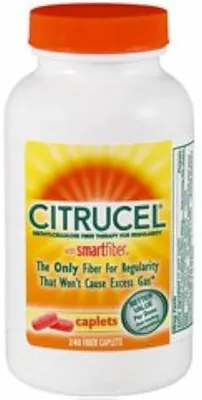
Best for Sensitive Stomachs: Citrucel SmartFiber
If you have tried Metamucil or other fiber supplements and experienced uncomfortable gas, bloating, or cramping, Citrucel addresses that problem directly. Methylcellulose is a semi-synthetic fiber derived from cellulose (plant cell walls) that has been chemically modified to dissolve in water. The key difference: gut bacteria cannot ferment it.
When bacteria ferment psyllium or wheat dextrin in your colon, they produce hydrogen and methane gas. That is the bloating and flatulence that makes some people give up on fiber supplements entirely. Methylcellulose passes through the gut intact, absorbing water and adding bulk to stool, without producing gas along the way.
What’s in it: Methylcellulose fiber (2 grams per serving in powder form). The flavored powder contains citric acid, orange flavoring, and sucralose. The caplet form contains only methylcellulose.
Evidence level: Methylcellulose is well-established for constipation relief and regularity. Clinical studies confirm that it is better tolerated than psyllium in terms of gas and bloating. It does not have an FDA-approved cholesterol health claim, and the evidence for blood sugar management is less robust than psyllium.
Dose: One level scoop of powder in 8 ounces of cold water, up to 3 times daily. Or 2-4 caplets with 8 ounces of water, up to 6 times daily.
Who it’s best for: Seniors with IBS, diverticulosis, or anyone who experiences significant gas and bloating from other fiber types. Also a good choice if you take fiber primarily for regularity and constipation prevention rather than for cholesterol or blood sugar management.
Trade-off to understand: Because methylcellulose is non-fermentable, it does not feed your beneficial gut bacteria. You sacrifice the prebiotic benefit for comfort. If gut microbiome support matters to you, consider pairing Citrucel with a probiotic supplement or increasing fermented foods in your diet.
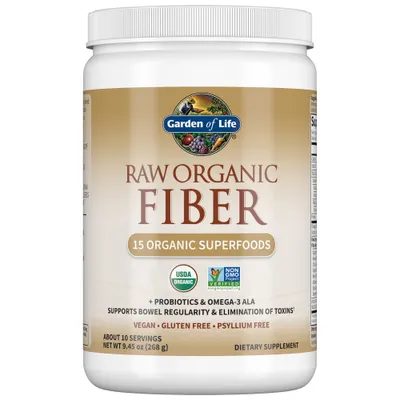
Best Organic: Garden of Life Raw Organic Fiber
Garden of Life takes a fundamentally different approach to fiber supplementation. Instead of a single isolated fiber type, this product blends organic fibers from 15 raw superfoods — including flax seeds, chia seeds, sprouted grains, and legumes — plus adds probiotics and omega-3 fatty acids.
The idea is that whole food fiber provides a broader nutritional profile than isolated psyllium or methylcellulose. You get both soluble and insoluble fiber, along with the vitamins, minerals, and plant compounds naturally present in the source foods. The added probiotics (Lactobacillus plantarum, Lactobacillus bulgaricus, and others) support gut health alongside the fiber.
What’s in it: 9 grams of fiber per serving from organic flax meal, organic chia seed, organic sprouted adzuki bean, organic sprouted amaranth, organic sprouted buckwheat, organic sprouted millet, organic sprouted quinoa, and other raw organic ingredients. Also includes 1.5 billion CFU of probiotics and omega-3 fatty acids from flax and chia.
Evidence level: The individual fiber sources (flax, chia, legumes) each have published evidence supporting digestive health and regularity. However, this specific blend has not been studied as a whole in the way psyllium has been studied. The evidence is extrapolated from the components rather than the finished product. The probiotic strains and doses are modest.
Dose: One tablespoon mixed into water, juice, or a smoothie. Can be taken 1-3 times daily.
Who it’s best for: Health-conscious seniors who prefer organic, whole-food-based supplements and want fiber along with complementary nutrients. Best when mixed into a morning smoothie where the gritty texture is masked by other ingredients.
Heads up on texture: This does not dissolve cleanly. It creates a gritty, thick mixture in water that some people find difficult to drink. Mixing it into oatmeal, yogurt, or a smoothie is a much better experience than stirring it into a glass of water.
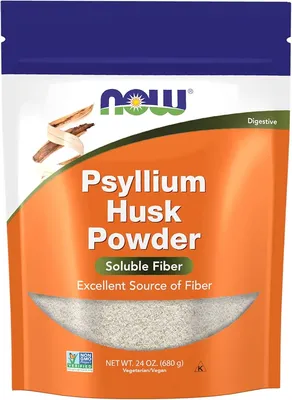
Best Value: NOW Foods Psyllium Husk Powder
NOW Psyllium Husk Powder is pure psyllium husk in a bag — nothing else. No sugar, no artificial flavors, no sweeteners, no orange dye. If Metamucil is the branded version with the marketing budget, NOW is the generic equivalent at roughly half the price.
The clinical evidence is identical because the active ingredient is the same: psyllium husk. You get the same cholesterol-lowering potential, the same blood sugar management benefits, and the same regularity improvement. The only differences are taste (unflavored vs. orange), convenience (bag with scoop vs. pre-measured packets), and price.
What’s in it: Psyllium husk powder. That is it. 7 grams of fiber per tablespoon serving. Non-GMO Project Verified.
Evidence level: Same as Metamucil — this is the same ingredient. All the clinical evidence for psyllium husk applies equally to this product.
Dose: One level tablespoon stirred briskly into 12 ounces of liquid, 1-3 times daily.
Who it’s best for: Seniors who are comfortable measuring their own doses and do not need flavoring to make fiber palatable. If you plan to add fiber to smoothies, oatmeal, or baking, the unflavored powder is actually more versatile than Metamucil. It is also the clear choice if you want to avoid added sugars, artificial sweeteners, and additives.
Cost comparison: At roughly $10 for about 47 servings (at the recommended dose), NOW costs approximately $0.21 per serving compared to Metamucil at roughly $0.40-0.50 per serving. Over a year of daily use, that is a savings of approximately $70-100.
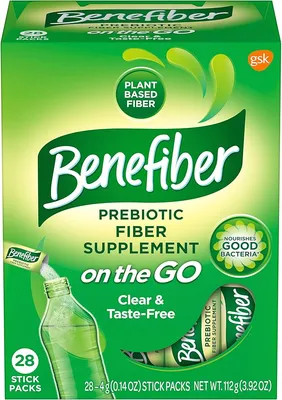
Best for Mixing: Benefiber Original
Benefiber’s single greatest advantage is that it disappears. Completely. Wheat dextrin dissolves fully in any liquid without changing the taste, color, texture, or viscosity. You can stir it into your morning coffee, afternoon tea, soup, juice, or water and never know it is there.
This sounds trivial, but for many people it is the difference between taking fiber daily and abandoning it after a week. If you cannot stand the thick gel of Metamucil or the grittiness of Garden of Life, Benefiber removes every sensory barrier to consistency.
What’s in it: Wheat dextrin (3 grams of fiber per two-teaspoon serving). The Original formula contains only wheat dextrin — no sugar, no flavoring, no artificial ingredients.
Evidence level: Wheat dextrin has published studies supporting its role in regularity and as a prebiotic fiber that feeds beneficial gut bacteria. The evidence base is smaller than psyllium, and there is no FDA-approved cholesterol claim. Wheat dextrin does have some evidence for modest blood sugar management, but the effect is less pronounced than psyllium at comparable doses.
Dose: Two teaspoons stirred into any liquid or soft food, up to 3 times daily.
Who it’s best for: Seniors who have tried and rejected other fiber supplements because of taste or texture. Also a good option for people who want to add fiber to their routine without changing any habits — you stir it into what you already drink and forget about it.
The catch: At 3 grams of fiber per serving, Benefiber delivers roughly half the fiber per dose of Metamucil (5-6 grams) or NOW (7 grams). You would need two servings to match one serving of a psyllium product. This means the cost per gram of fiber is higher than it appears, and reaching a therapeutic dose for cholesterol management requires more servings per day.
Metamucil vs. Benefiber vs. Citrucel
These three brands dominate the pharmacy shelf, and the “which one should I buy?” question comes up constantly. Here is the direct comparison.
Metamucil (psyllium husk) gives you the widest range of benefits: regularity, cholesterol reduction, blood sugar management, and prebiotic gut support. The trade-off is taste and gas. The orange powder has a thick, gel-like texture that you either tolerate or hate. Gas and bloating are common in the first 1-2 weeks. If you can push through the adjustment period, it is the most effective all-around option.
Benefiber (wheat dextrin) gives you the easiest experience: no taste, no texture, invisible in any drink. It is a solid fiber for regularity and has prebiotic benefits. But it delivers less fiber per serving (3g vs. 5-6g), has weaker evidence for cholesterol and blood sugar management, and still causes some gas because wheat dextrin is fermentable. Not suitable for people with wheat or gluten sensitivities.
Citrucel (methylcellulose) gives you the gentlest experience: effective for regularity with minimal gas and bloating because methylcellulose is non-fermentable. It is the best choice for IBS and other conditions where gas is a significant problem. The trade-off: no prebiotic benefit, limited cholesterol evidence, and less data on blood sugar management.
The practical decision:
If you want the most health benefits and can handle some initial gas: Metamucil (or NOW for the same fiber at lower cost).
If gas and bloating are the main reason you avoid fiber: Citrucel.
If taste and texture are the main reason you do not take fiber: Benefiber.
If cholesterol is a primary concern: Metamucil — it is the only one with an FDA-approved heart health claim at therapeutic doses.
How to Start Fiber Supplements Without Misery
The number one mistake people make with fiber supplements is starting at the full recommended dose on day one. This is a recipe for gas, bloating, cramping, and a strong desire to throw the entire container in the trash.
Week 1: Half Dose, Once Daily
Start with half the recommended serving, once per day. For Metamucil, that means half a tablespoon instead of a full one. For Benefiber, one teaspoon instead of two. Take it at the same time each day — morning with breakfast works for most people.
Week 2: Full Dose, Once Daily
If the first week went smoothly, move to the full recommended serving, still once per day. Most people notice improved regularity by this point. If gas is still significant, stay at half dose for another week before increasing.
Week 3 and Beyond: Increase If Needed
If your doctor or health goals require more fiber (for example, reaching 7+ grams daily for cholesterol management), you can add a second serving at a different meal. Continue increasing gradually — your gut bacteria need time to adapt to the increased fiber, and rushing the process causes the misery that makes people quit.
The Water Rule — Non-Negotiable
Every single dose of fiber supplement must be taken with at least 8 ounces of water. This is not a suggestion. Fiber absorbs water. Without enough fluid, fiber can compact in your intestines and actually worsen constipation — the exact opposite of what you want. In rare cases, taking concentrated fiber (especially psyllium) without adequate water can cause esophageal or intestinal blockage.
Drink the full glass of water with your fiber, and aim for an additional 4-6 glasses of water throughout the day. If you are not a habitual water drinker, increasing fiber without increasing water intake will backfire.
Timing Around Medications
Fiber can bind to medications in your digestive tract and reduce their absorption. This is especially relevant for:
- Thyroid medications (levothyroxine) — take on an empty stomach, at least 1 hour before fiber
- Diabetes medications (metformin, glipizide) — separate by 2 hours
- Heart medications (digoxin) — separate by 2 hours
- Antidepressants (tricyclics) — separate by 2 hours
- Lithium — separate by 2 hours
The simple rule: take your medications at least 1-2 hours before or after your fiber supplement. If you take multiple medications at different times, ask your pharmacist to help you build a daily schedule that keeps fiber safely separated from everything.
Frequently Asked Questions
How much fiber do adults over 60 need daily? The recommended daily intake is 25-30 grams for adults over 60. Most Americans get about 15 grams per day — roughly half what they need. A fiber supplement can close this gap, but it should add to the fiber you get from food (fruits, vegetables, whole grains, legumes), not replace it. Food fiber comes with vitamins, minerals, and phytonutrients that supplements cannot replicate. Aim to get as much fiber as you can from meals, then use a supplement to cover the shortfall.
Will fiber supplements cause gas and bloating? It depends on the type of fiber. Soluble fermentable fibers like psyllium, inulin, and wheat dextrin are broken down by gut bacteria, which produces gas as a byproduct. This is most noticeable when you start supplementing or increase your dose too quickly. Methylcellulose (Citrucel) is non-fermentable — bacteria cannot break it down — so it causes significantly less gas and bloating. If you choose a fermentable fiber, start with half the recommended dose and increase gradually over 2-3 weeks. Your gut bacteria adjust, and the gas usually subsides.
Can fiber supplements help with cholesterol? Yes — psyllium specifically has an FDA-approved heart health claim. At doses of 7 grams or more per day, psyllium husk can lower LDL cholesterol by 5-10%. It works by binding to bile acids in the intestine, forcing your liver to pull cholesterol from the blood to make more bile. This is a well-established mechanism with strong clinical evidence. Other fiber types may have modest cholesterol effects, but psyllium has the most robust data and the only FDA-approved claim.
Should I take fiber before or after meals? For blood sugar management, taking fiber 15-30 minutes before a meal may help slow glucose absorption from that meal. For general regularity and cholesterol benefit, the timing matters less — consistency is more important than when you take it. What always matters is water. Take every dose of fiber with at least 8 ounces of water, and drink plenty of fluids throughout the day. Fiber without adequate water can cause constipation or, in rare cases, intestinal blockages.
Can fiber supplements interfere with medications? Yes — this is an important consideration for seniors taking multiple medications. Fiber can bind to certain drugs in your digestive tract and reduce their absorption. Common medications affected include thyroid hormones (levothyroxine), certain antidepressants, lithium, digoxin, and some diabetes medications. The simple rule: take your medications at least 1-2 hours before or after your fiber supplement. Consult your pharmacist if you take multiple medications — they can help you map out a safe timing schedule.
The Bottom Line
Fiber is one of the simplest, cheapest, and most evidence-backed supplements you can add to your daily routine after 60. The majority of older adults do not get enough of it, and the consequences — constipation, higher cholesterol, poor blood sugar control, reduced gut diversity — are all addressable with a $10-20 monthly investment and a glass of water.
Metamucil Psyllium Fiber is our top pick because psyllium husk has the deepest clinical evidence for the widest range of benefits: regularity, cholesterol reduction (FDA-approved claim at 7+ grams daily), blood sugar management, and prebiotic gut support. If you want the same psyllium at a lower price and without the orange flavoring, NOW Foods Psyllium Husk Powder delivers identical benefits for roughly half the cost.
If gas and bloating are the reason you have avoided fiber supplements in the past, Citrucel SmartFiber is the clear choice — methylcellulose does the regularity job without producing gas. If taste and texture are your barriers, Benefiber Original dissolves invisibly into any drink. And if you prefer a whole-food, organic approach with added probiotics, Garden of Life Raw Organic Fiber is the most nutrient-dense option.
Whichever you choose: start with half the recommended dose, increase gradually over 2-3 weeks, drink plenty of water with every dose, and take your fiber at least 1-2 hours away from medications. Consult your doctor before starting a fiber supplement if you have diverticulitis (not diverticulosis — the inactive form is generally fine with fiber), a history of bowel obstruction, or difficulty swallowing.
For related reading, see our guides on Best Probiotics for Seniors and Best Digestive Enzymes for Seniors.
All Products We Reviewed
- Psyllium husk — the most clinically studied fiber supplement ingredient
- FDA-approved health claim for lowering cholesterol
- Proven to support regularity, blood sugar management, and heart health
- Available in powder, capsule, and fiber thins for flexible dosing
- Decades of clinical use and safety data in older adults
- Can cause gas and bloating initially, especially at full dose
- Orange-flavored powder contains sugar and artificial flavoring
- Thick, gel-like texture in water that some people find unpleasant
- Must drink immediately after mixing — thickens rapidly
- Methylcellulose — non-fermentable fiber that causes significantly less gas
- Gentle on sensitive digestive systems
- Does not form a thick gel like psyllium — easier to drink
- Good option for IBS sufferers who cannot tolerate fermentable fibers
- No FDA-approved cholesterol claim — less evidence for heart health
- Less clinical evidence overall compared to psyllium
- Does not feed beneficial gut bacteria (non-prebiotic)
- Slightly less effective for blood sugar management than psyllium
- Organic fiber blend from 15 raw superfoods
- Includes probiotics and omega-3s alongside fiber
- No psyllium — uses flax, chia, and sprouted seeds instead
- USDA Organic, Non-GMO Project Verified, vegan
- Provides both soluble and insoluble fiber
- Gritty texture that does not dissolve completely — takes getting used to
- Multiple ingredients mean more potential for digestive sensitivity
- Higher price per serving than single-ingredient fibers
- Taste is earthy — best mixed into smoothies rather than water
- Pure psyllium husk — no additives, sugar, or artificial flavors
- Best value on this list at roughly half the price of Metamucil
- Same active ingredient and clinical evidence base as Metamucil
- Unflavored — can be added to smoothies, oatmeal, or baking
- Non-GMO Project Verified
- Unflavored means it tastes like, well, psyllium husk
- No pre-measured packets — requires a measuring spoon
- Same gas and bloating potential as any psyllium product
- Powder only — no capsule option in this product line
- Wheat dextrin dissolves completely — truly tasteless and invisible in drinks
- Easiest fiber to incorporate into daily routine without changing habits
- Can be mixed into coffee, juice, soup, or any liquid
- No gritty texture, no thickening, no flavor change
- Lower fiber per serving (3g) compared to Metamucil (5-6g)
- Less clinical evidence than psyllium for cholesterol and blood sugar
- Not suitable for people with wheat or gluten sensitivities
- May still cause some gas — wheat dextrin is fermentable
Frequently Asked Questions
How much fiber do adults over 60 need daily?
The recommended daily intake is 25-30 grams for adults over 60. Most Americans get about 15 grams per day — roughly half what they need. A fiber supplement can close this gap, but it should add to the fiber you get from food (fruits, vegetables, whole grains, legumes), not replace it. Food fiber comes with vitamins, minerals, and phytonutrients that supplements cannot replicate. Aim to get as much fiber as you can from meals, then use a supplement to cover the shortfall.
Will fiber supplements cause gas and bloating?
It depends on the type of fiber. Soluble fermentable fibers like psyllium, inulin, and wheat dextrin are broken down by gut bacteria, which produces gas as a byproduct. This is most noticeable when you start supplementing or increase your dose too quickly. Methylcellulose (Citrucel) is non-fermentable — bacteria cannot break it down — so it causes significantly less gas and bloating. If you choose a fermentable fiber, start with half the recommended dose and increase gradually over 2-3 weeks. Your gut bacteria adjust, and the gas usually subsides.
Can fiber supplements help with cholesterol?
Yes — psyllium specifically has an FDA-approved heart health claim. At doses of 7 grams or more per day, psyllium husk can lower LDL ('bad') cholesterol by 5-10%. It works by binding to bile acids in the intestine, forcing your liver to pull cholesterol from the blood to make more bile. This is a well-established mechanism with strong clinical evidence. Other fiber types may have modest cholesterol effects, but psyllium has the most robust data and the only FDA-approved claim.
Should I take fiber before or after meals?
For blood sugar management, taking fiber 15-30 minutes before a meal may help slow glucose absorption from that meal. For general regularity and cholesterol benefit, the timing matters less — consistency is more important than when you take it. What always matters is water. Take every dose of fiber with at least 8 ounces of water, and drink plenty of fluids throughout the day. Fiber without adequate water can cause constipation or, in rare cases, intestinal blockages.
Can fiber supplements interfere with medications?
Yes — this is an important consideration for seniors taking multiple medications. Fiber can bind to certain drugs in your digestive tract and reduce their absorption. Common medications affected include thyroid hormones (levothyroxine), certain antidepressants, lithium, digoxin, and some diabetes medications. The simple rule: take your medications at least 1-2 hours before or after your fiber supplement. Consult your pharmacist if you take multiple medications — they can help you map out a safe timing schedule.