
Best Supplements for Jet Lag After 50 (2026)
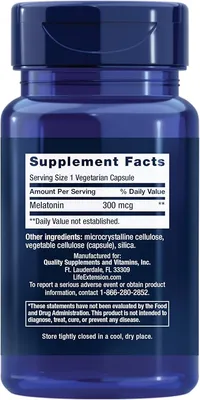
Life Extension Melatonin 300 mcg
Best overall — the right physiological dose at a low price. The Zhdanova 2001 Sleep study used this exact dose; clinical evidence supports it specifically. Default melatonin for adults over 50.
- 0.3mg (300mcg) dose — the Zhdanova clinical research dose
- Quick-dissolve tablets; can split for even lower dose if needed
- Low price for 100-count bottle
The most-bought melatonin doses in U.S. retail (3mg, 5mg, 10mg) are wrong for adults over 50 trying to manage jet lag. The clinical research that established melatonin’s circadian-shifting effects used 0.3-0.5mg doses; the high-dose retail products reflect manufacturing convenience, not evidence.
This guide explains the right dose, the protocol for east-bound vs. west-bound travel, and the supplements that pair with low-dose melatonin to handle the full jet-lag stack.
The 30-second answer
- Best overall melatonin: Life Extension Melatonin 300mcg — the right physiological dose.
- Best for sensitive users: Pure Encapsulations Melatonin 0.5mg — hypoallergenic, slightly higher dose.
- Best for dose customization: Source Naturals Melatonin Liquid Sublingual — adjust by drop.
- Add magnesium glycinate: Pure Encapsulations Magnesium Glycinate 200-400mg evening — calming, muscle relaxation.
- Add L-theanine: NOW Foods L-Theanine 200mg — non-sedating travel-day calming.
- East-bound protocol: Start 1-3 nights before, shift bedtime earlier nightly.
- West-bound protocol: Nothing on travel night, melatonin 2-3 nights after arrival if still waking too early.
- Skip: 5mg melatonin, alcohol on flights, prescription sedatives without specific authorization.
Now the detail.
The dose problem
Most U.S. retail melatonin is 3mg, 5mg, or 10mg per tablet. These doses overshoot physiological melatonin levels by 10-40x in adults over 50.
Endogenous melatonin in young adults peaks overnight at about 60-80 picograms per milliliter. A 5mg supplemental dose typically produces blood levels of 1,000-2,000 picograms per milliliter — far beyond receptor occupancy needs.
Adults over 50 metabolize melatonin more slowly than younger adults. The same 5mg dose stays elevated in the bloodstream longer, prolonging the next-day effects.
The actual clinical research — Zhdanova at MIT, published in Sleep (2001), and multiple follow-up studies — used 0.3mg doses and demonstrated sleep-onset benefits comparable to higher doses without the side effects.
Side effects of overdosing melatonin in older adults include morning grogginess, vivid dreams (often unpleasant), low-mood next-day effects, paradoxical sleep disruption in subsequent nights, and headaches.
The fix is simple: take 0.3-0.5mg, not 5mg. If your existing melatonin bottle is 3mg or higher, either replace it or take a quarter of the tablet (cutting tablets is easier than splitting capsules).
East-bound protocol (the hard direction)
East-bound travel requires advancing your sleep phase — going to bed earlier. The body resists advancing more than 1-2 hours per night, so this is the direction that produces the most jet lag.
1-3 nights before departure:
- Shift bedtime 1 hour earlier each night
- Take 0.3-0.5mg melatonin one hour before target sleep time
Travel night:
- Once you’ve arrived, take 0.3-0.5mg melatonin at the target time-zone bedtime
- Avoid screens, dim lights, prepare for sleep at destination time even if you’re not tired
2-4 nights after arrival:
- Continue melatonin 0.3-0.5mg at target bedtime
- Get morning sunlight from day 1 (anchors your circadian rhythm to new time)
- Eat at destination meal times even if not hungry
- Avoid napping more than 30 minutes after 2pm destination time
West-bound protocol (the easier direction)
West-bound travel requires delaying your sleep phase — staying up later. The body tolerates this more easily, so jet lag is usually milder.
Travel night:
- Don’t take melatonin on travel night — let yourself stay up later naturally
- Stay hydrated (8oz water per hour on flight, plus 1 LMNT or electrolyte serving)
- Caffeine at destination morning hours, none in destination afternoon
2-3 nights after arrival:
- If you’re waking too early (3-4am destination time), take 0.3mg melatonin at target bedtime
- Get evening light exposure at destination to delay your clock
- Eat at destination evening meal times
For most adults, west-bound jet lag resolves within 2-3 days of arrival without specific intervention beyond light, meals, and hydration.
The full travel sleep stack
Low-dose melatonin (0.3-0.5mg) at target bedtime — the circadian-shifting backbone.
Magnesium glycinate (200-400mg) 1-2 hours before bedtime — calming, muscle relaxation, supports GABA pathways. Take year-round, not just for travel.
L-theanine (200mg) as needed for travel-day anxiety, cabin discomfort, or pre-flight nerves — non-sedating, takes 30-60 minutes to take effect.
Hydration baseline — long flights are dehydrating; cabin pressure equivalent to 6,000-8,000 feet altitude amplifies fatigue. 8oz water per hour minimum, plus 1 electrolyte serving (LMNT, Re-Lyte) per 4-hour flight segment.
What to skip
5mg+ melatonin. Overshoots physiological levels in older adults. Causes grogginess, vivid dreams, paradoxical sleep disruption. If your current bottle is 3-10mg, replace or split.
Melatonin-with-caffeine combinations. Some “jet lag” products combine melatonin (to help you sleep on flight) with caffeine (to help you wake at destination). The combination defeats the purpose of both — caffeine half-life of 5-6 hours means daytime doses linger into evening when you need melatonin to work.
Alcohol as a sleep aid on planes. Disrupts REM sleep, dehydrates further, amplifies depressant effects at altitude, interacts with medications, disrupts melatonin signaling. One of the worst sleep aids available. Limit to one drink if you drink at all on a flight.
Prescription sedative-hypnotics without specific authorization. Zolpidem (Ambien), eszopiclone (Lunesta), and similar are on the Beers Criteria for adults over 65. Increased fall risk in unfamiliar hotels, anterograde amnesia, next-day cognitive impairment, sleep-walking risk. If your doctor specifically authorized prescription sleep medication for travel use, follow that — but don’t borrow medication from a spouse.
Diphenhydramine (Benadryl, ZzzQuil, Tylenol PM). First-generation antihistamine; on the Beers Criteria for adults over 65 due to anticholinergic burden (cognitive impairment, falls, urinary retention) and association with long-term dementia risk in cumulative users. Don’t use as a routine sleep aid at any time — including travel.
Behavioral basics that supplements amplify
Light exposure. Morning sun at destination = strong “wake up” signal to circadian system. Evening dim lighting at destination = strong “sleep soon” signal. East-bound travel needs morning light; west-bound needs evening light.
Meal timing. Eating at destination meal times entrains peripheral organ clocks even before central circadian rhythm catches up. The “food clock” works independently of light.
Brief naps under 30 minutes. Short naps can reduce sleep pressure without disrupting nighttime sleep. Naps over 60 minutes risk REM sleep that interferes with overnight sleep.
Hydration. Cabin air is desiccating; dehydration mimics and amplifies jet lag fatigue.
Compression stockings on long flights. Reduce DVT risk and lower-leg swelling, particularly relevant for adults over 50.
When jet lag warrants medical attention
Most jet lag resolves within 1-7 days depending on direction and time zones crossed. See your doctor if:
- Sleep disruption lasts more than 10-14 days after a moderate-zones trip
- You develop new heart palpitations, chest discomfort, or breathing changes
- You develop new daytime cognitive complaints that persist past normal jet-lag window
- Persistent insomnia at home base unrelated to travel — likely a separate sleep disorder, not jet lag
- New depression or significant mood changes that persist beyond the trip
The simple rule
Low-dose melatonin (0.3-0.5mg, NOT 5mg), magnesium glycinate, and L-theanine cover the supplement side. Light timing, meal timing at destination, hydration, and avoiding alcohol and prescription sedatives cover the behavioral side. Combined, this protocol gets adults over 50 through transatlantic and transpacific travel meaningfully faster and with much less next-day impairment than either intervention alone.
For the broader summer playbook, see our best supplements for summer over 50 pillar guide. For travel-immune support, see our best immune supplements for summer travel guide.
All Products We Reviewed
- 0.3mg (300mcg) dose — the Zhdanova clinical research dose
- Quick-dissolve tablets; can split for even lower dose if needed
- Low price for 100-count bottle
- Reliable brand for low-dose specialty supplements
- Must check label carefully — Life Extension also sells 1mg, 3mg, 5mg versions; the 300mcg is the right one
- Quick-dissolve format requires keeping under tongue 60-90 seconds
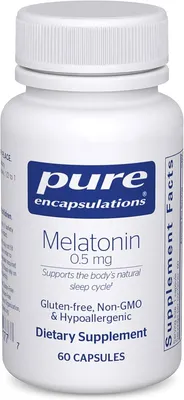
- 0.5mg dose — slightly higher than Life Extension 300mcg but still in physiological range
- Hypoallergenic formulation (no gluten, soy, dairy, GMOs, additives)
- Reliable physician-line manufacturing standards
- Useful if 0.3mg feels too low; this is the next step up without overshooting
- Higher price than Life Extension equivalent
- Capsule format; can't be split as easily as Life Extension tablets
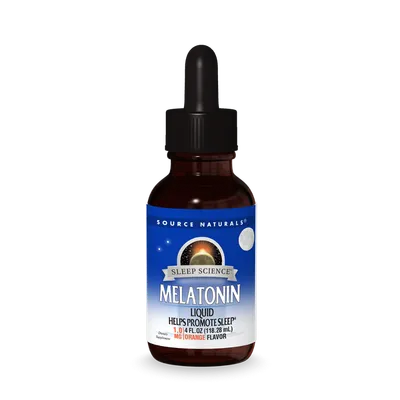
- Liquid dropper allows precise dose adjustment (1mg per dropper, can dose 0.25-1mg)
- Sublingual absorption faster than oral tablets
- Best for users who want to titrate dose by drop
- Travel-friendly small bottle
- Alcohol-based; slight burn under tongue
- Must measure carefully; easier to overshoot than tablet

- 120mg elemental magnesium glycinate per capsule (2 capsules = 240mg standard dose)
- Glycinate form: well-absorbed, no laxative effect, calming via glycine amino acid
- Hypoallergenic, third-party tested
- Safe for daily year-round use as sleep/muscle baseline
- Need 2-3 capsules for therapeutic dose — pill burden if you take other supplements
- Premium pricing for magnesium category
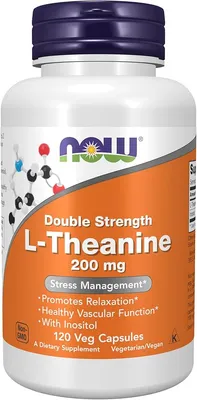
- 200mg L-theanine — calming amino acid found in green tea
- Reduces travel-day anxiety without sedation
- Useful for daytime cabin discomfort if anxiety is part of travel
- Low price, GMP-certified
- Effect is mild — best for mild-to-moderate anxiety, not severe flight phobia
- Not a sleep aid on its own; pairs with melatonin or magnesium for sleep
Frequently Asked Questions
Why are standard 5mg melatonin tablets the wrong dose for adults over 50?
Three reasons. (1) Endogenous melatonin levels in young adults peak at about 60-80 picograms per milliliter overnight. A 5mg supplemental dose typically produces blood levels of 1,000-2,000 picograms per milliliter — about 20-40 times physiological levels. This overshoots the receptors melatonin acts on, can cause receptor downregulation, and produces the morning grogginess, vivid dreams, and paradoxical sleep disruption many users experience. (2) Adults over 50 metabolize melatonin more slowly than younger adults. The same 5mg dose stays elevated in the bloodstream longer, prolonging the next-day effects. (3) The original clinical research on melatonin for sleep — Zhdanova at MIT, published in Sleep (2001) — used 0.3mg doses and demonstrated sleep-onset benefits comparable to higher doses without the side-effect burden. The 3mg, 5mg, and 10mg products that dominate retail shelves reflect manufacturing convenience and consumer assumption that 'more is more,' not clinical evidence. For adults over 50, 0.3-0.5mg at target bedtime is consistently the best-evidence dose.
How should I time melatonin for east-bound vs. west-bound travel?
Direction matters because of how circadian rhythm shifts. East-bound travel (e.g., New York to Paris) requires advancing your sleep phase — going to bed earlier. This is harder for most people; the body resists advancing more than 1-2 hours per night. West-bound travel (Paris to New York) requires delaying your sleep phase — staying up later — which the body tolerates more readily. (1) East-bound protocol: Start 1-3 nights before departure. Each night, shift bedtime 1 hour earlier and take 0.3-0.5mg melatonin one hour before target sleep time. On the travel night, take melatonin at the target time-zone bedtime once you've arrived. Continue for 2-4 nights after arrival. Get morning sunlight at destination from day 1 to anchor the new schedule. (2) West-bound protocol: Don't take anything on the travel night — let yourself stay up later naturally. Starting 2-3 nights after arrival, take 0.3mg melatonin at target bedtime if you're still waking too early. Get evening light at destination to delay your internal clock. (3) For trips under 3 time zones, the body usually adjusts in 1-2 nights regardless of intervention. (4) For trips over 5 time zones, recovery can take 5-7 days even with optimal protocol — the supplement accelerates but doesn't eliminate jet lag.
Does magnesium glycinate actually help with jet lag or just regular sleep?
Both, with jet-lag-specific benefits. Magnesium glycinate (200-400mg evening dose) has three jet-lag-relevant effects: (1) Calming and muscle-relaxant — reduces the physical tension and restless-legs feeling that often accompanies long flights and dehydration. (2) Supports GABA receptor function — modestly enhances the sleep-promoting neurotransmitter pathway, which complements melatonin's circadian-shifting effect. (3) Glycine itself (the amino acid form magnesium glycinate provides) has independent sleep benefits in some studies — modest reductions in sleep onset latency. The glycinate form is specifically chosen because it's well-absorbed without the laxative effect of magnesium citrate or oxide — important for travel when GI predictability matters. Take 1-2 hours before bedtime. Magnesium glycinate is also safe to continue daily year-round; many adults over 50 take it as a general sleep and muscle-relaxation supplement, which makes adding it for travel a continuation of an existing baseline rather than a new intervention. The combination of low-dose melatonin + magnesium glycinate is the standard travel sleep stack most well-evidenced for adults over 50.
Is it safe to drink alcohol on a long flight to help me sleep?
Generally no — alcohol is one of the worst sleep aids available, especially on planes for adults over 50. (1) Alcohol disrupts REM sleep architecture; even modest amounts shorten REM cycles and reduce sleep quality. (2) Cabin air pressure (typically equivalent to 6,000-8,000 feet altitude) amplifies alcohol's depressant effects — a glass of wine feels like 1.5-2 glasses at sea level. (3) Alcohol is a diuretic, compounding the already-dehydrating cabin environment. (4) Alcohol interacts with many medications common after 50 — sleep aids, BP medications, opioid pain medications — increasing fall risk on arrival and in unfamiliar hotel environments. (5) Alcohol disrupts melatonin signaling, working directly against the circadian re-entrainment you're trying to achieve. Better travel-day approach: stay hydrated (8oz water per hour on flight, plus 1 LMNT or Re-Lyte during a long flight), light meals matched to destination time when possible, walking up and down the aisle every 1-2 hours for circulation, eye mask and noise-canceling headphones for sleep environment, and if you sleep on flights, melatonin 0.3mg timed for the target time-zone night phase. If you do drink alcohol on a flight, limit to one drink and pair with a full glass of water.
What about prescription sleep medications like Ambien for jet lag?
Generally avoid without your doctor's specific authorization, particularly for adults over 65. Zolpidem (Ambien), eszopiclone (Lunesta), and similar sedative-hypnotics are on the Beers Criteria — the geriatric medicine consensus list of medications to avoid in older adults. Risks: (1) Increased fall risk, particularly in unfamiliar hotel rooms at night for bathroom trips. (2) Anterograde amnesia (no memory of events after taking) — particularly problematic when waking disoriented in a new environment. (3) Next-day cognitive impairment that interferes with travel logistics and driving on arrival. (4) Sleep-walking, sleep-eating, and sleep-driving have all been reported with zolpidem, more commonly in adults over 65. (5) Interaction with alcohol — many travelers don't realize they shouldn't combine; the combination can be dangerous. If your doctor has specifically authorized a short-acting prescription sleep aid for travel use, follow that prescription. Don't borrow medication from a spouse or family member; doses and individual responses vary significantly. For most adults over 50, low-dose melatonin + magnesium glycinate is a safer and often more effective travel sleep approach than prescription sedatives. If you find you need prescription help for long-haul travel sleep, that's a conversation with your doctor — not a supplement choice.
Does timing your meals to destination time really help with jet lag?
Yes — this is one of the most underrated non-pharmacological interventions. Eating at destination meal times (even if it means slightly skipping or shifting flights' meal service) sends a strong circadian signal to peripheral organ clocks. The 'food clock' or food-entrainable oscillator is independent of light-based circadian signaling and helps re-entrain the body faster than light alone. Practical approach: (1) Look up destination meal times before traveling. (2) During flight, eat the meal closest to a destination meal time and skip or minimize others. (3) After arrival, eat at standard destination times even if you're not hungry — small meals are fine. (4) Avoid heavy meals at midnight destination time (the body's metabolic clock is least efficient overnight). (5) Caffeine timing also matters — drink coffee in destination morning hours, avoid in destination evening hours. (6) Light exposure works similarly: morning bright light at destination anchors the day; evening light delays your clock. Combining light, food, and melatonin signals produces faster recovery than any single intervention. For trips over 5 time zones, this combined approach can shave 1-3 days off recovery time compared to no intervention.
Are there special considerations for jet lag if I have heart disease or take BP medications?
Yes — several worth knowing. (1) Atrial fibrillation risk: long-haul flights with dehydration and immobility can trigger atrial fibrillation in susceptible adults. Stay hydrated, walk every 1-2 hours, consider compression stockings, and don't skip your blood thinner doses across time zones. (2) Blood pressure medication timing: across time zone changes, take your morning meds at destination morning time once you've arrived rather than precisely 24 hours after the last dose. The few hours of timing shift usually doesn't matter clinically, but consistency at destination matters more than continued home-time dosing. (3) Diuretics and travel: diuretic doses may make long flights uncomfortable (bathroom timing). Some travelers (with doctor's approval only) take the diuretic dose later in the day on travel day. Don't change diuretic timing without medical authorization. (4) Anticoagulants on flights: take exactly on schedule even across time zones; the missed dose risk of clot formation outweighs any minor timing inconvenience. (5) Heart medication interactions with melatonin and supplements: generally safe for the supplements discussed here, but melatonin can interact with some calcium channel blockers — talk to your doctor if you take amlodipine, felodipine, or similar. (6) Cardiac event symptoms during travel: chest pain, sudden severe shortness of breath, irregular heartbeat warrant immediate medical attention regardless of jet lag context. Don't dismiss symptoms as travel fatigue.