
Melatonin vs Magnesium for Sleep: Which Should You Take?
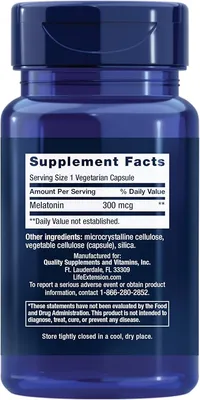
Life Extension Melatonin 300mcg
Best low-dose melatonin — the smartest starting dose for adults over 50, matching what your body naturally produces without the side effects of mega-dose products.
- 300mcg micro-dose matches the physiological level your body naturally produces
- No morning grogginess — the most common complaint with higher-dose melatonin
- Extremely affordable at roughly $0.05 per night
For most adults over 50 struggling with sleep, magnesium is the better place to start. It addresses a genuine nutritional gap — up to 68% of Americans do not consume enough magnesium — and supports sleep through muscle relaxation, GABA receptor activity, and nervous system calming without interfering with your body’s own melatonin production. Melatonin is a hormone that signals your brain it is time to sleep. It is best for specific circadian rhythm problems like jet lag, shift work adjustment, or a schedule that has drifted too late. These are fundamentally different approaches to the same problem, and choosing the right one depends on why you are not sleeping.
We reviewed the clinical evidence for both supplements in older adults, evaluated their mechanisms of action, and selected three products that represent the best options in each category.
What Is Melatonin?
Melatonin is a hormone produced by the pineal gland in your brain. When darkness falls, your body ramps up melatonin production to signal that nighttime has arrived and sleep should begin. Light — particularly blue light from screens — suppresses melatonin production.
Think of melatonin as a timing signal, not a sedative. It does not knock you out the way a sleeping pill does. Instead, it tells your brain’s master clock that it is nighttime. This distinction matters because it explains when melatonin works well and when it does not.
How Melatonin Works
Your retinas detect fading light and send signals to the suprachiasmatic nucleus (SCN) — the brain’s circadian pacemaker. The SCN tells the pineal gland to start releasing melatonin, which rises through the evening and peaks between 2 and 4 AM before declining toward morning.
Supplemental melatonin mimics this natural signal. When you take a melatonin supplement 30-60 minutes before bed, it raises your blood melatonin level and reinforces the “time to sleep” message to your brain.
Why this matters for adults over 50: Your pineal gland produces less melatonin as you age. By your 60s, you may produce roughly half the melatonin you did at 30. This reduced production can weaken your sleep onset signal and contribute to difficulty falling asleep.
The Dosing Problem
Here is something most melatonin buyers do not realize: the typical melatonin supplement is massively overdosed.
Your pineal gland naturally produces about 30-80 micrograms of melatonin per night. A standard 3mg supplement delivers 37 to 100 times more than your body would produce on its own. A 10mg supplement — commonly sold at drugstores — delivers 125 to 333 times the natural amount.
Research by Dr. Richard Wurtman at MIT found that 0.3mg (300 micrograms) is the dose that produces blood levels closest to natural youthful melatonin production — and it worked just as well as higher doses for improving sleep. Higher doses flood your receptors, can cause receptor desensitization, and commonly produce side effects like morning grogginess, vivid dreams, headaches, and paradoxically worse sleep quality.
The takeaway: If you use melatonin, start at 0.3-1mg. More is not better with this hormone.
What Is Magnesium?
Magnesium is a mineral involved in over 300 enzymatic reactions in your body. It plays critical roles in muscle and nerve function, blood sugar regulation, blood pressure management, protein synthesis, and bone health. For sleep specifically, magnesium supports relaxation through its interaction with the nervous system.
Unlike melatonin, magnesium is not a timing signal. It creates the physical and neurochemical conditions that allow sleep to happen — relaxed muscles, calm nerves, reduced cortisol, and enhanced GABA activity.
How Magnesium Supports Sleep
Magnesium promotes sleep through several complementary mechanisms:
GABA receptor activation. GABA (gamma-aminobutyric acid) is the primary calming neurotransmitter in your brain — the same neurotransmitter targeted by prescription sleep drugs like benzodiazepines and Z-drugs, though magnesium’s effect is far gentler. Magnesium binds to GABA receptors and enhances their activity, promoting calm and reducing the neural excitability that keeps people awake.
Cortisol regulation. Magnesium helps regulate the hypothalamic-pituitary-adrenal (HPA) axis, which controls your stress response. Adequate magnesium levels are associated with lower cortisol — the stress hormone that, when elevated in the evening, directly interferes with melatonin production and sleep onset.
Muscle relaxation. Magnesium counteracts calcium at the muscular level, promoting muscle relaxation. This is why magnesium deficiency is associated with muscle cramps, restless legs, and tension — all of which can disrupt sleep.
Melatonin support. Here is an underappreciated connection: magnesium is involved in your body’s natural melatonin production. A 2012 study in the Journal of Research in Medical Sciences found that magnesium supplementation in elderly subjects not only improved sleep quality but also increased their natural melatonin levels. Magnesium does not replace melatonin — it helps your body make more of its own.
Why Magnesium Deficiency Is So Common After 50
Magnesium deficiency is widespread in older adults for several reasons:
Reduced dietary intake. Magnesium-rich foods include dark leafy greens, nuts, seeds, whole grains, and legumes — foods many people do not eat enough of.
Decreased absorption. Your gut absorbs magnesium less efficiently as you age. The decline begins around age 40 and accelerates after 60.
Medication depletion. Proton pump inhibitors (omeprazole, pantoprazole), diuretics (furosemide, hydrochlorothiazide), and certain antibiotics all deplete magnesium. These are among the most commonly prescribed drugs for adults over 50.
Increased urinary excretion. Age-related kidney changes can increase magnesium loss through urine.
A 2012 analysis published in BMC Medicine estimated that up to 68% of American adults do not meet the recommended dietary allowance for magnesium. For adults over 50, the rate is likely even higher.
Head-to-Head: The Evidence Compared
Melatonin for Sleep: What the Research Shows
A 2013 meta-analysis in PLOS ONE by Ferracioli-Oda et al. pooled 19 randomized controlled trials with 1,683 participants. Melatonin reduced the time to fall asleep by an average of 7.06 minutes and increased total sleep time by 8.25 minutes compared to placebo. These are modest but statistically significant effects.
A 2005 meta-analysis by Brzezinski et al. in Sleep Medicine Reviews analyzed 17 studies and found similar results — a small but reliable reduction in sleep onset latency, with the strongest effects in people with delayed sleep phase (those whose natural sleep timing is shifted later than they want).
Where melatonin works best: The evidence is strongest for circadian rhythm disorders — jet lag, shift work, delayed sleep phase — where the problem is a misaligned sleep-wake clock rather than an inability to relax. A Cochrane review of melatonin for jet lag found it “remarkably effective” for preventing or reducing jet lag when taken close to the target bedtime at the destination.
Where melatonin works less well: For general insomnia — the vague “I just can’t sleep” experience that most older adults face — melatonin’s effects are modest. If your problem is staying asleep, waking too early, or not feeling rested despite sleeping enough hours, melatonin alone is unlikely to solve it.
Magnesium for Sleep: What the Research Shows
A 2012 randomized, double-blind, placebo-controlled trial by Abbasi et al. gave 500mg of magnesium daily to elderly subjects with insomnia for eight weeks. The magnesium group showed significant improvements in sleep time, sleep efficiency, sleep onset latency, and early morning awakening compared to placebo. They also had higher serum melatonin levels and lower cortisol — suggesting magnesium improved sleep partly by supporting the body’s own sleep hormone production.
A 2021 systematic review in BMC Complementary Medicine and Therapies evaluated the available evidence on magnesium supplementation for sleep quality. The review found that magnesium supplementation was associated with improvements in subjective sleep quality, particularly in people with low magnesium levels — which, as noted above, includes the majority of older adults.
A 2022 study in Nutrients found that magnesium L-threonate (Magtein) specifically improved sleep quality, reduced sleep latency, and decreased nighttime awakenings in adults. Because L-threonate crosses the blood-brain barrier, it may address sleep disruption at the neural level more directly than other magnesium forms.
Where magnesium works best: Magnesium shows the strongest benefits for people who are deficient (the majority of older adults), those with muscle tension or restless legs, and those whose sleep problems involve stress, anxiety, or an overactive mind at bedtime. Its effects on staying asleep — not just falling asleep — are a meaningful advantage over melatonin.
Where magnesium works less well: If your sleep problem is purely a circadian timing issue (you fall asleep at 8 PM and wake at 3 AM, or you cannot fall asleep until 2 AM), magnesium alone is unlikely to fix the clock. That is where melatonin’s timing signal is more appropriate.
The Key Difference
Melatonin tells your brain it is time to sleep. Magnesium helps your body relax enough to sleep.
If your problem is falling asleep at the right time — your clock is off, you are adjusting to a new time zone, or your natural melatonin production is too low — melatonin addresses the root cause.
If your problem is relaxing enough to fall asleep or staying asleep — muscle tension, racing thoughts, restless legs, stress-driven wakefulness — magnesium addresses the root cause.
For many older adults, both factors are at play. Which is why these supplements can complement each other — but most people benefit from starting with one and evaluating its effect before adding the second.
When to Choose Melatonin
Melatonin is the better choice if:
Your sleep timing is off. If you naturally fall asleep too late and cannot shift your schedule earlier, melatonin taken 30-60 minutes before your desired bedtime can help reset your circadian clock.
You are dealing with jet lag. Melatonin is the gold-standard supplement for jet lag, with strong Cochrane review evidence supporting its effectiveness.
You take a beta-blocker. Medications like atenolol, metoprolol, and propranolol suppress natural melatonin production. Low-dose melatonin supplementation can replace what the medication suppresses.
You fall asleep fine on weekends but struggle on workdays. This pattern suggests your circadian rhythm is shifted — you have a mild delayed sleep phase. Melatonin can help pull your sleep onset earlier on work nights.
Dose: Start at 0.3mg (300mcg). Increase to 1mg if needed after one week. Consider 3mg only if lower doses are insufficient. Take 30-60 minutes before your desired sleep time. Life Extension Melatonin 300mcg delivers the optimal physiological dose.
When to Choose Magnesium
Magnesium is the better choice if:
You have trouble relaxing at bedtime. If racing thoughts, muscle tension, or an inability to “wind down” keeps you awake, magnesium’s GABA-supporting and muscle-relaxing effects directly address these issues.
You wake up frequently during the night. Melatonin helps you fall asleep but does little for sleep maintenance. Magnesium’s nervous system calming effects support staying asleep through the night.
You experience muscle cramps or restless legs. These are classic signs of magnesium deficiency and commonly disrupt sleep in adults over 50. Magnesium supplementation can resolve both the cramps and the sleep disruption.
You want broader health benefits. Unlike melatonin (which is specifically a sleep-timing hormone), magnesium supports heart health, blood pressure regulation, blood sugar management, bone density, and mood. Taking magnesium for sleep delivers significant side benefits.
You take medications that deplete magnesium. Proton pump inhibitors, diuretics, and certain antibiotics lower magnesium levels. Supplementation replaces what these medications remove.
You want a long-term solution. Magnesium can be taken indefinitely as a nutritional supplement. It corrects a deficiency rather than adding a hormone, making it a more sustainable long-term approach than melatonin.
Dose: 200-400mg of magnesium glycinate or L-threonate, taken with dinner or 30-60 minutes before bed. Start at 200mg and increase after one week if tolerated. Natural Vitality Calm is a good entry point for the citrate form, while Life Extension Neuro-Mag is the premium choice for L-threonate.
Can You Take Both?
Yes. Because melatonin and magnesium work through completely different mechanisms, combining them is safe and may be more effective than either alone for some people.
A practical approach: Start with magnesium alone for two weeks. If you are sleeping better, stick with magnesium. If you are relaxing well but still struggling with sleep onset timing, add low-dose melatonin (0.3-1mg) to the magnesium.
This sequence makes sense because magnesium addresses the more common underlying issue (deficiency and nervous system overactivity) and also supports your body’s natural melatonin production. Adding exogenous melatonin on top of healthy magnesium levels gives you both the relaxation foundation and the timing signal.
What to avoid: Do not use this combination as a substitute for addressing underlying causes of poor sleep. If you have untreated sleep apnea, chronic pain, depression, or medication side effects disrupting your sleep, supplements alone will not solve the problem. Talk to your doctor if sleep problems persist for more than two to three weeks despite trying these supplements.
Safety Considerations
Melatonin Safety
Common side effects: Morning grogginess (especially at doses above 1mg), vivid or unusual dreams, headaches, and occasional dizziness. These are almost always dose-related — lower the dose before abandoning melatonin entirely.
Drug interactions: Melatonin may interact with blood thinners (warfarin), blood pressure medications, diabetes drugs, immunosuppressants, and anti-seizure medications. Consult your doctor or pharmacist before combining.
Long-term concerns: Extended use of exogenous melatonin may reduce your pineal gland’s natural production over time, though this has not been definitively demonstrated in human studies. The precautionary approach is to use the lowest effective dose for the shortest period needed.
Magnesium Safety
Common side effects: Loose stools or diarrhea, especially with magnesium oxide and citrate forms. Glycinate and L-threonate are significantly gentler on the digestive system. Start low and increase gradually.
Drug interactions: Magnesium can reduce absorption of certain antibiotics (fluoroquinolones, tetracyclines) and bisphosphonates (alendronate/Fosamax) — separate them by at least two hours. Magnesium may enhance the effects of blood pressure medications and muscle relaxants.
Kidney disease: People with impaired kidney function should not take magnesium supplements without medical supervision, as the kidneys are responsible for excreting excess magnesium.
Long-term safety: Magnesium supplementation at recommended doses (200-400mg daily) is considered safe for long-term use and is correcting a nutritional deficiency that most older adults have. This is a meaningful advantage over melatonin for sustained nightly use.
Our Product Recommendations
Life Extension Melatonin 300mcg — Best Low-Dose Melatonin
This is the melatonin supplement that sleep researchers would design if they made supplements. At 300 micrograms (0.3mg), it delivers the dose shown by MIT research to produce blood levels matching your body’s natural youthful melatonin production — without the side effects of the 3-10mg doses that dominate store shelves. It costs roughly a nickel per night.
Who it’s best for: Adults over 50 who need melatonin for circadian timing issues, jet lag, or to replace melatonin suppressed by beta-blocker medications. Also ideal for anyone who has tried higher-dose melatonin and experienced grogginess or vivid dreams. Read our full review: Life Extension Melatonin 300mcg
Natural Vitality Calm — Best Magnesium Citrate for Sleep
Natural Vitality Calm is the most accessible magnesium sleep supplement — sold at most grocery stores and pharmacies, it dissolves in warm water to create a fizzy, mildly flavored bedtime drink. The ritual of making and sipping the drink is itself a relaxation cue that signals to your body it is time to wind down. The powder format allows flexible dosing: start with a half teaspoon and work up to find your sweet spot.
Who it’s best for: Adults over 50 who are new to magnesium supplementation, prefer a drinkable format over capsules, or want an affordable and widely available option to test whether magnesium helps their sleep. The citrate form is more likely to cause digestive issues than glycinate — if loose stools are a problem, switch to a chelated form. Read our full review: Natural Vitality Calm
Life Extension Neuro-Mag — Best Magnesium L-Threonate
Neuro-Mag uses Magtein, the patented magnesium L-threonate developed at MIT — the only magnesium form clinically demonstrated to cross the blood-brain barrier and increase brain magnesium concentrations. This makes it uniquely suited for sleep problems driven by an overactive mind, anxiety, or neural excitability. A 2022 clinical trial found Magtein improved sleep quality and reduced nighttime awakenings.
Who it’s best for: Adults over 50 whose sleep problems center on racing thoughts, mental restlessness, or an inability to quiet the mind at bedtime. Also an excellent choice for anyone who wants combined sleep and cognitive benefits — the same brain magnesium increase that supports sleep also supports memory and learning. Read our full review: Life Extension Neuro-Mag
Frequently Asked Questions
Can I take melatonin and magnesium together for sleep? Yes, taking melatonin and magnesium together is generally safe and may be more effective than either alone for some people. They work through different mechanisms — melatonin signals your brain that it is time to sleep, while magnesium helps your body relax enough to fall and stay asleep. A reasonable combination is 0.3-1mg of melatonin with 200-400mg of magnesium glycinate or L-threonate, taken 30-60 minutes before bed. Start with each one individually first to see which helps more, then combine if needed. Consult your doctor before combining supplements, especially if you take prescription medications.
What type of magnesium is best for sleep? Magnesium glycinate (bisglycinate) and magnesium L-threonate are the two best forms for sleep. Glycinate is chelated with the amino acid glycine, which itself has calming properties and promotes better sleep. L-threonate (Magtein) is the only form clinically shown to cross the blood-brain barrier and increase brain magnesium levels, making it especially useful for sleep disrupted by racing thoughts or neural overactivity. Avoid magnesium oxide — it is poorly absorbed and mainly acts as a laxative. Magnesium citrate is moderately absorbed but more likely to cause digestive issues than glycinate.
How much melatonin should a senior take for sleep? Start with 0.3mg (300mcg) to 1mg taken 30-60 minutes before bed. This is far lower than the 5-10mg doses commonly sold, but research from MIT shows that 0.3mg produces blood levels closer to what your body naturally produces. Higher doses often cause grogginess, vivid dreams, and can actually worsen sleep quality by desensitizing melatonin receptors. If 1mg does not help after a week, try 3mg before going higher. Most sleep specialists consider 3mg the maximum beneficial dose for older adults.
Does magnesium help you stay asleep through the night? Magnesium may help you stay asleep by relaxing muscles, calming the nervous system, and supporting GABA activity — the neurotransmitter that quiets brain activity. A 2012 study in elderly subjects found that magnesium supplementation improved sleep efficiency, total sleep time, and reduced early morning awakening. Magnesium also helps with restless legs and muscle cramps — two common causes of nighttime waking in adults over 50. It is not a sedative and will not knock you out, but it creates conditions that make staying asleep easier.
Is melatonin safe for long-term use in older adults? Short-term use of low-dose melatonin (up to 3 months) appears safe for most older adults. Long-term safety data beyond one year is limited. The American Academy of Sleep Medicine considers melatonin safe for short-term use but does not make a strong recommendation for long-term nightly use due to insufficient data. Higher doses may suppress your body’s natural melatonin production over time. If you plan to take melatonin for more than a few months, discuss it with your doctor. Magnesium, by contrast, can be taken long-term as a nutritional supplement since most adults are deficient.
The Bottom Line
Melatonin and magnesium are both effective natural sleep aids, but they solve different problems. Melatonin is a timing signal — it tells your brain when to sleep. Magnesium is a relaxation enabler — it helps your body physically and neurochemically settle into sleep.
For most adults over 50, magnesium is the better starting point. It addresses a common deficiency, supports sleep through multiple mechanisms, offers benefits beyond sleep (heart health, blood pressure, bone density), and can be taken safely long-term. If magnesium alone is not enough, adding low-dose melatonin (0.3-1mg) provides the circadian signal on top of the relaxation foundation.
Whatever you try, keep the doses low — especially with melatonin. More is not better. And consult your doctor before starting either supplement, particularly if you take blood pressure medications, blood thinners, or drugs that affect your nervous system.
For related reading, see our guides on Best Natural Sleep Aids for Seniors, Best Magnesium for Sleep, Magnesium Glycinate vs Citrate vs Oxide, Is Melatonin Safe for Seniors?, and Natural Sleep Remedies Without Melatonin.
All Products We Reviewed
- 300mcg micro-dose matches the physiological level your body naturally produces
- No morning grogginess — the most common complaint with higher-dose melatonin
- Extremely affordable at roughly $0.05 per night
- From a company with over 40 years of research-focused supplementation
- May feel too subtle for people accustomed to 3-5mg melatonin doses
- Not USP verified (relies on in-house quality testing)
- Capsule form only — no liquid or sublingual option
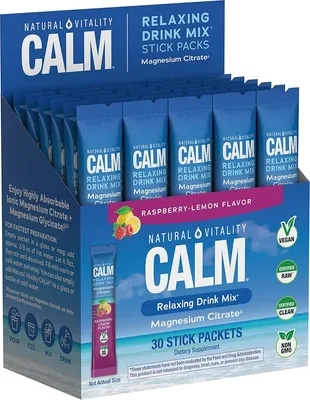
- Drinkable magnesium citrate powder — pleasant bedtime ritual
- Flexible dosing: start with half a teaspoon and increase gradually
- Widely available at most grocery stores and pharmacies
- Flavored options (raspberry-lemon, unflavored) taste good in warm water
- Magnesium citrate form is more likely to cause digestive issues than glycinate
- Lower absorption rate compared to chelated forms like glycinate or threonate
- Contains 325mg magnesium per full serving — easy to overshoot and cause loose stools
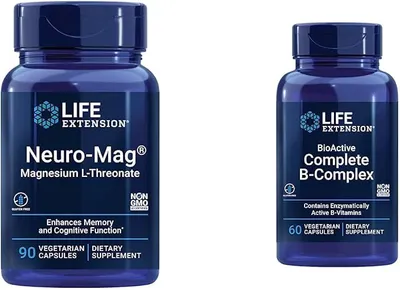
- Magtein magnesium L-threonate — the only form clinically shown to cross the blood-brain barrier
- Addresses both sleep quality and cognitive function simultaneously
- Developed at MIT with published research in Neuron
- Supports GABA activity directly in the brain where sleep is regulated
- Lower elemental magnesium per serving than other forms (144mg Mg from 2,000mg MgT)
- Three capsules per serving — higher pill burden
- More expensive per serving than glycinate or citrate options
Frequently Asked Questions
Can I take melatonin and magnesium together for sleep?
Yes, taking melatonin and magnesium together is generally safe and may be more effective than either alone for some people. They work through different mechanisms — melatonin signals your brain that it is time to sleep, while magnesium helps your body relax enough to fall and stay asleep. A reasonable combination is 0.3-1mg of melatonin with 200-400mg of magnesium glycinate or L-threonate, taken 30-60 minutes before bed. Start with each one individually first to see which helps more, then combine if needed. Consult your doctor before combining supplements, especially if you take prescription medications.
What type of magnesium is best for sleep?
Magnesium glycinate (bisglycinate) and magnesium L-threonate are the two best forms for sleep. Glycinate is chelated with the amino acid glycine, which itself has calming properties and promotes better sleep. L-threonate (Magtein) is the only form clinically shown to cross the blood-brain barrier and increase brain magnesium levels, making it especially useful for sleep disrupted by racing thoughts or neural overactivity. Avoid magnesium oxide — it is poorly absorbed and mainly acts as a laxative. Magnesium citrate is moderately absorbed but more likely to cause digestive issues than glycinate.
How much melatonin should a senior take for sleep?
Start with 0.3mg (300mcg) to 1mg taken 30-60 minutes before bed. This is far lower than the 5-10mg doses commonly sold, but research from MIT shows that 0.3mg produces blood levels closer to what your body naturally produces. Higher doses often cause grogginess, vivid dreams, and can actually worsen sleep quality by desensitizing melatonin receptors. If 1mg does not help after a week, try 3mg before going higher. Most sleep specialists consider 3mg the maximum beneficial dose for older adults.
Does magnesium help you stay asleep through the night?
Magnesium may help you stay asleep by relaxing muscles, calming the nervous system, and supporting GABA activity — the neurotransmitter that quiets brain activity. A 2012 study in elderly subjects found that magnesium supplementation improved sleep efficiency, total sleep time, and reduced early morning awakening. Magnesium also helps with restless legs and muscle cramps — two common causes of nighttime waking in adults over 50. It is not a sedative and will not knock you out, but it creates conditions that make staying asleep easier.
Is melatonin safe for long-term use in older adults?
Short-term use of low-dose melatonin (up to 3 months) appears safe for most older adults. Long-term safety data beyond one year is limited. The American Academy of Sleep Medicine considers melatonin safe for short-term use but does not make a strong recommendation for long-term nightly use due to insufficient data. Higher doses may suppress your body's natural melatonin production over time. If you plan to take melatonin for more than a few months, discuss it with your doctor. Magnesium, by contrast, can be taken long-term as a nutritional supplement since most adults are deficient.