
Best Evening Primrose Oil for Menopause: Pharmacist's Picks
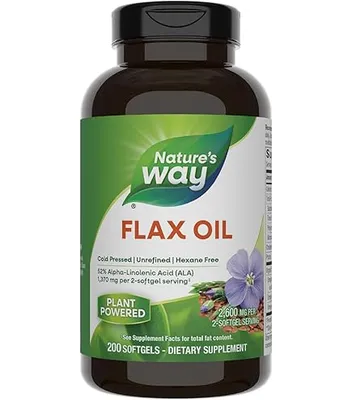
Nature's Way Evening Primrose Oil 1300mg
Best overall — the value-plus-quality winner for women who want solid GLA delivery without paying a premium.
- Cold-pressed extraction preserves GLA integrity
- Standardized 9-10% GLA content per softgel
- 1,300mg single-softgel dose matches the clinical range
Nature’s Way Evening Primrose Oil 1300mg is the best pick for most women over 50 — cold-pressed extraction, standardized 9-10% GLA, and under $15 per month. For cyclical breast tenderness alongside menopause symptoms, Solgar EPO at 1,300mg adds hexane-free processing and tighter quality controls. For higher-dose needs (2,000mg or more), NOW EPO at 1,000mg twice daily is the most cost-effective way to hit the range. None of these supplements replace hormone therapy — they address specific symptoms at the margins, and they work best when you match the product to your symptom pattern.
We reviewed six weeks of clinical research and compared label specifications across the top evening primrose oil products sold in the U.S. Below are the five that met our standards for GLA content, extraction quality, third-party testing, and reasonable cost — plus the context you need to decide if EPO belongs in your menopause strategy at all.
Important: Evening primrose oil is not a treatment for menopause. It may help with specific symptoms — hot flashes, breast tenderness, skin dryness — at the margins. If your symptoms significantly affect your quality of life, talk to your doctor about all available options, including hormone replacement therapy, which remains the most effective approach for moderate to severe symptoms. See our broader guide: Best Menopause Supplements for Women Over 50.
Key Takeaways
- Nature’s Way Evening Primrose Oil 1300mg is the best-value pick — cold-pressed, 9-10% GLA, under $15 per month
- GLA (gamma-linolenic acid) is the active compound — look for 9% or higher on the label
- Clinical dose range: 1,300-2,600mg daily, taken with food, for 8-12 weeks before judging effectiveness
- Breast tenderness responds faster (4-6 weeks) than hot flashes (8-12 weeks) or skin changes
- Blood thinner interaction is real — talk to your doctor if you take warfarin, aspirin, or clopidogrel
- EPO is not as strong as black cohosh for pure hot flash relief — use it for the broader symptom cluster
Understanding Evening Primrose Oil and Menopause
Evening primrose (Oenothera biennis) is a North American wildflower whose seeds produce an oil uniquely rich in gamma-linolenic acid. GLA is an omega-6 fatty acid that your body can make from linoleic acid — but only inefficiently, and the conversion declines with age, inflammation, and certain nutrient gaps. Direct GLA from evening primrose oil bypasses this bottleneck.
GLA matters for menopause because of what it becomes downstream. Your body converts GLA into dihomo-gamma-linolenic acid (DGLA), which in turn produces prostaglandin E1 — a compound that regulates blood vessel tone, inflammation, and hormone receptor sensitivity. Falling estrogen disrupts prostaglandin balance in ways that contribute to three menopause hallmarks: hot flashes (through thermoregulatory dysregulation), cyclical breast tenderness (through inflammatory prostaglandin excess), and skin dryness (through reduced barrier function).
This mechanism explains why EPO works better for the package of menopause symptoms than for any single one. Black cohosh beats EPO for pure hot flash frequency reduction. But if your hot flashes travel with breast tenderness, dry skin, and joint stiffness, EPO addresses the broader picture through a single pathway that the others don’t touch.
The evidence base is imperfect. A 2013 randomized trial in Archives of Gynecology and Obstetrics found that 500mg of EPO daily for 6 weeks significantly reduced hot flash severity, frequency, and duration compared to placebo. A 2013 Iranian trial corroborated the hot flash benefit at 1,000mg daily. Other studies — including a 1994 trial by Chenoy et al. — showed more modest or negative results for pure hot flash outcomes. The pattern suggests EPO helps some women more than others, with stronger effects when the symptom cluster includes inflammation-driven components.
For breast tenderness, the evidence is more consistent. Multiple trials of EPO in cyclical mastalgia have shown meaningful benefit, and the mechanism (prostaglandin E1 restoration) fits the symptom precisely.
What to Look For on the Label
Not all evening primrose oil is equal. Four specifications matter:
GLA content. Look for standardized GLA of 9% or higher. Some cheap EPO products test at 6-7% GLA, which is well below the therapeutic range. A 1,300mg softgel at 9% GLA delivers 117mg of GLA — the working dose in most clinical studies.
Extraction method. Cold-pressed is the gold standard. Some cheaper brands use hexane solvent extraction, which is faster and cheaper but leaves trace residues and degrades the oil’s quality. “Hexane-free” should be on the label or the manufacturer’s website.
Oxidation protection. Evening primrose oil is fragile. Once opened, it oxidizes quickly — and rancid oil is mildly pro-inflammatory, the opposite of what you want. Look for added vitamin E (mixed tocopherols), opaque softgels, and a realistic expiration date. Store the bottle in a cool, dark place.
Third-party testing. USP, NSF, or brand-published certificates of analysis give you some assurance that what’s on the label is in the capsule. Supplements are minimally regulated, and cheap EPO products are one of the categories where potency variation is wide.
Our Top Picks Compared
1. Nature’s Way Evening Primrose Oil 1300mg — Best Overall
Nature’s Way is the dominant brand in the EPO category for good reason — the price is low, the quality specs are solid, and the 1,300mg single-softgel dose hits the clinical range without needing to take multiple capsules.
How it’s made: Cold-pressed extraction from evening primrose seeds, standardized to 9-10% GLA. TRU-ID certified, meaning the species is DNA-verified. Non-GMO and third-party tested for heavy metals.
Who it’s best for: Most women starting with EPO for general menopause symptom support. The combination of clinical-range dose, verified quality, and low price makes it the default choice unless you have a specific reason to pay more.
Dosing: One softgel daily with a meal. Women with more significant symptoms can take two softgels (2,600mg total) split between morning and evening. Allow 8-12 weeks for full effect.
Trade-offs: The softgel uses gelatin and soybean oil as a carrier — worth noting if you have dietary restrictions. Not organic.
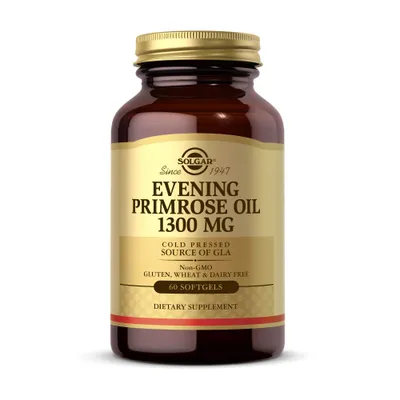
2. Solgar Evening Primrose Oil 1300mg — Best for Cyclical Breast Tenderness
Solgar is one of the oldest and most respected names in premium supplementation, and the company’s attention to oxidation specs makes it a standout for women using EPO long-term — which matters most if breast tenderness is a primary reason for supplementing.
How it’s made: Hexane-free extraction, tighter oxidation specs than most mass-market brands, and rigorous batch testing. Kosher certified, gluten-free, dairy-free, and non-GMO verified.
Why it shines for breast tenderness: EPO evidence is strongest for cyclical mastalgia, and long-term daily use is the typical pattern. Oxidation matters more for chronic users than occasional ones — you’re consuming the oil every day for months or years, so quality compounds.
Dosing: One softgel daily. For breast tenderness specifically, some women benefit from 2,000-2,600mg daily during the week before menses if cycles are still present, dropping to maintenance after.
Trade-offs: Roughly 50% more expensive than Nature’s Way. Less widely available in mainstream retail — primarily online or at independent health retailers.
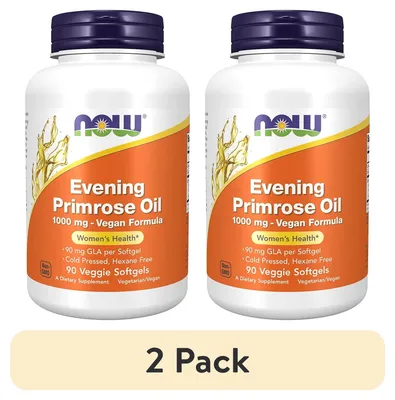
3. NOW Evening Primrose Oil 1000mg — Best for Higher-Dose Regimens
Some women need more than 1,300mg of EPO — particularly those with persistent symptoms or those whose doctors have recommended the higher end of the clinical range. NOW Foods offers the most cost-effective path to 2,000mg+ daily.
How it’s made: Hexane-free extraction, non-GMO verified, GMP-certified manufacturing facility. Third-party tested for potency, solvents, heavy metals, and microbial contamination. Full certificates of analysis available on request.
Why the 1,000mg size matters: Two softgels deliver 2,000mg — a sweet spot dose that many women find more effective for the combined symptom cluster (hot flashes plus breast tenderness plus skin). Three softgels deliver 3,000mg for the higher end of the range.
Dosing: One softgel twice daily (2,000mg total), taken with meals. Can be increased to three softgels daily if tolerated and if your doctor agrees.
Trade-offs: Slightly lower GLA percentage than premium cold-pressed brands. The 1,000mg size means more capsules if you want to hit 2,600mg — but the cost savings usually make this a wash.
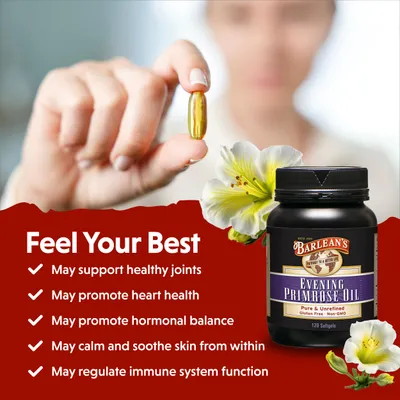
4. Barlean’s Evening Primrose Oil — Best Organic Option
Barlean’s is one of the few brands offering certified organic, unrefined evening primrose oil. Unrefined means the natural antioxidants and minor compounds in the seed oil are retained — a meaningful difference for women who prioritize minimally processed supplements.
How it’s made: Cold-pressed from organic evening primrose seeds, hexane-free, and minimally processed. Batch testing is published transparently, and the company offers both softgel and liquid forms.
Why the liquid matters: A liquid form allows precise dose titration — useful if you want to start low (500mg) and work up, or if you’re combining EPO with other oils for a customized blend.
Dosing: One softgel daily with a meal, or 1/2 to 1 teaspoon of liquid. Refrigerate after opening to slow oxidation.
Trade-offs: Premium price. Refrigeration requirement makes it less convenient for travel or for people who forget supplements stored out of sight.
5. Jarrow Formulas Evening Primrose — Best Balance of Price and Transparency
Jarrow has built its reputation on scientifically formulated products at fair mid-market prices. The evening primrose oil matches that pattern — 9% GLA standardization, added vitamin E for oxidation protection, and transparent third-party testing.
How it’s made: Standardized to 9% GLA with label-disclosed content, added vitamin E (mixed tocopherols) for in-capsule oxidation protection. Manufactured in a GMP-certified facility with third-party testing.
Why vitamin E matters: Most EPO products rely on the intact softgel to prevent oxidation. Adding vitamin E inside the capsule provides additional protection against degradation during shelf life — particularly useful if you live in a warm climate or buy supplements in bulk.
Dosing: One softgel daily with food. Can be increased to two softgels if tolerated.
Trade-offs: Contains soybean oil as a carrier — worth noting if you avoid soy. The 1,300mg softgel is large; some women find it hard to swallow compared to smaller capsules.
Who Should NOT Take Evening Primrose Oil
Evening primrose oil is generally safe, but several groups should avoid it or use only with medical supervision:
Women on blood thinners. Warfarin, clopidogrel, aspirin (daily dose), dabigatran, and other anticoagulants can interact with EPO to increase bleeding risk. The interaction is not severe at typical doses for most women, but it matters enough to require medical clearance and possibly INR monitoring.
Women with bleeding disorders. Hemophilia, von Willebrand disease, and similar conditions make EPO’s mild bleeding-time effect unacceptable. Avoid.
Women with epilepsy. EPO may lower the seizure threshold in rare cases, particularly when combined with certain antipsychotics (phenothiazines). If you have a seizure history, talk to your neurologist before starting.
Women preparing for surgery. Stop EPO at least two weeks before any planned surgery to reduce bleeding risk. Most surgeons ask about supplements during preop screening — tell them everything you take.
Women with estrogen-sensitive cancer concerns. EPO is not estrogenic, but the general principle of minimizing unnecessary supplements during active treatment applies. Cleared with your oncology team is the safe default.
Pregnancy. Most EPO research excludes pregnant women. While EPO is sometimes used by midwives near term to help with labor, unsupervised use during pregnancy is not recommended.
Building Your Evening Primrose Oil Strategy
If you’re still deciding whether EPO fits your situation, think through this decision tree:
Do your symptoms include breast tenderness, dry skin, or mild joint stiffness alongside hot flashes? EPO’s multi-symptom mechanism is a good match. Start with Nature’s Way 1300mg daily.
Are hot flashes your only significant symptom? Black cohosh has stronger evidence. Consider Remifemin first; add EPO only if you also develop breast tenderness or dry skin issues.
Do you take blood thinners or have bleeding disorders? Skip EPO entirely unless your doctor specifically clears it. The interaction is not worth the modest benefit.
Have you tried EPO before and felt no effect after 12 weeks? Don’t increase the dose indefinitely. Switch approaches — black cohosh, Relizen, or direct conversation with your doctor about HRT.
Are your symptoms severe? EPO is a mild-to-moderate-symptom tool. If you’re having multiple hot flashes per hour, drenching night sweats every night, or significant mood disruption, talk to your doctor about HRT. See Perimenopause Symptoms and Supplements and Hormone Replacement Therapy Guide for context.
Layering matters too. Many women combine EPO with black cohosh (different mechanisms, complementary effects) or pair EPO with a magnesium supplement for the sleep-mood-cramp cluster. What doesn’t work well is stacking three or four supplements at once — you lose the ability to tell what’s helping, and the interaction risk compounds. Add one thing at a time, give it 8-12 weeks, and track your symptoms in a simple journal.
For women dealing with menopause brain fog alongside the physical symptoms, see Best Supplements for Menopause Brain Fog. If hair thinning is part of your picture, see Best Supplements for Menopause Hair Loss & Thinning.
The Bottom Line
Evening primrose oil is a practical, low-cost, broad-spectrum supplement for women navigating menopause — but set expectations realistically. It’s not going to eliminate severe hot flashes. It will, for many women, take the edge off a cluster of symptoms that don’t respond to any single targeted supplement.
Nature’s Way Evening Primrose Oil 1300mg is the default recommendation: clinical-range dose, cold-pressed quality, reasonable price. Move to Solgar if oxidation quality matters to you, NOW for higher-dose regimens, Barlean’s if organic sourcing is a priority, or Jarrow if you want vitamin E oxidation protection built into the capsule. All five deliver real GLA in clinically relevant amounts.
Give any product a full 8-12 weeks before deciding. Track your symptoms honestly, pay attention to breast tenderness and skin changes as well as hot flashes, and talk to your doctor about the full picture. Supplements work best as part of a broader strategy — not as magic bullets. See our Best Supplements for Hot Flashes guide for the wider toolkit.
Sources
- Chenoy et al., 1994 — Effect of oral gamolenic acid from evening primrose oil on menopausal flushing
- Farzaneh et al., 2013 — Evening primrose oil for hot flashes in menopausal women
- Kazemi et al., 2013 — Evening primrose oil and menopause symptoms in Iranian women
- Horrobin, 2000 — GLA and its role in human health
- Kast, 2001 — Borage oil reduction of rheumatoid arthritis activity (GLA mechanism reference)
- Pruthi et al., 2010 — Vitamin E and evening primrose oil for mastalgia
- Bayles & Usatine, 2009 — Evening primrose oil clinical review
- NIH Office of Dietary Supplements — Evening Primrose Oil fact sheet
All Products We Reviewed
- Cold-pressed extraction preserves GLA integrity
- Standardized 9-10% GLA content per softgel
- 1,300mg single-softgel dose matches the clinical range
- TRU-ID certified, non-GMO, and under $0.25/day
- Clinical evidence for hot flash reduction is modest compared to black cohosh
- May interact with blood thinners — needs medical clearance if on warfarin or aspirin
- Hexane-free extraction — no solvent residues
- Kosher, gluten-free, and verified non-GMO
- Tighter oxidation specs than many mass-market brands
- Well-tolerated softgels with minimal aftertaste
- Roughly 50% more expensive than Nature's Way
- Harder to find in mainstream retail — mostly online
- Excellent cost-per-mg — easy to hit 2,000mg daily affordably
- Hexane-free, non-GMO, and GMP-certified manufacturing
- Third-party tested for potency and purity
- Flexible dosing — take one or two softgels
- 1,000mg softgel means two capsules needed to match the 1,300mg clinical dose
- Slightly lower GLA percentage than premium cold-pressed brands
- Organic, cold-pressed, and hexane-free
- Unrefined oil retains more natural antioxidants
- Transparent batch testing with published results
- Also available as liquid for higher-dose flexibility
- Premium price per softgel
- Refrigeration recommended after opening — less convenient
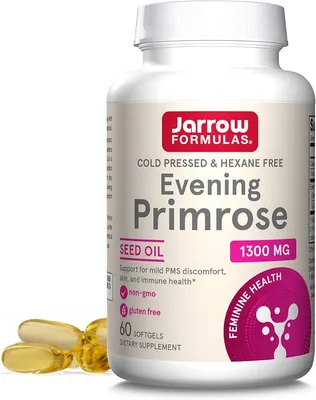
- Standardized to 9% GLA with label-disclosed content
- Added vitamin E for oxidation protection
- Third-party tested by a transparent manufacturer
- Widely available at a fair mid-market price
- Added soybean oil as a carrier may bother women avoiding soy
- 1,300mg softgel is large — some women find it hard to swallow
Frequently Asked Questions
Does evening primrose oil actually help with hot flashes?
The evidence is mixed but modestly positive. A 2013 randomized controlled trial found that 500mg of EPO daily for 6 weeks reduced hot flash severity, frequency, and duration compared to placebo. Other trials show more modest or inconsistent effects. EPO is not as strong as black cohosh for pure hot flash relief, but it helps many women — particularly those whose symptoms include breast tenderness or dry skin alongside hot flashes. Expect a modest benefit over 8-12 weeks rather than dramatic relief.
How much evening primrose oil should I take for menopause?
Most clinical studies used 500mg to 1,300mg daily, taken with a meal. A practical starting dose is 1,300mg once daily (one standard softgel). Women with more significant symptoms sometimes increase to 2,000-2,600mg daily, split between morning and evening. Higher doses are not automatically better — more GLA does not linearly translate to more relief. Give any dose 8-12 weeks before judging effectiveness.
What is GLA and why does it matter for menopause?
GLA is gamma-linolenic acid, an omega-6 fatty acid your body converts into prostaglandin E1 — a compound that regulates inflammation, pain, and hormone signaling. Evening primrose oil is one of the richest dietary sources, typically 9-10% GLA by weight. Declining estrogen disrupts prostaglandin balance, which contributes to hot flashes, breast tenderness, and dry skin. GLA supplementation supports prostaglandin E1 production and may partially offset these changes.
Can evening primrose oil be taken with blood thinners?
With caution and medical guidance. EPO can mildly increase bleeding time, so combining it with warfarin, clopidogrel, aspirin, or other anticoagulants raises bleeding risk. The interaction is not severe at typical doses for most women, but it matters. If you take any blood thinner, talk to your doctor and pharmacist before starting EPO. Stop EPO at least two weeks before any planned surgery. Women with bleeding disorders should generally avoid it.
How long does evening primrose oil take to work?
Most women need 6 to 12 weeks of consistent daily use before evaluating whether EPO is helping. Breast tenderness often responds faster (4-6 weeks). Hot flash improvement typically builds over 8-12 weeks. Skin hydration changes can appear by week 4 but stabilize around week 8. If you have taken 1,300mg daily for 12 weeks with no noticeable change, the supplement is unlikely to work for you — switch approaches rather than increasing the dose indefinitely.
Is evening primrose oil safe long-term?
Yes, for most women. Long-term EPO use at 1,300-2,600mg daily has a good safety record over years of study. The main cautions are bleeding risk (especially with blood thinners or surgery), rare reports of seizure-threshold lowering in people with epilepsy, and mild digestive upset at high doses. Oxidation matters — buy EPO from reputable brands with cold-pressed extraction and store it in a cool, dark place. Rancid EPO is not just ineffective; it can be mildly pro-inflammatory.
Which is better: evening primrose oil or black cohosh?
They work on different pathways and different symptom profiles. Black cohosh (particularly Remifemin's iCR extract) has stronger evidence for pure hot flash reduction and does not work through hormonal mechanisms. Evening primrose oil has weaker hot flash evidence but adds support for breast tenderness, skin dryness, and inflammation. Many women take both together — black cohosh for vasomotor symptoms, EPO for the broader symptom cluster. Start with one at a clinical dose for 8-12 weeks before layering.